The world of arts and theatre is rich with emotion, creativity, and a unique vernacular that sets it apart from many other professions. Understanding and mastering the specialized vocabulary within this field, especially in a language such as Spanish, can make a significant difference for anyone looking to engage with the art world more deeply. Whether you’re acting, directing, writing, or engaging with the arts in any capacity, having a robust vocabulary is essential to communicate and understand with precision and nuance.
Learning advanced vocabulary in Spanish related to the arts and theatre goes beyond memorizing words; it encompasses understanding their usage in context, the cultural nuances, and the idiomatic expressions that can bring scripts and conversations to life. For non-native speakers, this can seem daunting, but rest assured, it’s an achievable goal.
This comprehensive guide will explore some of the most useful Spanish vocabulary words and phrases pertinent to the arts and theatre. We will cover essential terms, phrases, and expressions that will not only bolster your language skills but also deepen your appreciation and participation in the Spanish-speaking art world. From understanding the foundational concepts to diving into the jargon used behind the scenes, this article aims to equip you with the tools needed to master Spanish vocabulary in this vibrant field.
Basic Terms in Arts and Theatre
Let’s start with some foundational terms that are used universally in arts and theatre. These are the building blocks that allow you to form a coherent dialogue about productions, scripts, and artistic expressions.
El escenario: The stage, a central element in any theatre production. Understanding stage directions and the different parts of the stage is crucial.
El guion: The script. This includes all the written dialogue and instructions for a production.
El director: The director, the visionary guiding the performance. Comprehending the director’s role and instructions can provide insight into the entire creative process.
Other essential terms include el vestuario (costume), la iluminación (lighting), la escenografía (scenography or set design), and la actuación (acting). These terms constitute the core vocabulary one must be familiar with to navigate the world of Spanish theatre and arts effectively. Each of these elements plays a significant role in creating the aesthetic and narrative of a production.
Moreover, knowing these basic terms allows you to engage in more specific conversations about different aspects of a performance and develop a clearer understanding of the roles and contributions involved in a production.
Advanced Vocabulary for Theatre Professionals
As you delve deeper into the world of theatre, the vocabulary becomes more specialized. Here are some advanced terms that are frequently used by professionals in the field:
La dramaturgia: Playwriting or dramatic composition. This term encompasses the creation and structure of the narrative in a play.
El ensayo general: The dress rehearsal, a critical part of the production process where the final output is fine-tuned.
La interpretación: Interpretation, often referring to how an actor brings a character to life, including nuances in performance.
Another critical term is la utilería (props), essential for adding realism and depth to performances. Understanding the importance of these components and how they intertwine can significantly enhance your ability to participate in and contribute to a production.
Furthermore, familiarizing yourself with phrases used during rehearsals, such as “entrar a tiempo” (to enter on cue) and “hacer una pausa” (to take a pause), is invaluable. Mastering these advanced terms not only improves communication but also provides a deeper appreciation of the theatrical arts and its complexities.
Vocabulary for Visual Arts
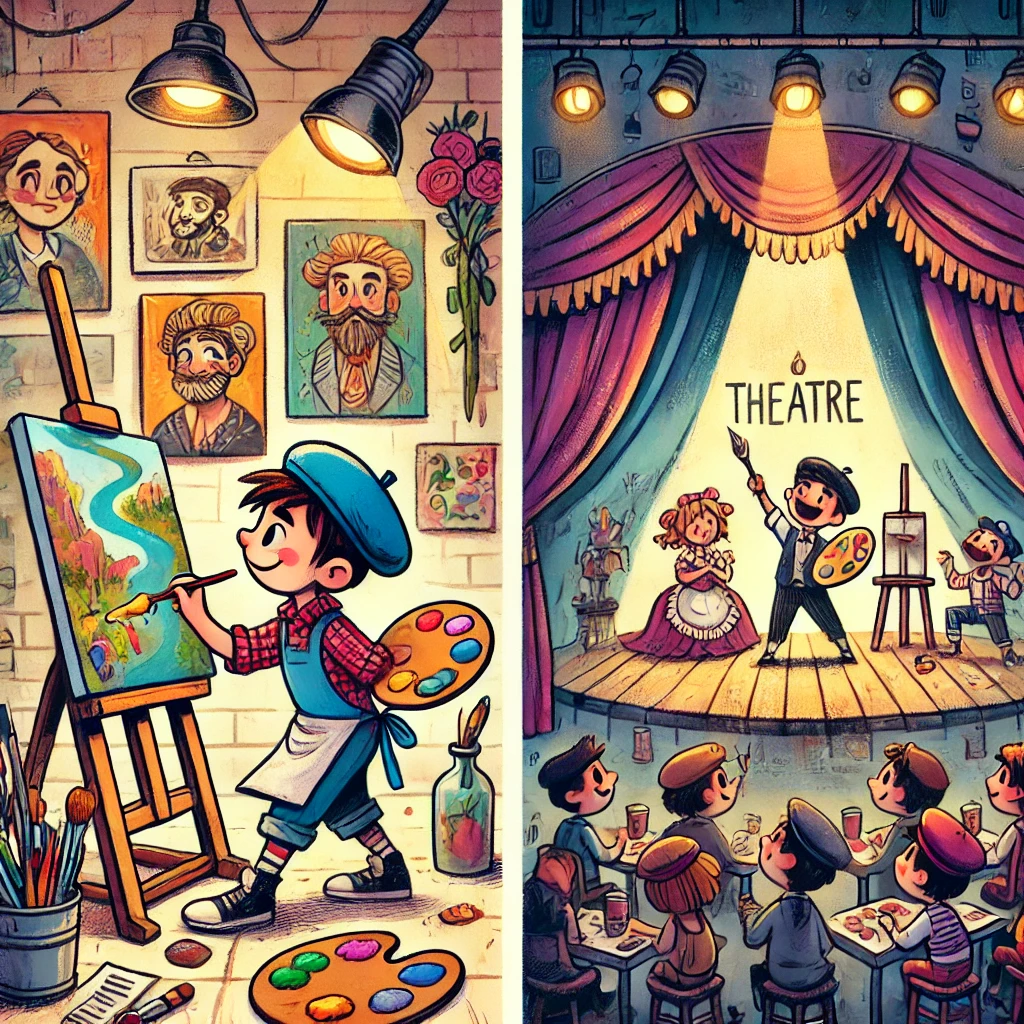
Visual arts encompass a wide range of mediums including painting, sculpture, and photography. Each of these disciplines has its own unique set of vocabulary:
La obra maestra: The masterpiece. Often used to refer to the most outstanding work of an artist.
El lienzo: The canvas. A critical term in painting, as this is the surface on which artists express their creativity.
La paleta: The palette. Refers to both the range of colors used by a painter and the physical board used to mix paints.
In sculpture, terms like la alabastro (alabaster) and la escultura en relieve (relief sculpture) are significant. Photography includes terms such as la exposición (exposure) and el encuadre (framing).
Understanding and using these terms help in discussing and appreciating the nuances of visual artworks. Moreover, it fosters deeper engagement with artists and art enthusiasts, facilitating more meaningful conversations about techniques, styles, and artistic influences.
Expressions and Idioms
Spanish, like any language, is rich with expressions and idioms that add color to conversations. In the context of arts and theatre, these phrases can enhance your dialogues:
Dar en el blanco: To hit the nail on the head. Often used in critiques and discussions about the effectiveness of a piece of art or performance.
Ser un éxito rotundo: To be a smash hit. Commonly used in the context of plays or exhibitions that receive widespread acclaim.
Pasarse de la raya: To go overboard. A phrase that might be used in critiques or discussions about a performance or artwork.
These idiomatic expressions are invaluable as they convey complex ideas in a nuanced and culturally relevant manner. They are particularly useful in informal settings, critiques, and reviews, where conveying subtle nuances is crucial.
Cultural Context in Arts and Theatre
The cultural backdrop is essential when it comes to mastering vocabulary for the arts and theatre. Understanding the historical and societal influences on Spanish art and theatre enriches your experience and comprehension:
From the Golden Age of Spanish literature, El Siglo de Oro, to contemporary cinema, each era has contributed unique vocabulary and themes to the arts. Familiarity with iconic Spanish playwrights like Lope de Vega and Federico García Lorca is crucial, as their works are seminal in understanding Spanish theatre.
In visual arts, understanding the movements such as El Surrealismo (Surrealism), influenced heavily by Salvador Dalí, can be significant. These historical contexts provide insight into why certain terms and expressions are used and how they have evolved.
Moreover, recognizing the influence of regional cultures within Spain, such as Catalan and Andalusian art, can provide a deeper understanding and appreciation for the diversity within Spanish art circles. Thus, cultural literacy is just as important as linguistic fluency when engaging with the arts in a meaningful way.
Tips and Resources for Learning
Mastering advanced Spanish vocabulary for the arts and theatre requires dedication, practice, and utilizing the right resources. Here are some tips that might help you:
- Read Scripts and Plays: Engage with Spanish scripts and plays to familiarize yourself with the language used in theatrical contexts.
- Watch Performances: Watching Spanish plays, films, and art critiques can help you see how vocabulary is applied in context.
- Flashcards and Apps: Utilize flashcards and language learning apps that focus on advanced and specialized vocabulary.
- Join Art Communities: Participate in Spanish-speaking art and theatre groups, both online and offline, to practice and immerse yourself in the language.
- Work with Tutors: Consider professional tutoring, focusing specifically on arts and theatre vocabulary to refine your skills.
There are also numerous online resources, including educational websites, online courses, and YouTube channels dedicated to Spanish for the arts. Making use of these tools can provide a structured and effective approach to mastering this specialized vocabulary.
Conclusion
Mastering Spanish vocabulary for the arts and theatre is an invaluable skill for anyone looking to engage deeply with these vibrant fields. While challenging, the journey to mastery is filled with opportunities to enrich not only your linguistic abilities but also your cultural understanding and appreciation. From basic terms to advanced professional jargon, each word and phrase serves as a stepping stone towards fluent, nuanced communication.
As reiterated throughout this comprehensive guide, familiarity with the cultural context, historical significance, and practical application of terms is essential. Understanding the art forms, influencing movements, and notable figures in Spanish-speaking countries can elevate your grasp of the language exponentially.
Remember, learning advanced vocabulary is not a sprint but a marathon. Consistent engagement, active practice, and immersive learning experiences are key. Utilize the tips and resources mentioned to aid your journey, and don’t hesitate to immerse yourself in the vibrant world of Spanish arts and theatre.
In doing so, you’ll not only improve your language skills but also gain a deeper, more profound connection with the art forms you love. Whether you’re an actor, director, artist, or simply an enthusiast, mastering this specialized vocabulary will open doors to new experiences and opportunities, enriching your professional and personal life.