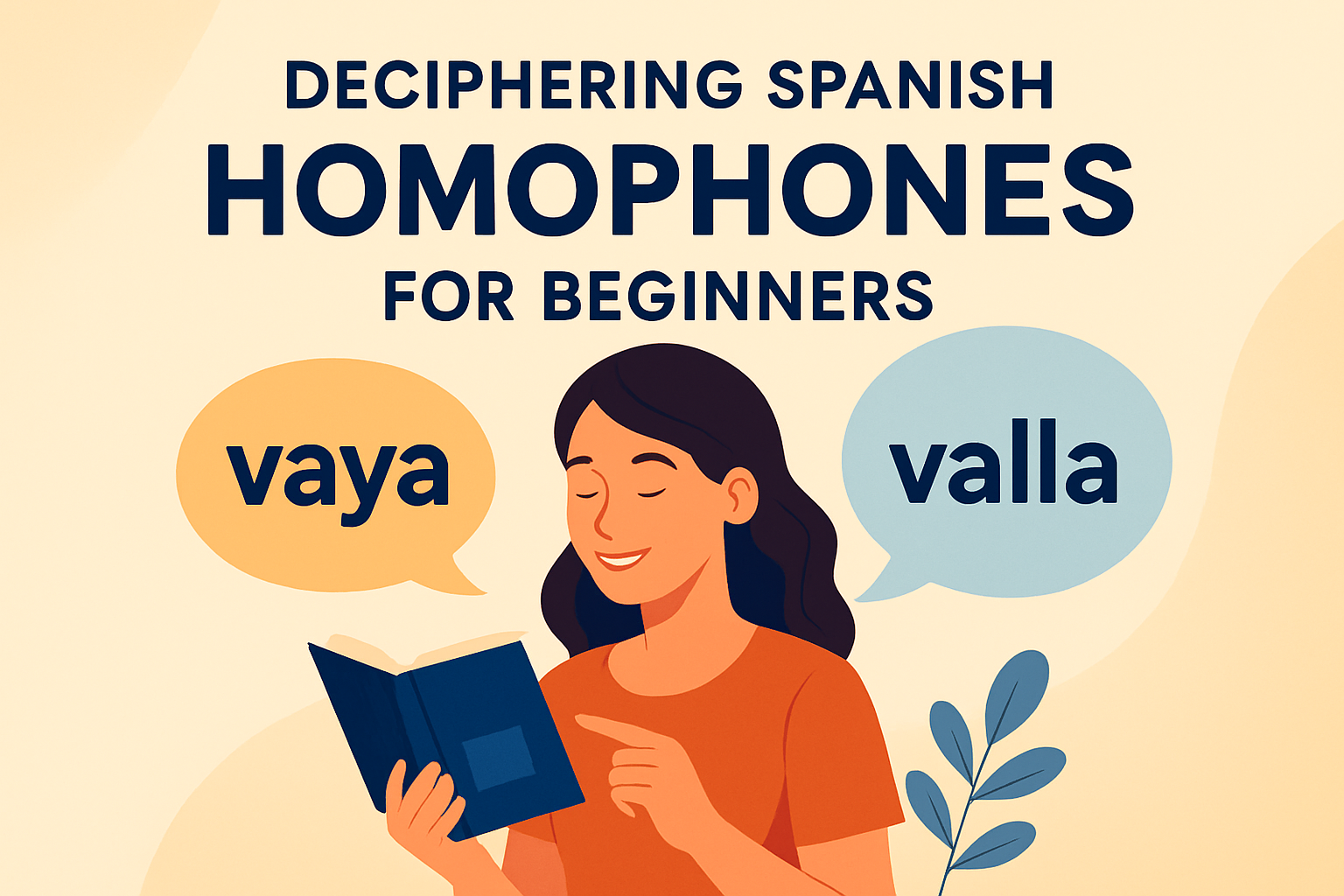
Spanish, a language rich in history and culture, is known for its melodious and rhythmic quality. One of the keys to mastering the Spanish language lies in the proper pronunciation of its consonants. This guide aims to provide learners with clear and concise tips to navigate the nuances of Spanish consonant pronunciation, paving the way for effective communication and deeper understanding of this beautiful language.
Understanding Spanish Consonants
Spanish consonants, though similar to those in the English language, have unique aspects in their articulation. A thorough understanding of these differences is crucial for any learner.
The Basics
The Spanish alphabet consists of 27 letters, with ñ as the additional character unique to the language. The consonants can be broadly categorized based on their phonetic characteristics such as plosives, fricatives, nasals, laterals, rhotics, and affricates.
Plosives: B, D, G, P, T, K
Plosives are produced by obstructing the air flow and then releasing it explosively. Spanish plosives are softer compared to English. For example, ‘b’ and ‘v’ are pronounced almost identically, with lips slightly touching without the strong burst of air as in English.
Fricatives: F, S, X
Fricatives are produced by forcing air through a narrow channel formed by placing two articulators close together. The Spanish ‘s’ is a prime example, sounding more like the English ‘s’ in ‘see’ rather than ‘z’ in ‘rose’.
Nasals: M, N, Ñ
Nasals are produced by allowing air to escape through the nose. The ñ, a unique Spanish sound, is pronounced like ‘ny’ in ‘canyon’.
Laterals: L
The lateral consonant in Spanish is ‘l’. It is similar to the English ‘l’, but with the tongue placed closer to the roof of the mouth.
Rhotics: R
Rhotics in Spanish include the single ‘r’ and the rolled ‘rr’. The single ‘r’ is tapped, similar to the ‘tt’ in American English ‘better’. The ‘rr’ is a trilled sound, requiring practice for most non-native speakers.
Affricates: Ch
The Spanish ‘ch’ is pronounced as in English ‘church’.
Tips for Mastering Spanish Consonants
Listening and Imitation
The foundation of good pronunciation starts with active listening. Engage with native Spanish content like songs, movies, and podcasts. Imitate what you hear, focusing on the rhythm and intonation.
Practice with Tongue Twisters
Spanish tongue twisters (trabalenguas) are an excellent way to practice consonant sounds. They enhance diction, clarity, and fluency. For example, “Tres tristes tigres tragaban trigo en un trigal.”
Record and Compare
Record your speech and compare it with native speakers. This self-assessment can highlight areas needing improvement.
Speak with Native Speakers
Engage in conversation with native speakers. They can provide real-time feedback and corrections.
Focus on Trouble Sounds
Identify which consonant sounds are difficult for you and focus your practice on them. For English speakers, the rolled ‘r’ and the Spanish ‘j’ often require extra attention.
Use Phonetic Exercises
Phonetic exercises can help in mastering specific sounds. For example, to practice the rolled ‘r’, repeat the phrase “perro carro” slowly increasing the speed.
Consonant Combinations
In Spanish, consonants can combine to form new sounds, which can be challenging for learners.
The ‘ll’ and ‘y’
Both ‘ll’ and ‘y’ often sound like the ‘y’ in ‘yes’. However, in some dialects, ‘ll’ can sound like ‘j’ in ‘joy’.
The ‘qu’ and ‘c’
The ‘qu’ is always pronounced like ‘k’. The ‘c’ can sound like ‘k’ or ‘s’ depending on the following vowel.
The ‘g’ Sound
The ‘g’ in Spanish can have a hard sound as in ‘go’ or a soft sound, similar to the ‘h’ in ‘hello’, depending on the following vowel.
Common Mistakes to Avoid
Overemphasizing Sounds
Spanish consonants are generally softer. Avoid overemphasizing sounds, which can make your speech sound unnatural.
Mispronouncing the ‘v’ and ‘b’
Remember, ‘v’ and ‘b’ are pronounced almost identically in Spanish.
Ignoring Regional Variations
Spanish has diverse dialects. Be aware of regional variations in pronunciation.

Advanced Techniques for Pronunciation
After mastering the basic consonant sounds, learners can focus on advanced techniques to further refine their pronunciation.
Stress and Intonation
Understanding the stress patterns and intonation in Spanish is crucial. The stress in a word can alter its meaning. For example, ‘hablo’ (I speak) versus ‘habló’ (he/she spoke). Practicing intonation helps in sounding more natural and fluent.
Linking Sounds
Spanish often links words in a sentence, creating a smooth flow of speech. Practice linking consonants to the following vowel sounds. For instance, ‘es español’ is pronounced more like ‘esespañol’.
The Silent ‘H’
Unlike English, the ‘h’ in Spanish is always silent. Words like ‘hola’ (hello) are pronounced ‘ola’.
The ‘z’ and ‘c’
In Spain, ‘z’ and ‘c’ before ‘e’ or ‘i’ are pronounced like the English ‘th’ in ‘thin’. However, in Latin America, these are pronounced like the ‘s’.
Dialectal Differences
Be aware of dialectal differences in Spanish. For example, the Argentine and Uruguayan ‘ll’ and ‘y’ often sound like ‘sh’ in ‘shoe’.
Practice Strategies
Daily Practice
Consistent daily practice is key to mastering pronunciation. Dedicate time each day to practice speaking and listening.
Use Language Apps
Language learning apps often have pronunciation exercises. These can provide instant feedback and help in fine-tuning your skills.
Join Language Groups
Participating in language exchange groups or Spanish clubs can provide practical speaking opportunities.
Watch Spanish TV Shows and Movies
Listening to native speakers in various contexts helps in understanding the practical application of pronunciation rules.
Read Out Loud
Reading Spanish texts out loud is an effective way to practice pronunciation. It also helps in building vocabulary and understanding sentence structure.
Common Challenges and Solutions
Difficulty with Rolled ‘R’
Many learners struggle with the rolled ‘r’. A tip is to practice the sound in isolation first, then in words, and gradually in sentences.
Mixing up ‘b’ and ‘v’
Since ‘b’ and ‘v’ sound similar in Spanish, it’s common to mix them up. Focus on context and remember that the actual pronunciation difference is minimal.
Hard ‘g’ and Soft ‘g’
Understanding when to use the hard and soft ‘g’ can be challenging. Practice with word pairs like ‘gato’ (cat) and ‘gente’ (people).
The ‘j’ Sound
The Spanish ‘j’ (like the ‘h’ in ‘hat’) can be harsh for English speakers. Practice with words like ‘jugo’ (juice) and ‘reloj’ (watch).
Resources for Learning
Online Pronunciation Guides
There are numerous online resources with audio examples that can help in understanding the correct pronunciation.
Spanish Pronunciation Workshops
Some language schools offer specialized workshops focused on pronunciation.
Tutors and Language Partners
A tutor or a language exchange partner can provide personalized guidance and feedback.
Conclusion
Improving your Spanish consonant pronunciation is a journey that enhances your overall language skills. Embrace the challenges and enjoy the process of learning. Remember, practice makes perfect, and patience is key. With dedication and the right strategies, you can speak Spanish with clarity and confidence.