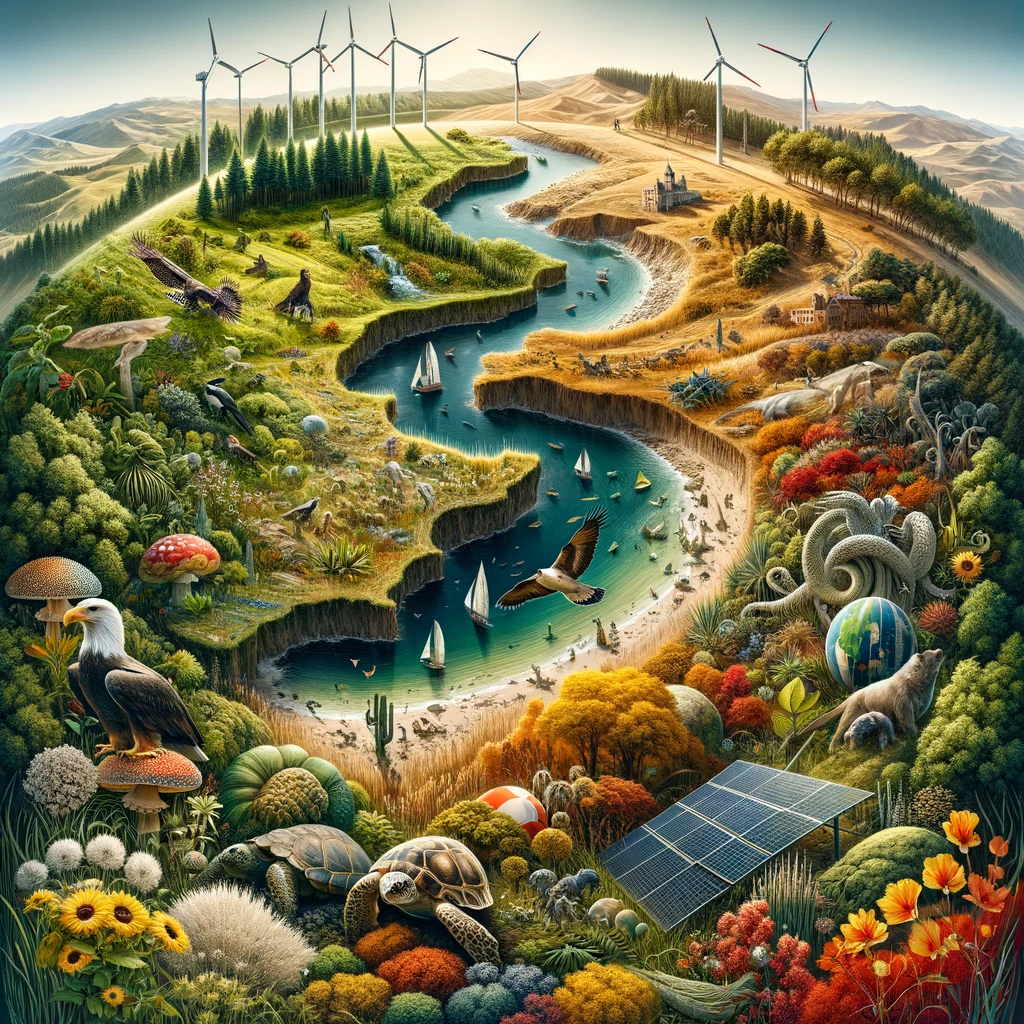
In an era where environmental concerns are increasingly at the forefront of global discourse, the importance of understanding and discussing these issues in multiple languages has never been more critical. For Spanish learners and speakers, expanding vocabulary in this domain not only enhances communication but also deepens understanding of the issues at hand. This article explores advanced Spanish vocabulary pertaining to environmental and ecological concepts, providing a comprehensive resource for students, professionals, and anyone interested in this vital subject.
Key Vocabulary in Environmental Science
Climate Change and Global Warming
- Cambio Climático (Climate Change): Refers to long-term alterations in temperature, precipitation, wind patterns, and other elements of the earth’s climate system.
- Calentamiento Global (Global Warming): The increase in Earth’s average surface temperature due to rising levels of greenhouse gases.
- Efecto Invernadero (Greenhouse Effect): A natural process that warms the Earth’s surface, exacerbated by increased levels of greenhouse gases due to human activity.
- Gases de Efecto Invernadero (Greenhouse Gases): Gases in Earth’s atmosphere that trap heat, including carbon dioxide (CO2), methane (CH4), and nitrous oxide (N2O).
Biodiversity and Ecosystems
- Biodiversidad (Biodiversity): The variety of life in the world or in a particular habitat or ecosystem.
- Ecosistema (Ecosystem): A biological community of interacting organisms and their physical environment.
- Especies Endémicas (Endemic Species): Species that are native to a specific location and are not naturally found elsewhere.
- Deforestación (Deforestation): The removal of a forest or stand of trees from land which is then converted to a non-forest use.
Pollution and Waste Management
- Contaminación (Pollution): The introduction of harmful materials into the environment.
- Residuos (Waste): Materials that are not needed and are discarded.
- Reciclaje (Recycling): The process of converting waste materials into new materials and objects.
- Energías Renovables (Renewable Energy): Energy from a source that is not depleted when used, such as wind or solar power.
Environmental Protection and Sustainability
Conservation and Sustainable Practices
- Conservación (Conservation): The act of preserving, protecting, or restoring the natural environment and its inhabitants.
- Sostenibilidad (Sustainability): Meeting the needs of the present without compromising the ability of future generations to meet their own needs.
- Desarrollo Sostenible (Sustainable Development): Economic development that is conducted without depletion of natural resources.
- Huella de Carbono (Carbon Footprint): The total amount of greenhouse gases produced to directly and indirectly support human activities.
Renewable Energy and Resources
- Energía Solar (Solar Energy): Power obtained by harnessing the energy of the sun’s rays.
- Energía Eólica (Wind Energy): Power obtained from the energy of moving air.
- Biomasa (Biomass): Organic material that comes from plants and animals, and is a renewable source of energy.
- Geotérmica (Geothermal): Heat energy generated and stored in the Earth.
Climate Action and Policy
Environmental Laws and Regulations
- Leyes Ambientales (Environmental Laws): Regulations and standards that govern environmental factors and ecosystem protection.
- Normativas de Emisiones (Emission Standards): Legal requirements governing air pollutants released into the atmosphere.
- Acuerdos Internacionales (International Agreements): Treaties and agreements between countries regarding environmental protection.
- Protocolo de Kioto (Kyoto Protocol): An international treaty that commits state parties to reduce greenhouse gas emissions.
Activism and Social Responsibility
- Activismo Ambiental (Environmental Activism): Actions aimed at protecting the environment and influencing environmental policy.
- Responsabilidad Social (Social Responsibility): Ethical framework which suggests that an entity, be it an organization or individual, has an obligation to act for the benefit of society at large.
- Eco-friendly (Eco-friendly): Products or practices that do not harm the environment.
- Movimiento Verde (Green Movement): A political and social movement that promotes the conservation and improvement of the environment.
Advanced Topics in Environmental Science
Climate and Atmospheric Studies
- Meteorología (Meteorology): The science dealing with the atmosphere and weather.
- Ciclo del Carbono (Carbon Cycle): The process by which carbon is exchanged among the biosphere, pedosphere, geosphere, hydrosphere, and atmosphere of the Earth.
- Aerosoles Atmosféricos (Atmospheric Aerosols): Tiny particles suspended in the atmosphere which have a significant effect on climate.
- Albedo (Albedo): The proportion of the incident light or radiation that is reflected by a surface, typically that of a planet or moon.
Oceanography and Water Resources
- Oceanografía (Oceanography): The branch of science that deals with the physical and biological properties and phenomena of the sea.
- Acidificación del Océano (Ocean Acidification): A reduction in the pH of the ocean over an extended period, primarily due to uptake of carbon dioxide from the atmosphere.
- Recursos Hídricos (Water Resources): The sources of water that are useful or potentially useful to humans.
- Gestión del Agua (Water Management): The activity of planning, developing, distributing and managing the optimum use of water resources.

Marine Biology and Oceanography
- Biología Marina (Marine Biology): The study of marine organisms, their behaviors, and interactions with the environment.
- Oceanografía (Oceanography): The exploration and study of the ocean, including marine organisms, ecosystem dynamics, ocean currents, and more.
- Acidificación del Océano (Ocean Acidification): A decrease in the pH of the Earth’s oceans, caused by the uptake of carbon dioxide (CO2) from the atmosphere.
- Elevación del Nivel del Mar (Sea Level Rise): An increase in the level of the world’s oceans due to the effects of global warming.
Agricultural and Land Management
- Agricultura Sostenible (Sustainable Agriculture): Farming in sustainable ways meeting society’s present food and textile needs, without compromising the ability of future generations.
- Manejo de Tierras (Land Management): The process of managing the use and development of land resources in both urban and rural settings.
- Rotación de Cultivos (Crop Rotation): The practice of growing a series of dissimilar types of crops in the same area in sequential seasons to improve soil health and reduce pests.
- Desertificación (Desertification): The process by which fertile land becomes desert, typically as a result of drought, deforestation, or inappropriate agriculture.
The Role of Technology in Environmentalism
Environmental Monitoring and Data Analysis
- Monitoreo Ambiental (Environmental Monitoring): The systematic sampling of air, water, soil, and biota to observe and study the environment.
- Análisis de Datos Ambientales (Environmental Data Analysis): The process of analyzing data gathered from the environment to understand patterns and impacts.
- Tecnologías Limpias (Clean Technologies): Environmental technology used to create products and services that are less harmful to the environment.
- Modelos Climáticos (Climate Models): Mathematical models that simulate the Earth’s climate system to forecast climate changes.
Green Technology and Innovation
- Tecnología Verde (Green Technology): Technology that is considered environmentally friendly based on its production process or supply chain.
- Innovación Sostenible (Sustainable Innovation): Innovations that improve sustainability performance, like reducing carbon emissions or water use.
- Vehículos Eléctricos (Electric Vehicles): Cars that are powered by electric motors, using energy stored in rechargeable batteries, which are more environmentally friendly.
- Edificios Verdes (Green Buildings): Structures that are environmentally responsible and resource-efficient throughout their life-cycle.
Conclusion
As our understanding of environmental and ecological issues deepens, so too does the vocabulary we use to discuss and address these challenges. The advanced Spanish terms covered in this article provide a comprehensive overview of key concepts in environmental science, conservation, climate action, and technology. Mastery of this vocabulary is not just an academic exercise but a crucial tool for effective communication, advocacy, and action in the face of global environmental challenges. By expanding our linguistic repertoire, we empower ourselves to engage more meaningfully in the discourse surrounding our planet’s health and future.