Understanding family terms in Spanish is crucial for anyone learning the language, as family plays a central role in Hispanic cultures. This comprehensive guide will walk you through the basic vocabulary for family members, extended relatives, and colloquial terms, enriching your Spanish linguistic skills.
Introduction
In Spanish, as in many languages, family terms extend beyond the nuclear family, reflecting the importance of extended kin in society. Knowing these terms not only enhances communication but also provides insight into the culture and social norms of Spanish-speaking communities.
Core Family Terms
Immediate Family Members
- Padre (Father) – The term ‘padre’ is used universally across Spanish-speaking countries to refer to a father.
- Madre (Mother) – Similarly, ‘madre’ refers to a mother.
- Hijo (Son) / Hija (Daughter) – These terms are used for children, with ‘hijo’ being masculine and ‘hija’ feminine.
- Hermano (Brother) / Hermana (Sister) – Siblings are referred to as ‘hermano’ for a brother and ‘hermana’ for a sister.
Spouses and Partners
- Esposo (Husband) / Esposa (Wife) – These are the formal terms for husband and wife.
- Marido (Husband) – An alternate, slightly less formal word for husband.
- Pareja (Partner) – This gender-neutral term is used for a partner in a non-marital relationship.
- Novio (Boyfriend) / Novia (Girlfriend) – Used for a romantic partner.
Children and Their Spouses
- Yerno (Son-in-law) / Nuera (Daughter-in-law) – These terms refer to the spouses of one’s children.
- Suegro (Father-in-law) / Suegra (Mother-in-law) – The parents of one’s spouse.
Extended Family Terms
Grandparents
- Abuelo (Grandfather) / Abuela (Grandmother) – These terms are affectionately shortened to ‘abuelito’ or ‘abuelita’ to convey endearment.
Aunts, Uncles, and Cousins
- Tío (Uncle) / Tía (Aunt) – Referring to the siblings of one’s parents.
- Primo (Cousin – male) / Prima (Cousin – female) – Cousins are an important part of the extended family in Hispanic culture.
Nieces and Nephews
- Sobrino (Nephew) / Sobrina (Niece) – These terms are used for the children of one’s siblings.
Additional Family-Related Terms
Stepfamily and In-Laws
- Padrastro (Stepfather) / Madrastra (Stepmother) – These terms refer to a step-parent.
- Hijastro (Stepson) / Hijatra (Stepdaughter) – Used for stepchildren.
- Cuñado (Brother-in-law) / Cuñada (Sister-in-law) – The siblings of one’s spouse, or the spouse of one’s siblings.
Godparents
- Padrino (Godfather) / Madrina (Godmother) – A vital role in many Hispanic cultures, especially during baptisms and other religious ceremonies.
Colloquial and Affectionate Terms
In Spanish-speaking countries, family members often use affectionate or colloquial terms that might not have a direct translation but are important for understanding family dynamics.
- Abue – A shortened, affectionate term for grandparents.
- Nene/Nena – Often used to refer to young children, akin to ‘kid’ or ‘little one’.
- Mijo/Mija – A contraction of ‘mi hijo/hija’ (my son/daughter), used widely as a term of endearment.
Cultural Insights
Family in Hispanic cultures often extends beyond the biological ties. Friends and close acquaintances can be considered part of the ‘extended family’ and might be referred to using familial terms as a sign of closeness and affection.
Familial Respect and Formality
In many Spanish-speaking cultures, there is a strong emphasis on respect, especially towards elders. It’s common to address older relatives using formal terms or titles, even within the family.
The Role of the Family
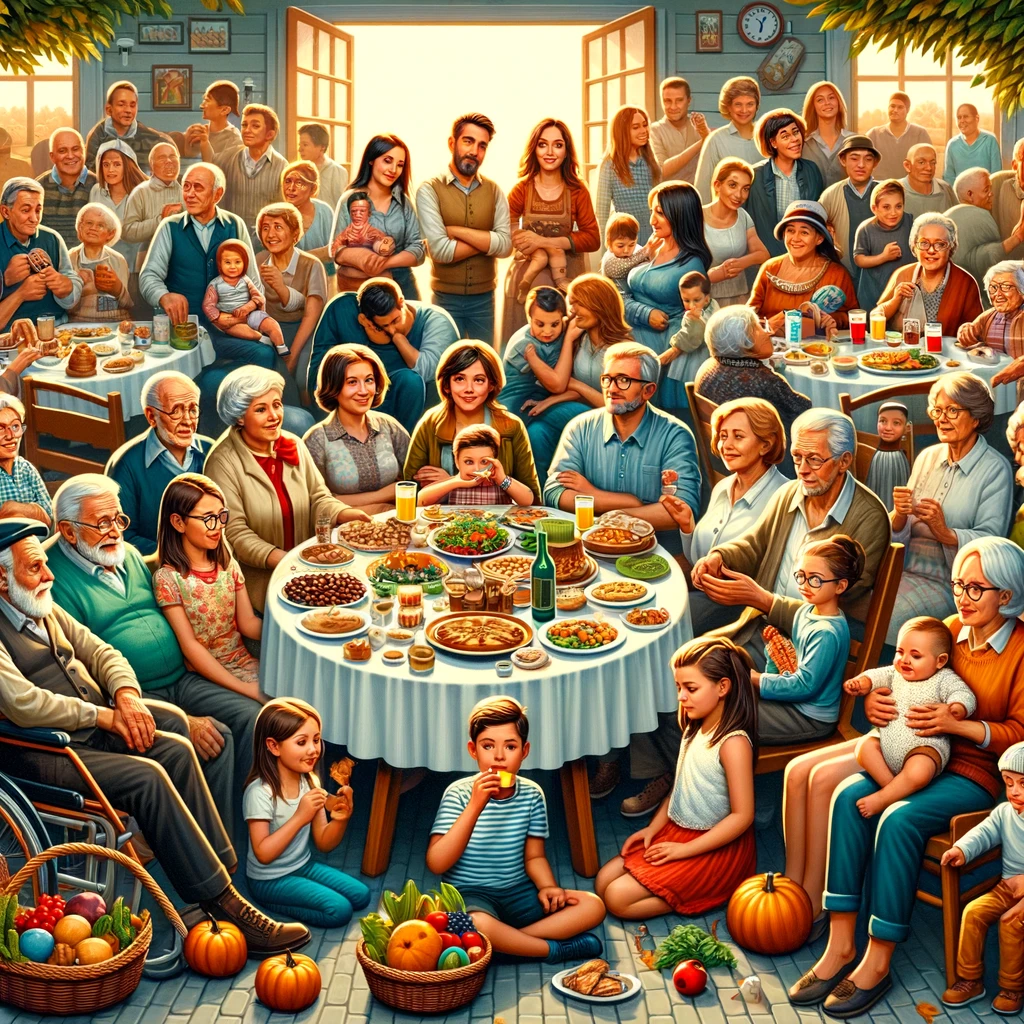
The family unit in Hispanic cultures is not just a social structure but a fundamental part of individual identity. Family gatherings, celebrations, and rituals are integral to these cultures, emphasizing the importance of familial bonds.
The Significance of Nicknames and Titles
In Spanish-speaking cultures, nicknames and titles play a significant role in family dynamics. These affectionate terms, often based on personal traits or shortened versions of names, add a layer of intimacy and warmth to familial relationships.
Nicknames
- Chico/Chica – Literally meaning ‘boy/girl’, these are commonly used for younger family members.
- Gordo/Gorda – Despite meaning ‘fat’, these terms are often used endearingly without negative connotations.
- Peque/Pequi – Short for ‘pequeño/pequeña’ (small), used for younger children.
Titles
- Don/Doña – Used as a sign of respect, often preceding the first name of an elder family member.
- Señor/Señora – Similar to ‘Mr.’ or ‘Mrs.’, these are formal titles used in more respectful contexts.
Family Gatherings and Celebrations
Family gatherings are central to Hispanic cultures, often involving large, extended families. These events are filled with traditional food, music, and storytelling, reinforcing family bonds.
Common Celebrations
- Cumpleaños (Birthdays) – Celebrated with great enthusiasm, often involving the entire extended family.
- Bodas (Weddings) – Not just a union of two individuals but a celebration of extended families coming together.
- Quinceañeras – A significant birthday celebration for 15-year-old girls, marking their transition into womanhood.
Food and Festivity
During these gatherings, traditional dishes are prepared, each region having its own specialties. Music and dancing are also integral, with styles like salsa, mariachi, and flamenco often setting the tone.
The Concept of ‘Familismo’
‘Familismo’ is a key concept in Hispanic cultures, emphasizing the importance of family connections and loyalty. This cultural value influences many aspects of life, from daily decisions to long-term plans.
Characteristics of Familismo
- Collectivism Over Individualism – The needs and well-being of the family often take precedence over individual desires.
- Support and Solidarity – Family members are expected to provide emotional, financial, and practical support to each other.
- Respect for Elders – Elderly family members are revered and cared for within the family structure.
Gender Roles in the Family
Traditional gender roles have historically been prominent in Hispanic families, though these are evolving with modern influences.
Traditional Roles
- El Padre – Often seen as the breadwinner and decision-maker.
- La Madre – Typically the caregiver and emotional pillar of the family.
Modern Shifts
Increasingly, these roles are becoming more fluid, with shared responsibilities and a focus on egalitarian relationships.
Regional Variations
Spanish-speaking countries each have unique nuances in how they use family terms, influenced by regional dialects and cultural practices.
Examples of Regional Variations
- Mexico – Known for its particularly affectionate and informal use of family terms.
- Spain – Tends to be more formal in its use of family language, reflecting its European influence.
- Argentina – Features a unique blend of Spanish and Italian influences in its familial language.
Learning Family Terms: Tips for Spanish Learners
For those learning Spanish, understanding family terms is essential. Here are some tips to help:
- Practice with Native Speakers – Engage in conversations with native Spanish speakers to understand the context and usage.
- Watch Spanish-Language Media – Movies, TV shows, and music provide real-life examples of how these terms are used.
- Use Language Apps and Resources – Many online resources offer specialized lessons on family vocabulary.
Conclusion
In summary, the realm of family terms in Spanish is not just about vocabulary; it’s a tapestry of cultural values, social norms, and intimate relationships. Whether you are a student of the language, a traveler, or someone embracing a Spanish-speaking family, understanding these terms is pivotal in navigating and appreciating the rich familial landscapes of Hispanic cultures. As you continue your journey in Spanish, let these words be more than just translations; let them be a gateway to deeper connections and cultural understanding.