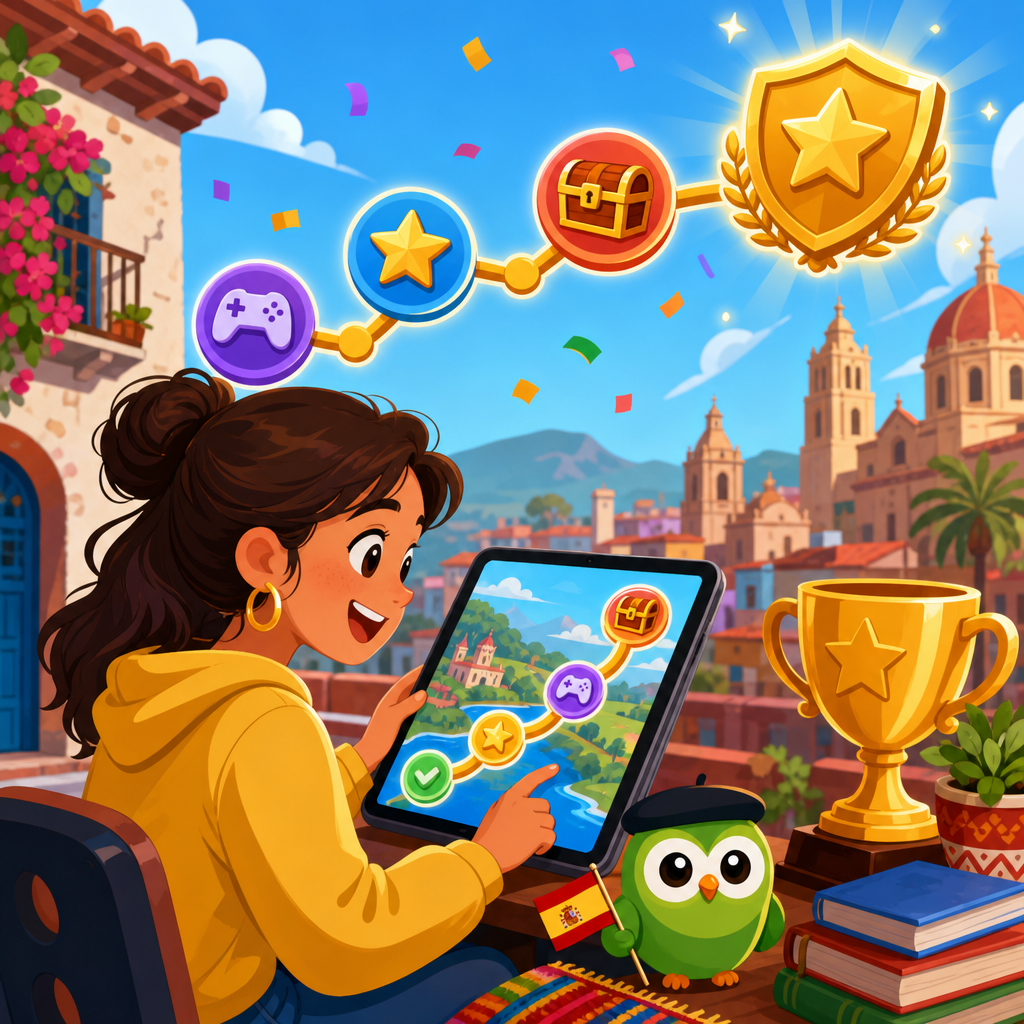
Gamification in Spanish learning turns practice into a system of goals, feedback, and rewards that keeps learners engaged long enough to build real communication skills. In language education, gamification means applying game mechanics such as points, streaks, levels, badges, quests, timed challenges, leaderboards, and progress tracking to non-game tasks like vocabulary review, speaking drills, grammar practice, and community participation. It matters because Spanish learners often struggle less with access than with consistency. There are excellent apps, podcasts, tutors, exchange communities, and textbooks available, yet many learners quit after the novelty fades. I have seen this pattern repeatedly when designing study plans for adults: motivation rises fast in the first two weeks, then drops when learners hit verb conjugations, listening fatigue, or embarrassment about speaking. Game-based structures help bridge that gap by making repetition visible, rewarding, and easier to sustain.
Spanish is especially well suited to gamified learning because it offers clear incremental wins. Learners can track cognate recognition, frequency vocabulary, verb tense mastery, pronunciation improvements, and conversation streaks. Unlike subjects where progress is abstract, language growth can be measured through comprehensible input, recall speed, accuracy, and interaction confidence. Gamification does not replace sound teaching. It works best when paired with proven methods such as spaced repetition, retrieval practice, comprehensible input, deliberate speaking practice, and corrective feedback. Used well, it can transform “I should study Spanish” into a repeatable habit. Used poorly, it can create shallow point-chasing with weak retention. This hub explains what gamification in Spanish learning includes, which tactics work, where the limits are, and how learners and educators can use these tools to build a more social, motivating, and effective Spanish learning experience.
What Gamification Means in Spanish Learning
At its core, gamification in Spanish learning is the structured use of motivational design. The most effective systems combine a clear goal, small achievable tasks, immediate feedback, and visible progress. In practice, that might look like earning a streak for daily listening, unlocking a new conversation prompt after mastering restaurant phrases, or receiving points for correctly producing the preterite instead of merely recognizing it. The distinction between recognition and production is important. Many beginners feel successful because they can tap the right answer in an app, but real progress comes when they can retrieve language without prompts. Good gamification pushes learners from passive familiarity toward active use.
Several game mechanics are especially valuable for Spanish. Points work when tied to meaningful actions, such as completing ten minutes of shadowing or writing five original sentences using ser and estar correctly. Levels help organize progression from novice basics to intermediate conversational topics. Badges can mark milestones like “1000 words reviewed” or “first five-minute conversation.” Quests are useful for theme-based learning: plan a trip in Spanish, order food, describe your family, debate a current event. Leaderboards can motivate some learners, but they should be used carefully because social comparison helps competitive students and discourages others. In my experience, personal bests and team challenges often outperform public rankings for adult learners who want encouragement without pressure.
The best known examples are apps such as Duolingo, Memrise, Quizlet, and LingQ, each using game elements differently. Duolingo emphasizes streaks, leagues, gems, and bite-sized exercises. Memrise leans on recall practice and short-form review loops. Quizlet supports timed study modes and flashcard competition. LingQ uses reading and listening progress to create a sense of accumulation. These platforms can be useful, but the underlying principle matters more than the app itself. A notebook, calendar, speaking log, and monthly challenge can also form a powerful gamified system if they make progress measurable and practice frequent.
Why Gamification Works for Motivation and Retention
Gamification works because it supports behaviors that language learning requires but human motivation often resists. Spanish acquisition depends on repeated exposure, retrieval, error correction, and gradual tolerance for ambiguity. Those are cognitively demanding tasks. Reward signals make them easier to repeat. A streak reduces the chance of skipping a day. A progress bar turns a vague goal into a visible target. Immediate feedback after a pronunciation attempt or grammar response prevents learners from rehearsing mistakes for too long. These mechanisms align with behavioral science. Frequent small rewards help maintain effort, while variable challenge keeps tasks from becoming monotonous.
Retention improves when gamification reinforces evidence-based learning methods instead of distracting from them. Spaced repetition is a prime example. Vocabulary review works better when words reappear at increasing intervals based on recall strength. A game layer can make that process feel lighter without changing the science behind it. Retrieval practice benefits too. Asking learners to produce cómo estuvo tu día rather than simply recognizing it strengthens memory more effectively. Timed challenges can improve processing speed, but only if accuracy remains high. For speaking, quests and role-play missions encourage output, which is essential for developing fluency and noticing gaps in knowledge.
There is also a social dimension. Spanish is often learned for travel, work, family connection, or participation in bilingual communities. Community challenges, conversation clubs, and accountability groups can be gamified through shared goals and milestones. For example, a group might complete a thirty-day “only Spanish greetings” challenge, a weekend audio diary challenge, or a collaborative reading sprint around a short story by Isabel Allende or Gabriel García Márquez. These formats turn learning into participation. That is one reason gamification fits naturally within a broader Spanish community and interaction strategy: it gives learners reasons to show up, contribute, and keep speaking.
Core Gamification Elements and How to Use Them Well
Not every game element helps every learner. The key is matching the mechanic to the skill. Streaks are excellent for consistency but weak for depth if learners rush through easy tasks. Points are effective when they reward outputs that matter, such as minutes of conversation, number of sentences written from memory, or successful comprehension of a podcast segment. Levels work best when each level corresponds to a practical skill set. For Spanish, that could mean introducing yourself, handling common travel interactions, narrating past events, expressing opinions, and managing work-related conversations. Badges should signal meaningful mastery, not just app usage.
Challenges and quests are often the most versatile tools because they connect language to real situations. A beginner quest might require labeling ten household items in Spanish, recording three self-introductions, and ordering a coffee in a role-play. An intermediate quest might involve summarizing a news clip from BBC Mundo, discussing it with a partner, and writing a short opinion paragraph. Advanced learners can complete debate challenges, transcription tasks, or regional vocabulary comparisons across Spain, Mexico, Argentina, and Colombia. The quest format creates narrative and purpose, which are stronger motivators than isolated drills.
Feedback loops must be fast and specific. “Correct” is less useful than “correct meaning, but article agreement is off” or “good pronunciation of rr, but stress placement changed the word.” Tools like speech recognition can help, though they are imperfect with accent variation. I generally recommend combining automated feedback with human review when possible. Language exchange partners, tutors on platforms like italki or Preply, and community moderators can validate whether gamified progress reflects actual communicative ability. The strongest systems reward behaviors that predict fluency rather than only in-app activity.
| Game Element | Best Use in Spanish Learning | Main Benefit | Common Risk |
|---|---|---|---|
| Streaks | Daily listening, flashcards, short writing | Builds consistency | Encourages minimum-effort sessions |
| Points | Rewarding speaking minutes or recall tasks | Makes effort visible | Can prioritize volume over quality |
| Levels | Sequencing practical communication skills | Clarifies progression | May oversimplify uneven skill growth |
| Badges | Celebrating milestones like first conversation | Marks achievement | Can feel trivial if overused |
| Quests | Real-world scenarios and themed projects | Adds purpose and context | Needs careful design to stay achievable |
| Leaderboards | Group classes and team challenges | Adds social energy | Discourages less competitive learners |
Best Gamified Tools, Communities, and Offline Methods
Digital tools dominate the conversation, but the strongest Spanish learning ecosystems combine apps, people, and offline routines. Apps provide convenience and feedback. Communities provide accountability and authentic language use. Offline systems reduce screen fatigue and often improve reflection. A practical stack might include Anki for spaced repetition, a podcast such as Notes in Spanish or Coffee Break Spanish for listening, a tutor for weekly speaking, and a handwritten progress tracker with monthly goals. Anki is not flashy, but it is one of the most effective tools for gamified vocabulary if the cards are designed well. You can set review targets, track retention, and create decks around frequency lists, irregular verbs, or thematic vocabulary.
For community-based gamification, Discord servers, Meetup groups, local conversation circles, Reddit communities, and classroom cohorts can all host challenges. I have seen simple formats work extremely well: five-day voice note chains, partner point systems for correcting each other, and bingo cards built around real interaction tasks such as asking for directions, leaving a voicemail, or describing a childhood memory. In classrooms, teachers can use mission boards, escape-room activities, and team competitions based on communicative tasks rather than isolated grammar speed tests. In family settings, parents raising bilingual children often gamify routines by awarding story points for Spanish-only dinner talk or weekend scavenger hunts using household vocabulary.
Offline methods remain underrated. A wall chart tracking consecutive days of Spanish journaling can be more motivating than an app notification. Conversation dice, printed scenario cards, and board games like Taboo or charades adapted into Spanish create low-pressure output. Even television can be gamified: earn a point for each phrase understood without subtitles, pause to predict dialogue, or summarize a scene in Spanish afterward. These methods work because they embed language in lived experience. That matters in a hub focused on miscellaneous community and interaction topics, since Spanish learning becomes stickier when it is social, visible, and woven into daily life rather than confined to an app icon.
Common Mistakes, Limitations, and How to Build a Better System
The biggest mistake in gamification is rewarding the wrong behavior. If learners earn status for tapping through easy exercises, they may feel productive while avoiding speaking, writing, and listening at natural speed. Another common problem is mistaking frequency for progress. A one-hundred-day streak sounds impressive, but if sessions are shallow, the learner may still freeze during a basic conversation. Good systems include performance checks. Every few weeks, learners should test themselves on practical tasks: introduce yourself without notes, understand a short native clip, describe yesterday, ask follow-up questions, and maintain a three-minute exchange. These checkpoints reveal whether the game is serving the language or replacing it.
There are also equity and design issues. Leaderboards can frustrate learners with less time. Time pressure can penalize thoughtful students or those with processing differences. Speech recognition may misread accents, microphones, or background noise. Cultural nuance is another limitation. Spanish varies across regions in pronunciation, vocabulary, and formality. A gamified system that marks vos, vosotros, or local phrasing as incorrect can mislead learners. Content designers should specify the target variety when needed and acknowledge alternatives. Standards such as the Common European Framework of Reference can help structure levels, but real communication should remain the benchmark.
To build a better system, start with outcomes, not features. Decide what success means in the next thirty days. It might be holding a five-minute conversation, understanding restaurant interactions, or mastering the most frequent five hundred words. Then assign points only to behaviors directly linked to that goal. Use short cycles, clear rules, and honest reviews. Keep one core metric for consistency and one for competence. For example, track daily study minutes and weekly speaking performance. If motivation drops, adjust challenge level before adding more rewards. The most durable gamification in Spanish learning feels purposeful, social, and slightly demanding. If you want stronger progress, build your system around real communication, invite other people into it, and make every point earned move you closer to using Spanish confidently in everyday life.
Frequently Asked Questions
What is gamification in Spanish learning, and how does it actually help people learn?
Gamification in Spanish learning is the use of game-like elements to make language practice more motivating, structured, and consistent. Instead of treating study as a loose set of tasks, gamification turns it into a system with goals, feedback, rewards, and visible progress. Common mechanics include points, levels, streaks, badges, quests, timed challenges, leaderboards, and completion trackers. These tools are applied to real learning activities such as vocabulary review, grammar exercises, pronunciation drills, listening practice, speaking prompts, and classroom or community participation.
The reason gamification helps is not because it makes learning effortless, but because it encourages learners to stay engaged long enough to build actual skill. Spanish learners often do not fail because they are incapable; they lose momentum when progress feels slow, repetitive, or hard to measure. Gamified systems solve that problem by creating short-term wins inside a long-term learning journey. Earning a badge for completing verb practice, maintaining a seven-day streak, or unlocking a new level after finishing listening exercises gives learners immediate feedback that their effort matters.
From a learning perspective, gamification supports consistency, repetition, and active recall, which are all essential for language acquisition. A learner who returns daily to review vocabulary, answer quick comprehension questions, and complete speaking tasks is much more likely to retain Spanish over time. Well-designed gamification also reduces the emotional weight of mistakes. Errors become part of the challenge rather than proof of failure, which can increase confidence and willingness to keep practicing. In that sense, gamification is most effective when it supports real communication goals, not when it distracts from them.
Which game mechanics work best for learning Spanish vocabulary, grammar, and speaking skills?
The most effective game mechanics are the ones that match the skill being practiced. For vocabulary, points, streaks, spaced-review challenges, and timed recall rounds tend to work very well because vocabulary growth depends heavily on repetition and retrieval. Learners benefit from quick cycles of seeing, recalling, and using new Spanish words in context. Progress bars and review goals can make this process more satisfying, especially when learners can clearly see how many words they have mastered and which words still need attention.
For grammar, levels, quests, and mastery checkpoints are especially useful. Grammar often feels abstract when it is taught as isolated rules, but gamified structures can turn it into a sequence of practical achievements. For example, learners might complete beginner quests on present tense verb endings, move up to adjective agreement challenges, and then unlock intermediate tasks involving past tenses or pronouns. This staged progression helps learners avoid overload while giving them a strong sense of advancement. Immediate corrective feedback is also important here, because grammar improves fastest when learners can see what went wrong and try again right away.
For speaking, the best mechanics are usually challenge-based rather than score-based. Timed speaking prompts, conversation missions, role-play scenarios, pronunciation goals, and community participation rewards can all encourage learners to speak more often. Speaking is a performance skill, so learners need tasks that push them to produce real Spanish, not just recognize it. A daily challenge such as describing a picture in Spanish, answering a question out loud, or recording a 30-second response can be far more effective than passive drills alone. Badges and streaks can still help, but the key is making sure the reward system supports meaningful output and confidence-building practice.
Can gamification improve motivation without making Spanish learning feel shallow or overly competitive?
Yes, when it is designed thoughtfully, gamification can increase motivation without reducing learning to empty rewards. The concern is understandable because some systems focus too heavily on points, rankings, or superficial completion. If learners chase badges without actually understanding or using the language, the system becomes entertainment rather than education. However, good gamification does the opposite: it gives structure to serious learning and makes sustained effort more rewarding.
The best approach is to tie rewards to behaviors that lead to real progress. Instead of rewarding speed alone, a strong system rewards consistency, review, participation, speaking attempts, listening comprehension, and successful use of Spanish in context. For example, learners might earn progress for completing a conversation task, revising weak vocabulary, or correcting previous mistakes. That keeps the game layer aligned with actual skill development. In other words, the reward should reflect learning behaviors, not distract from them.
Competition should also be used carefully. Leaderboards can energize some learners, but they can discourage others, especially beginners who feel behind. A more balanced model includes personal bests, team-based goals, cooperative quests, and self-paced milestones. These options preserve motivation without creating unnecessary pressure. In Spanish learning, long-term engagement matters more than short bursts of intensity, so the most effective gamification systems are the ones that help learners feel challenged, supported, and capable. When that balance is right, motivation becomes more durable and less dependent on willpower alone.
How can teachers, tutors, or language platforms use gamification effectively in Spanish instruction?
Teachers, tutors, and language platforms can use gamification effectively by starting with clear learning outcomes and then choosing mechanics that reinforce those outcomes. The mistake many programs make is adding points or badges after the fact without changing the learning experience itself. Effective gamification begins with questions like: What do learners need to practice more often? Where do they lose motivation? Which habits lead to stronger communication skills? Once those answers are clear, game elements can be used strategically to increase participation, repetition, and confidence.
In a classroom or tutoring setting, this might look like vocabulary quests, speaking missions, grammar unlock levels, team challenges, or weekly participation rewards. A teacher could create a system where students earn progress for using Spanish in class, completing listening tasks, helping peers, or revising errors. Platforms can do something similar on a larger scale by offering streak tracking, progress dashboards, adaptive review systems, and achievement paths tied to reading, writing, listening, and speaking. The most effective systems provide immediate feedback so learners know what they did well, what needs work, and what to do next.
It is also important to keep gamification flexible and inclusive. Not every learner responds to the same incentives, so a good system allows different ways to succeed. Some students are motivated by competition, while others prefer collaboration or private progress tracking. Accessibility matters too: the tasks should be achievable, the rewards meaningful, and the challenge level appropriate. Most of all, the game structure should support communication in Spanish, not replace it. If learners are completing quests, earning points, and leveling up while also listening better, speaking more confidently, and understanding grammar in context, then gamification is doing its job well.
What are the biggest mistakes to avoid when using gamification to learn Spanish?
One of the biggest mistakes is focusing on rewards instead of learning quality. If a learner is only trying to maintain a streak or collect points, they may rush through activities without paying attention to accuracy, retention, or real-world use. This creates the illusion of progress without building strong communication skills. In Spanish learning, repetition matters, but meaningful repetition matters more. A gamified system should encourage learners to slow down when needed, review weak areas, and apply what they know in realistic contexts.
Another common mistake is overusing competition. While leaderboards and rankings can boost energy, they can also create stress or discourage learners who are progressing at a different pace. Language acquisition is not always linear, and comparing learners too aggressively can undermine confidence. It is usually better to balance competition with personal milestones, cooperative goals, and self-improvement metrics. That way, learners stay motivated without feeling punished for being beginners or for learning more gradually.
A third mistake is rewarding the wrong behaviors. For example, a system that gives high value to speed but little value to speaking practice, error correction, or comprehension may push learners toward shallow engagement. Similarly, if grammar drills are disconnected from communication, learners may perform well in the game while struggling in actual conversation. The best way to avoid this is to make sure every mechanic supports a useful habit: daily exposure, active recall, listening comprehension, speaking attempts, contextual vocabulary use, and reflection on mistakes. When gamification is aligned with those habits, it becomes a powerful support system. When it is not, it becomes a distraction. The goal is not to make Spanish learning feel like a game at all times, but to use game design principles to make serious learning more engaging, consistent, and effective.