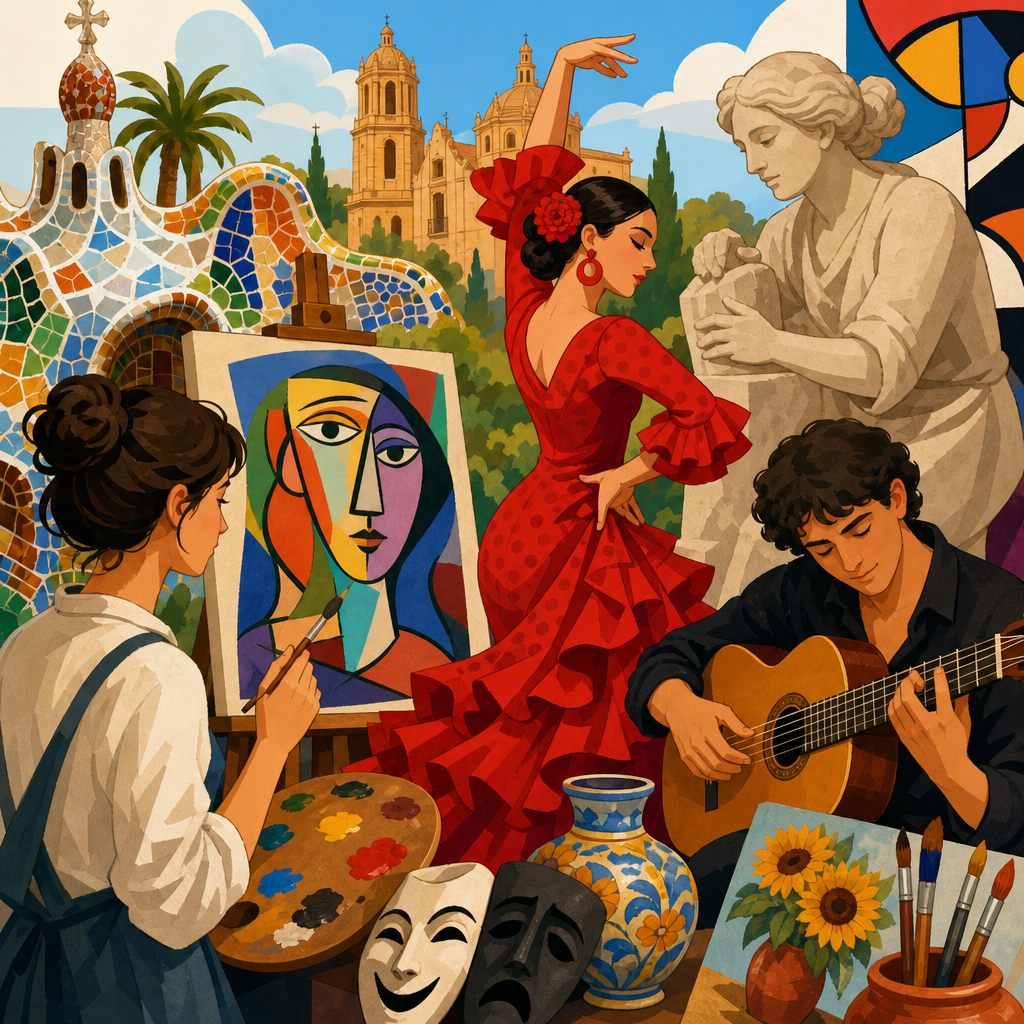
Spanish in the arts gives learners a practical way to connect language with creativity, community, and culture. In this context, arts vocabulary includes the words and phrases used to discuss painting, music, dance, theater, film, literature, photography, and public performance in Spanish. A hub article on this topic matters because arts settings are where people naturally interact: they ask for tickets, describe a performance, discuss style, praise technique, and share opinions. I have taught and used Spanish in museums, rehearsal rooms, community festivals, and classrooms, and the same pattern appears every time: students remember language better when it is tied to images, movement, sound, and emotion. Learning Spanish for the arts is not only about memorizing nouns. It means understanding how to talk about creative work, ask informed questions, participate politely, and interpret cultural references. That makes this topic central to Spanish community and interaction, especially for learners who want useful, real-world language.
At a basic level, learners need to distinguish between broad categories. El arte means art in general, while las artes can refer to the arts collectively. An artista is an artist or performer, but artesano points more toward craftsperson. Una obra can mean a work of art, a play, or a piece of work depending on context. A exposición is an exhibition, a concierto is a concert, and una función is a show or performance, especially in theater or cinema. These distinctions matter because arts conversations move quickly between forms. Someone may invite you to una muestra de fotografía, recommend una novela gráfica, or ask whether you prefer arte contemporáneo or arte clásico. If you know the key terms and the social phrases around them, you can respond naturally instead of translating word by word.
Core vocabulary for visual arts and museums
Visual arts are often the easiest entry point because the language is concrete and highly descriptive. Essential nouns include la pintura, el dibujo, la escultura, el mural, el retrato, el paisaje, la galería, el museo, el lienzo, el pincel, and la acuarela. In museums, learners also hear curador or comisario for curator, colección for collection, and sala for gallery room. To ask useful questions, start with phrases like ¿Quién es el artista?, ¿De qué época es esta obra?, ¿Qué técnica usó?, and ¿Cuál es el tema principal? When discussing style, terms such as abstracto, realista, minimalista, impresionista, surrealista, and contemporáneo appear often. In Spanish-speaking cities, public art is a major part of community life, so words like el grafiti, el arte urbano, and el espacio público are especially valuable.
The most useful descriptions are simple and repeatable. You can say Los colores son intensos, La composición está muy equilibrada, or La obra transmite calma. For figurative work, use Se ve una figura humana, Parece una escena cotidiana, or El fondo es oscuro. For abstract work, say No representa un objeto concreto, but it still evokes emotion through shape and color. In guided visits, I often encourage learners to combine one noun, one adjective, and one reaction: Es un mural vibrante que me recuerda al barrio. That structure is easy to retain and helps learners move from isolated words to real interaction. If you later visit related articles under this miscellaneous hub, these museum phrases link naturally to topics on festivals, local events, and neighborhood cultural spaces.
Music, dance, and performance language for real conversations
Spanish for music and dance is highly social because people use it before, during, and after performances. Core terms include la canción, la letra, el ritmo, la melodía, el coro, la banda, la orquesta, el ensayo, el escenario, and el público. In classical settings, you may hear director de orquesta, solista, and partitura. In popular music, words like gira, lanzamiento, and sonido en vivo are common. For dance, learn el baile, la coreografía, el movimiento, el vestuario, and the names of styles such as salsa, flamenco, tango, bachata, and danza contemporánea. If you attend community events, useful questions include ¿A qué hora empieza el concierto?, ¿Quedan entradas?, and ¿Dónde está la taquilla? These are not classroom phrases; they are exactly what people need at festivals, school performances, and local cultural centers.
To discuss quality without sounding vague, rely on specific reactions. Say La voz del cantante tiene mucha fuerza, La banda estuvo muy coordinada, or La coreografía fue precisa y expresiva. If the performance was moving, Me puso la piel de gallina is a natural phrase meaning it gave me goosebumps. If the audience was engaged, El público estaba entregado works well. I have found that learners gain confidence quickly when they pair technical observations with personal response: El ritmo fue constante y por eso la canción resultó pegadiza. In flamenco contexts, terms such as compás, cante, toque, and duende carry cultural weight, so it is worth learning them accurately. They do not translate perfectly, and using them correctly shows respect for the art form and the community around it.
Theater, film, and literature: how to talk about stories and interpretation
Theater, cinema, and literature share a common vocabulary of narrative and interpretation. Start with la obra de teatro, la película, la novela, el cuento, el poema, el personaje, la trama, la escena, the guion, and the ending. Add verbs that support discussion: interpretar, representar, narrar, dirigir, actuar, and adaptar. If you are watching a play, ask ¿Es una comedia o un drama?, ¿Cuánto dura la función?, or ¿Hay subtítulos? For film, la dirección, la fotografía, la banda sonora, and el reparto are standard review terms. In reading groups and classrooms, learners constantly need phrases like El tema central es, El autor sugiere que, and El personaje cambia a lo largo de la historia. These patterns let you speak with more precision than simply saying Me gusta or No me gusta.
Interpretation language matters because arts discussion is rarely just about plot. You often need to explain symbolism, tone, and audience effect. Useful expressions include La obra critica, La escena refleja, El poema explora, and El final queda abierto. If a movie adaptation changes the source material, say La película se aleja bastante de la novela. If a performance feels convincing, the standard phrase is La actuación fue muy creíble. If it feels exaggerated, Fue un poco sobreactuada. In my experience, intermediate learners improve fastest when they practice short review formats after each cultural activity: summary, analysis, recommendation. For example: La película trata sobre la migración, destaca por su fotografía austera, y la recomiendo por su mirada humana. That structure works across cinema clubs, school assignments, and community conversation groups.
Essential phrases for participation, opinions, and community interaction
Knowing vocabulary is not enough; learners need phrases that help them participate respectfully in real settings. Before an event, use ¿Me recomienda esta exposición?, ¿Es apta para niños?, and ¿Hay visita guiada? During a workshop, practical questions include ¿Necesito materiales?, ¿Dónde me siento?, and ¿Puede repetir la instrucción? Afterward, social phrases matter just as much: Me encantó la puesta en escena, No conocía a este artista, and Gracias por la recomendación. If you want to sound natural in group discussion, use opinion frames that show nuance: En mi opinión, Desde mi punto de vista, Lo que más me llamó la atención fue, and Aunque no soy experto, me pareció interesante. These softeners are useful because arts conversations often involve taste, identity, and differing interpretations.
When giving feedback, balance honesty with courtesy. Instead of saying Fue aburrido, a better phrase is No terminó de convencerme. Instead of saying No entendí nada, say Me costó seguir la trama. If you truly admire something, use Fue una experiencia memorable, Tiene una gran sensibilidad artística, or Se nota mucho trabajo detrás. Community interaction also includes invitations and follow-up. Learners should know ¿Quieres ir a la exposición conmigo?, Vamos al estreno el viernes, and Luego tomamos algo y lo comentamos. Those phrases turn arts vocabulary into social action. This hub also supports related articles on volunteering, neighborhood events, clubs, and intercultural exchange, because creative spaces are often where Spanish-speaking communities welcome newcomers most openly and where conversation starts easily.
Practical vocabulary by art form and common situations
The fastest way to build usable Spanish in the arts is to organize vocabulary by situation rather than memorize random lists. The table below groups common settings, key terms, and practical phrases that learners can immediately use in museums, performances, and community activities.
| Setting | Essential vocabulary | Useful phrase |
|---|---|---|
| Museum | exposición, obra, sala, colección | ¿Cuál es la obra más conocida de esta sala? |
| Concert | escenario, ensayo, repertorio, público | La banda tuvo mucha energía en vivo. |
| Dance class | paso, ritmo, coreografía, postura | ¿Puede mostrar el paso otra vez, por favor? |
| Theater | función, guion, reparto, puesta en escena | La puesta en escena fue sobria pero efectiva. |
| Book club | tema, personaje, narrador, estilo | El personaje principal evoluciona mucho. |
| Workshop | materiales, técnica, boceto, proceso creativo | Me interesa más el proceso que el resultado final. |
Notice how each phrase does a different job. Some ask for information, some give an opinion, and some help you participate. That balance is important. Learners who know many nouns but no interaction phrases still struggle in real life. I recommend building a personal phrase bank with three categories: asking, reacting, and connecting. Asking includes practical questions, reacting covers description and evaluation, and connecting helps extend conversation with others. This approach mirrors how people actually use language in cultural spaces.
Regional nuance, cultural context, and study strategies that work
Spanish in the arts changes by country, institution, and genre, so learners should expect variation. In Spain, cartelera commonly refers to listings for cinema and theater, while in parts of Latin America, programación may be more frequent in cultural venues. Curator can appear as curador or comisario depending on region and institutional preference. A gallery opening may be called an inauguración, apertura, or vernissage in elite art circles, though the borrowed French term is less essential for learners. Music and dance vocabulary also shifts with local traditions: peña in flamenco settings, milonga in tango culture, comparsa during Carnival, and taller for workshops almost everywhere. The lesson is not to memorize every regionalism at once. Instead, learn standard terms first, then add local language as you engage with a specific community.
Effective study methods for this topic are highly practical. First, use authentic materials: museum maps, event posters, subtitles, playbills, and exhibit labels. The vocabulary on those materials reflects real usage better than generic word lists. Second, practice output immediately after input. If you attend a film screening, record a one-minute audio review in Spanish the same day. Third, build thematic sets around actions: comprar entradas, describir una obra, comentar una canción, participar en un taller. Fourth, use reputable tools such as WordReference for nuance, the Diccionario de la lengua española from the Real Academia Española for definitions, and subtitles from trusted platforms to check natural phrasing. Finally, revisit vocabulary through experience. The words stick because they belong to memories, conversations, and places. Start using these phrases at your next exhibit, concert, reading group, or dance class, and your Spanish will become more social, precise, and alive.
Frequently Asked Questions
What kinds of Spanish vocabulary are most useful when talking about the arts?
The most useful Spanish arts vocabulary is the language you can apply across real conversations, cultural experiences, and creative settings. Start with broad categories such as la pintura (painting), la música (music), la danza (dance), el teatro (theater), el cine (film), la literatura (literature), and la fotografía (photography). From there, build practical word groups you are likely to use in museums, performances, classes, or discussions. For visual art, useful terms include el cuadro (painting), la exposición (exhibition), el retrato (portrait), el paisaje (landscape), el color (color), la técnica (technique), and el estilo (style). In music, learn words such as la canción (song), el ritmo (rhythm), la melodía (melody), la letra (lyrics), el concierto (concert), and el instrumento (instrument).
For performance arts, it is especially important to know vocabulary that supports interaction. In theater and dance, words like el escenario (stage), la actuación (acting/performance), el ensayo (rehearsal), la coreografía (choreography), el vestuario (costume), and la puesta en escena (staging) appear often. In film and literature, terms such as la trama (plot), el personaje (character), la escena (scene), el director (director), el autor (author), and la obra (work) help you describe and interpret what you experience. What makes this vocabulary essential is not just its cultural value, but its practicality: these are the words people actually use when buying tickets, reacting to a show, commenting on an artist’s work, or sharing recommendations with friends.
What are some essential Spanish phrases for museums, concerts, theaters, and other arts settings?
In arts settings, the most valuable Spanish phrases are the ones that let you ask questions, express opinions, and participate naturally in conversation. If you are visiting a museum or gallery, helpful phrases include ¿Cuánto cuesta la entrada? (How much is admission?), ¿Hay una visita guiada? (Is there a guided tour?), ¿Quién es el artista? (Who is the artist?), and ¿Qué representa esta obra? (What does this work represent?). These phrases allow you to move beyond passive observation and begin engaging with the art itself. In a theater or concert hall, common phrases include ¿Dónde está mi asiento? (Where is my seat?), ¿A qué hora empieza la función? (What time does the performance start?), and ¿Todavía hay boletos? or ¿Todavía hay entradas? (Are there still tickets available?).
Equally important are opinion phrases, because arts conversations are often social and expressive. You can say Me gustó mucho la exposición (I really liked the exhibition), La actuación fue impresionante (The performance was impressive), La música tenía mucha energía (The music had a lot of energy), or No entendí bien el mensaje de la obra (I didn’t fully understand the message of the work). If you want to sound more natural and culturally engaged, learn phrases that soften or deepen your opinion, such as En mi opinión (In my opinion), Me parece que… (It seems to me that…), and Lo que más me llamó la atención fue… (What stood out to me most was…). These expressions are especially useful because they help learners participate in real discussions, not just memorize isolated vocabulary.
How can learning Spanish through the arts improve real-world communication skills?
Learning Spanish through the arts improves communication because it places language in meaningful, interactive situations. Arts environments are naturally conversational. People ask for tickets, comment on what they see, compare styles, praise performers, discuss emotions, and interpret meaning. That means learners practice vocabulary and structures that are highly transferable to everyday Spanish. For example, when you describe a painting as colorido (colorful), abstracto (abstract), or emocionante (moving), you are also developing your ability to describe objects, feelings, and reactions in other contexts. When you talk about a film’s trama or a novel’s personajes, you strengthen storytelling skills that also help in daily conversation.
The arts also teach learners how to express nuance, which is a major step toward fluency. Instead of only saying whether you like something, you learn to explain why: Me gustó la obra porque la iluminación creó un ambiente muy intenso (I liked the play because the lighting created a very intense atmosphere). That kind of language builds confidence with adjectives, cause-and-effect structures, comparison, and interpretation. Just as importantly, the arts connect language to community and culture. In Spanish-speaking contexts, artistic expression often reflects history, identity, regional traditions, and social issues. By discussing music, theater, film, dance, or literature in Spanish, learners begin to communicate in ways that are not only grammatically correct but also culturally informed and personally meaningful.
How do I describe artistic style, technique, and performance in Spanish more naturally?
To describe artistic style, technique, and performance naturally in Spanish, focus on combining strong vocabulary with flexible sentence patterns. For style, useful adjectives include clásico (classical), moderno (modern), abstracto (abstract), realista (realistic), expresivo (expressive), minimalista (minimalist), and tradicional (traditional). You can say El estilo del artista es muy expresivo (The artist’s style is very expressive) or La obra combina elementos tradicionales y modernos (The work combines traditional and modern elements). For technique, words like preciso (precise), delicado (delicate), innovador (innovative), complejo (complex), and cuidadoso (careful) are useful. A natural example would be La técnica del pintor es muy detallada (The painter’s technique is very detailed).
When describing performance, it helps to focus on the impact it had on you. You might say La bailarina se movía con mucha gracia (The dancer moved with great grace), El actor transmitió mucha emoción (The actor conveyed a lot of emotion), or La puesta en escena fue poderosa y bien organizada (The staging was powerful and well organized). To sound more advanced, use comparative and interpretive phrases such as Lo más interesante fue… (The most interesting thing was…), Se nota que… (You can tell that…), or Destaca por… (It stands out for…). For example: Se nota que el director cuidó mucho los detalles (You can tell that the director paid close attention to the details). This kind of language sounds natural because it reflects how native speakers often discuss art: not just by labeling it, but by evaluating how it works and how it feels.
What is the best way to study and remember Spanish arts vocabulary and phrases?
The best way to study and remember Spanish arts vocabulary is to learn it in context, not as disconnected word lists. Group words by setting and purpose. For example, create one set for museums and galleries, another for concerts and live music, another for theater and dance, and another for film and literature. Within each category, include both nouns and useful phrases. For a museum set, you might study la exposición, el artista, la obra, el retrato, and phrases like <