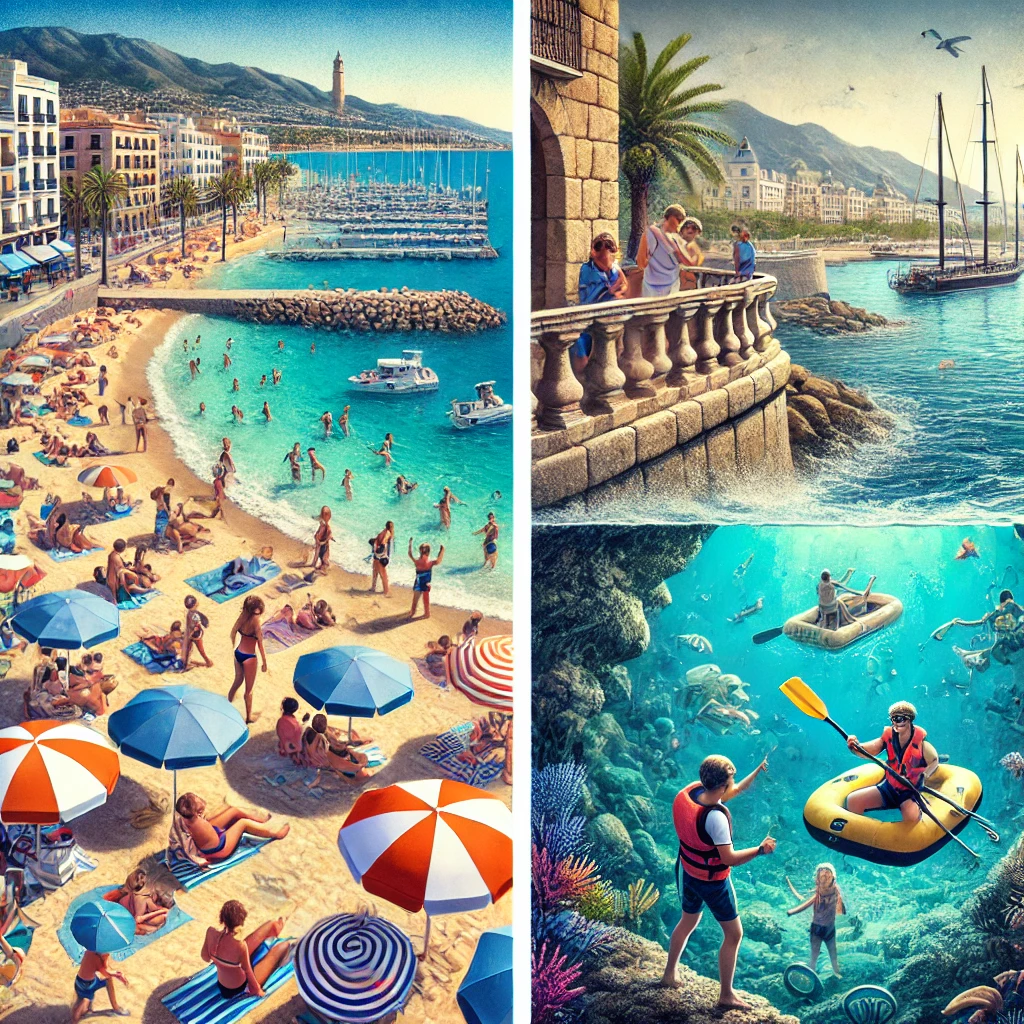
Whether you’re planning a sun-soaked vacation on the Mediterranean coast or a marine escapade along the stunning shores of Latin America, understanding key Spanish terms related to coastal and marine tourism can enhance your travel experience. From booking luxurious seaside accommodations to engaging in thrilling water sports, being well-versed in the relevant vocabulary ensures smooth and enjoyable interactions. In this article, we will cover essential Spanish terms that will be invaluable during your coastal and marine adventures.
Accommodation Vocabulary
Securing the perfect place to stay is a fundamental aspect of coastal tourism. Below are some essential terms that will help you navigate accommodation options in Spanish-speaking regions:
- Hotel (Hotel): A common term for a place offering lodging, usually in a more formal setting.
- Hostal (Hostel): A more budget-friendly option, often with shared facilities.
- Casa de huéspedes (Guesthouse): A privately-owned residence offering lodging.
- Apartamento turístico (Tourist Apartment): Ideal for longer stays, providing home-like amenities.
- Camping (Camping): For a closer-to-nature experience, campsites are available.
- Resort (Resort): A destination offering a variety of amenities and activities, often in luxurious surroundings.
- Frente al mar (Seafront): Describes properties located directly by the sea.
- Todo incluido (All-inclusive): Packages that cover lodging, food, and activities.
- Recepción (Reception): The front desk where you check into your accommodation.
- Reserva (Reservation): Essential for booking your stay ahead of time.
Beach Activities
Beaches are the heart of coastal tourism, offering endless activities. Here’s how to talk about popular beach activities in Spanish:
- Tomar el sol (Sunbathe): Laying out in the sun for relaxation and tanning.
- Nadar (Swim): The act of moving through water for leisure or exercise.
- Jugar al voleibol (Play volleyball): A favorite beach sport.
- Hacer un picnic (Have a picnic): Enjoying a meal outdoors.
- Construir castillos de arena (Build sandcastles): A creative activity for the young and young-at-heart.
- Pasear por la playa (Walk on the beach): A leisurely stroll along the shore.
- Hacer surf (Surf): Riding waves on a surfboard.
- Hacer windsurf (Windsurf): Combining elements of surfing and sailing.
- Hacer kITESURF (Kitesurf): Using wind power to glide across the water.
- Paddleboarding (Paddleboarding): Standing on a large board and paddling through calm waters.
Marine Adventures
For those seeking adventure, the marine world offers endless opportunities. Familiarize yourself with these terms for your next aquatic adventure:
- Bucear (Scuba dive): Exploring underwater ecosystems using diving equipment.
- Esnórquel (Snorkeling): Swimming near the water’s surface with a mask and snorkel.
- Pesca (Fishing): The act of catching fish, whether for sport or sustenance.
- Excursión en barco (Boat trip): An excursion or short journey by boat.
- Avistamiento de delfines (Dolphin watching): Observing dolphins in their natural habitat.
- Avistamiento de ballenas (Whale watching): Observing whales, often during migration season.
- Kayak (Kayak): Paddling through waters in a small boat.
- Jet ski (Jet ski): Riding a motorized watercraft.
- Esquí acuático (Water skiing): Being pulled by a boat while on water skis.
- Paravelismo (Parasailing): Being towed behind a boat while attached to a parachute.
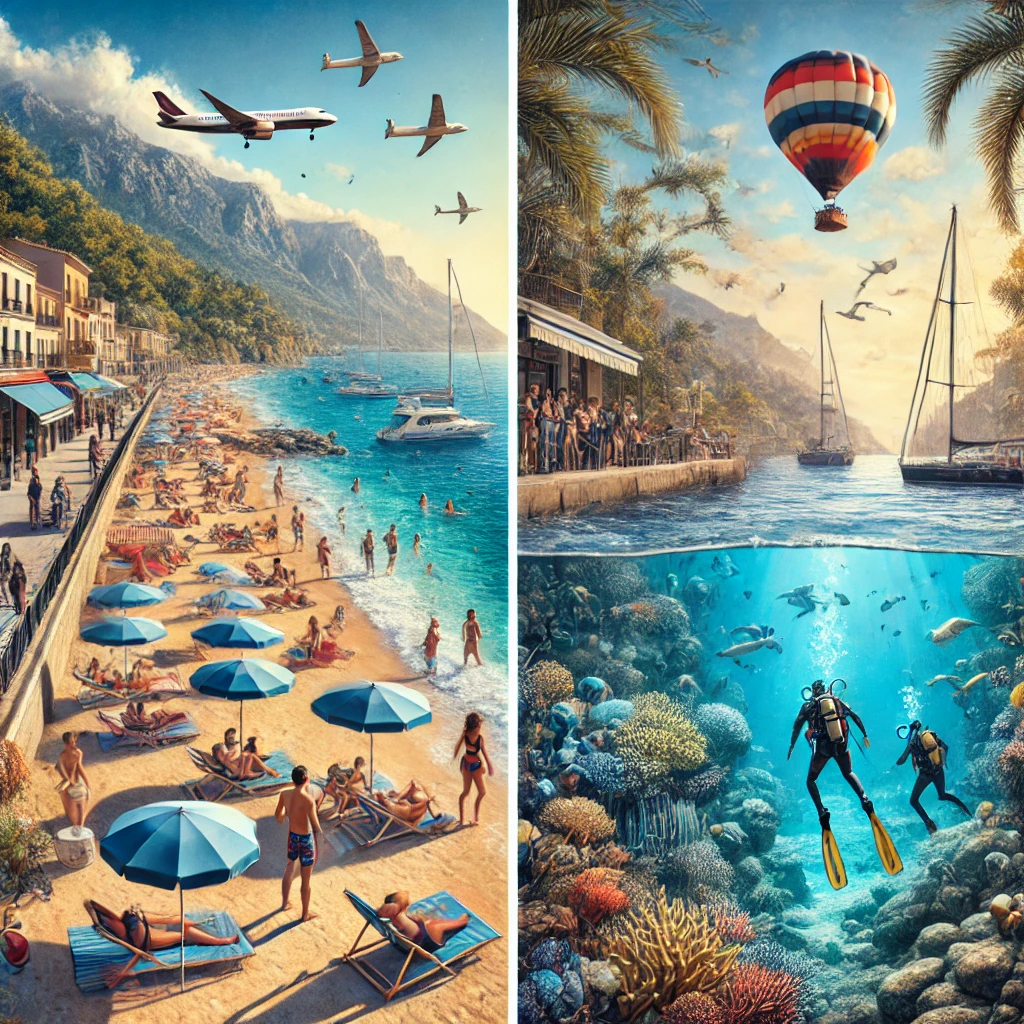
Dining by the Sea
Coastal tourism isn’t complete without sampling the local cuisine. Master these dining terms to fully indulge in the gastronomic delights:
- Restaurante frente al mar (Seafront restaurant): A dining establishment with sea views.
- Mariscos (Seafood): A general term for edible sea creatures.
- Pescado fresco (Fresh fish): Often caught and served on the same day.
- Paella (Paella): A famous Spanish rice dish with seafood and other ingredients.
- Tapas (Tapas): Small plates or appetizers, perfect for sampling a variety of flavors.
- Coctel de mariscos (Seafood cocktail): A cold dish typically featuring prawns and other seafood with sauce.
- Ceviche (Ceviche): Fresh seafood cured in citrus, popular in Latin American coastal areas.
- Vino blanco (White wine): Often paired with seafood dishes.
- Plato principal (Main course): The main part of your meal.
- Postre (Dessert): The sweet course typically served at the end of a meal.
Safety and Precaution Terms
Safety is paramount when enjoying coastal and marine activities. These terms will help you stay informed and safe:
- Socorrista (Lifeguard): Trained personnel responsible for ensuring safety in swimming areas.
- Bandera roja (Red flag): Indicates dangerous conditions, often meaning swimming is prohibited.
- Crucero (Cruise): A ship or voyage taken for pleasure, offering multiple stops and onboard amenities.
- Corriente (Current): A flow of water that can be strong and potentially hazardous.
- Medusa (Jellyfish): Marine creatures that may cause painful stings.
- Protector solar (Sunscreen): Essential for protecting your skin from harmful UV rays.
- Sombrilla (Beach umbrella): Provides shade and protects against sun exposure.
- Chaleco salvavidas (Life jacket): A flotation device crucial for safety in water activities.
- Primera ayuda (First aid): Essential for treating minor injuries, often found at beachside facilities.
- Botiquín de primeros auxilios (First aid kit): A set of medical supplies for emergencies.
Traveler’s Essentials
To maximize your coastal and marine tourism experience, having the right travel essentials is key. Here are some terms to help you prepare:
- Pasaporte (Passport): Required for international travel.
- Billete de avión (Plane ticket): Necessary for flights to your coastal destination.
- Maleta (Suitcase): Used for carrying your belongings.
- Mapa (Map): Crucial for navigation purposes.
- Guía de viaje (Travel guide): Provides detailed information about your destination.
- Dinero en efectivo (Cash): Handy for making small purchases or in areas where cards are less accepted.
- Ropa de baño (Swimwear): Essential for enjoying the beaches and marine activities.
- Toalla de playa (Beach towel): Useful for drying off and relaxing on the sand.
- Sombrero (Hat): Provides additional protection from the sun.
- Gafas de sol (Sunglasses): Protects your eyes from the sun’s glare.
In conclusion, immersing yourself in the language of coastal and marine tourism enhances your travel experience by helping you interact more effectively and understand your surroundings better. Whether you are basking under the sun, delving into marine adventures, or savoring the local cuisine, these Spanish terms equip you with the vocabulary needed to navigate through all aspects of your adventure. By mastering these essential terms, you not only ease your way through common situations but also enrich your travel encounters with meaningful interactions. So pack your bags, brush up on these terms, and get ready for an unforgettable coastal and marine escapade in the Spanish-speaking world.


