Skip to content

MY-SPANISH-DICTIONARY

  • Spanish Words by Letter
    • A
    • B
    • C
    • D
    • E
    • F
    • G
    • H
    • I
    • J
    • K
    • L
    • M
    • N
    • O
    • P
    • Q
    • R
    • S
    • T
    • U
    • V
    • W
    • X
    • Y
    • Z
  • Vocabulary
    • Advanced Vocabulary
    • Basic Vocabulary
    • Thematic Vocabulary
    • Slang and Colloquialisms
  • Grammar
    • Basic Grammar
    • Advanced Grammar
    • Sentence Structure
    • Verb Conjugations
    • Prepositions and Conjunctions
    • Gender and Number Agreement
  • Resources
    • Educator Resources
      • Teaching Guides and Strategies
    • Learning Resources
      • Interactive Quizzes and Games
  • Listening Comprehension
    • Listening Exercises
  • Pronunciation and Speaking
    • Listening Comprehension Exercises
  • Toggle search form

Spanish Vocabulary for Describing Springtime and Nature

Posted on By admin

Springtime is a season of renewal, colorful blossoming, and burgeoning life. It’s no wonder people love talking about it! If you’re learning Spanish, expanding your vocabulary to include terms related to spring and nature can be both useful and enjoyable. Not only will it enrich your conversations, but it also brings you closer to appreciating the nuances of Spanish-speaking cultures. Whether you are describing the vibrant flora, the variety of fauna, or simply the beauty of a spring day, these words and phrases will help you paint a vivid picture in Spanish. This article will walk you through a comprehensive list of essential Spanish vocabulary for the spring season and nature. Grab your notepad and let’s dive into the blooming world of springtime words!

Describing the Weather

Springtime weather is often unpredictable but usually pleasant, characterized by gentle breezes and occasional showers. Here are some key Spanish terms to describe the spring weather:

  • Primavera – Spring
  • Brisa – Breeze
  • Soleado – Sunny
  • Templado – Mild/Temperate
  • Flores – Flowers
  • Lluvia de primavera – Spring Rain
  • Nubes – Clouds
  • Arco iris – Rainbow

Imagine you want to describe a beautiful spring day. You might say: “Hoy es un día de primavera, está soleado con una brisa templada. Después de la lluvia de primavera, apareció un arco iris entre las nubes.” This paints a clear and lovely image using common Spanish words for natural phenomena in spring.

Flora and Fauna

Spring is a perfect time to explore the outdoors and observe the burst of life around you, from flowers blooming to animals awakening. With the following vocabulary, you can talk about this seasonal splendor in Spanish:

  • Flor – Flower
  • Árbol – Tree
  • Hierba – Grass
  • Mariposa – Butterfly
  • Abeja – Bee
  • Aves – Birds
  • Jardín – Garden
  • Césped – Lawn/Grass

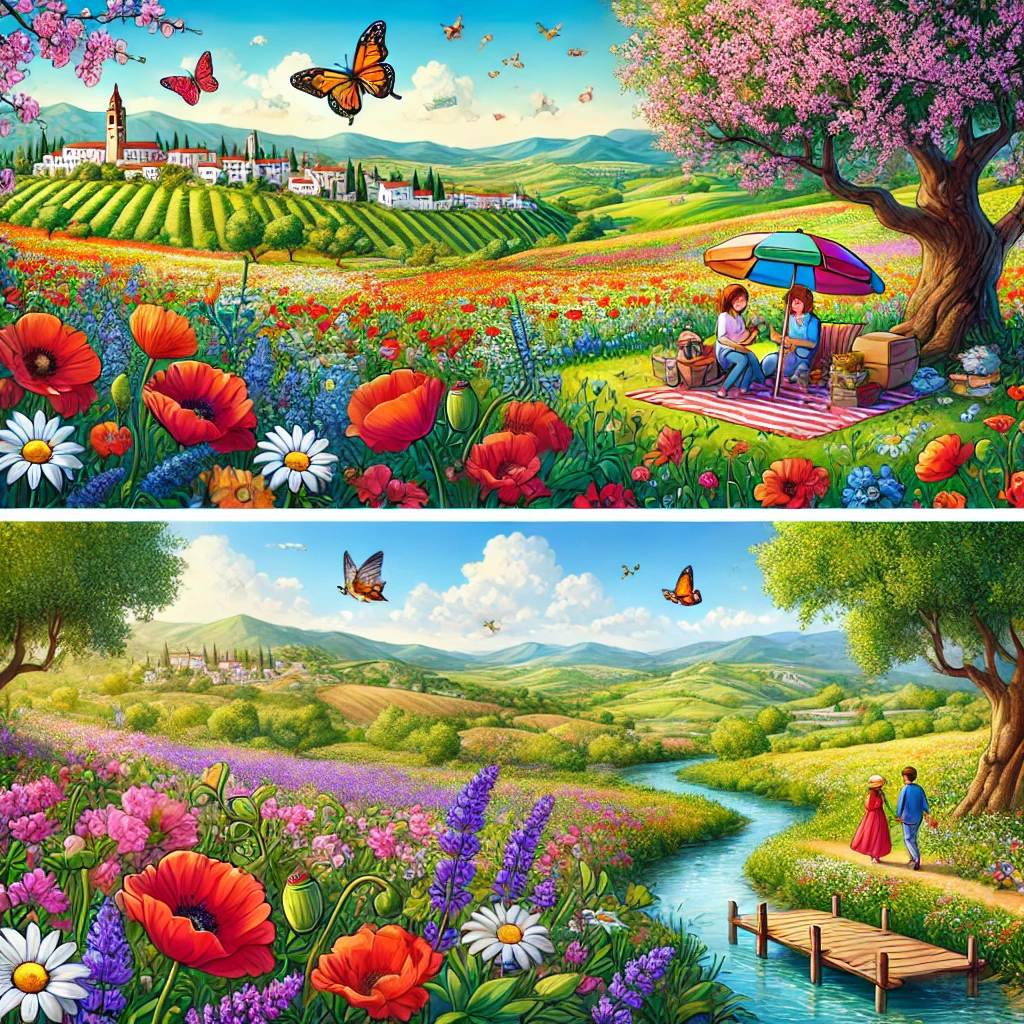
Consider how you might use these in a sentence: “El jardín está lleno de flores de primavera, las mariposas y las abejas vuelan de un árbol a otro, y los pájaros cantan en el césped verde.” This phrase encapsulates a picturesque scene of spring’s vibrancy.

Spring Activities

Spring is an ideal time for a variety of outdoor activities. From picnics to hiking, these enjoyable experiences can be described with specific Spanish terms:

  • Picnic – Picnic
  • Senderismo – Hiking
  • Parque – Park
  • Disfrutar – To enjoy
  • Excursión – Excursion/Trip
  • Caminata – Walk/Hike
  • Montaña – Mountain
  • Valle – Valley

An example sentence could be: “Nos gusta hacer picnic en el parque los fines de semana de primavera, disfrutar del senderismo en las montañas y explorar los valles.” This sentence provides a sense of the various fun activities people engage in during the spring.

Describing Landscapes

Whether you are an avid nature lover or simply enjoy a good view, describing landscapes can be incredibly satisfying. Here are some essential Spanish words for various natural features:

  • Paisaje – Landscape
  • Montañas – Mountains
  • Lago – Lake
  • Río – River
  • Colina – Hill
  • Bosque – Forest
  • Prado – Meadow
  • Cueva – Cave

You could say: “El paisaje de primavera es impresionante, con colinas verdes, ríos caudalosos y prados llenos de flores junto a los lagos y montañas.” This sentence captures the essence of a beautiful springtime landscape.

Colors of Spring

Spring is synonymous with a burst of colors. Knowing how to describe these colors in Spanish will greatly enhance your descriptive abilities:

  • Rojo – Red
  • Amarillo – Yellow
  • Verde – Green
  • Rosa – Pink
  • Azul – Blue
  • Anaranjado – Orange
  • Púrpura – Purple
  • Blanco – White

For example: “Durante la primavera, el jardín se llena de colores vivos como el rojo de las flores, el verde del césped, y el azul del cielo sin nubes.” This describes a vibrant and colorful spring scene.

Expressions and Common Phrases

In addition to individual vocabulary words, it’s helpful to learn common expressions and phrases that capture the essence of spring in Spanish. Here are some useful ones:

  • Abrir la ventana – To open the window (signifying the fresh air of spring)
  • Dar un paseo – To take a walk
  • Sentir la brisa – To feel the breeze
  • Día soleado – Sunny day
  • Todo florece – Everything blooms
  • Olor a flores – Smell of flowers
  • Templar el viento – To temper the wind (indicative of mild weather)

You might use one of these in a sentence like this: “Me gusta abrir la ventana y sentir la brisa durante un día soleado de primavera, cuando todo florece y el aire está lleno del olor a flores.” This highlights the sensory experiences associated with spring.

Conclusion

As we wrap up, it’s clear that springtime offers an unparalleled opportunity to expand your Spanish vocabulary. Whether you’re describing the weather, enjoying outdoor activities, or simply observing the beauty of nature, having the right words at your disposal can greatly enhance your communication skills and your appreciation of Spanish-speaking cultures. By incorporating these terms—ranging from general weather conditions to specific flora and fauna—you’ll be well-equipped to describe the multifaceted aspects of spring. Remember, practicing these words in sentences will help solidify your understanding and pronunciation. So next time you find yourself in a Spanish-speaking environment during springtime, you’ll be ready to describe the season’s beauty in vivid detail. ¡Feliz primavera!


Basic Vocabulary, Vocabulary

Post navigation

Previous Post: Spanish Vocabulary for Outdoor Activities
Next Post: Learn Spanish Clothing Vocabulary: Words for Apparel & Accessory

Related Posts

Learning Spanish: Terms for Outdoor Sports and Recreation Basic Vocabulary
Spanish Vocabulary for Various Types of Accommodations Thematic Vocabulary
Master Advanced Spanish Vocabulary for Environmental Conservation Advanced Vocabulary
Modern Spanish Slang for Digital and Tech-Savvy Users Slang and Colloquialisms
Understanding Spanish Colloquialisms in Social Media Slang and Colloquialisms
Latin American Slang Guide: Unique Expressions by Country Slang and Colloquialisms

Categories

  • Community and Interaction
    • Forums for Language Learners
  • Cultural Insights
    • Cultural Norms and Etiquette
  • Education News
    • Language Learning Tips and Techniques
    • Language News and Updates
    • Reviews and Recommendations
    • Spanish in Professional Contexts
  • Educator Resources
    • Teaching Guides and Strategies
  • Grammar
    • Advanced Grammar
    • Basic Grammar
    • Gender and Number Agreement
    • Prepositions and Conjunctions
    • Sentence Structure
    • Verb Conjugations
  • Learning Resources
    • Conversational Spanish
    • Cultural Insights and Real-Life Spanish
    • Interactive Quizzes and Games
    • Language Skills Development
    • Recommended Books, Apps, and Websites
    • Spanish Culture and History
    • Study Guides and Tips
  • Listening Comprehension
    • Listening Exercises
  • Pronunciation and Speaking
    • Advanced Pronunciation
    • Basic Pronunciation
    • Conversation Practice
    • Listening Comprehension Exercises
    • Speech Patterns and Intonation
  • Uncategorized
  • Vocabulary
    • Advanced Vocabulary
    • Basic Vocabulary
    • Cultural and Regional Varieties
    • Slang and Colloquialisms
    • Thematic Vocabulary
    • Travel
  • Writing Skills
    • Advanced Writing Skills
    • Basic Writing Skills
    • Spelling and Editing
    • Writing for Different Contexts

Recent Posts

  • Interactive Spanish: Role Play Scenarios for Practice
  • Spanish Conversational Skills: Talking About Movies
  • Expressing Emotions and Feelings in Spanish
  • Spanish Conversation: Discussing Personal Goals
  • Spanish for Technology and Social Media Conversations
  • Discussing Health and Fitness in Spanish
  • Spanish Language Practice: Planning a Trip
  • Role-Playing Common Spanish Social Situations

Archives

  • October 2025
  • September 2025
  • August 2025
  • June 2025
  • May 2025
  • April 2025
  • March 2025
  • February 2025
  • January 2025
  • December 2024
  • November 2024
  • October 2024
  • September 2024
  • August 2024
  • July 2024
  • June 2024
  • May 2024
  • April 2024
  • March 2024
  • February 2024

Categories

  • Advanced Grammar
  • Advanced Pronunciation
  • Advanced Vocabulary
  • Advanced Writing Skills
  • Basic Grammar
  • Basic Pronunciation
  • Basic Vocabulary
  • Basic Writing Skills
  • Community and Interaction
  • Conversation Practice
  • Conversational Spanish
  • Cultural and Regional Varieties
  • Cultural Insights
  • Cultural Insights and Real-Life Spanish
  • Cultural Norms and Etiquette
  • Education News
  • Educator Resources
  • Forums for Language Learners
  • Gender and Number Agreement
  • Grammar
  • Interactive Quizzes and Games
  • Language Learning Tips and Techniques
  • Language News and Updates
  • Language Skills Development
  • Learning Resources
  • Listening Comprehension
  • Listening Comprehension Exercises
  • Listening Exercises
  • Prepositions and Conjunctions
  • Pronunciation and Speaking
  • Recommended Books, Apps, and Websites
  • Reviews and Recommendations
  • Sentence Structure
  • Slang and Colloquialisms
  • Spanish Culture and History
  • Spanish in Professional Contexts
  • Speech Patterns and Intonation
  • Spelling and Editing
  • Study Guides and Tips
  • Teaching Guides and Strategies
  • Thematic Vocabulary
  • Travel
  • Uncategorized
  • Verb Conjugations
  • Vocabulary
  • Writing for Different Contexts
  • Writing Skills

Spanish to English by Letter

  • Spanish Words that Start with A
  • Spanish Words that Start with B
  • Spanish Words that Start with C
  • Spanish Words that Start with D
  • Spanish Words that Start with E
  • Spanish Words that Start with F
  • Spanish Words that Start with G
  • Spanish Words that Start with H
  • Spanish Words that Start with I
  • Spanish Words that Start with J
  • Spanish Words that Start with K
  • Spanish Words that Start with L
  • Spanish Words that Start with M
  • Privacy Policy
  • Spanish Words that Start with N
  • Spanish Words that Start with O
  • Spanish Words that Start with P
  • Spanish Words that Start with Q
  • Spanish Words that Start with R
  • Spanish Words that Start with S
  • Spanish Words that Start with T
  • Spanish Words that Start with U
  • Spanish Words that Start with V
  • Spanish Words that Start with W
  • Spanish Words that Start with X
  • Spanish Words that Start with Y
  • Spanish Words that Start with Z

Powered by AI Writer DIYSEO.AI. Download on WordPress.Copyright © 2025 MY-SPANISH-DICTIONARY.

Powered by PressBook Grid Blogs theme