
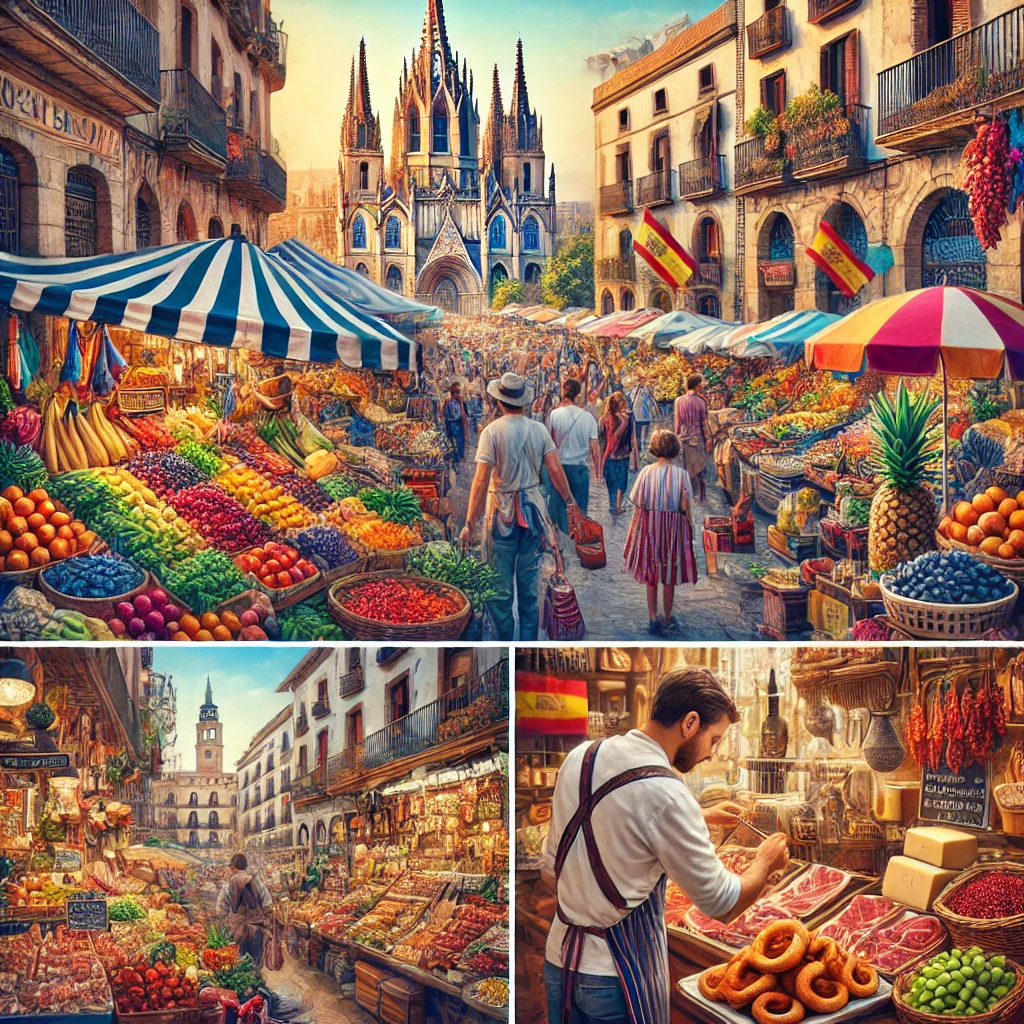
Traveling is one of life’s most enriching experiences, allowing you to immerse yourself in new cultures, meet diverse people, and explore different locales. One of the best places to get an authentic taste of a country’s culture is by visiting its local markets and bazaars. You’ll find these vibrant areas filled with colorful stalls, delicious street food, and a frenetic energy that encapsulates the soul of the place. But, navigating these local gems can be intimidating, especially if you’re not familiar with the language.
For those venturing into Spanish-speaking countries, having a grasp of essential Spanish phrases can make your market trips far more enjoyable and less stressful. Whether you’re bargaining for a hand-made scarf in Mexico, asking about the freshness of produce in Spain, or finding your way through a bustling bazaar in Argentina, knowing specific thematic vocabulary and phrases is invaluable.
This comprehensive article will cover various Spanish phrases and vocabulary that are particularly useful for navigating local markets and bazaars. We’ll delve into greetings, inquiries about prices, bargaining tactics, and polite expressions—helping you blend in seamlessly with the locals. This guide is designed not just to equip you with phrases but to also offer context and cultural nuances that can enhance your interaction and make your market experience nothing short of spectacular.
Ready to transform your market excursions? Let’s dive in and explore the essential Spanish phrases you need to become a market-savvy traveler.
Basic Greetings
When venturing into any local market or bazaar, it’s essential to start interactions with a friendly greeting. Basic greetings set the tone and make you appear approachable and respectful. Here are some essential greetings and polite phrases:
- Hola (uoh-la) – Hello
- Buenos días (bweh-nohs dee-ahs) – Good morning
- Buenas tardes (bweh-nahs tahr-des) – Good afternoon
- Buenas noches (bweh-nahs noh-chehs) – Good evening/night
- ¿Cómo está? (koh-moh ehs-tah) – How are you?
- Muy bien, gracias (moo-ee byehn, grah-syas) – Very well, thank you
- Mucho gusto (moo-choh goos-toh) – Nice to meet you
Learning and using these phrases can help break the ice with vendors and create a more enjoyable shopping experience. Engaging with vendors in their own language, even if it’s just a simple greeting, often encourages warm and helpful responses.
Remember, markets are social spaces in many Spanish-speaking countries. Vendors appreciate when customers take the time to greet them politely, and a simple “Hola” or “Buenos días” can go a long way in building rapport. By starting your interaction on the right foot, you are much more likely to get good service, fair prices, and maybe even discover more about the products you’re interested in.
Asking for Prices
Once you’ve greeted the vendor and are ready to dive into the shopping experience, you’ll need the vocabulary to ask about prices. Understanding and negotiating prices is key, especially in locales where bargaining is expected. Here are some essential phrases for inquiring about prices:
- ¿Cuánto cuesta? (kwahn-toh kwes-tah) – How much does it cost?
- ¿Cuánto vale? (kwahn-toh vah-leh) – How much is it worth?
- ¿Cuál es el precio? (kwahl ehs ehl preh-syo) – What is the price?
- ¿Me puede dar el precio? (meh pwe-deh dahr ehl preh-syo) – Can you give me the price?
Knowing the local currency and having an idea of general price ranges for different items can help you gauge what is a reasonable price. If you’re unsure, it’s perfectly acceptable to ask:
- ¿Esta a buen precio? (ehs-tah ah bwen preh-syo) – Is this a good price?
- ¿Podrías decirme el costo aproximado? (poh-dree-ahs deh-seer-meh ehl kohs-toh ah-prok-see-mah-doh) – Could you tell me the approximate cost?
By using these phrases, you signal that you’re serious about making a purchase, and most vendors will be happy to provide the information. Moreover, understanding the local way of discussing prices can make the vendor view you as a knowledgeable, savvy customer, potentially making them more inclined to offer better deals.
Bargaining Tips
In many Spanish-speaking countries, bargaining is not just a way to get the best deal, but also a cultural experience that involves skill and tact. Here are some key phrases to help you navigate the negotiation process:
- ¿Me puede dar un descuento? (meh pwe-deh dahr oon dehs-kwen-toh) – Can you give me a discount?
- Es muy caro (ehs moo-ee kah-roh) – It’s very expensive
- Tengo un presupuesto (tehn-goh oon preh-soo-pwehs-toh) – I have a budget
- ¿Aceptaría X cantidad? (ah-sehp-tah-ree-ah ehs kahn-tee-dahd) – Would you accept X amount?
- ¿Cuál es su mejor precio? (kwahl ehs soo meh-hor preh-syo) – What’s your best price?
Bargaining is an art and part of the fun of visiting markets, but it’s important to remain respectful. Don’t be overly aggressive and recognize when the price offered is already fair. Here’s some additional etiquette to consider:
- Start your counter-offer below what you’re willing to pay to give yourself room to negotiate.
- Use humor and maintain a friendly demeanor. A smile can be quite persuasive.
- If you’re buying multiple items, ask for a discount on the total. Quantity can be a good bargaining chip.
Successful bargaining often depends on both parties feeling satisfied with the outcome. Good natured bargaining can lead to better prices for you and repeat customers for the vendor—an arrangement beneficial to both.
Essentials and Asking for Directions
Markets can be bustling and sometimes labyrinthine. Knowing how to ask for essentials and directions can save you time and make your market visit smoother. Here are some phrases to help you navigate:
- ¿Dónde está…? (dohn-deh ehs-tah) – Where is…?
- El baño (ehl bah-nyoh) – The bathroom
- Una salida (oo-nah sah-lee-dah) – An exit
- Una entrada (oo-nah ehn-trah-dah) – An entrance
- La caja (lah kah-hah) – The cash register
- El mercado (ehl mehr-kah-doh) – The market
For more specific requests related to the market experience, these phrases can be useful:
- ¿Me puede ayudar? (meh pwe-deh ah-yoo-dahr) – Can you help me?
- ¿Dónde puedo encontrar…? (dohn-deh pweh-doh ehn-kohn-trahr) – Where can I find…?
- Estoy buscando… (ehs-toy boos-kahn-doh) – I’m looking for…
Sometimes, markets are divided into sections such as food, clothes, and crafts. Knowing how to ask where certain sections are can also be handy:
- ¿Dónde está la sección de alimentos? (dohn-deh ehs-tah lah sehk-syon deh ah-lee-mehn-tohs) – Where is the food section?
- ¿Dónde está la sección de ropa? (dohn-deh ehs-tah lah sehk-syon deh roh-pah) – Where is the clothing section?
- ¿Dónde está la sección de artesanía? (dohn-deh ehs-tah lah sehk-syon deh ahr-teh-sah-nee-ah) – Where is the crafts section?
Having the ability to ask for assistance or directions not only helps you navigate more smoothly but also increases your confidence, making your market trip more pleasant and productive.
Polite Expressions
Politeness and courtesy go a long way in any culture. Using polite expressions and showing respect in your interactions can enhance your market experience and may even open up opportunities for friendlier and fairer negotiations with vendors. Here are some fundamental polite expressions:
- Por favor (por fah-vohr) – Please
- Gracias (grah-see-ahs) – Thank you
- De nada (deh nah-dah) – You’re welcome
- Perdón (pehr-dohn) – Excuse me
- Lo siento (loh syehn-toh) – I’m sorry
- ¿Puede repetirlo, por favor? (pweh-deh reh-peh-teer-loh por fah-vohr) – Can you repeat that, please?
- Disculpe (dees-kool-peh) – Excuse me (to get someone’s attention)
Expressing your gratitude and politeness can endear you to vendors and other market-goers. Consider using the following phrases to show your appreciation:
- Gracias por su ayuda (grah-see-ahs por soo ah-yoo-dah) – Thank you for your help
- Fue un placer (fweh oon plah-sehr) – It was a pleasure
- He tenido una buena experiencia (eh teh-nee-doh oo-nah bwen-ah ehk-speer-ehn-syah) – I had a good experience
Politeness builds a positive environment and fosters trust, which can be beneficial in various situations you might encounter during your market exploration. People tend to be more willing to help and more gracious in negotiations when they see that you are respectful and courteous.
The use of polite expressions not only reflects well on you but also shows respect for the local culture and traditions, enhancing reciprocal respect and understanding.
Conclusion
Visiting local markets and bazaars in Spanish-speaking countries can be a delightful and enriching experience. You’ll find yourself amidst a vibrant mix of sounds, sights, and scents that offer a remarkable insight into the local way of life. Equipping yourself with essential Spanish phrases can significantly enhance this experience, making it more pleasurable and comfortable.
Using basic greetings like “Hola” or “Buenos días” can help you start your interactions on a positive note, making you approachable to vendors. Understanding how to ask for prices, negotiate, and seek directions will empower you to navigate these bustling markets more efficiently. And, employing polite expressions will not only endear you to the vendors but also reflect well on your respect for the local culture.
Whether you’re buying fresh produce, unique souvenirs, or simply enjoying the atmosphere, these phrases can bridge the language gap, making your market visits smoother and more engaging. Remember, the key to a successful market experience lies not just in the phrases you use but also in your attitude. A smile, respectful demeanor, and willingness to engage with local traditions can turn a simple shopping trip into an unforgettable cultural exchange.
So, the next time you find yourself wandering through a vibrant market in a Spanish-speaking locale, arm yourself with these phrases and dive into the rich, colorful world of local bazaars. You’ll not only come away with fantastic purchases but also with heartwarming memories and perhaps even a few new friends.


