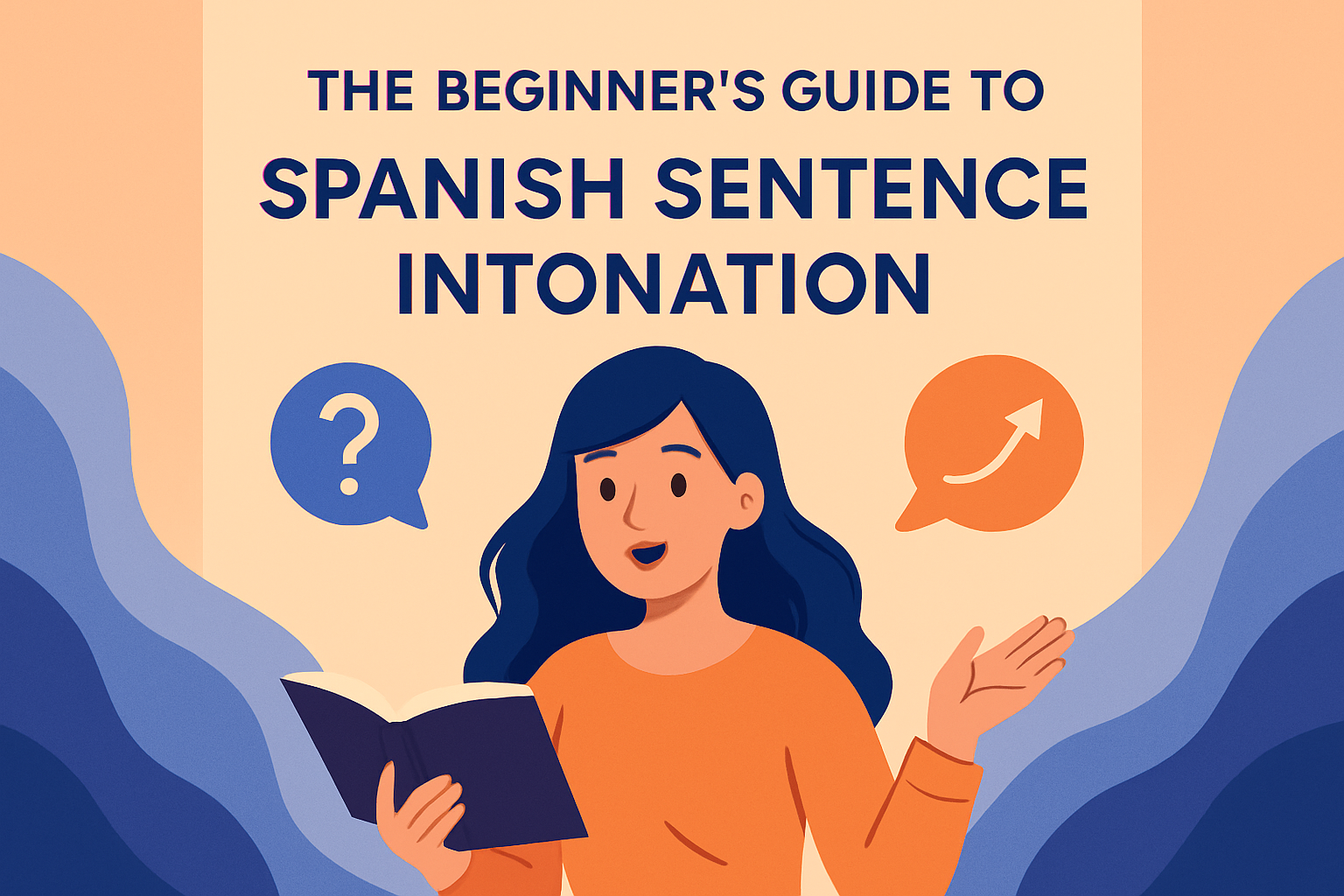
Learning a new language involves immersing oneself in a myriad of new sounds, structures, and meanings. Spanish, a language spoken by over 460 million people worldwide, is known for its rhythmic and melodious intonation. Spanish sentence intonation refers to the rise and fall of pitch in spoken Spanish. Unlike languages that focus heavily on word stress, Spanish uses intonation patterns to convey different meanings or emotions within a sentence. This makes intonation a crucial element for learners seeking to understand and communicate effectively in Spanish. Whether you’re a beginner or an advanced learner, grasping the subtleties of Spanish intonation can enhance comprehension, improve spoken fluency, and enrich cultural connections. In this guide, we’ll explore the fundamentals of Spanish sentence intonation, break it down into its components, and provide practical ways to incorporate it into your language learning journey.
Understanding the Basics of Spanish Intonation
Spanish intonation serves various functions, like indicating questions, showing surprise or excitement, and contrasting or emphasizing specific pieces of information. One of the most essential aspects to understand is the prosodic feature, which relates to speech melody. Prosody involves pitch, loudness, and tempo, all of which are crucial in Spanish.
The basic pitch contour in Spanish is relatively flat, but it changes with different types of sentences. Consider the following example:
- Declarative Sentence: “Estoy en casa.” (I am at home) – Typically a flat or slight falling intonation at the end.
- Yes/No Question: “¿Estás en casa?” (Are you at home?) – Rising intonation at the end.
- Wh-Question: “¿Dónde estás?” (Where are you?) – Falling intonation starting at a higher pitch.
Understanding these basic patterns is the foundation for recognizing and using intonation in Spanish conversation effectively.
Differentiating Declarative and Interrogative Sentences
To successfully communicate in Spanish, it’s important to identify whether a sentence is declarative (stating information) or interrogative (asking a question). The primary way to differentiate the two is through intonation. Declarative sentences often end in a low pitch, giving listeners a sense of conclusion. In contrast, interrogative sentences, particularly yes/no questions, end on a high pitch to indicate inquiry.
Consider how these patterns work in a conversation:
- Declarative: “Hace buen tiempo hoy.” (It’s nice weather today.)
- Interrogative: “¿Hace buen tiempo hoy?” (Is it nice weather today?)
Notice the shift in tone from the declarative’s flat and falling pitch to the interrogative’s rising pitch. For language learners, distinguishing between these patterns can improve listening comprehension and conversational skills.
Using Intonation to Convey Emotions and Emphasis
In addition to distinguishing types of sentences, intonation is also instrumental in expressing emotions and emphasizing specific words or phrases. Here is how different intonations can change the nuance of a message:
- Surprise: “¡No me digas!” (You don’t say!) – Start with a higher pitch and quickly drop to a lower one.
- Emphasis: “Ella es la mejor.” (She is the best.) – Emphasize LA with a higher pitch.
- Contradiction: “¡Pero no es cierto!” (But it’s not true!) – Use a pitch rise at the beginning on “Pero.”
Learning these subtle tonal shifts can aid in the effective communication of sentiments, making interpersonal interactions more dynamic and authentic. It allows non-native speakers to engage more naturally in dialogues and enhance verbal expressiveness.
Integrating Pitch Variations in Complex Sentences
Complex sentences often incorporate multiple clauses that necessitate varied intonation patterns. Within these sentences, pitch variations help maintain clarity and emphasize important points:
- “Aunque llueve, iremos al parque.” (Although it’s raining, we will go to the park.) – Slight pause and pitch dip after “llueve” before rising slightly again.
- “Si quieres, podemos ver una película.” (If you want, we can watch a movie.) – Minor rise at “quieres” and fall at the end.
Real-world applications of these structures often require careful attention to pitch to signal logical relationships among the clauses. Mastery of intonation within complex sentences can enhance elaborative and narrative speech capabilities.
Regional Variations in Spanish Intonation
Just as pronunciation and vocabulary can vary across the Spanish-speaking world, so too can intonation. Thus, it’s vital for learners to be aware of these differences. Let’s take a look at some regional intonation characteristics:
| Region | Characteristic |
|---|---|
| Spain | Generally incorporates more pronounced pitch changes within statements and questions. |
| Mexico | More steady pitch and less variation, particularly within declarative sentences. |
| Argentina | Noticeably rhythmic, with a distinctive melodic pitch in questions and emotional expressions. |
Each region’s intonation influences have resulted from unique historical, sociolinguistic, and contact factors, so adapting to these can greatly benefit cross-cultural communication, travel, and understanding distinct Spanish dialects.
Improving Intonation Through Practice
To improve your grasp of Spanish intonation, incorporate varied methods of practice. Listening to native speakers through media—be it films, radio shows, or podcasts—serves as a bridge to understanding natural speech patterns. Repetition and mimicry of these sounds allow learners to internalize intonation naturally. Speaking with native speakers, whether through language exchange groups or courses, also expedites progress. Remember, consistency is key while focusing on intonation.
Record yourself speaking, and consider using software that offers feedback on your intonation. This tool can highlight areas needing adjustments. Here are some practical exercises:
- Practice reading aloud daily, distinguishing between sentence types.
- Use tongue twisters to improve fluency and adjust pitch dynamically.
- Engage in intonation drills focusing on emotion conveyance.
Integrating these techniques builds a strong foundation in effectively applying intonation, enriching conversational Spanish.
The Future of Intonation in Learning Initiatives
The rise of AI-powered language learning apps is revolutionizing how intonation is taught to students across the globe. These platforms provide customizable learning experiences, adapting intonation practices to individual learning paces and incorporating interactive exercises that mirror real-life scenarios. As technology progresses, we can expect it might take on a greater role in helping learners navigate regional intonations and dialects, consequently personalizing and streamlining language learning journeys.
Institutions now focus more on intonation during language instruction due to its recognized importance in achieving communicative competence. As research expands on interrelations between intonation, comprehension, and proficiency, education systems worldwide may shift to integrate immersive, intonation-centric modules to enhance linguistic aptitude early on, making students more effective communicators.
Conclusion
In sum, mastering Spanish sentence intonation is critical for any language learner wanting to communicate effectively and authentically. By understanding basic intonation patterns, differentiating between sentence types, integrating regional knowledge, and practicing with diverse methods, one can greatly enhance their spoken Spanish capabilities.
Spanish intonation plays a fundamental role in conveying the nuance of language, from the subtlety of a simple assertion to the complexity of layered emotions. It enriches conversations and opens deeper connections in cross-cultural exchanges. As you embark on or continue your Spanish learning journey, consider focusing on intonation, for it will play a crucial part in your communicative success.
If you’re prepared to elevate your Spanish-speaking skills, start observing and practicing intonation in your day-to-day interactions. Enroll in workshops or courses that emphasize speaking, join language exchange communities, and immerse yourself in Spanish media content to experience a tapestry of sounds. With dedication and mindful practice, your journey of mastering Spanish intonation will bring you one step closer to fluency and enrich your engagement with the vibrant Spanish-speaking world.
Frequently Asked Questions
1. What is Spanish sentence intonation, and why is it important?
Spanish sentence intonation refers to the variation in pitch as we speak a sentence in Spanish. It’s a key aspect of oral communication that can change the meaning or emotional undertone of a statement. Unlike English, which heavily relies on word stress to express meaning, Spanish uses intonation as a vital tool. For instance, a simple declarative sentence can turn into a question simply by altering the pitch towards the end. This melodic quality is what makes Spanish sound so musical and is crucial for effective communication. Without mastering intonation, learners may unintentionally convey the wrong message or emotion, which can lead to misunderstandings in conversations.
2. How can I recognize the intonation patterns in Spanish speech?
Recognizing intonation patterns in Spanish is a skill that develops over time as you immerse yourself in listening and speaking practice. One of the most straightforward ways to start is by listening to native speakers. Pay attention to conversations in Spanish movies, telenovelas, or songs and notice the rise and fall of their pitch. Generally, Spanish intonation patterns include rising intonation (often used in questions), falling intonation (typically found in statements), and flat intonation (used in commands or lists). As you listen, try to mimic the patterns you hear, focusing on how the pitch changes from the beginning to the end of sentences. With consistent practice, recognizing and reproducing these patterns will become more intuitive.
3. Are there specific intonation patterns unique to questions in Spanish?
Yes, questions in Spanish often have distinct intonation patterns. For yes/no questions, the pitch usually rises at the end of the sentence. Take the question “¿Vienes a la fiesta?” (Are you coming to the party?). The pitch rises on the word “fiesta,” signaling the speaker is seeking confirmation. In contrast, questions that start with interrogative words (such as ¿qué?, ¿quién?, ¿cuándo?, etc.) tend to have a rising-falling intonation pattern. For example, “¿Dónde está el baño?” (Where is the bathroom?) starts with a higher pitch at “dónde,” slightly falls, and then rises again towards the end, before dropping. Recognizing these patterns will make it easier for you to express curiosity or uncertainty naturally in conversations.
4. Can intonation in Spanish change the meaning of a sentence?
Absolutely, intonation can significantly alter the meaning or intent behind a sentence in Spanish. Consider the sentence “Te vas a casa.” In a neutral tone, it could simply mean “You’re going home.” However, if said with a rising intonation at the end, it turns into a question: “Are you going home?” Conversely, using a falling tone can express certainty or a command. This demonstrates how intonation not only affects the semantic interpretation of words but also the emotional context in which they are presented. Mastering this nuanced aspect of speech is essential for anyone looking to communicate in Spanish effectively.
5. What are some effective ways to practice Spanish sentence intonation?
Practicing Spanish sentence intonation involves active listening, mimicry, and speaking. One effective method is shadowing, where you listen to a native speaker and repeat what they say as closely as possible, focusing on intonation patterns. You can use resources like Spanish-language podcasts, audiobooks, or YouTube videos. Additionally, try recording yourself using speech applications to compare your intonation with that of native speakers — adjustments can be made through this feedback loop. Language exchange partners or tutors are also invaluable, as they can provide real-time correction and examples. Finally, immerse yourself as much as possible: watch Spanish films, listen to music, and engage in conversations. The key is consistent practice and a conscious effort to understand and replicate the melodic nuances of Spanish speech.