
Understanding and engaging in discussions about politics and economics requires not only knowledge of the subjects but also an advanced vocabulary that allows for the expression of complex ideas. This article aims to expand your Spanish vocabulary in these areas, enabling more nuanced and sophisticated conversations. We’ll delve into terms and phrases divided into categories, including political structures, economic models, political ideologies, economic terms, and more.
Political Structures & Systems
In discussing politics, it’s crucial to start with the structural and systemic components that shape the governance of societies. Here are some key terms:
- Democracia (Democracy): A system of government by the whole population, typically through elected representatives.
- República (Republic): A state in which supreme power is held by the people and their elected representatives, and which has an elected or nominated president rather than a monarch.
- Monarquía (Monarchy): A form of government with a monarch at the head.
- Tiranía (Tyranny): Cruel and oppressive government or rule.
Political Ideologies
The beliefs that provide the foundation for political systems are vast and varied. Here are several ideologies to familiarize yourself with:
- Comunismo (Communism): A political theory advocating class war, leading to a society in which all property is publicly owned, and each person works and is paid according to their abilities and needs.
- Capitalismo (Capitalism): An economic and political system in which a country’s trade and industry are controlled by private owners for profit, rather than by the state.
- Socialismo (Socialism): A political and economic theory of social organization that advocates for the production, distribution, and exchange to be owned or regulated by the community as a whole.
- Liberalismo (Liberalism): A political and social philosophy that promotes individual rights, civil liberties, democracy, and freemarket capitalism.
Political Terms and Concepts
Expanding further, let’s look at some specific political terms and concepts that often feature in discussions:
- Derechos humanos (Human Rights): Basic rights and freedoms that belong to every person in the world, from birth until death.
- Golpe de estado (Coup d’etat): A sudden, violent, and illegal seizure of power from a government.
- Política fiscal (Fiscal Policy): Government policies regarding taxation and spending to influence the economy.
- Soberanía (Sovereignty): The full right and power of a governing body to govern itself without any interference from outside sources or bodies.
Economic Models and Terms
Understanding the economy requires a grasp of both the models that economies operate within and the terms used to discuss economic conditions.
- Economía de mercado (Market Economy): An economic system in which production and prices are determined by unrestricted competition between privately owned businesses.
- Inflación (Inflation): A general increase in prices and fall in the purchasing value of money.
- Recesión (Recession): A period of temporary economic decline during which trade and industrial activity are reduced.
- PIB (GDP Producto Interno Bruto): The total value of goods produced and services provided in a country during one year.
International Relations and Global Economy
In an increasingly interconnected world, discussions about politics and economics inherently touch upon international relations and the global economy. Here are several pertinent terms:
- Globalización (Globalization): The process by which businesses or other organizations develop international influence or start operating on an international scale.
- Comercio internacional (International Trade): The exchange of goods and services between countries.
- Ayuda extranjera (Foreign Aid): Money, food, or other resources given or lent by one country to another.
- Sanciones económicas (Economic Sanctions): Commercial and financial penalties applied by one or multiple countries against a targeted country, group, or individual.
Advanced Economic Discussions
For those looking to dive deeper into economic discussions, here are some advanced concepts:
- Desregulación (Deregulation): The reduction or elimination of government power in a particular industry, usually enacted to create more competition within the industry.
- Crecimiento económico (Economic Growth): An increase in the amount of goods and services produced per head of the population over a period of time.
- Fusión y adquisición (Mergers and Acquisitions): The consolidation of companies or assets through various types of financial transactions.
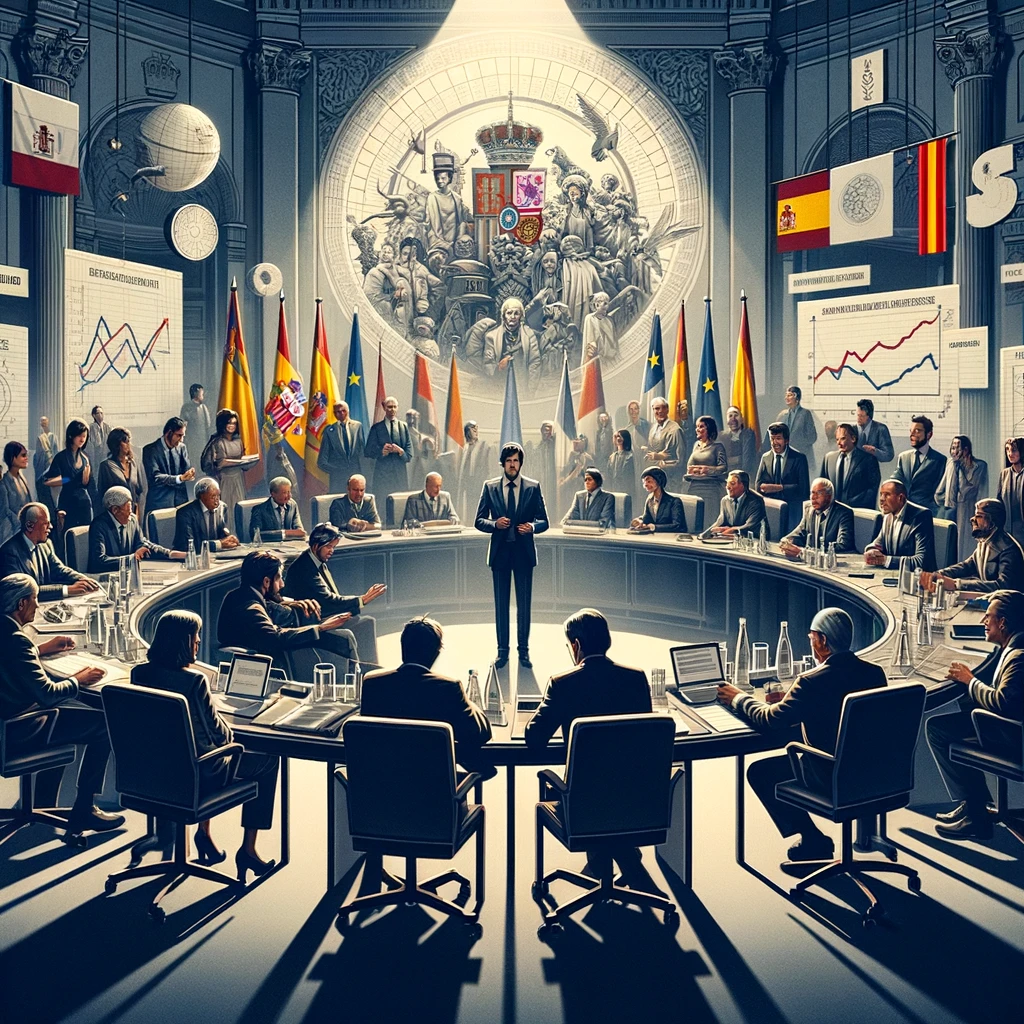
Understanding and using this vocabulary will not only bolster your Spanish skills but also enhance your ability to participate in and comprehend discussions on these critical subjects. As global events continue to influence political and economic landscapes, having a rich vocabulary in these areas becomes increasingly important. Whether you’re engaging in debates, writing essays, or simply expanding your knowledge, these terms provide a robust foundation for advanced discussions on politics and economics in the Spanish-speaking world. Continuing from the advanced vocabulary and concepts introduced, this section will delve into specific jargon used in the realms of political analysis and economic policy strategies. Mastery of these terms can significantly enhance your understanding of complex discussions and analyses in the political and economic sphere.
Political Analysis Terms
In-depth political discourse requires acquaintance with terms that describe political behaviors, strategies, and phenomena. Here are some critical ones:
- Polarización (Polarization): The division into two sharply contrasting groups or sets of opinions or beliefs.
- Demagogia (Demagogy): Political activity or practices that seek support by appealing to the desires and prejudices of ordinary people rather than by using rational argument.
- Autocracia (Autocracy): A system of government by one person with absolute power.
- Pluralismo (Pluralism): A condition or system in which two or more states, groups, principles, sources of authority, etc., coexist.
Economic Policy Strategies
Developing an understanding of economic policy involves familiarizing yourself with the strategies governments use to shape their economic system:
- Política monetaria (Monetary Policy): The process by which the monetary authority of a country, like the central bank, controls the supply of money, often targeting an inflation rate or interest rate to ensure price stability and general trust in the currency.
- Austeridad (Austerity): Policies aimed at reducing government budget deficits through spending cuts, tax increases, or a combination of both.
- Estímulo económico (Economic Stimulus): Government policies aimed at increasing demand in the economy in the hope of stimulating growth.
- Libre comercio (Free Trade): International trade left to its natural course without tariffs, quotas, or other restrictions.
Political and Economic Challenges
No discussion about politics and economics is complete without considering the challenges facing countries globally. Understanding these terms can provide insight into current global issues:
- Cambio climático (Climate Change): A longterm change in the Earth’s climate, especially a change due to an increase in the average atmospheric temperature.
- Desigualdad de ingresos (Income Inequality): The unequal distribution of household or individual income across the various participants in an economy.
- Corrupción (Corruption): Dishonest or fraudulent conduct by those in power, typically involving bribery.
- Migración (Migration): The movement of people from one place to another with the intentions of settling, permanently or temporarily, in a new location.
Conclusion
Armed with an advanced vocabulary in politics and economics, Spanish speakers are better equipped to dissect, discuss, and contribute to conversations and analyses concerning the political and economic landscapes. As the world faces increasingly complex challenges, the importance of clear and sophisticated discourse cannot be understated. Whether engaging in academic debates, drafting policy, or simply seeking to understand the intricacies of global events, these terms provide a solid foundation for effective communication and critical analysis in the Spanish-speaking world.


