
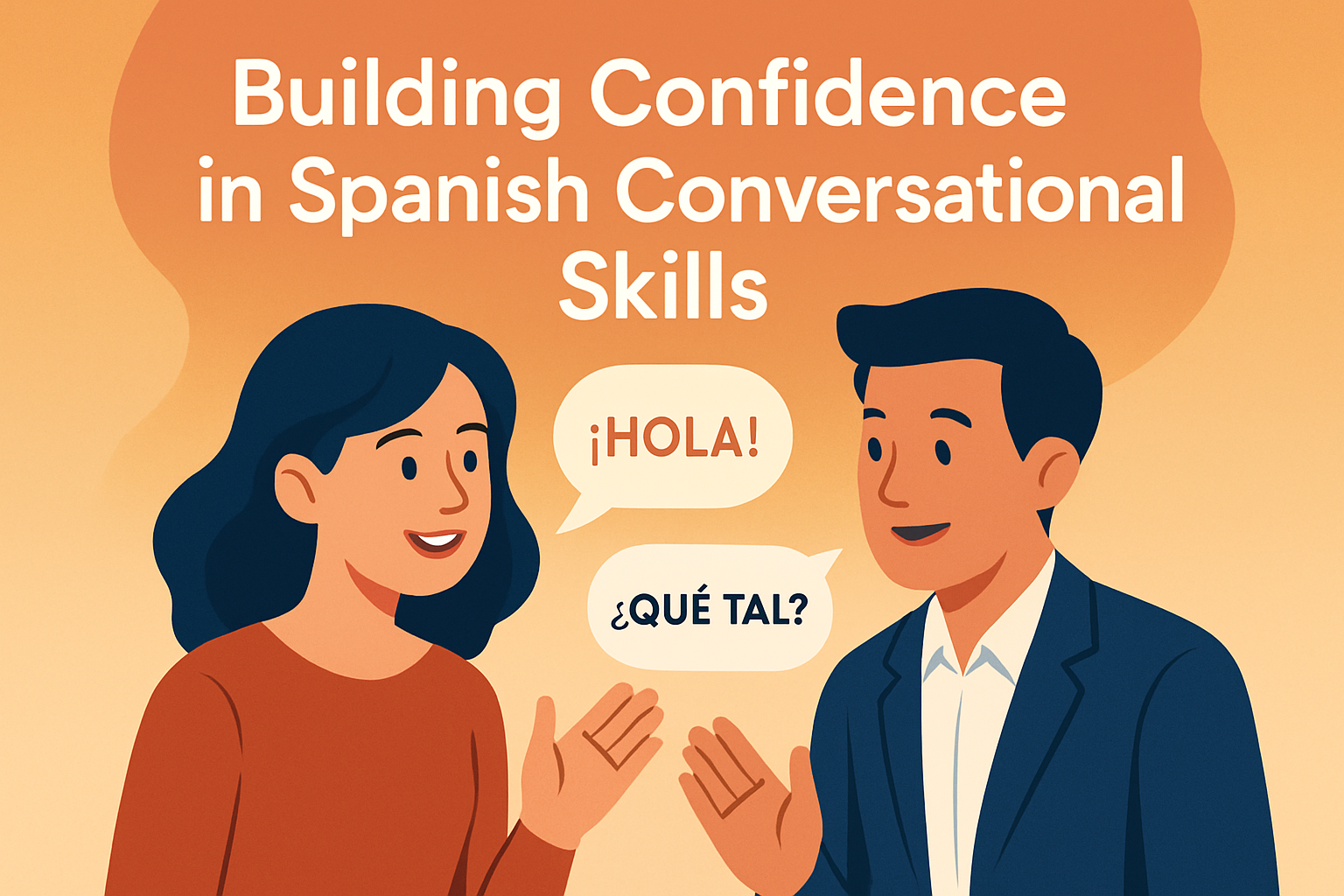
Spanish, as one of the most widely spoken languages in the world, opens innumerable doors both culturally and professionally. The confidence to engage in Spanish conversations can lead to more meaningful interactions, whether traveling through Latin America or conversing with native speakers at work. But building that confidence can be challenging. Unlike vocabulary or grammar drills, conversational skills are more nuanced, involving the mastery of tone, context, and real-time responsiveness. This article delves into the importance of Spanish conversation skills and provides practical yet thorough guidance on boosting your confidence in engaging smoothly with Spanish speakers. Why does having stellar Spanish conversational skills matter? It allows you to connect more deeply with people, enhances your cognitive abilities, and offers a more immersive travel experience. In today’s interconnected world, being bilingual, particularly in Spanish, is an invaluable asset that fosters both personal and professional growth.
Understanding the Basics of Spanish Conversation
The first step in building confidence in your Spanish conversational skills is to understand the basic structure of a conversation in Spanish. Unlike English, Spanish is a highly inflected language which means that the form of words changes to express tense, mood, voice, aspect, person, number, gender, and case. Recognizing these variations will not only make you a better listener but also a more effective speaker. Proper pronunciation, appropriate expressions and understanding the cultural context of the conversation are also crucial. For instance, a simple conversation starter like “¿Cómo estás?” (How are you?) when improperly pronounced could lead to misunderstandings. An excellent exercise is to listen to native speakers and practice imitating their sounds and expressions.
Vocabulary Building and Its Impact on Conversation
While grammar is important, vocabulary forms the backbone of any conversation. Without the right words, articulating your thoughts becomes challenging. Building a strong, contextually appropriate vocabulary foundation is essential. A practical approach would be to categorize vocabulary based on scenarios like daily greetings, travel, dining, and emergencies. Flashcards, mobile apps, and daily reading of Spanish texts can significantly expand your vocabulary pool and, in turn, your confidence. For example, imagine you’re at a restaurant in Barcelona. Understanding common culinary terms and phrases to order food not only boosts your confidence but also enhances your dining experience. Moreover, knowing synonyms and antonyms allows for more enriched conversations, as you can express your thoughts in varied, nuanced ways.
The Role of Active Listening
Active listening is a skill that empowers you to be fully engaged in conversations. It involves paying attention not only to the words spoken but also to the tone, pauses, and intonations. Engage with Spanish podcasts, watch films, or listen to news in Spanish, focusing on tone, reelabi, and expressions. Active listening helps improve not only comprehension but also pronunciation and timing in replies. For instance, in a casual chat with a coworker from Spain, actively listening enables you to catch idiomatic expressions or cultural references that you can use in the future. Engagement in active listening enriches your conversation-style vocabulary in native contexts, making you more relatable to speakers.
Practicing Speaking Through Real-life Interactions
Nothing beats actual practice when it comes to building conversational confidence. Engage in language exchange meetups, join Spanish clubs, or even practice with friends or digital partners. Online platforms offer an excellent opportunity; you can use them to find conversation partners eager to teach Spanish while learning English in return. Practice builds fluency—the capacity to string words into coherent, meaningful sentences. For instance, embarking on a three-month exchange program in Mexico city boosts your conversational skills exponentially by placing you in real-life situations that require you to speak Spanish constantly.
Utilizing Spanish in Everyday Situations
Integrating Spanish into your daily life is key to mastering conversational skills. Try narrating your daily routine in Spanish, practice speaking in Spanish while performing tasks or engage with Spanish media. This approach not only normalizes the use of Spanish in your daily activities but also encourages you to transition seamlessly between the languages. It can be as simple as labeling items around your home or as involved as keeping a journal in Spanish. This method could escalate from ordering your morning coffee “en español” at a local café to adding Spanish dialogue in your interactions with pets or plants.
| Situation | Spanish Phrase | English Translation |
|---|---|---|
| Ordering Food | Me gustaría ordenar… | I would like to order… |
| Asking for Directions | ¿Dónde está…? | Where is…? |
| Meeting New People | Mucho gusto | Nice to meet you |
| Expressing Gratitude | Gracias | Thank you |
Overcoming the Fear of Mistakes
Fear of making mistakes can be a significant barrier. Spanish learners often refrain from speaking for fear of mispronunciation or grammatical errors. To overcome this, you must remember that making mistakes is not only normal but is an integral part of the learning process. Native speakers appreciate the effort and often forgive mistakes, viewing them as part of engaging earnest dialogue. For example, during a fiesta in Madrid, you might initially stumble over verb agreements. But each mistake is a learning opportunity, accelerating your mastery and reducing hesitance over time. Encourage yourself to speak, seek feedback, and progressively refine your skills.
Exploring Spanish Dialects and Regional Differences
The richness of Spanish is in its dialects and regional differences. Each Spanish-speaking country, and even regions within countries, may use varied expressions, slang, or accents. Embracing these differences can significantly boost your ability to have effective conversations and adapt to diverse Spanish-speaking environments. For instance, the way you say “car” differs from “coche” in Spain to “carro” in much of Latin America. Or consider how Argentinians use “vos” instead of “tú” for “you”. Learning these nuances can make interactions more natural and show a deep appreciation for cultural diversity.
Using Technology and Resources to Aid Learning
In today’s digital age, technology can be a valuable ally in building Spanish conversational confidence. Use language learning apps that offer exercises, real-time interaction, and conversation simulations. Websites like Meetup can connect you with groups of Spanish speakers for real-world practice. Additionally, software with speech recognition can assist in improving pronunciation. Watching Spanish YouTube channels or participating in online forums dedicated to the language allows for immersion virtually. Utilizing a variety of technological resources fosters a comprehensive understanding of the language in its diverse conversational forms.
Immersing Yourself in Spanish Culture
You can’t underestimate the power of culture in building conversational skills. Engaging with Spanish music, literature, films, and historical contexts provides insight into the nuances of the language. This cultural immersion enriches your understanding of context and allows you to approach conversations with background knowledge enhancing speaker-listener dynamics. Consider the subtle contextual differences in expressions used in Miguel de Cervantes’ works compared to those in Latin American literature. Similarly, listening to music by artists from different Spanish-speaking backgrounds improves auditory comprehension and expands phrase familiarity.
Balancing Formal and Informal Language
Being confident in Spanish conversation involves finding a balance between formal and informal language. While it is crucial to understand formal structures for professional or academic settings, mastering informal language is equally important for daily casual interactions. Knowing when and where to use specific phrases or expressions can enhance the fluidity and appropriateness of your conversational exchanges. Participate in various speaking events that demand switches between these language modes, like debating clubs for formal language practice and casual meetups for informal engagement.
Summary and Call-to-Action
Building confidence in Spanish conversational skills is a journey enriched by both dedication and immersion. The key is to understand the basics, expand your vocabulary, listen actively, and practice daily. Employ real-world interactions, technology, and cultural immersion while embracing mistakes as part of your growth narrative. Remember to balance formal and informal language nuances. By integrating Spanish into various facets of life and employing the strategies discussed, you’ll not only gain confidence in Spanish conversations but also open up to a culturally rich world. Your call-to-action is simple: immerse yourself, practice consistently, and engage actively with Spanish speakers around you. Keep the flow of learning constant and take every opportunity to speak; each interaction brings you closer to fluency and deeper understanding. Begin today—your journey to confident Spanish communication awaits, with its vast opportunities and enriching experiences.
Frequently Asked Questions
1. Why is building confidence in Spanish conversational skills important?
Building confidence in Spanish conversational skills is crucial for several reasons. First, it enhances your ability to communicate effectively in one of the world’s most widely spoken languages, which can be incredibly beneficial both personally and professionally. Professionally, being confident in Spanish allows you to engage more fully with colleagues, clients, or partners, particularly in industries that deal with global markets. Personally, it enriches your experience when traveling through Spanish-speaking countries, making interactions with locals more meaningful and authentic.
Moreover, conversational confidence enables you to understand cultural nuances better, as language is tightly woven with culture. For instance, showing politeness, humor, or empathy effectively can significantly alter how your communication is received. Feeling confident also reduces anxiety, making you more willing to engage in conversations, even in unfamiliar or challenging contexts. Overall, having robust conversational skills in Spanish not only broadens your communication ability but also deepens your cultural appreciation, allowing for more profound and rewarding interactions.
2. What are some effective methods to improve conversational skills in Spanish?
Improving conversational skills in Spanish involves more than just memorizing vocabulary or mastering grammar rules. One effective method is immersive learning, where you surround yourself with the Spanish language as much as possible. This might mean traveling to a Spanish-speaking country, attending language meetups, or participating in language exchange programs where you can practice with native speakers. Engaging in regular conversations, regardless of your proficiency level, helps you become more comfortable with real-time language use.
Another strategy is to leverage technology. Language apps like Duolingo or Rosetta Stone can offer structured practice, while podcasts, music, and Spanish-language films enable you to hear the language in context and pick up on colloquial expressions. Mimicry can also be quite powerful. By watching Spanish TV shows or movies, you imitate the intonation, rhythm, and pronunciation of native speakers, which can significantly enhance your speaking skills.
Additionally, incorporating language learning into your daily routine can provide consistent practice. This could be as simple as labeling household items in Spanish, writing a daily journal, or speaking Spanish with a buddy or language partner. Attending language classes or hiring a tutor can provide guidance and feedback, helping you correct mistakes and refine your speaking abilities over time.
3. How do I overcome my fear of making mistakes while speaking Spanish?
Overcoming the fear of making mistakes while speaking Spanish starts by embracing the understanding that making mistakes is a natural and important part of learning any new language. It’s essential to cultivate a mindset focused on progress rather than perfection. Remember, everyone makes mistakes, including native speakers of any language, and each error is an opportunity to learn and improve.
One way to ease this fear is to practice speaking in a supportive environment. Language exchange meetups or conversation clubs are places where participants often share the same apprehension and are supportive of each other’s learning journeys. With encouragement and positive reinforcement, your confidence in speaking will grow.
Recording yourself while speaking Spanish and playing it back can also be an effective tactic. This allows you to hear your own voice, catch areas for improvement, and track your progress over time. Similarly, feedback from a language tutor or a more experienced language partner can help you identify habitual mistakes and develop strategies to avoid them in the future.
Finally, setting realistic goals and celebrating small victories can build your confidence incrementally. Instead of aiming to have a flawless conversation, focus on improving specific aspects of your speech, such as your pronunciation or fluency in certain scenarios. As you notice growth and improvement, your confidence will naturally increase, reducing the anxiety tied to making mistakes.
4. How do cultural nuances impact conversational Spanish, and how can I learn them?
Cultural nuances have a significant impact on conversational Spanish because language isn’t just about words and grammar; it’s a reflection of cultural values, traditions, and ways of thinking. For instance, understanding regional expressions, idioms, gestures, and even humor can greatly affect how well you communicate in Spanish or how you’re perceived by native speakers.
One effective way to learn these cultural nuances is through exposure to Spanish-speaking communities, whether locally or abroad. Immersing yourself in different cultures, attending cultural events, and participating in social activities can teach you customs, traditions, and subtleties in communication that aren’t typically covered in textbooks.
Additionally, consuming media in Spanish can be incredibly informative. Watching shows, listening to music, tuning into podcasts, and reading books or articles written by native speakers offer deep insights into cultural contexts. This helps you recognize how language is used differently depending on the situation or region.
Engaging with native speakers and asking about cultural norms or common expressions also helps you become more attuned to different usages. Language exchange partners or tutors from diverse Spanish-speaking cultures, in particular, can provide insights into nuances that might be unique to their region or community.
5. What role does listening play in building conversational confidence in Spanish?
Listening plays a critical role in building conversational confidence in Spanish, as it is an integral part of effective communication. Through active listening, you can pick up nuances in pronunciation, intonation, and context, which enhances your comprehension and ability to respond understandably and appropriately.
Being an attentive listener helps you understand the flow of natural conversation and patterns of speech. This becomes particularly important in distinguishing formal from informal language and recognizing regional accents and slang. Developing good listening skills sharpens your ability to decode meaning, even from unknown words, based on context and tone, ultimately leading to greater confidence when speaking.
Practicing listening skills also reinforces what you’ve learned about the language in theory. Engaging with different types of Spanish media, such as films, music, podcasts, and news programs, exposes you to various speakers, accents, and contexts, all of which contribute to a more rounded understanding of the language as it is actually used.
Incorporating listening into your learning routine isn’t just about passive absorption; it’s about becoming an active listener, noticing patterns, and applying them in your speech. Over time, your listening proficiency will inform and improve your speaking abilities, boosting overall confidence in your conversational Spanish.


