
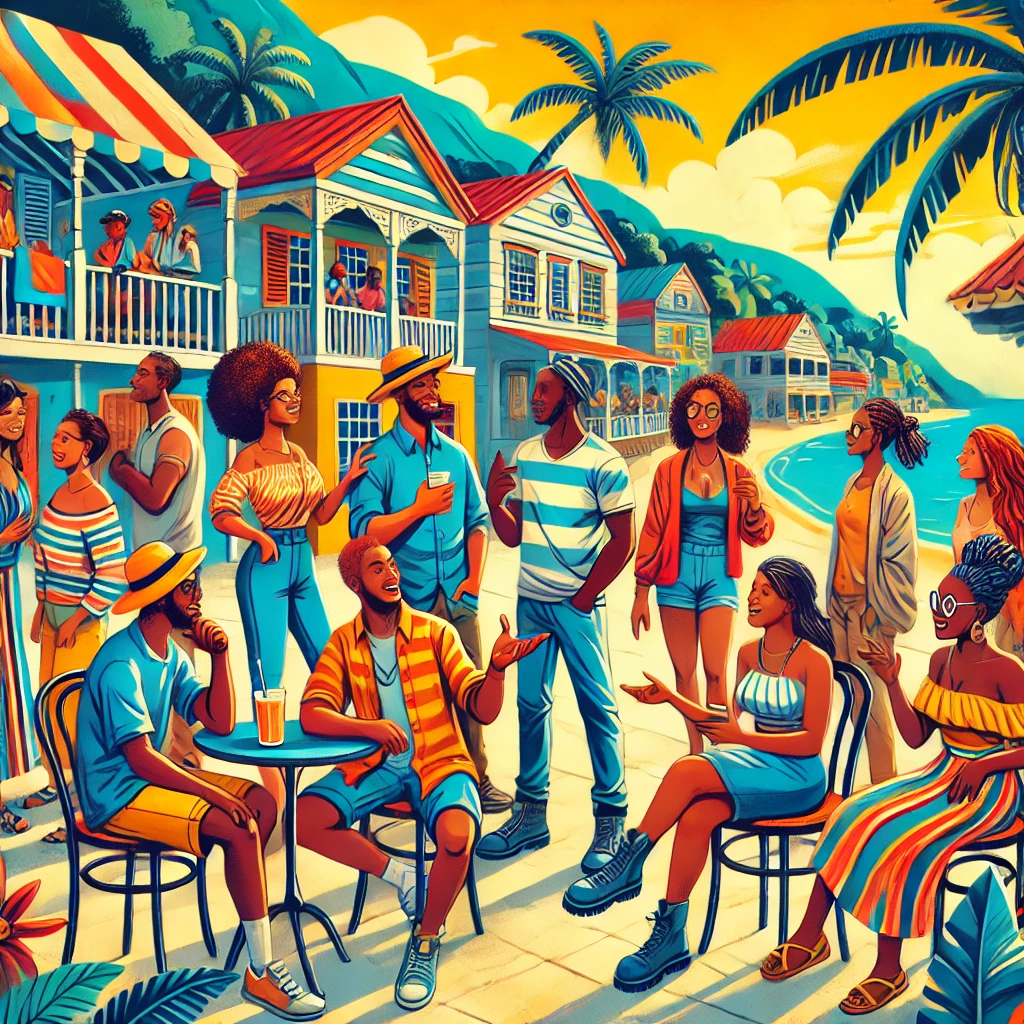
The Caribbean is celebrated for its vibrant cultures, sun-drenched beaches, and of course, its rich linguistic tapestry. Spanish, one of the primary languages spoken across Caribbean nations like Cuba, the Dominican Republic, and Puerto Rico, offers a fascinating glimpse into the lives and traditions of its speakers. While derived from Castilian Spanish, the Caribbean variant presents unique elements that make it stand out. From musical influences to historical nuances shaped by centuries of colonialism, slavery, and migration, Caribbean Spanish is a melodious journey that attracts language enthusiasts from around the world.
As you venture deeper into the Caribbean archipelago, you’ll notice distinct pronunciations, a sprinkle of indigenous and African words, and an array of colloquialisms that are quintessentially Caribbean. The region’s Spanish is not just a medium of communication but a reflection of its diverse heritage. In this article, we will embark on a linguistic exploration, unraveling the unique aspects that characterize Caribbean Spanish vocabulary. Whether you’re an aspiring Spanish speaker, a traveler, or a culture aficionado, this exploration will enrich your understanding and appreciation of the Caribbean’s linguistic landscape.
The Historical Roots of Caribbean Spanish
To understand the nuances of Caribbean Spanish, it’s crucial to delve into its historical roots. The Spanish language was first brought to the Caribbean by Christopher Columbus in 1492. As Spain established colonies throughout the region, Spanish became the lingua franca. However, the Caribbean was far from being a monolithic entity. Inhabitants included indigenous peoples like the Taíno and Carib, whose languages influenced the Spanish spoken by settlers.
The African influence on Caribbean Spanish cannot be understated. The transatlantic slave trade brought millions of Africans to the Caribbean, who brought with them not only their labor but also their languages, cultures, and traditions. Many African words were incorporated into the local Spanish lexicon, particularly in terms related to cuisine, music, and daily life.
Moreover, the Caribbean was a melting pot of European powers. With the British, French, Dutch, and Portuguese also staking claims in various parts of the region, a myriad of languages intermixed. This confluence of influences created a unique and eclectic Spanish dialect that bears traces of indigenous, African, and other European languages.
Pronunciation and Phonetic Features
One of the distinct features of Caribbean Spanish is its pronunciation. Phonetic characteristics provide a melodic quality that is often associated with Caribbean speech. For instance, Caribbean Spanish speakers often drop the “s” at the end of syllables. So, “más” (more) is pronounced as “má.” Another notable feature is the aspiration of the “r” and “l” sounds at the end of syllables, often turning them into a soft, almost silent “h.” For example, “amor” (love) might sound like “amoh” and “animal” (animal) like “animah”.
The influence of African languages is particularly evident in the intonation and rhythm of Caribbean Spanish. “Reggaetón,” a popular music genre originating in Puerto Rico, reveals how musicality permeates the Spanish spoken in this region. The cadence and stress patterns often mirror African linguistic structures, resulting in a melodious and rhythmic flow that is easy to recognize but challenging to master.
These phonetic quirks make Caribbean Spanish distinct but also unified in its diversity. Understanding these nuances not only aids in comprehension but also enriches the linguistic experience, providing a deeper connection to the region’s cultural and historical roots.

Unique Vocabulary and Expressions
Caribbean Spanish is replete with vocabulary that sets it apart from other Spanish-speaking regions. Many words and expressions have become symbols of Caribbean identity. For example, in Puerto Rico, the word “bochinche” is commonly used to describe gossip, whereas, in Spain, one would use “chisme.” Similarly, “guagua” is the preferred term for a bus in Cuba and the Dominican Republic, contrasting with “autobús” in other Spanish-speaking countries.
Food-related vocabulary also offers insights into the Caribbean way of life. “Mofongo,” a delightful dish made of mashed plantains, is a staple in Puerto Rico. Another example is “tostones,” referring to twice-fried plantains, a popular snack across the Caribbean. These terms might not be found in a standard Spanish dictionary, but they are integral to understanding Caribbean culinary culture.
Colloquial expressions and idioms further add to the richness of Caribbean Spanish. Phrases like “estar como coco” (to be crazy) in the Dominican Republic or “¡A la cañona!” (hurry up) in Cuba reflect the creativity and playfulness inherent in the language. Such idioms not only provide a colorful mode of expression but also offer a glimpse into the social fabric of the Caribbean.
Grammar and Syntax Variations
Beyond vocabulary, Caribbean Spanish also showcases differences in grammar and syntax. One noticeable variation is in the use of subject pronouns. Caribbean Spanish speakers often omit subject pronouns, particularly in informal settings. For instance, “(Yo) voy al mercado” (I am going to the market) is commonly truncated to “Voy al mercado.”
The use of “voseo” is another interesting aspect. While “voseo” (the use of “vos” instead of “tú” for the second-person singular) is predominantly associated with regions like Argentina and Uruguay, its influence can also be observed in Caribbean Spanish, albeit to a lesser extent. For example, in some rural areas of the Dominican Republic, “vos” might be used in casual conversations.
Additionally, Caribbean Spanish tends to favor the present continuous tense more frequently than other varieties. Rather than saying “Estoy cocinando” (I am cooking), one might hear “Voy cocinando” to describe an ongoing action. These syntactical variations, while subtle, play a significant role in making Caribbean Spanish unique and distinct.
Cultural Influences on Language
Language is a reflection of culture, and Caribbean Spanish is a testament to this adage. The cultural richness of the Caribbean is deeply embedded in its language. Music, for instance, has a profound influence on Caribbean Spanish. Genres like salsa, merengue, bachata, and reggaetón not only provide a rhythm to life but also contribute a lexicon of their own. Terms like “tumbao” (rhythmic body movement) have seeped into everyday language, testifying to the inseparable relationship between music and speech in the Caribbean.
Festivals and celebrations also leave an imprint on language. Words like “carnaval” (carnival) and “parranda” (party) get tossed around frequently, reflecting the region’s love for festivity and communal gatherings. Many of these terms have historical roots, tracing back to religious and pagan traditions that have evolved over centuries.
The impact of migration should not be overlooked. The Caribbean diaspora, particularly in countries like the United States, has led to a linguistic exchange that has further enriched Caribbean Spanish. Spanglish, a hybrid of Spanish and English, is a linguistic phenomenon that is particularly prevalent in Puerto Rican communities within the U.S. Words like “janguear” (to hang out) are the byproducts of such cultural exchanges, blending elements from both languages into a single cohesive expression.
The Future of Caribbean Spanish
As we look toward the future, the trajectory of Caribbean Spanish is one of continued evolution. Technological advancements and increased global interconnectedness will undoubtedly influence the language in new and unforeseen ways. Social media platforms and digital communication have already given rise to new slang and expressions that are rapidly adopted by younger generations.
Moreover, the preservation of indigenous languages remains a challenge but also an opportunity for enriching Caribbean Spanish. Efforts to revive and integrate indigenous words offer a beacon of hope for maintaining the linguistic diversity that characterizes the region.
Educational initiatives and linguistic research will play pivotal roles in shaping the future landscape of Caribbean Spanish. By documenting and studying the unique elements of this dialect, linguists and educators can develop curricula that highlight its richness and vibrancy. Such efforts will ensure that Caribbean Spanish retains its unique identity while adapting to the linguistic shifts brought about by globalization.
Conclusion
Caribbean Spanish is more than just a dialect; it’s a vibrant reflection of a region’s history, culture, and people. Through its unique pronunciation, diverse vocabulary, and rich cultural influences, Caribbean Spanish offers a melodic journey that is both fascinating and enlightening. As you navigate the linguistic waters of this region, you’ll discover a tapestry woven with elements from various continents and eras, each contributing to the colorful mosaic that is Caribbean Spanish.
Whether you’re chatting with locals, dancing to the rhythm of a reggaetón beat, or savoring a plate of mofongo, the language you encounter is a gateway to understanding the soul of the Caribbean. Embrace the quirks, celebrate the differences, and immerse yourself in the melodious symphony that is Caribbean Spanish. Your linguistic journey through this captivating region is bound to leave you enriched, enlightened, and eager for more.
In a world that is increasingly interconnected, the preservation and appreciation of regional dialects like Caribbean Spanish are more important than ever. They serve as a reminder of our shared humanity and the beauty of cultural diversity. So the next time you hear the rhythmic flow of Caribbean Spanish, let it remind you of the rich tapestry of history and culture that it represents.


