The Spanish Language, also known as Castilian, is a rich and diverse language spoken by millions of people across the world. However, it is not a standalone language in its make-up. The Spanish language has been influenced by many other languages and dialects over the centuries, one of the most significant influences being Catalan. The interaction between these two languages has resulted in the incorporation of numerous Catalan words into Spanish vocabulary. This interconnectedness showcases the cultural and regional varieties that enrich the Spanish language.
Introduction: Catalonia and Its Language
Catalonia, located in the northeastern corner of Spain, is a region that is both autonomous and distinct in its cultural heritage. The Catalan language, which is spoken by around 11 million people, has a strong presence in Catalonia, the Valencian Community, the Balearic Islands, and some parts of Aragon. It is also spoken in some regions of France and the Italian city of Algher.
Catalan is a Romance language that evolved from the Vulgar Latin spoken in the Pyrenees region during the early Middle Ages. Though it evolved independently, Catalan shares similarities with other Romance languages such as Spanish, French, and Italian. Over time, the close proximity and political connections between Catalonia and the rest of Spain have led to a significant interchange of words, phrases, and idioms between Catalan and Spanish.
The influence of the Catalan language on Spanish is evident in various aspects of daily life, from the arts and literature to cuisine and politics. Understanding this influence not only enriches our comprehension of the Spanish language but also helps in appreciating the cultural mosaic of Spain.
Historical Context: The Evolution of Mutual Influence
The historical interaction between Catalonia and the rest of Spain is a tale of both cooperation and conflict. During the Middle Ages, Catalonia was part of the Crown of Aragon, which also included present-day Aragon, the Balearic Islands, Valencia, and parts of modern Italy and Greece. This political entity facilitated the mixing of languages, cultures, and traditions.
As the Middle Ages gave way to the Renaissance, Catalonia experienced periods of political autonomy interspersed with centralization efforts from the Spanish crown. The Spanish Civil War and subsequent dictatorship of Franco in the 20th century saw efforts to suppress regional languages and cultures. Despite these hardships, Catalan has endured and continued to influence Spanish.
Through centuries of political changes, social interactions, and cultural exchanges, numerous Catalan words have found their way into the Spanish lexicon. This influence is not just a one-way street; Spanish also impacts Catalan, demonstrating a dynamic and reciprocal relationship.
Linguistic Borrowings: Catalan Words in Spanish Vocabulary
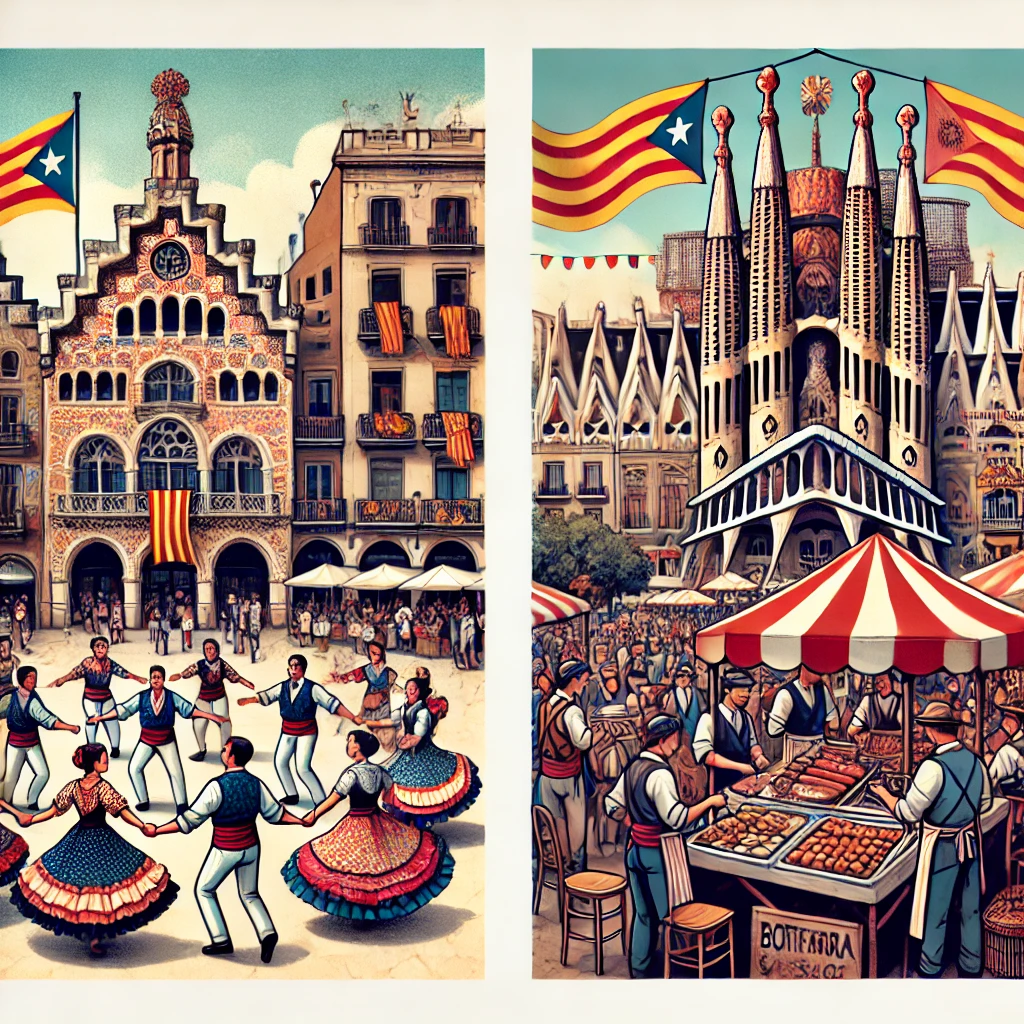
Catalan contributions to the Spanish language can be seen across various domains. For instance, in the culinary world, numerous dishes and ingredients that originated in Catalonia have retained their Catalan names in Spanish. Examples include “butifarra” (a type of sausage) and “crema catalana” (a dessert similar to crème brûlée).
Apart from gastronomy, Catalan influences are found in everyday terminology, particularly in regions close to Catalonia. In architecture and art, terms like “trencadís” (a type of mosaic) have been adopted into Spanish. The fields of music, dance, and theatre also reflect Catalan influence, with words such as “sardana” (a traditional Catalan dance) being common in Spanish.
Moreover, the mutual influence can be seen in idiomatic expressions and colloquial language. For instance, the Catalan phrase “fer volar coloms” (literally, “to make pigeons fly”) is used metaphorically in Spanish as “soñar despierto” (to daydream). These linguistic borrowings showcase the deep interconnectivity between the two cultures.
Pronunciation and Syntax Influences
Beyond vocabulary, Catalan influences the pronunciation and syntax of Spanish in Catalonia and surrounding regions. The accent and intonation patterns of Catalan speakers often seep into their Spanish speech, creating identifiable regional pronunciations. For instance, the Catalan accent tends to emphasize certain vowels and consonants differently compared to Standard Spanish.
Syntax, or the arrangement of words and phrases to create sentences, can also exhibit Catalan patterns when Catalan speakers switch to Spanish. For example, the use of reflexive verbs and the preference for certain sentence structures in Catalan can be observed in their Spanish. These subtleties influence the melodic flow and rhythm of regional Spanish dialects.
These phonetic and syntactic influences contribute to the rich tapestry of Spanish dialects, making the language more diverse and representative of its speakers’ cultural backgrounds.
Educational Implications: Teaching and Learning in Catalonia
The bilingual nature of Catalonia presents unique opportunities and challenges in education. In Catalan schools, both Catalan and Spanish are typically employed as languages of instruction. This bilingual education model helps students become proficient in both languages, fostering a deeper understanding of their cultural and linguistic heritage.
Teachers and educators in Catalonia play a crucial role in balancing these languages. They must develop curricula that reflect the significance of both Catalan and Spanish, ensuring that students are well-versed in each language’s literature, history, and contemporary usage. This dual-language approach not only enhances linguistic skills but also promotes cultural inclusivity and mutual respect.
However, this bilingual education model also requires careful planning to address potential challenges. Striking the right balance between the two languages and providing adequate resources for both are essential for the success of this educational framework. The goal is to create an environment where students can flourish linguistically and culturally, preparing them to navigate a diverse and interconnected world.
Cultural Exchange and Identity
The infusion of Catalan into Spanish vocabulary and vice versa exemplifies the broader theme of cultural exchange and identity within Spain. Language is more than just a communication tool; it is a reflection of identity, heritage, and community. The interplay between Catalan and Spanish languages embodies the multifaceted nature of Spanish identity.
In regions like Catalonia, where both languages are spoken, individuals often navigate between these linguistic identities daily. This fluidity creates a rich cultural landscape where traditions, customs, and expressions are shared and celebrated. The presence of Catalan words in Spanish not only enhances the lexicon but also serves as a reminder of the interconnectedness of the Spanish-speaking world.
This cultural exchange is evident in various forms of art, music, literature, and social interactions, showcasing the harmonious blending of traditions and influences from different linguistic heritages. Embracing this cultural diversity is essential for fostering unity and appreciation within Spain’s diverse population.
Conclusion: Celebrating Linguistic Diversity
The influence of Catalan on Spanish vocabulary is a testament to the dynamic and evolving nature of languages. This linguistic interweaving reflects the historical, cultural, and social bonds that connect Catalonia and the rest of Spain. Understanding and appreciating these influences enriches our knowledge of the Spanish language and deepens our appreciation for its regional varieties.
As we navigate an increasingly interconnected world, recognizing and celebrating linguistic diversity becomes even more crucial. The Catalan influence on Spanish vocabulary serves as a reminder of the power of cultural exchange and collaboration. It highlights the shared history and collective identity that bind different regions and communities together.
By embracing the linguistic contributions of Catalan and other regional languages, we celebrate the richness and complexity of the Spanish language. This celebration goes beyond mere words; it is an acknowledgment of the diverse voices and stories that shape our world. Through this lens of linguistic diversity, we can foster greater understanding, empathy, and unity among all Spanish speakers.