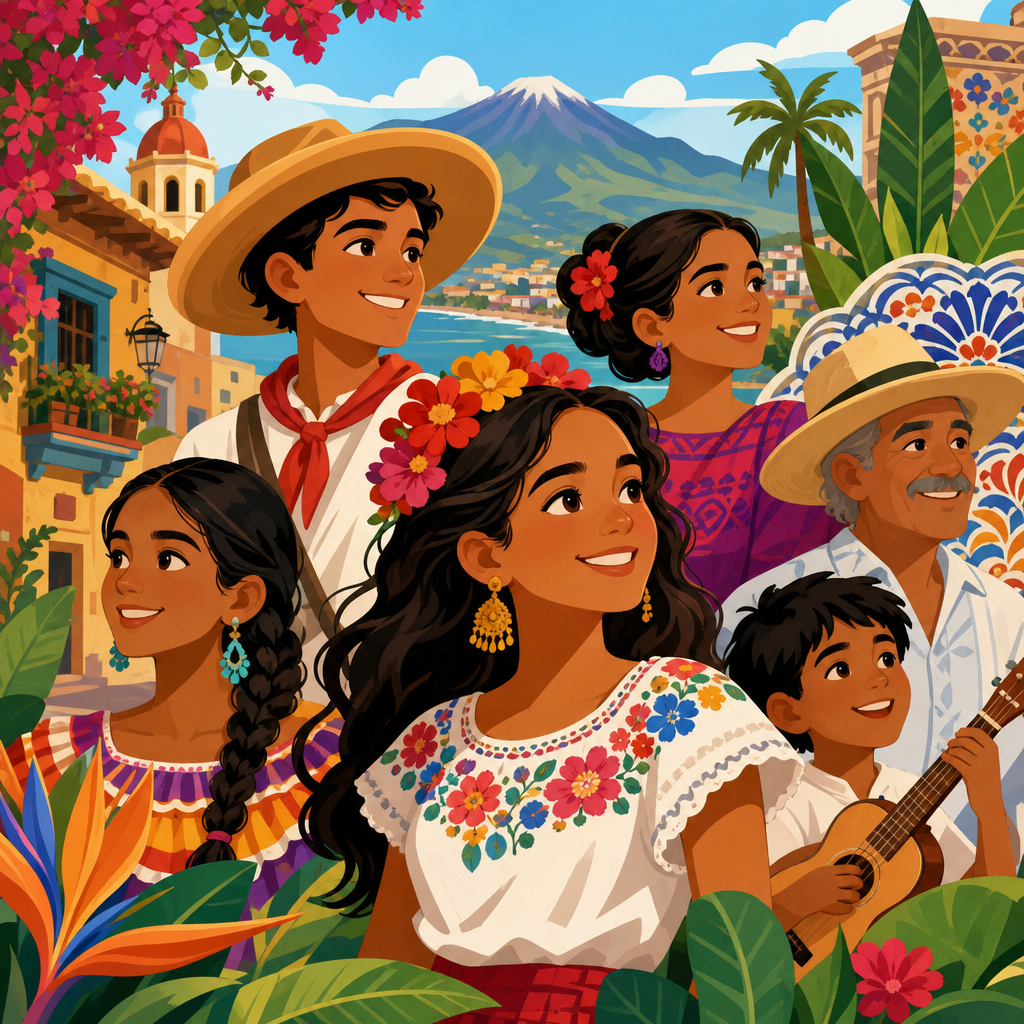
Celebrating Hispanic Heritage means recognizing the histories, languages, artistic traditions, migrations, and everyday contributions of people connected to Spain, Latin America, and Spanish-speaking communities worldwide. Hispanic heritage is not a single story or a fixed identity. It includes Indigenous, African, European, Arab, and Asian influences shaped over centuries through trade, conquest, resistance, religion, foodways, and family life. In practical terms, it shows up in the Spanish language, in regional accents from Mexico City to San Juan, in music from flamenco to salsa, and in public life through literature, business, education, and civic leadership.
This topic matters because Spanish-speaking communities are central to contemporary culture and economy on both sides of the Atlantic. More than 500 million people speak Spanish globally, making it one of the world’s most widely used languages. In the United States alone, Hispanic communities influence media, voting, entrepreneurship, sports, and local traditions in ways that cannot be treated as niche or seasonal. I have worked on Spanish community programming and bilingual content projects long enough to see a pattern: when heritage is presented as a living conversation instead of a museum exhibit, people engage more deeply, ask better questions, and connect history to the present.
As a hub for the miscellaneous side of Spanish community and interaction, this article brings together the broad themes readers usually search for first. What does Hispanic heritage include? How do different countries contribute distinct traditions? Why are language, migration, food, and festivals so often at the center of identity? And how can schools, organizations, and families celebrate respectfully without flattening differences? The answers require both overview and detail. A useful guide must cover defining concepts, regional examples, and practical ways to learn more while acknowledging that no single article can contain every voice.
One important distinction helps at the start. Hispanic usually refers to people, cultures, or places linked to the Spanish language, while Latino or Latin American emphasizes geography and roots in Latin America. The terms overlap, but they are not identical. Spain is Hispanic but not Latin American. Brazil is Latin American but not Hispanic because Portuguese is its main language. Many people also prefer national, regional, or Indigenous identities first. Respect begins by asking how communities describe themselves and by understanding that heritage is personal as well as historical.
The many roots of the Spanish-speaking world
The Spanish-speaking world was shaped by encounters that were creative and violent at the same time. Pre-Columbian civilizations such as the Maya, Mexica, Taíno, Inca, Muisca, and countless others developed sophisticated systems of agriculture, astronomy, architecture, and governance long before Spanish colonization. After 1492, imperial expansion imposed new political structures, Catholic institutions, and the Spanish language across vast territories. But colonial society never became culturally uniform. Indigenous languages survived, African cultural practices transformed religion and music, and migration from Europe, the Middle East, and Asia added further layers.
Understanding Hispanic heritage requires seeing mixture as historical reality, not slogan. In Mexico, maize-based cuisine, Nahuatl vocabulary, and Catholic feast days coexist in daily life. In the Caribbean, African drumming traditions, Spanish lyric forms, and local oral storytelling traditions produced genres that later shaped global music. In the Andes, Quechua and Aymara cultural continuity remains visible in textiles, farming knowledge, and festivals. In Spain itself, Roman, Visigothic, Jewish, Muslim, and Christian legacies are present in architecture, law, language, and cuisine. Heritage is strongest when these roots are named accurately instead of blended into a vague multicultural label.
Language as identity, bridge, and living archive
Spanish is often the most visible marker of Hispanic heritage, but it is far from uniform. The language differs in vocabulary, pronunciation, rhythm, and even grammar from region to region. Someone from Argentina may use vos where a speaker from Madrid uses tú. Caribbean Spanish often drops final consonants in speech, while highland varieties can sound more deliberate and conservative. These differences are not errors. They are evidence of living communities adapting language to history, migration, and contact with other tongues.
Language also carries memory. Hundreds of common Spanish words come from Indigenous and Arabic sources. Terms such as chocolate, tomate, and coyote entered global vocabulary through Indigenous languages of the Americas, while words like aceite, alcalde, and ojalá reveal centuries of Arabic influence in Iberia. In community settings, bilingualism often becomes a marker of resilience. I have seen grandparents preserve family stories in Spanish while younger generations move fluidly between English and Spanish to navigate school, work, and public life. That code-switching is not confusion. It is skilled communication shaped by context, audience, and identity.
For educators and community leaders, the practical lesson is clear: treating Spanish as one standardized block misses the people speaking it. Respecting regional forms, heritage speakers, and Indigenous language presence creates stronger programs and more trust. It also gives learners a fuller picture of the Spanish-speaking world.
Stories told through music, literature, and visual art
Art is one of the clearest ways to understand how Hispanic heritage travels across borders. Music alone offers a map of exchange. Flamenco in southern Spain reflects Romani, Andalusian, and possibly North African influences. Cuban son helped shape salsa, which later grew in New York through Puerto Rican, Cuban, and broader Caribbean communities. Mariachi developed in western Mexico with string traditions later expanded by trumpets and formal traje charro dress. Reggaeton emerged from Afro-Caribbean and Panamanian roots before becoming a global genre through Puerto Rico. Each form carries local history, class dynamics, and racial politics along with danceable rhythms.
Literature and visual art tell parallel stories. Miguel de Cervantes remains foundational to Spanish literature, but the canon of Hispanic heritage also includes Sor Juana Inés de la Cruz, Gabriel García Márquez, Pablo Neruda, Julia de Burgos, Federico García Lorca, Isabel Allende, and Sandra Cisneros. Their work addresses empire, gender, dictatorship, migration, urban life, and memory. In visual art, Diego Rivera’s murals, Frida Kahlo’s self-portraiture, Fernando Botero’s volumetric figures, and Pablo Picasso’s experimentation all show that heritage is not stylistically narrow. It includes public art, political witness, intimate symbolism, and avant-garde innovation.
These works matter because they teach readers how communities represent themselves. When schools or organizations celebrate Hispanic heritage through one dance, one flag, or one famous artist, they miss the richer lesson. The arts reveal difference within shared language and shared history.
Food traditions that preserve history
Food is often the first point of connection and the easiest place to make mistakes. Hispanic cuisine is not reducible to tacos, paella, or empanadas, because ingredients and techniques vary sharply by climate, migration pattern, and local history. Corn, beans, squash, potatoes, cassava, plantains, olives, rice, pork, seafood, and countless peppers appear in different combinations across regions. A dish can tell a history of trade routes, colonization, religious practice, or labor systems in a way textbooks rarely do.
Take a few examples. Mexican mole combines Indigenous ingredients such as chiles and cacao with colonial-era spices and techniques, producing a sauce with many regional variants. Cuban ropa vieja reflects Caribbean adaptation and migration history. Peruvian ceviche speaks to Pacific geography and deep Indigenous fishing traditions, later shaped by Spanish and Japanese influence. Spanish paella originated in Valencia and remains tied to local ingredients and social cooking traditions. Arepas connect several northern South American countries, but styles differ significantly between Venezuela and Colombia. The point is not to rank authenticity rigidly; it is to connect dishes to place and people.
| Tradition | Primary Region | What It Reveals About Heritage |
|---|---|---|
| Flamenco | Andalusia, Spain | Romani, Andalusian, and cross-Mediterranean cultural exchange |
| Mariachi | Jalisco, Mexico | Regional identity, rural traditions, and national symbolism |
| Ceviche | Peru | Coastal ecology, Indigenous practice, and later migration influence |
| Salsa | Caribbean/New York | Diaspora creativity and urban community formation |
| Day of the Dead | Mexico | Indigenous remembrance combined with Catholic observance |
Migration, diaspora, and community building
Hispanic heritage is also a story of movement. Migration within Latin America, from Latin America to Spain, and from Spanish-speaking countries to the United States has reshaped neighborhoods, labor markets, and cultural life for generations. People move for opportunity, safety, education, family reunification, or political survival. These journeys create diaspora communities that preserve traditions while adapting them to new realities.
In the United States, Mexican American communities in the Southwest carry histories that predate current national borders. Puerto Rican communities in New York forged influential cultural institutions and musical scenes in the twentieth century. Cuban communities in Florida transformed local politics and entrepreneurship. More recent migration from Central America, Venezuela, and the Dominican Republic continues to diversify what Hispanic identity looks like in schools, workplaces, and public spaces. In Spain, immigration from Latin America has likewise changed urban life in Madrid, Barcelona, and beyond.
Community building happens through churches, mutual aid societies, sports leagues, small businesses, language schools, radio stations, and digital networks. I have repeatedly seen local bakeries, bookstores, and neighborhood festivals do more than commerce or entertainment. They become trusted places where people exchange jobs, legal advice, childcare recommendations, and cultural knowledge. Heritage survives when there is infrastructure for belonging.
How to celebrate Hispanic heritage with accuracy and respect
Meaningful celebration starts with specificity. Instead of presenting all Spanish-speaking cultures as interchangeable, identify whose history is being highlighted and why. If a school hosts an event, it should include country-specific or region-specific context, correct pronunciation, and materials created with community input. If a company plans heritage programming, it should go beyond decorative themes and invite employees, scholars, artists, or local leaders to shape content. Recognition without representation usually feels superficial.
Good practice also means including difficult history. Colonization, enslavement, anti-Indigenous violence, authoritarian rule, labor exploitation, and discrimination are part of Hispanic heritage too. Honest celebration does not weaken pride; it makes pride credible. The same principle applies to language. Do not mock accents, assume every Hispanic person speaks Spanish, or treat bilingual employees as unpaid translators. Respect is practical, not abstract.
For families and readers looking to go deeper, start with primary sources and community institutions. Read novels and memoirs from different countries. Visit local museums, cultural centers, or historical societies. Follow Spanish-language journalism from outlets such as BBC Mundo, El País, Univision, or local community newspapers. Watch films by directors from across the Spanish-speaking world. Most importantly, listen when people describe their own heritage in their own terms. That habit improves cultural understanding faster than any themed celebration ever will.
Hispanic heritage is best understood as a living network of stories rather than a single label. It includes ancient civilizations, colonial encounters, migrations, neighborhood traditions, global art, and everyday family practices carried through language and memory. The Spanish-speaking world is connected, but it is not uniform, and that difference is a strength. When readers grasp the many roots behind music, food, literature, and community life, they move beyond stereotypes and begin to see heritage as something dynamic, local, and historically grounded.
The most important takeaway is simple: celebrate with context. Learn the distinction between broad identity terms, respect regional differences, and make room for Indigenous, African, and diaspora contributions that are too often minimized. Stronger understanding leads to better education, better community programming, and more meaningful interaction across generations and borders. In my experience, people respond most positively when heritage is presented with accuracy, curiosity, and humility rather than with generic symbolism.
Use this hub as a starting point for deeper exploration across the Spanish community and interaction topic. From language variation to festivals, migration, cuisine, and the arts, every subtopic opens another door into the richness of the Spanish-speaking world. Choose one tradition, one author, one local organization, or one historical period and study it closely. That small next step is how broad appreciation becomes real cultural knowledge.
Frequently Asked Questions
What does it mean to celebrate Hispanic heritage in a meaningful way?
Celebrating Hispanic heritage in a meaningful way means going beyond surface-level symbols and taking time to understand the many histories, cultures, and lived experiences connected to Spanish-speaking communities. It includes recognizing the contributions of people from Spain, Latin America, the Caribbean, and Hispanic communities across the United States and the wider world, while also remembering that Hispanic heritage is not one single tradition or identity. It is shaped by Indigenous civilizations, African diasporic cultures, European influences, Arab legacies in the Iberian Peninsula, migration patterns, regional customs, and family histories that differ from place to place.
A meaningful celebration can include listening to personal stories, reading literature by Hispanic authors, learning about historical events from multiple perspectives, supporting Hispanic-owned businesses, exploring music and visual art, and engaging with language in respectful ways. It also means making space for complexity. Some people identify strongly as Hispanic, others prefer Latino, Latina, Latine, or Latinx, and others primarily identify by nationality, race, or Indigenous community. True celebration is rooted in curiosity, respect, and a willingness to learn from real voices rather than relying on stereotypes. When people honor both the achievements and the struggles of Spanish-speaking communities, the celebration becomes more accurate, inclusive, and lasting.
Why is Hispanic heritage often described as diverse rather than as a single culture?
Hispanic heritage is described as diverse because it spans many countries, regions, and communities with distinct histories, accents, cuisines, artistic traditions, and social experiences. Although the Spanish language creates an important cultural bridge, Spanish-speaking societies have been shaped by very different local realities. Mexico, the Dominican Republic, Argentina, Peru, Spain, Colombia, Equatorial Guinea, and Hispanic communities in the United States all have different historical timelines, racial formations, migration stories, and cultural expressions. Even within a single country, there may be major differences between urban and rural life, coastal and highland traditions, or Indigenous and Afro-descendant communities.
This diversity comes from centuries of exchange and conflict. Indigenous peoples maintained and adapted long-standing traditions; Africans brought by force through the transatlantic slave trade transformed music, religion, language, and food; Europeans introduced institutions, religion, and colonial systems; and later migrations added further layers from the Middle East, Asia, and elsewhere. As a result, Hispanic heritage cannot be reduced to one look, one political viewpoint, one style of music, or one kind of family story. Understanding that diversity helps readers appreciate why stories from the Spanish-speaking world are so rich and varied. It also prevents the common mistake of treating all Hispanic people as interchangeable, when in fact their identities are shaped by place, ancestry, class, migration, and personal experience.
How has the Spanish language influenced culture across the Spanish-speaking world?
The Spanish language has influenced culture across the Spanish-speaking world by serving as a shared medium for storytelling, education, religion, government, journalism, music, and everyday communication. It connects people across continents, allowing ideas, artistic movements, political debates, and family traditions to travel across borders. Through Spanish, writers have produced internationally important novels, poets have shaped national identities, journalists have documented social change, and musicians have carried local rhythms to global audiences. The language also helps preserve memory, especially through oral histories, sayings, humor, and expressions passed from one generation to another.
At the same time, Spanish is not uniform, and that is part of its cultural power. Vocabulary, pronunciation, and idioms vary widely by country and region, reflecting local history and cultural blending. Spanish in the Andes sounds different from Spanish in the Caribbean; border communities often mix Spanish and English in creative ways; and in many places Spanish exists alongside Indigenous and immigrant languages. This means the language is both a connector and a record of cultural diversity. Celebrating Hispanic heritage through language is not only about grammar or fluency. It is also about recognizing how people use Spanish to express belonging, resistance, humor, faith, love, and identity in everyday life. The language carries history, but it also continues to evolve with each generation.
What kinds of stories best represent the Spanish-speaking world?
The stories that best represent the Spanish-speaking world are the ones that show its breadth, contradictions, and humanity. Historical accounts of independence movements, labor struggles, migration, civil rights activism, and community organizing are important because they reveal how people shaped their societies under difficult conditions. But cultural stories matter just as much. Family recipes, neighborhood celebrations, bilingual childhoods, regional festivals, folk traditions, and personal memories of home all help explain how identity is lived on an everyday level. Some of the most powerful stories are not only about famous leaders or artists, but about workers, parents, students, musicians, farmers, and migrants whose experiences reflect resilience and change.
Strong representation also includes stories that challenge oversimplified narratives. For example, Hispanic communities include Afro-Latino histories, Indigenous language traditions, mixed-race identities, immigrant experiences, and diasporic lives that cross borders physically and emotionally. Stories about exile, return, discrimination, adaptation, pride, and intergenerational memory all reveal different dimensions of heritage. A well-rounded article on celebrating Hispanic heritage should include both joy and struggle, tradition and reinvention, local customs and global influence. In other words, the best stories do not flatten the Spanish-speaking world into a single message. They show how many voices, places, and histories are constantly in conversation with one another.
How can readers respectfully engage with Hispanic heritage throughout the year, not just during heritage month?
Readers can respectfully engage with Hispanic heritage throughout the year by making learning and support part of their regular habits rather than limiting interest to a single commemorative period. That can mean reading books by Hispanic authors, following journalists and historians from Spanish-speaking communities, watching films and documentaries from different countries, attending local cultural events, and learning about the history of Hispanic neighborhoods where they live. It can also mean choosing to support Hispanic-owned businesses, restaurants, bookstores, and artists in ways that value their work beyond themed celebrations or seasonal campaigns.
Respectful engagement also requires attention to accuracy and openness. Readers should avoid assuming that one person can speak for all Hispanic communities, and they should be willing to ask thoughtful questions, listen carefully, and learn the difference between terms such as Hispanic, Latino, national identity, race, and ethnicity. If language is part of the connection, even learning a few phrases in Spanish with humility can be meaningful, especially when paired with interest in the cultures and histories behind the words. Most importantly, year-round engagement means recognizing Hispanic heritage as a living, evolving part of society. It is present in public life, education, food, music, labor, civic leadership, literature, and family traditions every day. When people approach it with consistency, respect, and genuine curiosity, they build a deeper understanding that lasts far beyond a single month.