

When it comes to the Spanish language, it is anything but uniform. Regional variations, rich cultural contexts, and local vernaculars add layers of complexity to the language spoken across the Spanish-speaking world. In Colombia, Spanish takes on a unique flavor, embodying the vibrant cultural and geographical diversity of the country. But what makes Colombian Spanish stand out? Why is it so distinct, and what should you know if you are planning to visit or converse with a native speaker?
Colombian Spanish, often considered among the clearest and most neutral Spanish dialects, is incredibly diverse. It shifts as you travel from the Andean highlands to the Caribbean coast, plunging into the Amazon rainforest and passing through buzzing metropolises like Bogotá, Medellín, and Cali. Understanding these variations is crucial for anyone looking to master this beautiful dialect.
From the slang-filled streets of Medellín, where parcero (buddy) is a commonly tossed word, to the uniquely flavored Spanish of the Caribbean coast, Colombian Spanish offers a tapestry of linguistic richness. This guide aims to explore these regional expressions, providing insights that will help you appreciate Colombia’s rich linguistic landscape. Whether you are planning a trip, conducting business, or merely interested in broadening your Spanish vocabulary, this guide has got you covered.
So, let’s dive into the fascinating world of Colombian Spanish, uncovering the vocabulary, phrases, and expressions that make it unique.
Regional Variations: The Coast and the Interiors
One cannot talk about Colombian Spanish without acknowledging its regional variations. The country is divided into several linguistic regions, each with its own set of peculiarities and accents.
The Caribbean coast, known for its relaxed lifestyle, also reflects this in its Spanish. You’ll encounter a high incidence of aspiration and the dropping of the letter “s” at the end of syllables. Common words or phrases include:
- Chevere: Cool or awesome
- ¡Qué vaina!: What a mess! or What a situation!
- Mamadera de gallo: Joking around or teasing
The people from the coastal regions of Barranquilla or Cartagena use these expressions liberally, infusing their communications with a distinctive coastal vibe.
On the flip side, the interiors, especially cities like Bogotá, generally have a more formal and clear articulation. The accent here is often considered the most “neutral” in Colombia, making it a favorite for radio and TV presenters. In Bogotá, you’ll frequently hear:
- Chévere: Cool (a word borrowed from the coast but used nationwide)
- Jel: Hello (a local adaptation of the English word “hello”)
- Guaro: A local term for aguardiente, a traditional alcoholic beverage
Understanding these regional variations can significantly enhance your adaptability and fluency in Colombian Spanish. It will also help you connect more genuinely with locals, whether you’re exploring the vibrant culture of the coast or the structured lifestyle of the highlands.
The Influence of Indigenous Languages
Another fascinating aspect of Colombian Spanish is the influence of indigenous languages. Colombia is home to numerous indigenous communities, each contributing to the country’s linguistic diversity. Nahuatl, Quechua, and Chibcha are some of the languages that have left an indelible mark on Colombian Spanish.
In the southwest, especially in regions like Cauca and Nariño, you’ll notice words with indigenous roots seamlessly integrated into everyday vocabulary. Common examples include:
- Arepa: A type of food made from ground maize dough, a staple influenced by indigenous cuisine
- Guambiano: Referring to the indigenous Guambiano people or anything related to them
- Minga: A communal work gathering or effort, emphasizing community and cooperation
These linguistic integrations are not just superficial borrowings; they represent the cultural amalgamation that defines modern Colombian society. Recognizing these influences not only improves your vocabulary but also offers insights into Colombia’s rich cultural history.
In urban environments, particularly in multicultural cities like Bogotá and Medellín, the influence of indigenous languages is evident in various forms of media, art, and even colloquial speech. This intermingling creates a dynamic and evolving linguistic landscape that keeps enriching Colombian Spanish.
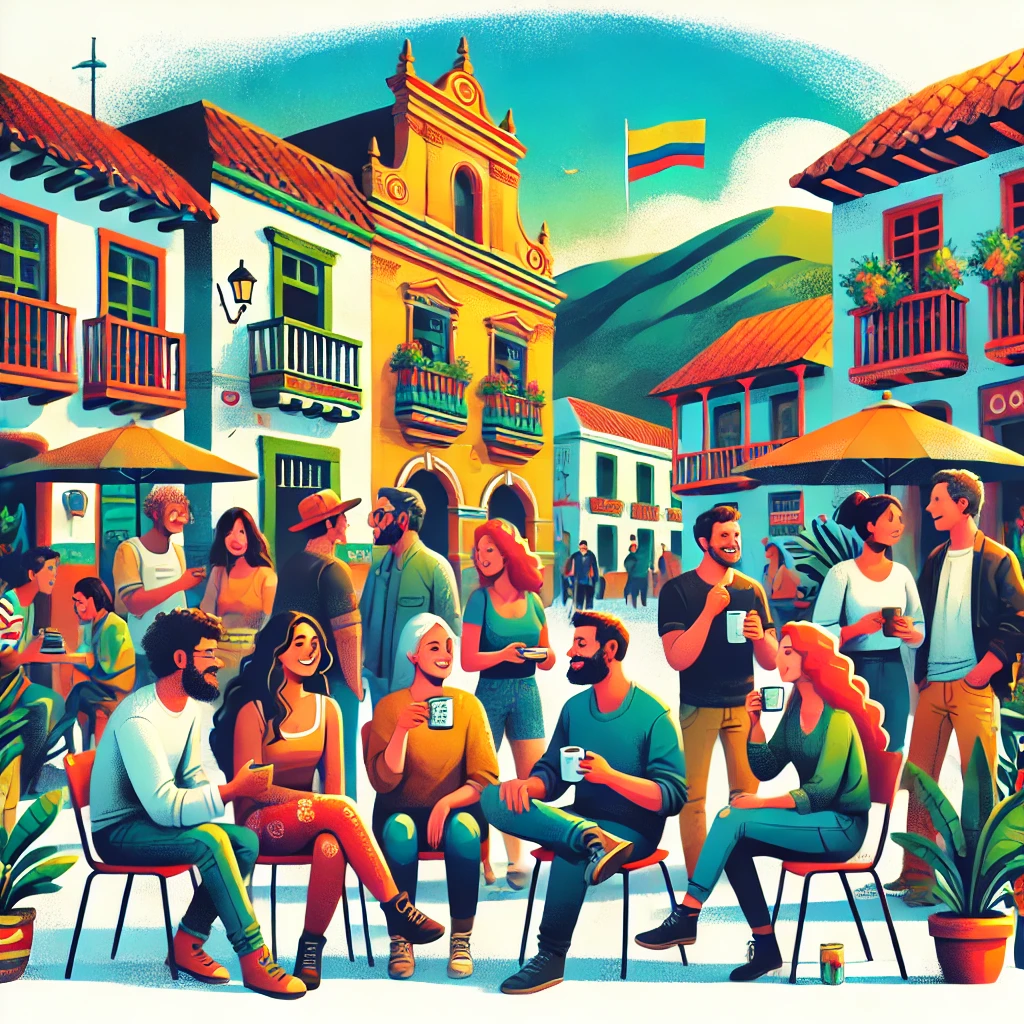
Unique Vocabulary and Slang
No guide on Colombian Spanish would be complete without delving into its unique vocabulary and slang. Colombia is known for its colorful and expressive slang, often leaving foreigners both amused and puzzled.
Here are some key expressions that are quintessentially Colombian:
- Parcero/Parcera: Friend or buddy, predominantly used in Medellín
- Joder: To annoy or bother, although it’s much more light-heartedly used in Colombia compared to Spain
- Charro: Funny or something that elicits laughter
- Paila: Bad luck or too bad
- Lucas: Money
These terms are more than just words; they express nuances and social contexts that may otherwise be lost in translation. Take “parcero,” for instance. While it simply means “friend,” its usage carries a sense of deep camaraderie and trust, especially within the context of Medellín’s tight-knit communities.
Moreover, phrases like “¿Qué más?” may confuse learners initially since they literally translate to “What more?” but are generally used to ask “How are you?” In essence, mastering these unique expressions requires not just rote memorization but an understanding of the cultural contexts in which they are used. This makes interactions more natural and enjoyable.
The Art of Politeness and Formality
Colombian Spanish is also notable for its polite and formal speech, especially in professional or unfamiliar settings. In many parts of Colombia, using formal titles and expressions is more than just a linguistic practice; it’s a social norm.
In professional environments or when addressing seniors and strangers, people often use the formal “usted” form instead of the informal “tú.” Additionally, Colombians have a penchant for euphemisms and indirect expressions to avoid coming across as rude. Here are some examples:
- ¿Me regala…?: Literally “Will you gift me…?” but used to make polite requests
- ¡Con gusto!: With pleasure! Often used to respond to expressions of thanks
- Permítame: Allow me, used when offering help
Understanding the cultural importance of politeness can significantly affect your social interactions in Colombia. For example, in Bogotá, people are often more reserved and formal, so use of polite language is essential. In contrast, coastal regions might be more laid-back but still appreciate respectful communication.
Politeness in language extends to everyday interactions, whether you are asking for directions, ordering food, or engaging in small talk. Being aware of these nuances can help you navigate social landscapes gracefully and confidently.
Idiomatic Expressions
Idiomatic expressions are deeply embedded in Colombian Spanish and offer a window into the cultural psyche of the nation. These expressions often carry meanings that go beyond their literal translations, providing enthusiasts with an enriched learning experience.
Some commonly used idioms include:
- Estar en la olla: Literally “to be in the pot,” meaning to be in a tough situation
- Sacarle el jugo a algo: Literally “to extract the juice from something,” meaning to make the most out of something
- Dar papaya: Literally “to give papaya,” meaning to make yourself an easy target for theft or criticism
These idioms reveal a lot about Colombian culture. The phrase “dar papaya,” for instance, is rooted in the social realities and cautionary tales passed down through generations. Idioms like these aren’t just linguistic frills; they encapsulate wisdom and social norms, making them essential for anyone looking to speak Colombian Spanish fluently.
Understanding and using idiomatic expressions can elevate your conversational skills and make your interactions more meaningful. Not only do they offer a deeper understanding of the language, but they also allow you to engage with locals on a more resonant, cultural level.
Conclusion
Colombian Spanish is a rich mosaic of regional variations, indigenous influences, unique slang, and idiomatic expressions. Far from being homogeneous, it offers a multitude of linguistic flavors that reflect the country’s diverse cultural and geographical landscape. Whether you’re navigating the polite formalities of Bogotá, soaking in the slang of Medellín, or appreciating the cultural depth brought by indigenous languages, mastering Colombian Spanish is a rewarding journey that goes beyond mere linguistic competence.
To truly appreciate Colombian Spanish, it’s essential to understand the cultural contexts that shape it. This goes beyond simple vocabulary acquisition to encompass an appreciation of social norms, historical influences, and regional particularities. By immersing yourself in these elements, you not only improve your Spanish but also gain a deeper understanding of Colombian culture.
As you’ve learned, the subtleties of regional speech, the contributions of indigenous languages, idiomatic expressions, and the art of politeness make Colombian Spanish uniquely captivating. So whether you’re walking the bustling streets of Bogotá, mingling in the vibrant plazas of Medellín, or exploring the picturesque landscapes of the coast, you’ll find that each encounter offers a new linguistic discovery.
Equipped with these insights, you’re now prepared to dive deeper into the world of Colombian Spanish, making your interactions more authentic and enriching. Don’t just study the language—live it, experience it, and let it unveil the multifaceted beauty of Colombia’s cultural tapestry.


