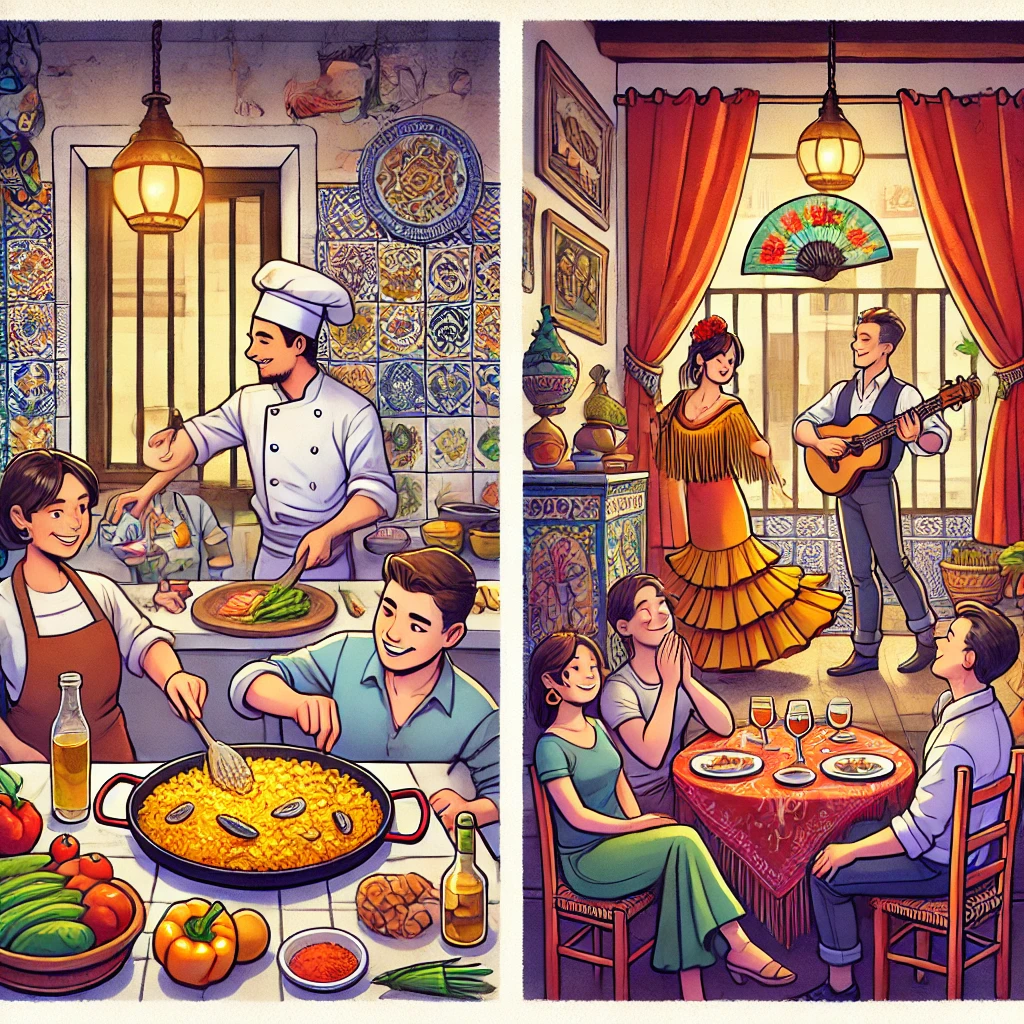
Dining is not just about food; it’s also about culture, manners, and the language we use to connect with others around the table. Understanding dining etiquette is essential, especially when dining in a different country. Spain, known for its rich culinary heritage and social dining experiences, places a high value on manners and correct language usage during meals. This article delves into the important phrases and vocabulary you need to navigate Spanish dining etiquette efficiently. Whether you’re enjoying tapas in a bustling Spanish plaza or sharing a meal with friends, being well-versed in these expressions will ensure you not only enjoy the food but also the social experience to its fullest.
Greetings and Seating Etiquette
First impressions matter, especially in Spain, where dining is a social activity steeped in tradition. Upon arrival at a dining establishment or someone’s home, greeting etiquette is paramount. Common greetings include “Hola” (Hello) and more formal options like “Buenas tardes” (Good afternoon) or “Buenas noches” (Good evening), depending on the time of day. When shown to your seat, a polite phrase might be “¿Me puede indicar mi mesa?” (Can you show me to my table?). If you are dining in someone’s home, acknowledging your host with “Gracias por invitarme” (Thank you for inviting me) sets a warm tone. Respect for personal space and waiting until everyone is seated before starting to eat are key components of Spanish dining etiquette.
Ordering Food and Drinks
Ordering at a restaurant is a crucial part of the dining experience. Begin with “¿Puedo ver el menú, por favor?” (Can I see the menu, please?). When it comes to drinks, the basics include “Quisiera una copa de vino” (I would like a glass of wine) for wine lovers, and “Un agua sin gas, por favor” (A still water, please) for something simpler. If you require recommendations, “¿Qué me recomienda?” (What do you recommend?) is a useful phrase. For those with dietary restrictions or preferences, “¿Este plato contiene…?” (Does this dish contain…?) followed by the ingredient in question, such as “carne” (meat) or “gluten,” is essential. Always remember to conclude your order with “Por favor” (Please) and “Gracias” (Thank you) to maintain politeness.
Common Dining Phrases and Vocabulary
Understanding basic dining phrases can significantly enhance your eating experience. Useful expressions include “Buen provecho” (Enjoy your meal), commonly said once the food is served. If you need anything from the staff, “Disculpe” (Excuse me) followed by your request, such as “¿Me puede traer…?” (Can you bring me…?), is appropriate. For example, “¿Me puede traer más pan?” (Can you bring me more bread?). Complimenting the chef or the meal, “La comida está deliciosa” (The food is delicious) goes a long way. Another handy phrase is “¿Podría pasarme la sal?” (Could you pass me the salt?). This helps you engage with your fellow diners and enhances the communal aspect of the meal.
Handling Issues or Complaints
Even in the best dining situations, issues can arise. Knowing how to address them politely can make a significant difference. If you need to call attention to a problem, start with “Disculpe” (Excuse me) followed by your concern, such as “Mi plato está frío” (My dish is cold) or “Esto no es lo que pedí” (This is not what I ordered). If the service has been unsatisfactory, a polite yet firm “Quisiera hablar con el gerente” (I would like to speak to the manager) can address the issue without causing unnecessary tension. Always remain calm and respectful to ensure a positive resolution to any dining dilemma.
Paying the Bill
Ending your dining experience on a good note is as important as starting it. When you’re ready to pay, a simple “¿Me trae la cuenta, por favor?” (Can you bring me the bill, please?) suffices. If you’re paying by credit card, you might follow up with “¿Puedo pagar con tarjeta?” (Can I pay with a card?). In Spain, tipping is not mandatory but appreciated; “¿Está incluido el servicio?” (Is service included?) can clarify if a tip is expected. If it is not included and you wish to leave a tip, “Quédese con el cambio” (Keep the change) is a polite way to indicate your gratitude. Ensuring that the payment process is smooth rounds off your entire dining experience.
Conclusion
Dining in Spain goes beyond just the food; it’s an experience rich with social interaction and cultural etiquette. By understanding and using key phrases and vocabulary, you can significantly enhance your dining encounters. Whether you’re navigating greetings and seating, ordering food and drinks, using common dining phrases, addressing issues, or paying the bill, the right language makes all the difference. Embracing these etiquettes not only showcases your respect for Spanish culture but also enriches your personal experience, making every meal memorable. So, next time you find yourself at a Spanish table, remember these key phrases and enjoy the delightful combination of food, language, and culture.