

The Pyrenees, a majestic mountain range lying between France and Spain, is not just notable for its breathtaking scenery but also for its rich tapestry of languages and dialects. This unique geographical area sees a convergence of cultures, which is vividly reflected in its language. While standard Spanish is widely spoken, the region boasts a wealth of vocabulary specifics that lend it an unmistakable flavor. Understanding these unique terms is essential for anyone looking to truly immerse themselves in the local culture, whether they’re skiers navigating the slopes, hikers exploring trails, or culinary enthusiasts indulging in regional dishes.
In the Pyrenees, language is a marker of identity and tradition. Despite the rise of globalization, which has already altered many local traditions, the area manages to retain unique linguistic elements, stemming from its historical divergences and geographical isolation. To appreciate the full spectrum of Pyrenean Spanish, one should consider the influences of Basque, Aragonese, Catalan, and Gascon dialects, which each contribute their own share to the region’s rich lexicon.
In this article, we will delve into various categories of Pyrenean-specific Spanish vocabulary. Our journey will cover everyday words, culinary terms, and expressions unique to natural landscapes and activities typically found in this picturesque area. Our attempt here is to provide readers with a deeper understanding of the linguistic diversity that flourishes in the shadow of these historic mountains. Whether you’re a seasoned linguist, an adventurous tourist, or a curious learner, this guide aims to equip you with essential phrases and insights into the Pyrenees region.
Everyday Vocabulary
The everyday vocabulary of the Pyrenees has significantly diverged from standard Spanish in many ways, reflecting the region’s unique history and cultural influences. This divergence is especially evident in rural and mountainous areas, where traditional lifestyles still prevail.
Words such as “txok” (a Basque word for a small, cozy place) and “masía” (a Catalan term for a type of rustic farmhouse) are commonly heard and used. In Aragon, the word “albaricoque” (apricot) is replaced by “ambaibo,” reflecting a mix of influences. Similarly, “recibir” (to receive) may be substituted with the Aragonese “rebir.”
Additionally, local pronunciations can dramatically alter the sound of common words. For instance, in the Pyrenees, the word “cabra” (goat) may sound more like “cabra” with a softer ‘r,’ which aligns with the melodic and softer intonations found in the local dialects. Similarly, “manteca” (lard) is often used instead of “mantequilla” (butter), with distinct regional nuances.
Though you might encounter these terms interchangeably with standard Spanish, it’s vital to recognize them as a testament to the region’s unique linguistic heritage. These words not only enrich communication but also offer a deeper connection to the local culture and history.
Culinary Terms
The culinary landscape of the Pyrenees is as diverse and rich as its language. The regional cuisine heavily relies on locally-sourced ingredients, which consequently influences the vocabulary. Understanding culinary terms from the Pyrenees offers insights into the gastronomic culture rooted in its traditions and natural resources.
Terms like “txistorra” (a type of Basque sausage) and “ollada” (a hearty Catalan stew) are far more common in this region than in other parts of Spain. Similarly, “patxaran” (a Basque liquor made from sloe berries) is another term you might encounter when exploring local dining options.
In terms of dairy products, “queso de Roncal” (a particular type of cheese from the Roncal Valley) and “requesón” (a type of whey cheese) are typical products with specialized names. These items not only carry unique names but also unique flavors and preparation methods that are endemic to the region.
Local beverages also bring their own lexicon: “sangría” might be crossed with “kalimotxo” (a mix of red wine and cola), reflecting the cultural blend. “Trago” (a small sip or drink) and “botijo” (a traditional water jug) highlight how everyday objects have their own regional terms. Familiarizing oneself with these culinary terms is a fantastic way to deepen your appreciation and understanding of Pyrenean culture.
Natural Landscapes and Activities
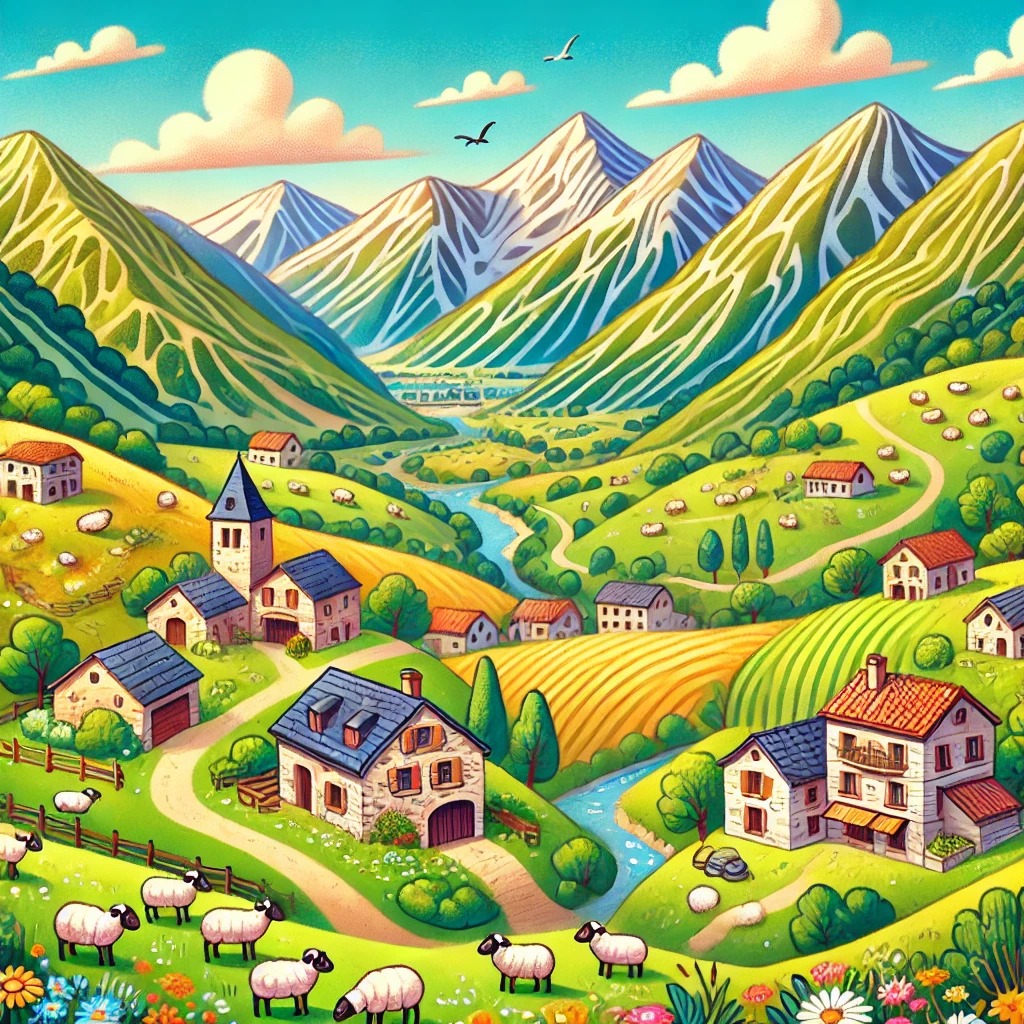
Given the Pyrenees’ stunning natural beauty, it is no surprise that the region has a rich vocabulary specific to its landscapes and the activities that these mountains facilitate. From skiing to hiking and beyond, the Pyrenees offer a range of outdoor activities, and specific terms have evolved around these experiences.
For instance, “pico” (peak) and “valle” (valley) are often heard but are sometimes replaced by “tuc” (peak in Aragonese) and “barranco” (ravine). Words for natural water formations like “ibón” (a high mountain lake) and “arroyos” (streams) frequently appear in local conversations.
The sporting vocabulary also showcases the region’s unique linguistic heritage. Terms such as “esquí de travesía” (backcountry skiing) and “senderismo” (hiking) are commonly used. Locals might use “espeleologia” (cave exploration) more frequently due to the numerous caves found throughout the mountains. Specific types of sporting gear also have unique names, such as “raquetas de nieve” (snowshoes) and “piolet” (ice axe).
Moreover, phrases describing weather and natural conditions are adapted to reflect the region’s unique climate. “Tormenta de nieve” (snowstorm) and “nieve polvo” (powder snow) are essential terms for anyone interested in winter sports in the Pyrenees. Recognizing these terms adds a layer of safety and enriches one’s experience while exploring the great Pyrenean outdoors.
Historical and Cultural Expressions
The Pyrenees carry a rich history, reflected in its language. Many expressions and terms unique to the region have been shaped by historical events, cultural practices, and traditions specific to these mountains. Learning these expressions offers a clearer understanding of the region’s past and helps bridge the gap between the old and the new.
Historical terms such as “tropilla” (a small troupe or group, often of bandits) and “caserío” (a Basque farmhouse) provide glimpses into the age-old societal structure. In addition, descriptors like “románico” (Romanesque, referring to architectural styles) and “castillo” (castle) highlight the region’s rich architectural and historical heritage.
Festivals and traditional practices also contribute significantly to the regional lexicon. The “Carnaval de Bielsa” (Bielsa Carnival) incorporates its own set of unique terms, and “Sanfermines” (the famous festival in Pamplona) includes vocabulary unique to these cultural celebrations.
Furthermore, religious terms like “ermita” (hermitage) and “romería” (pilgrimage) are often used to describe local traditions that blend both spirituality and community activities. Even terms relating to agriculture, such as “trilla” (threshing) and “pajar” (hayloft), reflect the agrarian practices that have long been a part of Pyrenean life.
Understanding these expressions not only sheds light on the rich cultural and historical fabric of the Pyrenees but also creates a sense of connection to the traditions that have shaped the region’s identity.
Conclusion
If there is one takeaway from exploring the rich tapestry of Pyrenean-specific Spanish vocabulary, it’s that language serves as a living record of a region’s history, culture, and lifestyle. The Pyrenees offer a fascinating case study in how geographical isolation and cultural convergence can produce unique linguistic traits.
By learning the everyday vocabulary, culinary terms, and expressions unique to natural landscapes and activities in the Pyrenees, you not only improve your language skills but also gain a richer understanding of the local culture. Exploring historical and cultural expressions further adds to this depth, unraveling the region’s complex history.
For anyone venturing into the Pyrenees — be it for tourism, academic research, or sheer curiosity — being acquainted with the region’s distinct vocabulary can enrich your experience in more ways than one. It enables authentic communication and fosters a deeper appreciation for the region’s cultural nuances.
To sum up, the language spoken in the Pyrenees is more than just a means of communication. It’s a heritage site, a reflection of the people who have lived, labored, and loved in this majestic mountain range. As the world becomes increasingly globalized, preserving and understanding these unique linguistic elements becomes even more crucial. It is a way of honoring the past while ensuring that future generations also get to experience the rich culture etched into every word spoken in this incredible region.


