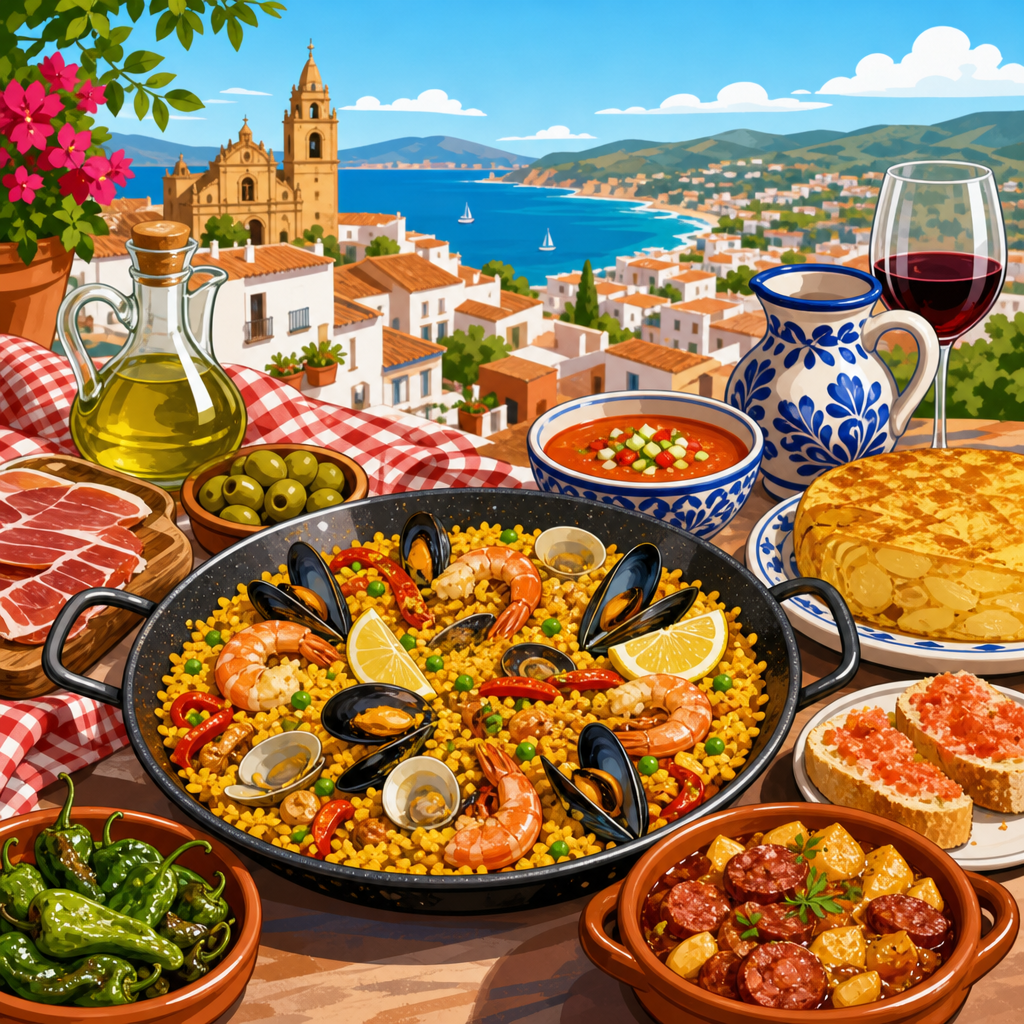
Spanish cuisine is one of the most diverse food traditions in Europe, shaped by geography, climate, religion, trade, and strong regional identity. When people think of food from Spain, they often picture paella, tapas, jamón, and olive oil. Those classics matter, but they represent only a small part of a much broader culinary landscape that stretches from Galicia’s Atlantic seafood to Andalusia’s chilled soups, from Castile’s slow-roasted meats to the rice dishes of Valencia and the pintxos bars of the Basque Country. Discovering the richness of Spanish cuisine means understanding not only what Spaniards eat, but why those foods developed, how they are prepared, and what they reveal about Spanish community life.
In practice, Spanish cuisine is not a single uniform style. It is a collection of regional cuisines connected by common ingredients, seasonal habits, and social rituals around the table. Olive oil, garlic, saffron, paprika, wine, legumes, seafood, cured pork, almonds, and bread appear repeatedly, but they are used differently depending on the province and local history. Roman agriculture, Islamic influence in Al-Andalus, Jewish culinary traditions, New World ingredients such as tomatoes and peppers, and modern tourism all left visible marks. That layered history is why Spanish food matters far beyond restaurants: it is a living record of migration, trade, agriculture, and daily interaction.
As someone who has worked with Spanish food writing and menu analysis, I have seen that readers often search for one simple answer to a complex question: what defines Spanish cuisine? The direct answer is balance between local products and shared technique. Spanish cooks rely on ingredient quality first, then use methods that protect flavor rather than hide it. A tortilla española depends on potatoes, eggs, and olive oil handled with care. A great gazpacho requires ripe tomatoes and proper emulsification. Even an apparently simple plate of pan con tomate succeeds or fails based on bread texture, tomato acidity, and oil quality. That ingredient-driven approach explains why Spanish cuisine remains so respected among chefs and home cooks alike.
This hub page covers the miscellaneous side of Spanish cuisine comprehensively by connecting food culture, regional specialties, dining customs, ingredients, and modern trends. If you are exploring Spanish Community and Interaction, food is essential because meals in Spain are not isolated acts of consumption. They are social structures. Families gather for long lunches, friends meet for vermouth and tapas, villages organize festivals around local produce, and bars become neighborhood institutions. Understanding Spanish cuisine gives you a practical way to understand Spanish society itself.
Regional diversity is the foundation of Spanish cuisine
The most important fact about Spanish cuisine is that region comes first. Spain’s food map is defined by climate zones and local economies. In the north, cooler and wetter conditions support dairy, beans, cider, and abundant seafood. Galicia is known for pulpo a la gallega, percebes, empanada gallega, and excellent mussels. Asturias is associated with fabada, Cabrales cheese, and sidra poured from height to aerate it. In the Basque Country, cooks built an international reputation on hake, cod, txakoli wine, and a bar culture centered on pintxos. These foods are not interchangeable northern “Spanish dishes.” They come from distinct places with distinct identities.
Move inland and the cuisine changes. Castile and León and Castilla-La Mancha developed around grain, sheep, game, and roasting traditions. Cochinillo asado in Segovia and lechazo in Valladolid are famous examples of wood-fired oven cooking that depends on excellent raw product rather than heavy seasoning. La Mancha contributes Manchego cheese, saffron, and dishes that grew from pastoral and agricultural life. Extremadura is central to Iberian pork, especially jamón ibérico from acorn-fed pigs raised in dehesa landscapes. In these interior regions, preservation and hearty preparations historically mattered because winters were harder and access to coastal fish was limited.
The Mediterranean and southern regions bring another set of signatures. Valencia is inseparable from rice culture, especially paella valenciana and other arroces cooked in wide pans to control evaporation and socarrat formation. Catalonia combines mountain and sea influences in dishes such as suquet de peix and mar i muntanya pairings. Andalusia is known for gazpacho, salmorejo, pescaíto frito, sherry wines, and one of the deepest olive oil traditions in the world. Murcia and the Balearic and Canary Islands add further variety through produce, salted fish, pastries, and island adaptations shaped by trade routes. Any serious overview of Spanish cuisine must start here: there is no single national menu, only a national conversation among regions.
Core ingredients and techniques that define everyday Spanish cooking
Although regional diversity is decisive, several ingredients form the backbone of everyday Spanish cooking. Olive oil is the most obvious. Spain is the world’s largest producer of olive oil, and extra virgin olive oil is not simply a finishing fat; it is a structural ingredient used for frying, sautéing, marinating, emulsifying, and preserving. Garlic and onion provide aromatic base notes in countless dishes. Tomatoes, peppers, and paprika entered Iberian cooking after transatlantic exchange and now feel inseparable from it. Saffron remains vital in rice dishes, while parsley, bay leaf, and sherry vinegar are frequent supporting elements. Beans, chickpeas, lentils, rice, potatoes, and bread create the starch base for daily meals across class lines.
Technique matters as much as ingredient choice. Sofrito, a slow-cooked aromatic base of onion, tomato, garlic, and sometimes pepper, underpins many stews and rice dishes. Rehogado and pochado refer to gentle cooking that softens vegetables without browning them aggressively. Escabeche preserves fish or meat in an acidic marinade of vinegar, oil, and spices. Curado and salazón cover curing and salting traditions for ham, tuna roe, and cod. Plancha cooking delivers clean, direct heat to seafood, vegetables, and meats. Fritura, especially in Andalusia, depends on oil temperature control and light coatings rather than heavy batter. These methods explain how Spanish food achieves intensity with relatively short ingredient lists.
Some of the most recognized dishes illustrate these principles clearly. Tortilla española uses a confit-like treatment of potatoes in olive oil before binding them with eggs. Croquetas transform béchamel into a crisp, creamy bite that often carries ham, cod, or chicken leftovers. Patatas bravas vary by city, but the dish shows Spain’s gift for turning simple ingredients into bar staples through sauce and texture. Bacalao al pil-pil demonstrates emulsion technique, using gelatin from salt cod and olive oil to create a glossy sauce. None of these dishes is complicated in theory, yet all expose the cook’s precision immediately.
| Category | Spanish example | Why it matters |
|---|---|---|
| Oil | Extra virgin olive oil | Defines flavor, texture, frying quality, and regional identity |
| Preserved meat | Jamón ibérico | Shows curing skill, terroir, and the importance of pork culture |
| Rice dish | Paella valenciana | Represents technique, local ingredients, and communal eating |
| Cold soup | Gazpacho | Demonstrates climate adaptation and produce-driven cooking |
| Bar snack | Croquetas | Reflects social dining and effective use of leftovers |
Tapas, meal structure, and the social role of eating in Spain
Anyone studying Spanish cuisine as part of Spanish community and interaction must understand that eating in Spain is highly social and highly structured. Tapas are the best-known example, but they are often misunderstood outside Spain. A tapa is not one specific recipe; it is a style of portioning and serving that encourages conversation, movement, and sharing. In some cities, tapas accompany drinks automatically. In others, people order raciones, medias raciones, montaditos, or pintxos depending on local custom. The practical effect is the same: food supports social contact rather than interrupting it.
Daily meal timing also reflects social patterns. Breakfast is usually light, often coffee with toast or pastries. Midmorning may include a small snack. Lunch has traditionally been the main meal, especially in family settings, and can involve multiple courses. Afternoon merienda offers another pause, while dinner often starts later than in northern Europe or North America. This schedule developed from work rhythms, climate, and family structure. In warmer regions, lighter cold dishes at midday and later evening dining make practical sense. Even where modern office life has shortened meals, the cultural expectation that food deserves time remains strong.
Bars and markets reinforce these habits. A neighborhood bar in Madrid, Seville, Bilbao, or Zaragoza is often less about alcohol than about routine sociability. Regulars stop in for coffee, a beer, a tapa, and brief conversation with staff and neighbors. Municipal markets such as La Boqueria in Barcelona, Mercado de San Miguel in Madrid, or local covered markets in smaller towns connect consumers directly with fishmongers, butchers, and produce vendors. When people talk about Spanish food culture, this is what they mean: cuisine is embedded in repeated public interaction. Recipes matter, but the habits around them matter just as much.
Signature foods, festivals, and the evolution of modern Spanish cuisine
Several iconic foods serve as gateways into Spanish cuisine, and each carries deeper cultural meaning than its fame suggests. Jamón ibérico is not just cured ham; it is the result of breed selection, feeding regime, aging time, and strict classification. Denominations such as Jamón de Huelva or Guijuelo indicate recognized production zones. Cheese ranges from Manchego to Mahón and Idiazabal. Seafood can mean anchovies from Cantabria, red prawns from Dénia, or tinned conservas that Spain treats with more respect than many countries give fresh fish. Wine and fortified wines are equally important, from Rioja and Ribera del Duero to Cava, Albariño, and the sherry triangle of Jerez, Sanlúcar, and El Puerto de Santa María.
Festivals and seasonal foods deepen community ties. Valencia’s paella gatherings, village calçotadas in Catalonia, chestnut roasting in autumn, Semana Santa sweets such as torrijas, and Christmas tables featuring seafood, roast meats, turrón, and polvorones all show how cuisine marks time. In many towns, local identity is defended through one dish, one ingredient, or one fair dedicated to mushrooms, octopus, peppers, or wine. These events sustain rural economies and preserve techniques that might otherwise disappear under pressure from mass retail and standardized hospitality.
Modern Spanish cuisine has also had extraordinary global influence. The Basque culinary movement, the technical innovations associated with Ferran Adrià and elBulli, and the precision of chefs such as Juan Mari Arzak, Martín Berasategui, and the Roca brothers changed fine dining worldwide. Yet the most important lesson from Spain’s modern culinary success is not foam or molecular experimentation. It is the ability to combine avant-garde technique with respect for local tradition. Today, many of the best Spanish restaurants, from high-end dining rooms to small taverns, succeed by sourcing carefully, simplifying menus, preserving regional character, and communicating clearly with diners.
For readers using this page as a hub, the key takeaway is straightforward. Spanish cuisine is rich because it is regional, ingredient-led, and socially rooted. It includes humble stews and world-famous restaurants, market snacks and ceremonial dishes, ancient preservation methods and contemporary innovation. Explore it through regions, ingredients, meal customs, and local festivals, then follow that curiosity into more specialized articles on tapas, paella, olive oil, ham, wine, and community dining. The reward is more than better food knowledge. You gain a clearer understanding of how Spanish people gather, celebrate, remember, and express identity through what they cook and share. Start with one region, one market, or one classic dish, and let the rest of Spain open from there.
Frequently Asked Questions
What makes Spanish cuisine so diverse compared to other European food traditions?
Spanish cuisine is remarkably diverse because it has been shaped by a unique combination of geography, climate, history, and strong regional identity. Spain includes Atlantic coastlines, Mediterranean shores, fertile river valleys, mountain ranges, dry interior plains, and island territories, and each of these environments has influenced what people grow, catch, raise, and cook. In the north, cooler and wetter conditions support dishes centered on beans, seafood, dairy, and hearty stews. Along the Mediterranean, cooks rely heavily on rice, vegetables, olive oil, and seafood. In the interior, roasting, curing, and slow-cooked meat traditions have long been important, while in the south, warm weather helped inspire refreshing dishes like gazpacho and salmorejo.
History also plays a major role. Roman agricultural practices, Moorish influence, Jewish culinary heritage, Christian feast-day cooking, and later trade with the Americas all left lasting marks on Spanish food. Ingredients now considered essential, such as tomatoes, peppers, and potatoes, became deeply integrated into regional cooking over time. At the same time, Spain’s regions have preserved distinct culinary identities, so food in Galicia can feel very different from food in Valencia, the Basque Country, or Andalusia. That regional pride is one of the defining features of Spanish cuisine. Rather than being a single unified style, Spanish food is better understood as a collection of local traditions connected by a respect for seasonality, high-quality ingredients, and dishes that reflect place.
Is paella really the most representative dish of Spain?
Paella is certainly one of Spain’s most internationally recognized dishes, but it is not the single dish that fully represents the country’s culinary identity. In reality, paella is a regional specialty strongly associated with Valencia, where rice cultivation and local cooking traditions gave rise to the dish. Traditional Valencian paella differs from the versions often seen abroad, which may include a wide mix of seafood, meats, and vegetables without much connection to the original recipe. Authentic versions are deeply rooted in local ingredients, technique, and the proper cooking of rice, especially the development of flavor and texture in the pan.
While paella is important, it is only one part of a much broader culinary picture. Spain is equally known for jamón ibérico, tortilla española, croquetas, bacalao dishes, roasted lamb, fabada, pulpo a la gallega, pintxos, gazpacho, and countless regional stews, breads, cheeses, and seafood preparations. The idea that one dish could stand for all Spanish cuisine overlooks how strongly food varies across the country. A better way to think about paella is as an iconic gateway into Spanish food rather than its complete definition. It is beloved, influential, and culturally significant, but it represents one region’s excellence within a nation of many culinary traditions.
What is the difference between tapas and pintxos?
Tapas and pintxos are both associated with social eating in Spain, but they come from different traditions and are not exactly the same thing. Tapas are small portions of food served in bars and restaurants, especially common in many parts of Spain, including Andalusia, Madrid, and beyond. They can range from simple olives, almonds, or slices of cured ham to more elaborate dishes like garlic shrimp, patatas bravas, grilled cuttlefish, or stewed meat. In some places, tapas are served complimentary with a drink, while in others they are ordered separately. The concept centers on sharing, variety, and informal dining, allowing people to sample several dishes in one sitting.
Pintxos, by contrast, are most closely associated with the Basque Country and nearby northern regions. They are often displayed on bar counters and typically consist of a small piece of bread topped with ingredients such as anchovies, peppers, cod, tortilla, croquettes, or creative chef-driven combinations. Traditionally, many pintxos were secured with a skewer or toothpick, which is where the name comes from. The pintxos culture is especially tied to bar-hopping, where diners move from one establishment to another, enjoying a specialty bite and a drink at each stop. Both tapas and pintxos reflect Spain’s love of communal eating and local flavor, but pintxos are generally more specific to northern culinary culture, while tapas function as a broader national dining style.
What ingredients are most essential in traditional Spanish cooking?
Several core ingredients appear again and again in Spanish cooking, although their use varies widely by region. Olive oil is one of the most fundamental. It is used for frying, sautéing, dressing, preserving, and finishing dishes, and it plays a central role in both everyday home cooking and refined gastronomy. Garlic, onions, tomatoes, peppers, and saffron are also highly important, particularly in sauces, stews, rice dishes, and sofritos. Paprika, especially pimentón from regions such as Extremadura, gives many dishes their distinctive color and smoky depth. Legumes like chickpeas, lentils, and beans are another pillar of the cuisine, especially in rustic soups and long-simmered stews.
Spain is also defined by exceptional cured products and seafood. Jamón serrano and jamón ibérico are among the country’s most celebrated foods, while chorizo and other regional sausages contribute flavor to many traditional dishes. Along the coasts, fresh fish, shellfish, squid, cod, anchovies, and octopus are deeply woven into local cooking. Rice is essential in Valencia and other eastern regions, while bread and potatoes are everyday staples across the country. Cheeses, almonds, sherry vinegar, and wine also hold important places in the culinary landscape. What makes these ingredients especially meaningful is not just their presence, but how carefully they are treated. Spanish cooking often relies on simple preparations that let excellent raw materials speak for themselves.
How does regional identity influence what people eat in Spain?
Regional identity is one of the most powerful forces in Spanish cuisine. In many parts of Spain, food is closely tied to local history, language, agriculture, religious traditions, and even ideas of cultural independence. That means dishes are not merely recipes; they are markers of place and belonging. Galicia, for example, is famous for Atlantic seafood, octopus, empanadas, and hearty broths. The Basque Country is known for pintxos, cod dishes, and a highly developed food culture that ranges from traditional taverns to world-class restaurants. Catalonia blends mountain and sea ingredients in distinctive ways, while Valencia is closely associated with rice cookery. Andalusia offers olive oil-rich dishes, fried fish, cured meats, and chilled soups suited to its climate. Castile is known for roast meats and robust rural cooking.
This regionalism means there is no single “standard” Spanish meal that captures the entire country. Local festivals, religious holidays, and seasonal harvests often determine what is eaten and when. Even dishes with the same name may vary from one province to another. People in Spain often take pride in the authenticity of their local specialties, the quality of local produce, and the proper way to prepare traditional foods. For travelers and readers exploring Spanish cuisine, this is part of the excitement. Discovering Spanish food is really about discovering many cuisines within one nation, each with its own flavors, customs, and sense of identity.