

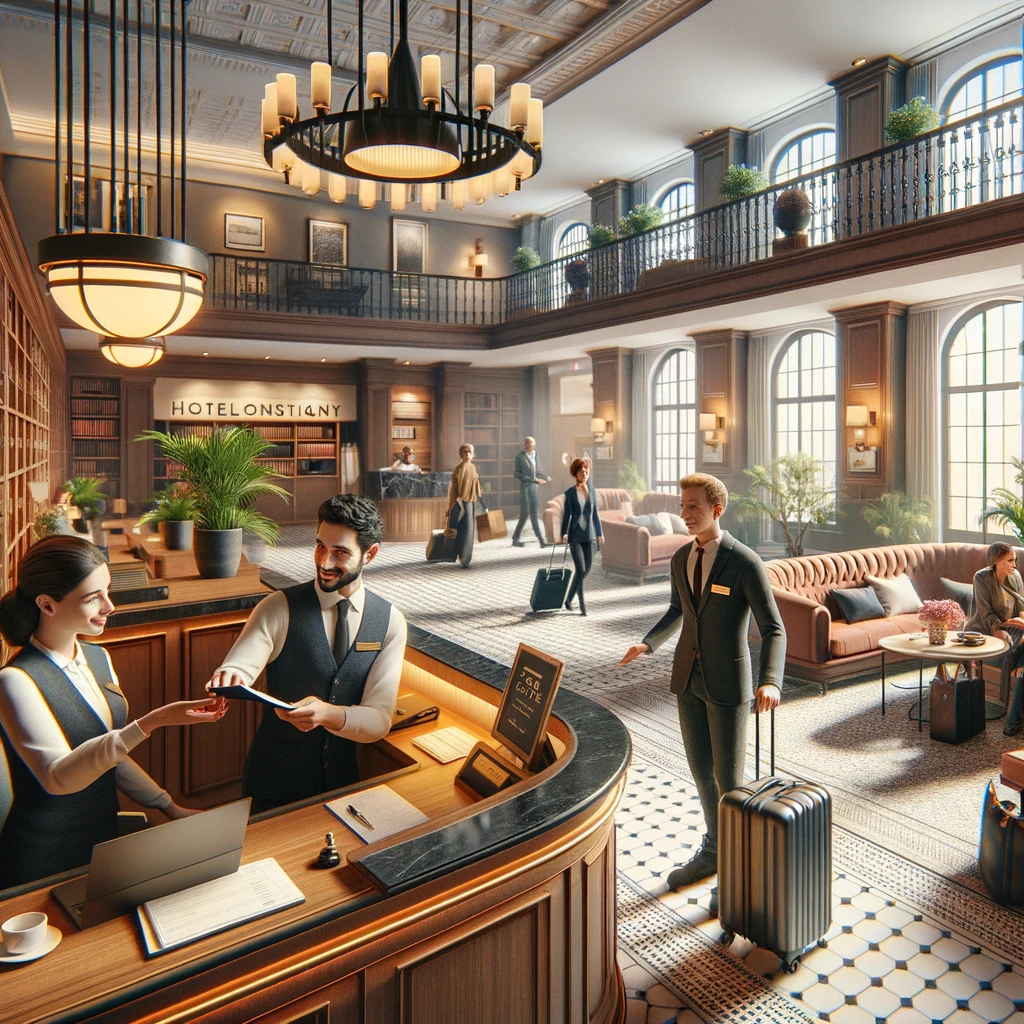
Traveling to a Spanish-speaking country can be an exhilarating experience, but it often comes with the challenge of navigating language barriers. One common scenario where language plays a crucial role is during hotel check-ins and check-outs. This comprehensive guide is designed to arm you with basic yet essential Spanish phrases to ensure a smooth and pleasant experience at your accommodation. Whether you are a beginner in Spanish or looking to brush up your language skills, these phrases will enhance your communication during your hotel stay.
Check-In Vocabulary and Phrases
Greetings and Introductions
- Buenos días/tardes/noches – Good morning/afternoon/evening
- Hola, tengo una reserva a nombre de [Your Name] – Hello, I have a reservation under the name [Your Name]
- Me llamo [Your Name] – My name is [Your Name]
Providing Personal Information
- Mi número de reserva es [Your Reservation Number] – My reservation number is [Your Reservation Number]
- ¿Podría ver su pasaporte, por favor? – Could I see your passport, please?
- Aquí tiene mi identificación – Here is my identification
Room Preferences and Requests
- ¿La habitación tiene una cama doble? – Does the room have a double bed?
- Preferiría una habitación con dos camas individuales – I would prefer a room with two single beds
- ¿Es posible tener una habitación con vista? – Is it possible to have a room with a view?
Miscellaneous
- ¿A qué hora es el desayuno? – What time is breakfast?
- ¿Tiene la habitación acceso a Wi-Fi? – Does the room have Wi-Fi access?
- ¿Dónde está el ascensor? – Where is the elevator?
Check-Out Vocabulary and Phrases
General Check-Out Phrases
- Buenos días, quisiera hacer el check-out – Good morning, I would like to check out
- ¿Podría tener la factura, por favor? – Could I have the bill, please?
- ¿Puedo pagar con tarjeta? – Can I pay with a card?
Discussing the Bill
- ¿Podría explicarme este cargo en la factura? – Could you explain this charge on the bill?
- Creo que hay un error en la cuenta – I think there’s a mistake on the bill
- ¿Está incluido el servicio en la factura? – Is service included in the bill?
Departure
- ¿Podría pedir un taxi para ir al aeropuerto? – Could you order a taxi to the airport?
- ¿A qué hora debo dejar la habitación? – What time do I need to check out of the room?
- Ha sido una estancia agradable, gracias – It has been a pleasant stay, thank you
Tips for Effective Communication
- Speak Slowly and Clearly: Remember that it’s not just about the words you use but also how you convey them. Speak slowly and clearly to increase understanding.
- Listen Carefully: Pay close attention to responses, as they may contain important information or instructions.
- Use Gestures: When words fail, simple gestures can be quite effective in conveying your message.
- Don’t Hesitate to Repeat: If you don’t understand something, don’t hesitate to ask for clarification or repetition.
Understanding Basic Questions and Responses
When checking into or out of a hotel, you might encounter various questions from the hotel staff. Here are some common questions and how you can respond:
Questions You May Be Asked
- ¿A nombre de quién está la reserva? – Under whose name is the reservation?
- La reserva está a nombre de [Your Name] – The reservation is under [Your Name]
- ¿Cuántas noches se hospedarán? – How many nights will you be staying?
- Me quedaré [Number of Nights] noches – I will stay for [Number of Nights] nights
- ¿Necesitan un servicio de despertador? – Do you need a wake-up service?
- Sí, por favor, despiértenme a las [Time] – Yes, please, wake me up at [Time]
- No, gracias – No, thank you
Responses to Possible Scenarios
- If there’s a problem with your room:
- Disculpe, la habitación está muy fría/caliente – Excuse me, the room is too cold/hot
- Hay un problema con la ducha/el inodoro – There’s a problem with the shower/toilet
- If you need assistance:
- ¿Podría ayudarme con las maletas? – Could you help me with my luggage?
- Necesito más toallas/almohadas – I need more towels/pillows
Navigating Hotel Facilities
Knowing how to ask about hotel facilities and services is important. Here are some phrases that could come in handy:
- ¿Dónde está el gimnasio/la piscina/el restaurante? – Where is the gym/pool/restaurant?
- ¿El hotel ofrece servicio de habitaciones? – Does the hotel offer room service?
- ¿A qué hora cierra el gimnasio/la piscina/el restaurante? – What time does the gym/pool/restaurant close?
Dining and Meal Requests
If your hotel stay includes meals, or you plan to dine at the hotel restaurant, these phrases will be useful:
- ¿A qué hora se sirve la cena/el almuerzo? – What time is dinner/lunch served?
- Tengo una alergia a [Allergen]. ¿Puede recomendar algo del menú? – I have an allergy to [Allergen]. Can you recommend something from the menu?
- ¿Podría tener la cuenta, por favor? – Could I have the bill, please?
Handling Emergencies
In case of an emergency, it’s crucial to know some basic phrases:
- Necesito ayuda, por favor – I need help, please
- Hay una emergencia en mi habitación – There’s an emergency in my room
- ¿Dónde está el hospital/la farmacia más cercana? – Where is the nearest hospital/pharmacy?
Cultural Considerations and Etiquette
When interacting in Spanish, particularly in a hospitality setting, keep these cultural considerations in mind:
- Use Formal Speech: In Spanish, there are formal (usted) and informal (tú) forms of address. It’s usually appropriate to use the formal ‘usted’ in hotel settings.
- Be Polite: Using phrases like “por favor” (please) and “gracias” (thank you) is not just polite but also customary in Spanish-speaking cultures.
- Small Talk: Engaging in small talk is common. Don’t be surprised if hotel staff ask about your day or plans.
Practice Makes Perfect
Lastly, practicing these phrases before your trip can greatly improve your confidence and fluency. Consider:
- Language Learning Apps: Apps like Duolingo or Babbel offer practice in conversational Spanish.
- Spanish Language Guides: Carry a pocket-sized Spanish language guide or a translation app on your phone.
- Speaking with Native Speakers: If possible, practice with native Spanish speakers. This real-world practice can be invaluable.
Conclusion
Armed with these essential Spanish phrases and a bit of practice, you will find that navigating the hotel check-in and check-out process becomes a part of your travel experience to look forward to, rather than a challenge to overcome. Embrace the opportunity to immerse yourself in the language and culture, and enjoy a more enriching and seamless travel experience.


