Shopping for clothes in a Spanish-speaking country can be an enjoyable and immersive cultural experience. Whether you’re in Spain, Mexico, or any other Spanish-speaking nation, knowing the basic vocabulary related to clothing shopping can make your experience more rewarding. This article provides a comprehensive guide to essential Spanish terms and phrases you’ll encounter while shopping for clothes.
Basic Clothing Items
Let’s start with the basics. Here are some common clothing items you might be looking for:
- La camisa – Shirt: A staple in everyone’s wardrobe, ‘la camisa’ refers to a shirt. It’s essential for both casual and formal occasions.
- El pantalón – Pants: ‘El pantalón’ covers various types of pants, from jeans (los jeans) to dress pants (pantalones de vestir).
- La camiseta – T-shirt: Perfect for a casual look, ‘la camiseta’ is your go-to for comfort.
- El vestido – Dress: ‘El vestido’ is used for all kinds of dresses, from sundresses to evening gowns.
- La falda – Skirt: ‘La falda’ comes in various lengths and styles, a versatile piece for any wardrobe.
- El abrigo – Coat: Essential for colder weather, ‘el abrigo’ keeps you warm and stylish.
- Los zapatos – Shoes: Shoes, or ‘los zapatos’, are vital for any outfit. Remember, ‘las botas’ are boots, and ‘las sandalias’ are sandals.
- El sombrero – Hat: Whether for fashion or function, ‘el sombrero’ covers all types of hats.
Describing Clothing
When shopping, you might want to describe what you’re looking for. Here are some useful adjectives and phrases:
- Grande – Big: Use this when looking for a larger size.
- Pequeño – Small: This describes a smaller size or fit.
- Estrecho/Ajustado – Tight: For clothes that are snug or form-fitting.
- Ancho – Wide: For a looser fit.
- De moda/Moderno – Fashionable/Stylish: When you’re looking for something trendy.
- Clásico – Classic: Timeless styles.
- Cómodo – Comfortable: Essential for everyday wear.
- Elegante – Elegant: For more formal or sophisticated attire.
- De cuadros/De rayas – Plaid/Striped: Specific patterns you might be looking for.
- De algodón/De lana/De seda – Cotton/Wool/Silk: If you have a preference for certain materials.
At the Store
Navigating a clothing store in a Spanish-speaking country will be much easier with these phrases:
- ¿Dónde está la sección de…? – Where is the section for…?
- Estoy buscando… – I am looking for…
- ¿Tiene esto en otra talla/color? – Do you have this in another size/color?
- ¿Puedo probarme esto? – Can I try this on?
- ¿Dónde están los probadores? – Where are the fitting rooms?
- ¿Cuánto cuesta? – How much does it cost?
- ¿Puede ayudarme? – Can you help me?
- Esto no me queda bien. – This doesn’t fit me well.
- Voy a llevar esto. – I’m going to take this.
- ¿Aceptan tarjetas de crédito? – Do you accept credit cards?
Sizes and Measurements
Understanding sizes is crucial. Sizes can vary significantly between countries, so here are some basic terms and phrases:
- La talla – Size: General term for size.
- Pequeño, Mediano, Grande – Small, Medium, Large: Standard sizing.
- ¿Qué talla es? – What size is it?
- Me queda grande/pequeño. – It’s too big/small for me.
- ¿Tiene una talla más grande/pequeña? – Do you have a bigger/smaller size?
Cultural Tips
- Haggling: In some Spanish-speaking countries, particularly in local markets, haggling over prices is common. It’s always polite to ask if a price is negotiable: ¿Es negociable el precio?
- Siesta Time: Be aware of the siesta in countries like Spain, where many shops close in the early afternoon.
- Greetings: Always greet with a polite “Buenos días” (Good morning) or “Buenas tardes” (Good afternoon) when entering a store.
- Payment Methods: While credit cards are widely accepted, carrying some cash is a good idea, especially in smaller shops or markets.

Shopping Online
With the rise of e-commerce, knowing how to shop for clothes online in Spanish is equally important. Here are some terms that will come in handy:
- La tienda en línea – Online store: The general term for any online retailer.
- Agregar al carrito – Add to cart: When you find something you like.
- Realizar el pedido – Place the order: When you’re ready to buy.
- La entrega/El envío – Delivery/Shipping: Important to know how your items will get to you.
- La política de devolución – Return policy: In case something doesn’t work out.
- Oferta/Promoción – Offer/Promotion: Look out for these words for discounts and deals.
- Usuario y contraseña – Username and password: For creating and accessing your account.
- Métodos de pago – Payment methods: To know how you can pay.
- Confirmación del pedido – Order confirmation: To ensure your order was successful.
- Seguimiento del pedido – Order tracking: To keep an eye on your shipment.
Vocabulary for Specific Types of Clothing
Sometimes you might be looking for specific types of clothing. Here’s a list that could be useful:
- La ropa deportiva – Sportswear: For all your athletic needs.
- El traje de baño – Swimsuit: Essential for the beach or pool.
- La ropa interior – Underwear: Basics for everyday wear.
- La ropa de dormir – Sleepwear: For a comfortable night’s sleep.
- El traje – Suit: For formal events or business attire.
- La ropa de segunda mano – Second-hand clothes: Great for thrift shopping.
- Los accesorios – Accessories: Includes items like belts, scarves, and jewelry.
- La ropa de invierno – Winter clothes: For the colder months.
- La ropa de verano – Summer clothes: Light and breezy options for hot weather.
- El uniforme – Uniform: For work or school requirements.
Handling Issues and Exchanges
Sometimes, things might not go as planned. Here are some phrases that might help:
- Esto está roto/dañado. – This is broken/damaged.
- ¿Puedo cambiar esto? – Can I exchange this?
- Perdí el recibo. – I lost the receipt.
- ¿Tienen política de devolución? – Do you have a return policy?
- Esto no es lo que pedí. – This is not what I ordered.
- ¿Puedo obtener un reembolso? – Can I get a refund?
- Esto no es de mi talla. – This is not my size.
- ¿Puedo probar otro color/estilo? – Can I try another color/style?
Enhancing Your Shopping Experience
To make your shopping experience even more enjoyable and efficient, consider these tips:
- Practice Your Pronunciation: Before you go shopping, practice the pronunciation of the key terms and phrases. It’ll boost your confidence and help with communication.
- Learn the Local Fashion Terms: Fashion terminology can vary by country. For example, what is called “tenis” in Mexico might be “zapatillas” in Spain.
- Understand the Sales Season: Sales seasons, like “rebajas” in Spain, offer great deals. Knowing when these occur can save you money.
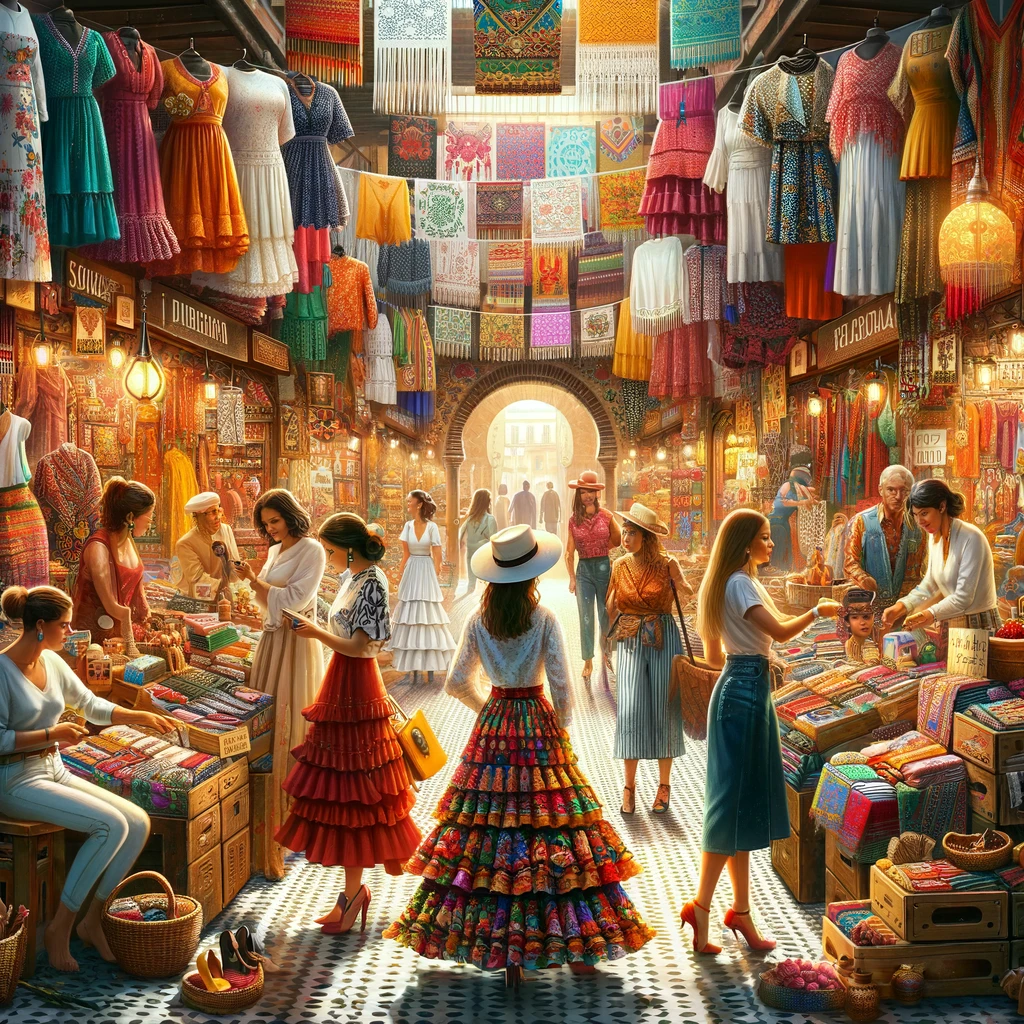
- Explore Local Markets: For a unique shopping experience, visit local markets (“mercados”) where you can find artisanal and unique items.
Conclusion
Mastering the basic vocabulary for shopping for clothes in Spanish not only enhances your shopping experience but also deepens your cultural understanding and interaction with the language. Whether you’re navigating a bustling market in Mexico City, browsing an elegant boutique in Madrid, or shopping online from a Spanish-speaking retailer, these terms and phrases will serve as your guide. Remember, language learning is a journey – each conversation and transaction is an opportunity to practice and improve. ¡Felices compras! (Happy shopping!)
This comprehensive guide on “Shopping for Clothes in Spanish: Key Vocabulary” covers essential terms, phrases, online shopping vocabulary, specific clothing types, handling issues, and cultural tips, providing a holistic approach to enhancing your shopping experience in Spanish-speaking environments.