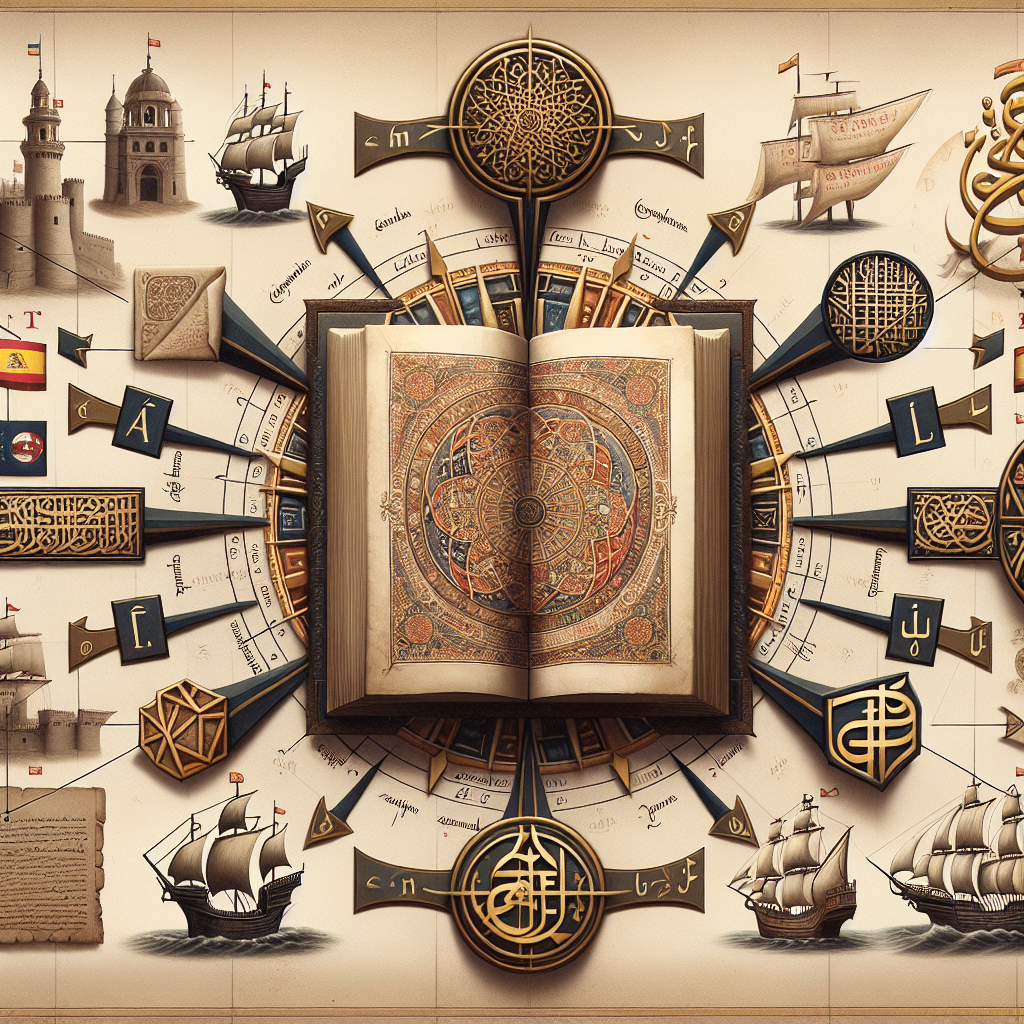
Spanish is not just a language; it’s a tapestry woven with threads from a vibrant and complex history. To truly appreciate the Spanish language, it’s crucial to explore the influences that have shaped it over the centuries. From early settlements to global expansion, Spanish history is a riveting narrative that has continually influenced the way the language is spoken today. By examining this rich background, we can gain a deeper understanding of the cultural significance and global influence embedded in the language.
Understanding the historical context of the Spanish language reveals why certain words and grammatical structures exist. Language, after all, is a reflection of the society and historical events that shape it. Spanish, also known as Castilian, owes its birth to a myriad of cultural exchanges, invasions, and political shifts. This blend of external and internal forces throughout Spain’s history is mirrored in the evolution of its language. Renaissance and colonial periods, religious influences, and technological advances have each left indelible marks on Spanish. In this article, we will dive into the influences that have significantly shaped the Spanish language into its modern form.
Roman Influence on Early Spanish
The roots of the Spanish language stretch back to the times of the Roman Empire. Around 206 BC, Romans began their conquest of the Iberian Peninsula, introducing Latin to the region. As the Roman Empire expanded, Latin began to interweave with the native languages spoken in the area, laying the foundation for what would eventually become Spanish.
Vulgar Latin, the colloquial form of the language spoken by the common people and Roman soldiers, was particularly influential. It became the lingua franca across the western territories of the Roman Empire. Elements of Latin such as vocabulary, grammatical structure, and phonetics are deeply embedded in modern Spanish. For instance, words like ‘flor’ (flower), ‘luz’ (light), and ‘estrella’ (star) find their origins in Latin.
Even after the fall of the Roman Empire, Latin continued to exert a powerful influence. The Church adopted Latin as its liturgical language, ensuring its survival and propagation throughout the medieval period. Thus, Classical Latin, through religious texts and scholarly works, continued to shape Spanish well into the middle ages. The preservation of Latin established a foundation upon which the future Spanish language could expand and evolve.
Visigothic and Moorish Contributions
After the fall of the Roman Empire, the Visigoths, a Germanic tribe, took control of the Iberian Peninsula around the mid-5th century. The Visigoths contributed relatively few words to the Spanish lexicon, but their rule did result in distinct influences on Spanish society, including laws and governance structures that would later impact the language indirectly.
However, perhaps the most profound non-Roman influence came from the Moors. In 711 AD, the Moors, who were Muslims of North African and Middle Eastern origin, invaded and controlled large parts of Spain for nearly 800 years. Their influence was extensive—politically, culturally, and linguistically—and the Spanish language absorbed over 4,000 Arabic words during this period.
Arabic terms related to agriculture, science, mathematics, and everyday life became part of the Spanish vocabulary. Words such as ‘aceituna’ (olive), ‘azúcar’ (sugar), and ‘arroz’ (rice) are clear evidence of this extensive linguistic influence. The interaction between Arabic and Latin dialects enriched Spanish, making it one of the most lexically diverse Romance languages.
The Reconquista and Unification of Spain
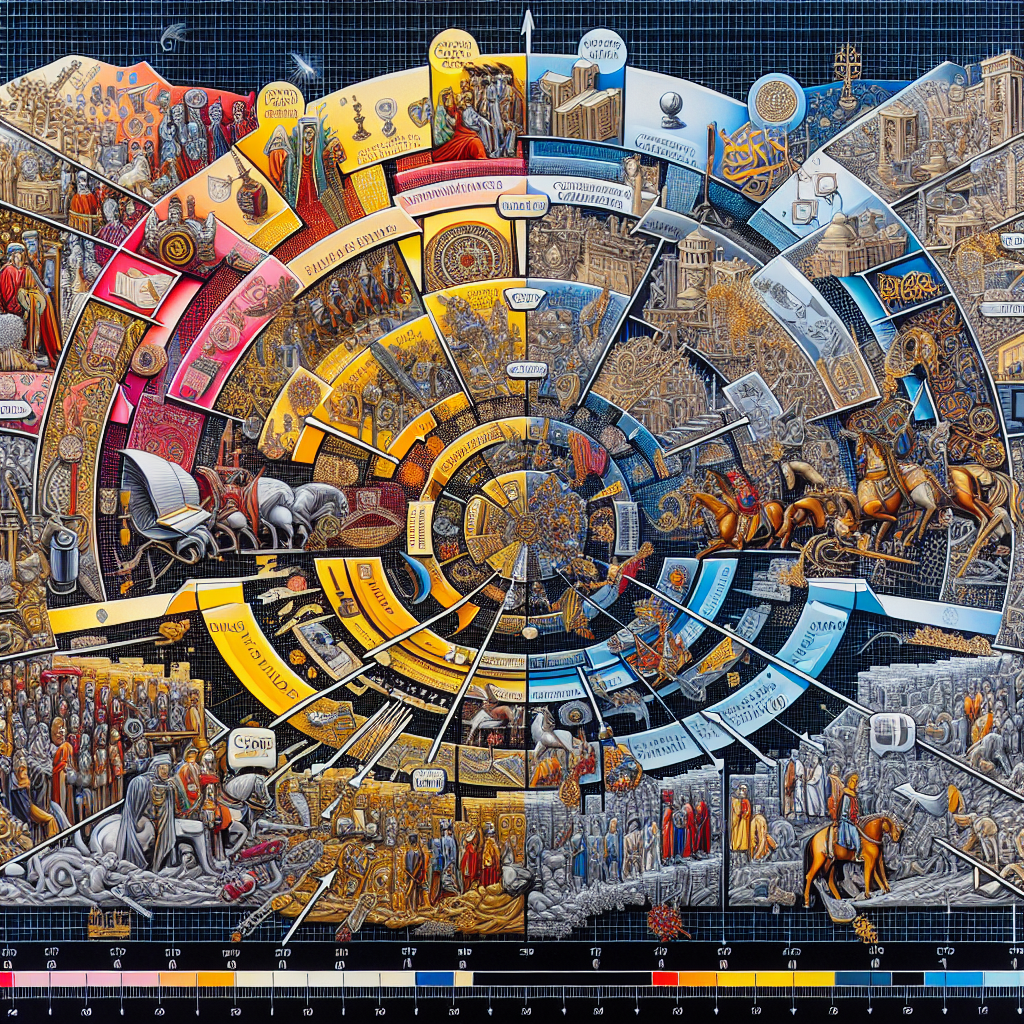
The Reconquista, the period during which Christian kingdoms in the north of Spain gradually regained territory from the Muslim Moors, played a pivotal role in the development of Spanish. This process, which was not complete until 1492 with the fall of Granada, influenced not only political but also linguistic unification in Spain.
As different regions were reclaimed, the Castilian dialect became increasingly prominent due to its association with the Kingdom of Castile. The reconquest fostered the spread of Castilian as the dominant dialect, which would eventually evolve into the modern Spanish language. The cultural and political importance of Castile cemented its dialect’s status.
With the Catholic Monarchs, Ferdinand and Isabella, taking control of all of Spain, Castilian Spanish was declared the official language. Their sponsorship of Columbus’s voyage to the New World in the same year accelerated the global spread of Spanish as a unifying language of empire and commerce.
The Age of Exploration and Global Expansion
The Age of Exploration marked a significant turning point for the Spanish language. Spain was at the forefront of global exploration and colonization in the 15th and 16th centuries, with vast territories in the Americas, Asia, and Africa coming under Spanish rule.
This global presence meant that Spanish spread far beyond the Iberian Peninsula, evolving as it encountered indigenous languages and cultures. In the Americas, particularly, Spanish incorporated local words and expressions specific to the geography, flora, fauna, and socio-cultural practices of each region.
For example, words such as ‘canoa’ (canoe) and ‘tabaco’ (tobacco) were adopted from indigenous languages. Additionally, the diverse interactions led to regional variations and dialects of Spanish in the Spanish-speaking world, with unique phonetics, grammar, and lexicons reflecting their combined cultural heritage.
The Influence of the Enlightenment and Romanticism
The 18th and 19th centuries were times of intellectual ferment that impacted the Spanish language indirectly through changes in thought and ideology. The Enlightenment brought about a focus on reason and science, prompting a surge in education and literacy, as well as the development of standardized language norms.
This period saw the establishment of the Real Academia Española in 1713, an institution aimed at preserving the purity and elegance of the Spanish language by standardizing spelling, grammar, and vocabulary. The academy played—and continues to play—a crucial role in maintaining linguistic unity among Spanish speakers worldwide.
Romanticism, on the other hand, emphasized emotion, nature, and nationalism. It inspired a resurgence of interest in folk traditions, myths, and regional dialects. This movement sparked a renewed interest in regional languages and dialects in Spain but also emphasized the beauty and expressive potential of Castilian Spanish, enriching it with poetic and emotive language.
The Role of Modernization and Global Connectivity
In the 20th and 21st centuries, modernization and globalization have played key roles in the development of the Spanish language. Technological advancements, media proliferation, and international travel have made Spanish more accessible and dynamic than ever before.
Spanish has become a major language of international business, culture, and diplomacy. The influence of global English has introduced numerous Anglicisms into modern Spanish, particularly in fields such as technology, business, and fashion. Words like ‘internet,’ ‘marketing,’ and ‘software’ have been seamlessly integrated into the lexicon.
Moreover, digital communication allows for rapid changes in language use, as seen in the rise of informal and abbreviated language forms in social media and texting. These modern influences are continuously reshaping Spanish, demonstrating the language’s enduring capacity to adapt and grow.
Conclusion: The Ever-Evolving Spanish Language
The history of the Spanish language is a compelling narrative of conquest, unification, expansion, and innovation. It is a language forged in the crucible of different cultures, ideologies, and historical epochs, each leaving its mark and contributing to the rich, diverse tapestry of modern Spanish.
Today, Spanish is spoken by over 500 million people worldwide across 20 countries, not merely as a relic of history but as a vibrant and living language that continues to evolve. The historical influences discussed have left an indelible impact on Spanish, endowing it with unique characteristics that reflect not only Spain’s past but also its current global presence.
As we look to the future, the Spanish language will undoubtedly continue to change and adapt, reflecting the ongoing cultural, political, and technological shifts of our time. Understanding its historical influences enriches our appreciation of the language and provides insightful perspectives into how it will continue to shape and be shaped by the world around us.