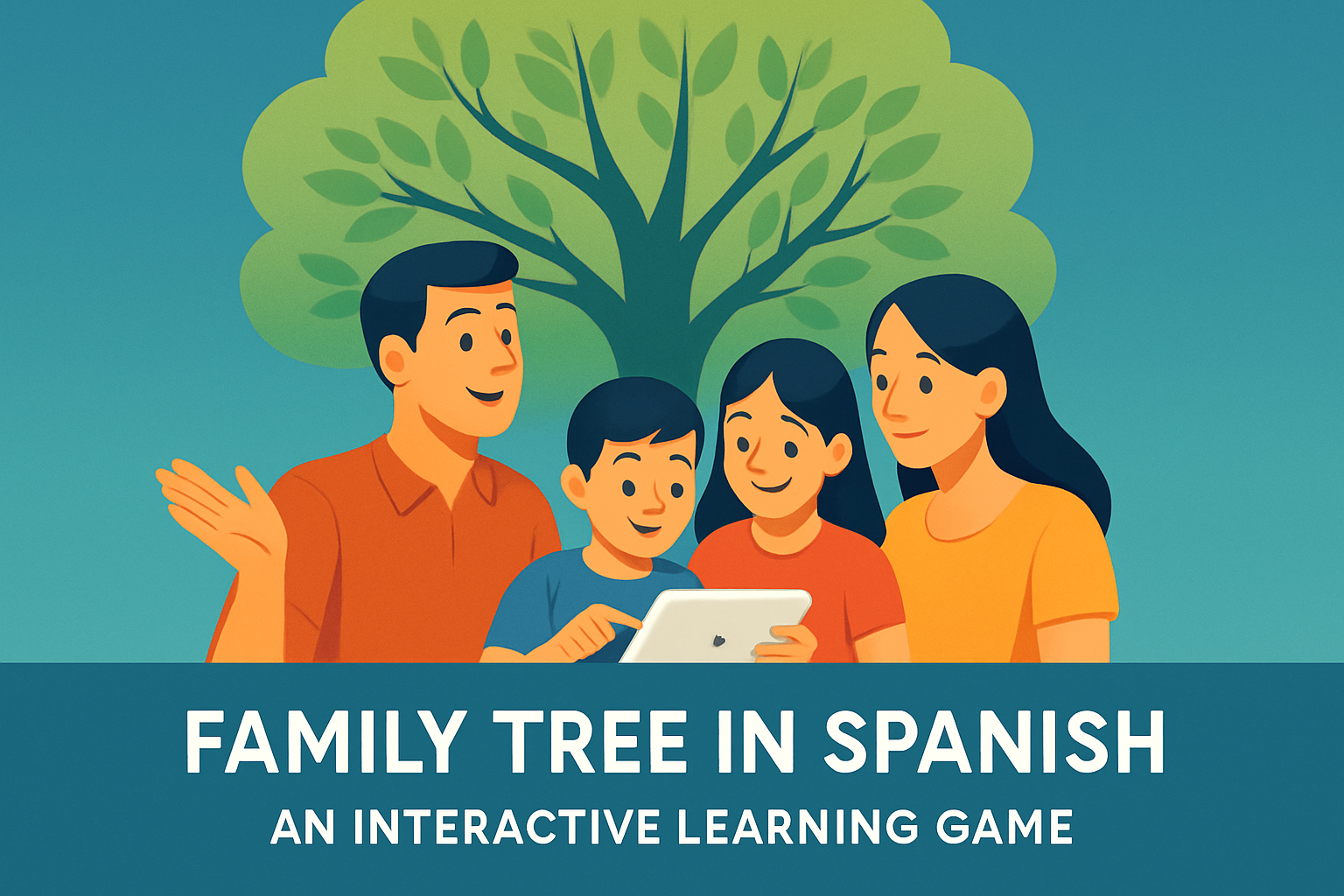
Learning a new language can be both a challenging and enriching experience. It’s not just about memorizing vocabulary or understanding grammar rules; it’s also about engaging with the culture and context behind the language. One effective method to enhance this engagement is through interactive learning games. The “Family Tree in Spanish” game serves as a perfect example—offering individuals an exciting way to grasp familial relationships in Spanish while having fun. This article will explore the concept of the game, its structure, practical use cases, and its educational benefits for various age groups and learning styles.
Before we delve deeper into the game itself, it is crucial to understand a few key terms. A family tree, or “árbol genealógico” in Spanish, is a diagram that represents family relationships in a conventional tree structure. Spanish, being a Romance language, carries with it nuances and structures that may differ from English. Understanding these differences is essential for effective communication. Therefore, utilizing a game that focuses on building familial connections can facilitate language learning by contextualizing and visualizing the terms in an interactive format. But why does this matter? For learners aiming to achieve fluency, cultural and contextual immersion acts as a vital catalyst. Being able to relate stories and personal experiences with family terms in Spanish adds depth to conversation skills, making communication more natural and relatable.
The Structure of the Family Tree Game
The Family Tree game is designed to emulate real-life familial relationships and dynamics using the Spanish language. Built around the concept of a traditional family tree, this game helps students visualize and remember how family members are connected and interact with one another. The layout of the game involves constructing a family tree from scratch, using Spanish terminology for each family member.
Participants are provided with a blank template resembling a tree, with placeholders for different family members. The primary goal is for players to fill in this template accurately using the correct Spanish terms like “abuelo” (grandfather), “hermano” (brother), or “suegra” (mother-in-law). In more advanced levels, players may also deal with extended relations like “primo segundo” (second cousin) or “tío abuelo” (great-uncle), heightening the complexity and challenge.
Real-World Application: A Classroom Example
Consider a high school Spanish class where students are tasked with creating family trees of famous Hispanic individuals. The exercise not only teaches the specific vocabulary but also allows students to appreciate varying family structures across cultures. For instance, the family tree of Frida Kahlo may reveal interesting facts about her artistic lineage and connections to prominent figures like Diego Rivera.
Working in groups, students research and piece together Frida’s family tree using online resources. This collaborative effort encourages communication among peers, utilizing Spanish to exchange findings. The tangible creation of a family tree offers a near-authentic experience, making abstract vocabulary concrete, and allowing students to practice pronunciation and listening skills, thereby reinforcing memory retention.
Interactive Elements
Interactive learning includes various components that stimulate different senses. Besides the visual aspect of laying out a family tree, the game can incorporate auditory learning through pronunciation guides. Teachers can utilize tools like flashcards with audio pronunciation, ensuring that students not only read but also correctly pronounce terms like “abuela” (grandmother). To integrate kinesthetic learning, consider role-playing family members in household scenarios, further solidifying language acquisition.
You might also consider using physical models or digital applications that incorporate drag and drop functionalities. This could engage tactile learners who benefit from hands-on experiences. For example, digital platforms might allow students to drag images of family members to the corresponding term in Spanish, receiving instant feedback on correctness. This immediate interaction and the reward system encourage continued engagement and learning.
Visual Representation
In teaching environments or family settings, presenting information visually can significantly enhance comprehension and recall. Below is a simplified table illustrating the Spanish terms for immediate family relations alongside their English equivalents. This visual aid serves as a quick reference guide:
| English Term | Spanish Term |
|---|---|
| Father | Padre |
| Mother | Madre |
| Brother | Hermano |
| Sister | Hermana |
| Grandfather | Abuelo |
| Grandmother | Abuela |
Such tables provide an at-a-glance view, supporting memory retention through the connection of visual elements with language learning. This accessible format makes it easier for all age groups to relate terms across languages without feeling overwhelmed.
Game Adaptability and Varied Learning Styles
One of the strongest aspects of the Family Tree in Spanish game is its adaptability to suit varied learning preferences and environments. For visual learners, the game’s diagrammatic nature appeals directly by converting abstract concepts into tangible connections. Auditory learners, however, find benefit from guides that read vocabulary aloud and involve listening exercises to predict or describe family relationships.
Kinesthetic learners, benefiting from movement and activity, are usually adept with the construction aspects of the game and may even extend their learning beyond digital environments. Through dramatization or physically building family tree models, they engage actively with the learning material. Teachers can customize the game to focus on specific linguistic challenges their students may face, ensuring that everyone, no matter their natural inclination, benefits from the experience.
Benefits of the Family Tree Game
The Family Tree in Spanish game brings several educational benefits. First, it makes learning fun—a critical factor in maintaining motivation and interest. The game challenges students to think critically about family terminology and the interdependencies within a Spanish-speaking household. Moreover, it encourages teamwork and communication skills, vital competencies in any language learning environment.
Additionally, the game allows learners to experience cultural immersion through language. Understanding and using family terms in Spanish fosters a connection to the cultural and familial values that permeate Hispanic societies. This cultural awareness enhances empathy and understanding—key components in global communication.
Final Thoughts and Next Steps
As we have explored, the Family Tree in Spanish game is a valuable educational tool, fostering language acquisition through interactive and meaningful engagement. It provides a unique way to learn family vocabulary in Spanish while simultaneously gaining insight into cultural nuances. By accommodating diverse learning styles and offering both visual and auditory stimuli, the game ensures no learner is left behind.
For educators, parents, or self-learners interested in especially engaging approaches to language learning, the next step is to craft or locate a family tree game tailored to your specific needs. Many resources exist, from printable templates to digital applications, providing flexibility in implementation. Remember, the key to successful language learning lies in variety, engagement, and practical application. Embark on the journey of language enrichment and cultural exploration with the Family Tree in Spanish game, and witness the dynamic growth in communication skills both within and beyond the classroom.
Innovative, creative, and inherently enjoyable, this interactive approach opens up pathways for enriched language education, reflecting the diversely interconnected world we live in.
Frequently Asked Questions
1. What is the “Family Tree in Spanish” interactive learning game and how does it work?
The “Family Tree in Spanish” interactive learning game is an engaging educational tool designed to help learners grasp the vocabulary and nuances of familial relationships in Spanish. This game you’ve asked about introduces players to different family members’ terms in Spanish, such as “madre” for mother, “padre” for father, “abuelo” for grandfather, and “tía” for aunt. By constructing a family tree, learners can reinforce their comprehension of these terms in a cultural context.
Players begin by selecting or constructing a family tree diagram, often starting with a central figure like a grandparent or parent. As they progress, they can drag and drop family member titles into the appropriate spots on the family tree. This process requires players to match Spanish vocabulary words with their English counterparts, learning both the spelling and pronunciation of these family terms. Unlike traditional rote memorization, this game emphasizes contextual understanding. Players are often exposed to sentences and situations showcasing how these family terms are used in everyday conversations, enhancing both their language and cultural proficiency.
2. Why is interactive learning important in language acquisition, particularly when learning Spanish?
Interactive learning, especially when integrated into language acquisition, is instrumental in enhancing a student’s ability to absorb and retain new information. When learning Spanish, this interactive component becomes even more significant due to the intricacies of the language regarding pronunciation, grammar, and cultural relevance. Traditional learning methods might involve repetitive drills or the passive consumption of audio tapes and textbooks, which often fail to capture the language’s dynamic nature.
The interactive nature of the “Family Tree in Spanish” game allows learners to engage both cognitively and emotionally, making the learning experience more effective and memorable. This method helps bridge the gap between theoretical knowledge and practical application by simulating real-life communication scenarios. Furthermore, it promotes active learning, where students can immediately apply what they learn, rectify mistakes, and build a deeper understanding of the language structure.
3. How does the cultural aspect of learning Spanish play out in this game?
The cultural component of language learning is crucial, and the “Family Tree in Spanish” game cleverly incorporates this aspect by reflecting on how family relationships are viewed and articulated in Hispanic cultures. Unlike English, where family terms may be used sparingly or interchangeably, Spanish places significant emphasis on familial bonds and often differentiates between various familial roles distinctly.
Through this game, players learn not just the vocabulary but also gain insights into how these familial systems operate in Spanish-speaking cultures. For instance, Spanish-speakers often gather in large, close-knit family groups where extended family members play pivotal roles. Understanding the cultural connotations of family terms in Spanish helps learners appreciate why certain words carry more significance, aiding them in employing the language more authentically in their interactions with native speakers.
4. What age group is the “Family Tree in Spanish” game suitable for, and can anyone play it?
The “Family Tree in Spanish” interactive learning game is crafted to be versatile enough for a broad range of age groups, making it accessible and beneficial to children, teenagers, and adults alike. The game provides varying levels of complexity, allowing both beginners and intermediate learners to enjoy a tailored educational experience. For young children, the game’s visuals, such as vibrant family tree diagrams and symbols, offer a captivating way to learn—since younger learners are often attracted to visually stimulating materials.
For adolescents and adults, the game can introduce more complex language tasks, such as forming sentences about family activities or interpreting conversations between family members. The platform is typically easy to navigate and offers language customization, which allows players to progress at their own pace regardless of age or Spanish proficiency level. Moreover, families can play together, creating an interactive learning environment where everyone can contribute to and reinforce one another’s understanding of the language.
5. How can playing the “Family Tree in Spanish” game enhance long-term language retention compared to other learning methods?
Playing the “Family Tree in Spanish” game offers several advantages in terms of long-term language retention when benchmarked against more traditional learning approaches. Interactive learning, such as that involved in this game, significantly enhances memory retention because it stimulates multiple areas of the brain simultaneously. Engaging with interactive content allows learners to practice their linguistic skills in a way that feels like a natural conversation rather than a regimented language lesson.
Compared to passive listening or rote memorization, where information is often forgotten soon after the exercise is completed, interactive gaming encourages repetitive practice in a fun and meaningful context. As players continuously interact with the family terms and relationships, they repeatedly reinforce their memory, translating the vocabulary into long-term memory storage. The immediate feedback provided by the game also bolsters learning by helping players to quickly understand and correct mistakes, fostering a growth mindset within the language acquisition process.