The Spanish language, with its mellifluous sounds and rich vocabulary, is spoken by over 580 million people worldwide. As the second most spoken language globally, Spanish has indisputable clout in international business, academia, culture, and more. Consequently, numerous global initiatives have been established to promote Spanish language education. These efforts aim not only to preserve and broaden the use of Spanish but also to foster greater intercultural understanding and communication. This article delves into various global initiatives dedicated to the promotion of Spanish language education and highlights their impacts and future goals.
Introduction
Spanish, or Español, is a Romance language that emerged from the Iberian Peninsula. Its widespread adoption, beyond the borders of Spain, is a testament to the history of exploration, conquest, and influence spearheaded by Spanish-speaking nations. With Spanish being an official language in 21 countries, there is a growing demand for educational programs that can accommodate the increasing appetite for learning this language.
Learning Spanish is not merely about acquiring the ability to communicate in a different tongue. It involves immersing oneself in a diverse array of cultures, histories, and perspectives, offering a more profound understanding of the world. Recognizing the importance of the language, various organizations and governments worldwide have rolled out initiatives to bolster Spanish language education. These initiatives vary in scope, from creating comprehensive curricula in schools to offering online learning opportunities and cultural exchange programs.
In the following sections, we will explore these initiatives, shedding light on their methods, successes, and the challenges they face. By understanding these global efforts, it becomes clear that promoting Spanish is a shared goal that connects educators, learners, and institutions across borders.
Spanish Language Education in Schools
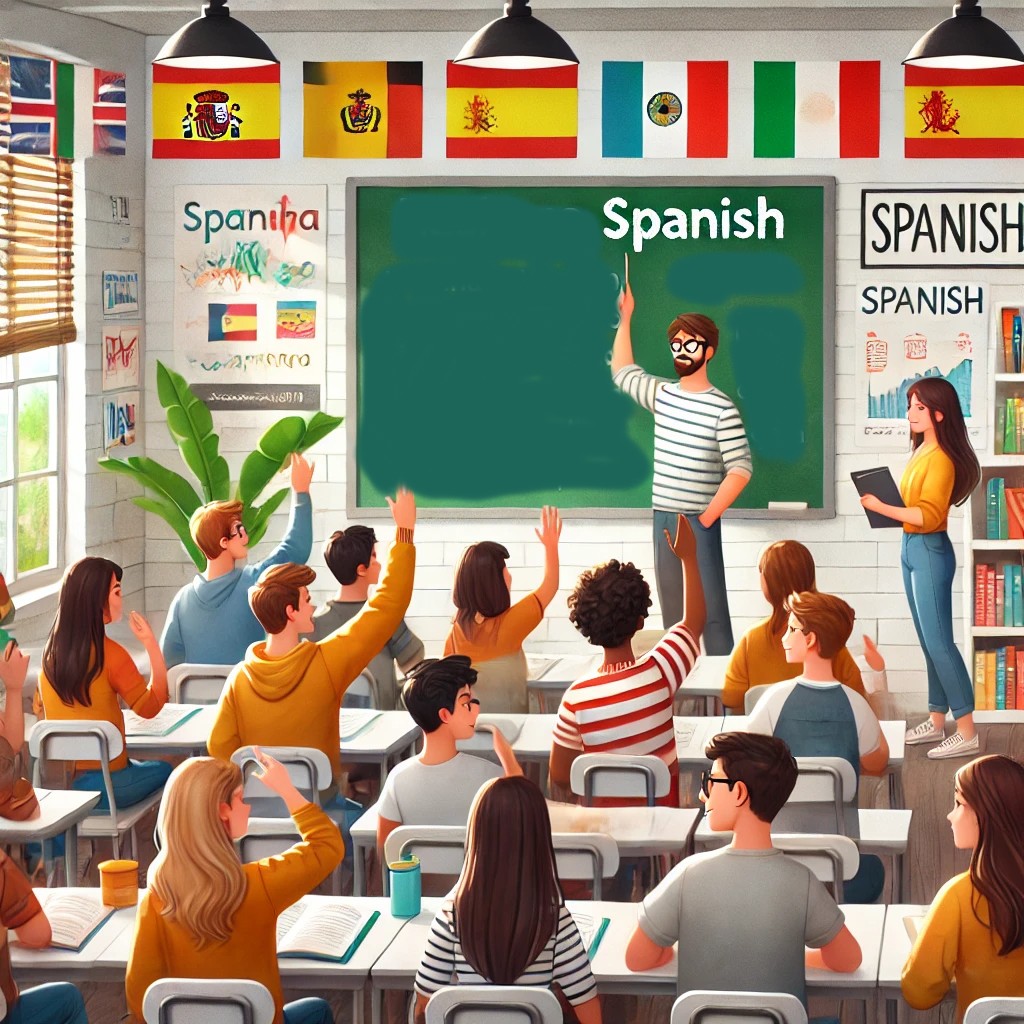
The integration of Spanish language programs into school curricula worldwide has been one of the most significant steps in promoting the language. In countries like the United States, Canada, and parts of Europe, Spanish is often offered as a primary or secondary foreign language option in both middle and high schools.
In the United States, for instance, the popularity of Spanish classes has skyrocketed. The American Council on the Teaching of Foreign Languages (ACTFL) notes that Spanish is the most studied language at the K-12 and university levels. This trend is supported by various school districts that mandate foreign language credits for graduation. Furthermore, the cultural and demographic shifts, particularly the growing Hispanic population, have fueled this rise in demand for Spanish education.
European countries, through the initiatives of the European Union, have also embraced multilingualism, with Spanish being a popular choice. Programs like the Erasmus+ initiative provide funding and resources for language learning and teacher training. This investment not only enhances linguistic skills but also fosters cross-cultural understanding among young Europeans.
However, challenges remain, such as ensuring equal access to high-quality Spanish language education, especially in rural areas and underfunded schools. Despite these hurdles, the push for including Spanish in school curricula remains strong, driven by a recognition of the language’s global relevance.
Online Learning Platforms
In the digital age, online learning platforms have revolutionized language education, making Spanish more accessible to learners of all ages and backgrounds. User-friendly apps and websites offer interactive lessons, instant feedback, and a plethora of resources, all available at the learner’s convenience.
Programs like Duolingo, Babbel, and Rosetta Stone have created engaging, gamified learning experiences that appeal to a broad audience. These platforms use a combination of methodologies, including spaced repetition, visual aids, and immersive simulations, to facilitate effective learning. Additionally, many of these platforms offer cultural insights and idiomatic expressions, enriching the learner’s understanding of the Spanish-speaking world.
Furthermore, Massive Open Online Courses (MOOCs) offered by institutions like Coursera and edX give learners the chance to take structured courses from esteemed universities like Universidad Nacional Autónoma de México (UNAM) and Universidad Carlos III de Madrid. These courses often provide certificates upon completion, which can be a significant credential for professional and academic advancement.
The flexibility of online learning is particularly beneficial for those who may not have access to traditional classroom settings. It can bridge geographical and economic gaps, allowing more people around the world to learn Spanish at their own pace and in their own spaces.
Cultural Exchange Programs
Language is intrinsically tied to culture, and immersive experiences are some of the most effective means of mastering a language. Cultural exchange programs are therefore a pivotal component in promoting Spanish language education. These programs often provide participants not only with language skills but also with a deep appreciation of the lifestyle, traditions, and values of Spanish-speaking communities.
One notable initiative is the North American Language and Culture Assistants Program, run by the Spanish Ministry of Education. This program invites native English speakers to work in Spain as language assistants, helping local students learn English while enhancing their own Spanish skills. Such exchanges create a symbiotic relationship where both parties benefit linguistically and culturally.
Similarly, institutions like the Fulbright Program offer scholarships for students and educators to study, teach, or conduct research in Spanish-speaking countries. These experiences are invaluable, providing participants with a firsthand understanding of the language and culture, and fostering long-lasting international ties.
Moreover, non-profit organizations like AFS Intercultural Programs and Rotary Youth Exchange offer high school students the opportunity to live with host families in Spanish-speaking countries. This immersion not only improves language proficiency but also fosters global citizenship and mutual respect among different cultures.
Government and Non-Government Organizations
A number of government and non-governmental organizations (NGOs) play a crucial role in promoting Spanish language education on a global scale. The efforts of these organizations are essential in creating structured programs, providing funding, and advocating for language learning policies.
The Instituto Cervantes, established by the Spanish government, is one of the most significant institutions dedicated to promoting Spanish language and culture worldwide. With centers in over 77 cities across 44 countries, the Instituto Cervantes offers language courses, teacher training, and cultural activities that highlight Spanish and Latin American cultures. Their DELE (Diploma de Español como Lengua Extranjera) certification is globally recognized and highly valued.
Another key player is the Organización de Estados Iberoamericanos (OEI), which works to strengthen educational cooperation among Ibero-American countries. By promoting Spanish and Portuguese, OEI seeks to foster cultural and academic integration in the region.
NGOs like the Fundación Biblioteca Virtual Miguel de Cervantes and the Fundación Carolina offer numerous resources, scholarships, and programs aimed at promoting Spanish language and Hispanic cultures. These organizations often collaborate with universities, libraries, and cultural institutions to expand their reach and impact.
Global Media and Entertainment
The proliferation of Spanish-language media and entertainment is another powerful driver of Spanish language education. With the rise of streaming platforms and digital content, Spanish-speaking media has become more accessible and widespread, engaging a global audience.
Television shows, movies, and music in Spanish are not only a form of entertainment but also serve as effective tools for language acquisition. Popular series like “La Casa de Papel” (Money Heist) and “Narcos” have garnered international attention, sparking interest in Spanish language and culture. These shows, often presented with subtitles, provide an entertaining means to improve listening comprehension and vocabulary.
Music, with its universal appeal, is another significant contributor. The global success of Spanish-language artists like Shakira, Bad Bunny, and Rosalia has brought Spanish into mainstream media, encouraging fans to learn the language to better understand the lyrics and connect with the music on a deeper level.
Moreover, global broadcasters such as Univision and Telemundo offer a wide array of Spanish-language programming, from news and telenovelas to educational content. These channels are not only popular among native speakers but also among learners who use the content to immerse themselves in the language.
Conclusion
Promoting Spanish language education is a multifaceted effort that involves schools, online platforms, cultural exchange programs, governmental and non-governmental organizations, and media. Each of these components plays a crucial role in making Spanish learning accessible and appealing to a global audience.
The benefits of these initiatives extend beyond linguistic skills. They foster intercultural understanding, open up economic and professional opportunities, and contribute to the preservation and appreciation of the rich cultural tapestry of the Spanish-speaking world. By learning Spanish, individuals do not just acquire a new language; they gain a new lens through which to view and interact with the world.
As global connectivity continues to grow, so too does the importance of multilingualism. Spanish, with its extensive global reach and cultural significance, stands out as a critical language for fostering communication, understanding, and collaboration across borders. The initiatives discussed in this article are just part of the broader movement to celebrate and encourage the learning of Spanish, ensuring that the language continues to thrive in the years to come.


