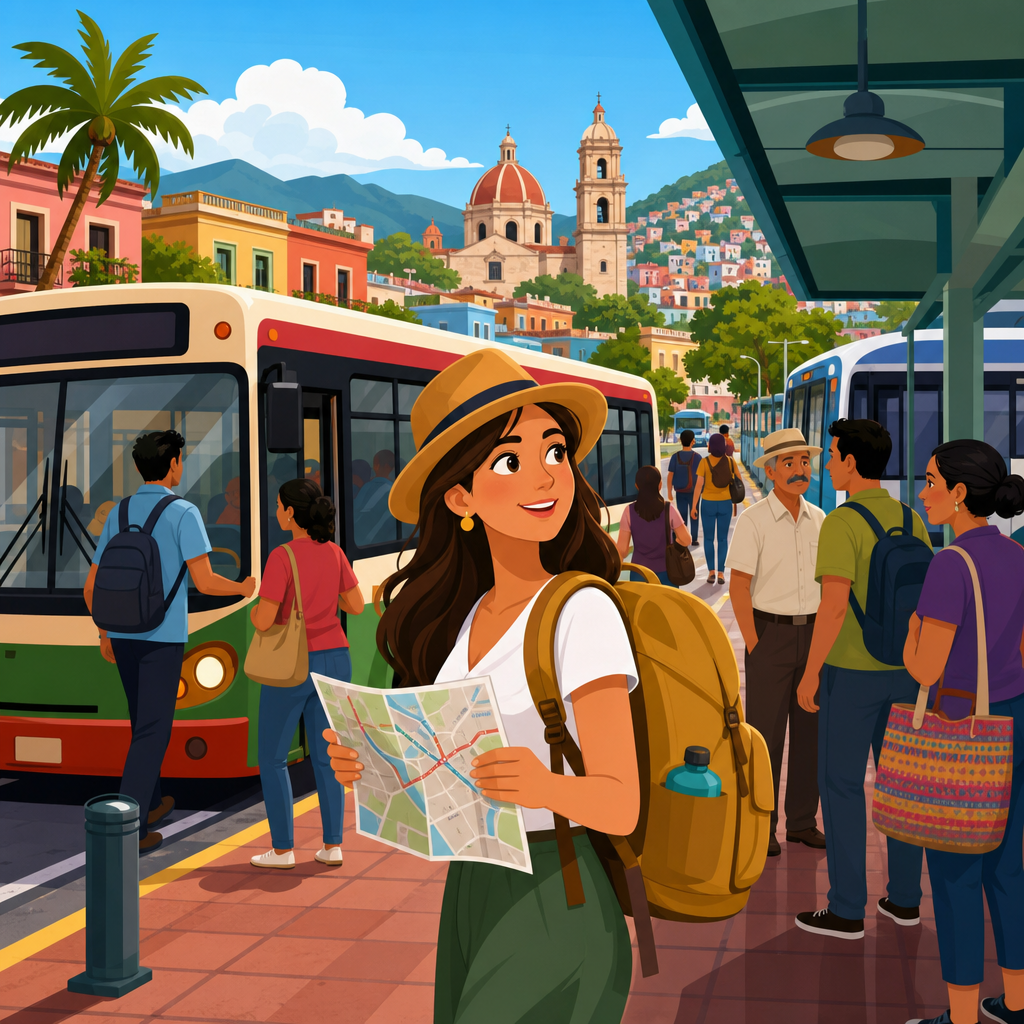
Navigating public transportation in Spanish-speaking countries is one of the fastest ways to turn classroom Spanish into practical, confident communication. Public transportation includes the systems people use to move around cities and regions without private cars: metro lines, city buses, intercity coaches, commuter rail, shared vans, ferries, trams, and regulated taxis connected to transit hubs. In Spanish-speaking countries, these systems vary widely in cost, reliability, and structure, but they share one important feature: they put travelers and new residents in direct contact with local language, etiquette, and daily routines. I have relied on buses in Mexico, metros in Madrid and Santiago, colectivos in Argentina, and long-distance coaches in Peru, and the same lesson repeats everywhere: understanding the transport vocabulary and local habits matters as much as knowing your destination.
This topic matters because transportation is where real-life interaction happens under time pressure. You may need to ask where to recharge a fare card, confirm whether a bus is going downtown, understand a platform announcement, or clarify if a taxi takes cash only. A learner who can order coffee in Spanish but cannot distinguish salida from entrada, andén from parada, or boleto from billete will feel lost quickly. Public transportation also reveals regional vocabulary differences that standard textbooks often skip. In one country, a ticket is a boleto; in another, a billete or pasaje. A bus may be an autobús, camión, guagua, micro, colectivo, or ómnibus depending on where you are. This hub article explains those differences, shows how transit systems usually work, and gives practical language for stations, schedules, payments, safety, and problem solving so you can move through Spanish-speaking communities with less stress and better judgment.
Core vocabulary and regional differences
The first step in navigating public transportation in Spanish-speaking countries is accepting that the words change by region, while the underlying concepts stay stable. The most universal terms include estación for station, parada for stop, línea for line, ruta for route, horario for schedule, tarifa for fare, transbordo for transfer, salida for exit or departure depending on context, llegada for arrival, and andén for platform. Beyond that core, local speech becomes decisive. In Spain, people commonly say metro, cercanías, autobús, and abono transporte. In Mexico City, many riders say metro, metrobús, camión, combi, and tarjeta de movilidad integrada. In the Caribbean, guagua often means bus. In Argentina, colectivo refers to a city bus, while SUBE is the nationally recognized transit card. In Chile, micro and metro are common, and Bip! is the payment card in Santiago.
Because regional variation is strong, the safest strategy is to learn both the standard term and the local one. If you ask, “¿Dónde está la parada del autobús?” you will usually be understood, but if local riders say “la parada de la guagua” or “la parada del colectivo,” recognizing their answer saves time. This is especially important in transport hubs where announcements are brief and staff speak quickly. I have seen learners miss the right platform because they understood tren but not cercanías, or because they looked for boletos while the machine labeled tickets as billetes. Build a personal vocabulary list by country, and include verbs as well as nouns: recargar for topping up a card, validar for tapping or validating it, hacer transbordo for transferring, bajar for getting off, and subir for boarding.
How major transit systems are organized
Most public transportation systems in Spanish-speaking countries fall into a few recognizable patterns. Large capitals such as Madrid, Mexico City, Santiago, Buenos Aires, Lima, and Medellín combine high-capacity rail with bus networks. The metro usually handles dense urban corridors, while buses and feeder routes connect neighborhoods outside the rail grid. Medium-sized cities may rely mostly on buses, bus rapid transit, or minibuses. Smaller towns often have less formal systems where route information is learned through local use rather than polished maps or official apps. Intercity travel is often more structured than local transit. Coach networks in Spain, Mexico, Colombia, Peru, Chile, and Argentina connect cities extensively, sometimes more effectively than passenger rail.
Understanding this structure helps you ask better questions. If you need a local connection from a central terminal, ask whether there is a ruta alimentadora, a bus de enlace, or another line that connects with the metro. If you are going between cities, ask whether the trip is directo or con escalas, whether the seat is semi-cama or cama on overnight routes, and which terminal handles departures. Spain’s transport ecosystem is highly integrated, with Renfe, metro systems, municipal buses, and regional cards often linked digitally. In contrast, some Latin American cities still depend on a mix of formal buses and semi-formal vans or colectivos with route logic that locals know by experience. That does not make them unusable; it means you should verify routes with more than one source, especially late at night or on weekends.
Paying fares, buying tickets, and using transit cards
Fare payment is one of the biggest stress points for visitors because methods differ sharply across Spanish-speaking countries. Many major systems now use reloadable cards, contactless bank cards, mobile wallets, or QR tickets, but cash remains important in many bus networks and smaller cities. Madrid’s public transport card, Mexico City’s integrated mobility card, Buenos Aires’s SUBE, and Santiago’s Bip! all require a rider to acquire the card first, then load balance and tap at entry points or validators. In some bus-heavy cities, you may still pay the driver directly, exact change may be expected, and asking for a large bill to be broken can slow boarding or trigger refusal. In long-distance terminals, counters, kiosks, and online platforms often coexist, but cancellation policies vary and not every company offers clear digital service.
A practical rule is to solve payment before you need the ride. At airports and large terminals, find out where cards are sold, what the minimum load is, whether a card can be shared, and if transfers are discounted automatically. Ask directly: “¿Dónde compro la tarjeta?”, “¿Se puede recargar aquí?”, “¿Aceptan tarjeta bancaria?”, and “¿Necesito efectivo?” In my experience, station staff usually answer these questions clearly even when they are busy. Problems arise when travelers assume one city works like another. Buenos Aires requires SUBE for many services, while some regional buses elsewhere still take coins or cash. Long-distance companies in Peru or Colombia may offer several fare classes, with meaningful differences in seat width, baggage allowance, and onboard security procedures. Read the ticket carefully for platform, departure time, terminal, and seat number.
| Country or city | Common local mode term | Typical payment method | Useful question |
|---|---|---|---|
| Madrid | Metro, autobús, cercanías | Reloadable transit card | ¿Dónde recargo el abono? |
| Mexico City | Metro, Metrobús, camión | Integrated mobility card | ¿Esta tarjeta sirve para todo? |
| Buenos Aires | Colectivo, subte, tren | SUBE card | ¿Dónde consigo una SUBE? |
| Santiago | Metro, micro | Bip! card | ¿Aquí venden la Bip!? |
| Caribbean cities | Guagua | Cash or local card | ¿Se paga al subir? |
Reading stations, signs, maps, and announcements
Transit literacy in Spanish depends less on fluent conversation than on recognizing repeated patterns in signs and announcements. In stations, entrada and salida mark entry and exit; correspondencia or conexión signals a transfer; taquilla, ventanilla, or boletería indicates a ticket window; and acceso cerrado means that entrance is closed. Platforms may be organized by destino, dirección, vía, andén, or dársena, depending on the mode. On buses, front displays usually show the route number and destination, but neighborhood names may matter more than street names. In large terminals, departures can shift by gate, so reading the board matters as much as listening to audio announcements.
Announcements often compress a lot of information into a few seconds. Learn the phrases repeated across networks: “Próxima estación,” “próxima parada,” “manténgase alejado de las puertas,” “servicio con retraso,” “por obras,” and “este tren no presta servicio.” If you understand those, you can catch the important part even when the recording is fast. Map reading also improves with a few habits. First, identify line colors and terminal stations, because directions are commonly given by the last stop on the line rather than compass orientation. Second, notice whether transfer stations require exiting and reentering. Third, check whether the same station name applies across systems or whether a bus stop near a rail station uses a slightly different label. Screenshot the map before entering tunnels where mobile service may fail.
Essential Spanish phrases for getting around
The most useful transport Spanish is short, direct, and context specific. For finding the right route, say: “¿Este autobús va al centro?”, “¿Dónde tomo el metro para ir a la estación?”, “¿Tengo que hacer transbordo?”, and “¿Cuántas paradas faltan?” For ticketing, use: “Quiero un billete de ida y vuelta,” “¿A qué hora sale el próximo?”, “¿Hay descuento para estudiantes o mayores?”, and “¿Desde qué andén sale?” For long-distance trips, add: “¿Cuánto equipaje está incluido?”, “¿La maleta va abajo?”, and “¿Hay paradas durante el viaje?” These phrases work because they are concrete. You are not asking for a grammar-perfect exchange; you are extracting the exact operational detail you need.
Politeness also matters. Starting with disculpe or perdón softens the request, and ending with gracias encourages helpful responses. If you miss part of the answer, ask “¿Me lo puede repetir más despacio?” or “Entonces, ¿bajo en la próxima?” to confirm. When I have coached travelers before trips, the biggest improvement came from practicing these transport questions aloud until they felt automatic. In stations, there is rarely time to mentally translate from English. A short phrase said confidently works better than a longer sentence assembled under pressure. Keep your questions closed when possible. Instead of asking “How does this whole system work?” ask “¿Esta línea llega a la terminal?” and then follow with one more targeted question if needed.
Safety, etiquette, and common mistakes
Public transportation in Spanish-speaking countries is generally manageable, but safe use depends on local awareness. Pickpocketing is the most common risk in crowded metros, bus terminals, and busy bus rapid transit systems. Keep phones and wallets secure, especially near doors where thieves exit quickly. Avoid displaying cash while buying tickets. On overnight coaches, valuables should stay with you, not in the luggage hold unless the company uses secure tagging procedures. Ride-hailing and regulated taxis linked to stations can be useful at odd hours, but verify the pickup point and plate number. In some cities, unofficial drivers solicit aggressively at terminals; the safest response is a firm “No, gracias” and movement toward authorized stands.
Etiquette varies, but some patterns are consistent. Let passengers exit before boarding, offer priority seating to elderly riders, pregnant passengers, or people with disabilities, and avoid blocking doors with large backpacks. Queuing norms differ: Spain often has more visible lines, while boarding elsewhere can feel more fluid and competitive. Watch what locals do, then adapt. The most common mistakes I see are boarding without enough change, assuming every stop is announced clearly, and underestimating travel time during rush hour. Another frequent error is relying on a single app. Use the official operator site when possible, then cross-check with map apps and local advice. Strikes, protests, weather, and road closures can change service suddenly, particularly in large capitals.
Using transportation to build Spanish and local confidence
Public transportation is not just a practical necessity; it is one of the best environments for learning how Spanish is actually used in community life. Station signs reinforce high-frequency vocabulary. Repeated announcements sharpen listening. Asking for directions creates low-stakes conversation with predictable language. Over time, you begin to understand informal references to neighborhoods, landmarks, and local routines that no phrasebook teaches well. This is why transportation belongs at the center of Spanish community and interaction. It gives learners structured exposure to the language while solving a real problem.
If you want to navigate public transportation in Spanish-speaking countries well, prepare in layers. Learn the local words for bus, ticket, stop, and card before arrival. Download official maps, save your destination offline, and confirm how fares are paid. Practice five transport questions until they are automatic. Then observe local behavior and adjust without panic. The reward is bigger than simply getting from point A to point B. You gain independence, better listening skills, and more natural contact with the communities around you. Use this hub as your starting point, then explore city-specific guides, transit vocabulary resources, and regional Spanish articles to build transport confidence trip by trip.
Frequently Asked Questions
What types of public transportation should travelers expect in Spanish-speaking countries?
Travelers will usually find a mix of urban and regional transportation options rather than one single system. In large cities, that often includes metro or subway networks, city buses, bus rapid transit lines, commuter trains, trams, cable cars in some mountainous areas, and regulated taxis that connect to major stations or terminals. Between cities, intercity coaches, long-distance buses, regional rail, ferries in coastal or island areas, and shared vans or minibuses are common. The exact combination depends heavily on the country and even the city. For example, a capital city may have a modern metro with reloadable transit cards, while a smaller town may rely more on buses, colectivos, or shared vans with cash payment.
That variety is important for language learners because each mode introduces useful real-world Spanish. You may need to ask where to buy a ticket, whether a bus goes downtown, which platform serves your destination, or whether a transfer is included. Learning transportation vocabulary such as boleto, pasaje, parada, andén, estación, transbordo, and terminal can make the experience much smoother. In many Spanish-speaking countries, transportation systems are also deeply tied to daily local life, so understanding how they work gives travelers both practical mobility and a better cultural read on the place they are visiting.
How can I ask for directions, fares, and route information in Spanish when using public transportation?
The most effective approach is to learn a small set of high-frequency questions and use them confidently. Helpful phrases include: ¿Dónde está la parada? for “Where is the stop?”, ¿Este autobús va al centro? for “Does this bus go downtown?”, ¿Cuánto cuesta el pasaje? for “How much is the fare?”, ¿Dónde compro la tarjeta? for “Where do I buy the card?”, and ¿Tengo que hacer transbordo? for “Do I need to transfer?” If you are in a station, ¿De qué andén sale? can help you find the correct platform, while ¿A qué hora sale? and ¿A qué hora llega? are useful for departure and arrival times.
It also helps to keep your Spanish direct and polite. Start with Perdón, Disculpe, or Buenos días, then ask one clear question at a time. If the response is too fast, say Más despacio, por favor or ¿Me lo puede repetir? If you are still learning, showing the name of your destination on your phone can be very effective. Many locals will meet you halfway if they see you are trying. Even basic Spanish can go a long way in transit settings because the questions are repetitive and highly practical. After a few rides, many learners notice that transportation becomes one of the easiest places to build listening confidence and everyday speaking fluency.
Are public transportation systems in Spanish-speaking countries easy to use for tourists and Spanish learners?
In many cases, yes, but “easy” depends on the city, the quality of signage, and how prepared you are. Major metropolitan systems are often designed to move large numbers of people efficiently, so they may have route maps, color-coded lines, numbered platforms, digital signs, and mobile apps that make navigation more intuitive even if your Spanish is limited. Airports, central bus terminals, and popular tourist corridors may also have extra support such as information desks, posted schedules, or staff used to helping visitors. That said, smaller cities or less formal systems may rely more on local knowledge, spoken instructions, or route names that are not always obvious to newcomers.
For Spanish learners, that challenge can actually be an advantage. Public transportation creates repeated, low-stakes situations where the same kinds of vocabulary and interactions come up again and again. You learn how to recognize destination signs, ask if a seat is free, understand when someone says the bus is full, and follow simple instructions like bájese en la próxima or tiene que cambiar de línea. The key is to prepare before you travel: review route names, save your destination, carry small cash if needed, and understand that transit systems differ widely. Some are formal and digital; others are flexible and community-based. Once you accept that variation, using public transportation becomes far less intimidating and far more rewarding.
What are the best safety and etiquette tips for using buses, metros, and taxis in Spanish-speaking countries?
Good transit habits matter everywhere, but they are especially important when you are unfamiliar with the language or local routines. Start by using official or clearly marked services whenever possible. In metros and major bus systems, stay aware of your surroundings, keep valuables secure, and avoid displaying phones, cash, or passports unnecessarily. During crowded rides, bags should be zipped and kept in front of you. If you are arriving late, confirm in advance whether the route is still operating and whether the stop or station is in a well-trafficked area. For taxis, use regulated stands, licensed vehicles, or reputable ride-hailing options where available, especially at airports and transit terminals.
Etiquette is just as important as safety. Offer seats to elderly passengers, pregnant riders, or people with disabilities if local custom expects it. Wait your turn, move away from doors when boarding is complete, and have your fare or transit card ready so you do not slow the line. In many places, a simple gracias, buenos días, or con permiso is appreciated. If you need to get off a crowded bus, saying permiso clearly and politely usually works well. On shared vans or informal local transport, observe what others do with payment, seating, and stop requests. Following local patterns respectfully helps you blend in, avoid confusion, and travel more confidently.
What should I know about paying fares, buying tickets, and handling transit differences from one country to another?
One of the biggest surprises for travelers is how much fare systems vary across Spanish-speaking countries. In one city, you may need a rechargeable contactless card for metro and buses. In another, buses may accept exact cash only. Some intercity coach companies require advance seat selection and ID, while others operate with more flexible boarding procedures. Shared vans or minibuses may collect payment after departure, and ferries may have separate counters for locals and visitors depending on the route. Because there is no universal model, it is smart to research the local system before your first trip and confirm details at stations, hotels, or tourism offices.
Language-wise, you should recognize that “ticket” may be called boleto, billete, pasaje, or tiquete, depending on the country. The word for bus can also vary, with terms like autobús, bus, camión, guagua, or colectivo used regionally. These differences do not usually prevent communication, but knowing them helps you adapt faster and understand local conversations. It is also wise to ask practical follow-up questions such as ¿Se paga al subir o al bajar?, ¿Aceptan efectivo?, and ¿Sirve esta tarjeta para toda la red? The more flexible you are with local terminology and procedures, the easier it becomes to navigate transportation smoothly across different Spanish-speaking destinations.