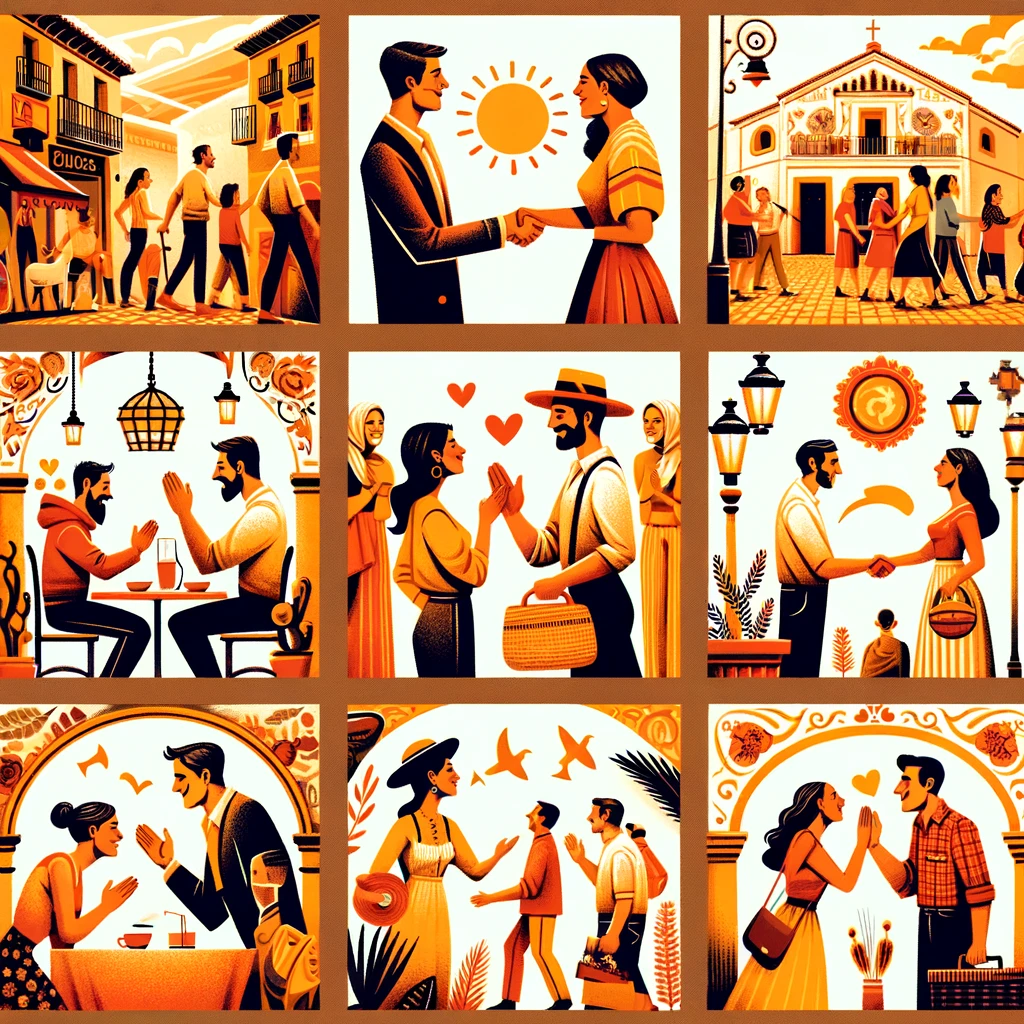
Spain, a country renowned for its rich history, diverse culture, and warm people, offers a unique array of social customs and etiquette. Among these, the practices surrounding social greetings stand out as a cornerstone of daily interactions. Understanding these norms is not only a sign of respect but also key to successfully navigating social situations in Spain. This comprehensive guide delves into the nuances of Spanish greetings, from formal handshakes to the affectionate ‘besos’, providing valuable insights for both visitors and those looking to deepen their understanding of Spanish culture.
The Significance of Greetings in Spanish Culture
In Spain, greetings are more than just a polite formality; they are an expression of social cohesion and personal respect. The way Spaniards greet each other varies depending on the region, the setting, and the relationship between the people involved. However, what remains constant is the emphasis on warmth and sincerity. Whether it’s a firm handshake in a business meeting or a friendly hug among friends, each gesture carries a depth of meaning and cultural significance.
Handshakes: The Formal Approach
Handshakes are the most common form of greeting in professional or formal settings. A typical Spanish handshake is firm and accompanied by direct eye contact, which conveys confidence and respect. It’s important to note that while handshakes are standard in business environments, they are also common in more casual settings when meeting someone for the first time.
Key Points to Remember:
- A firm grip is essential.
- Maintain direct eye contact.
- Handshakes are appropriate for both genders.
Besos: The Social Embrace
‘Besos’, or kisses, are a hallmark of social greetings among friends and family in Spain. This practice involves a light kiss on each cheek, starting with the left. It’s a gesture that symbolizes warmth and friendliness and is commonly used when greeting someone you have met before or when introduced to friends of friends. It’s important to note that the kisses are not actual lip-to-cheek contact but more of a cheek-to-cheek touch while making a kissing sound.
Important Considerations:
- Begin with the left cheek.
- The kisses are symbolic, not literal.
- Typically used among friends and family, not in professional settings.
Hugs: A Sign of Affection
In more intimate settings or among close friends and family, hugs are a common way to greet one another. Spanish hugs are generally warm and sincere, often accompanied by pats on the back. They signify a close relationship and a sense of trust.
Understanding the Context:
- Reserved for close relationships.
- Can be combined with ‘besos’.
- Reflects a higher level of intimacy.
Verbal Greetings: Words Matter
In addition to physical gestures, verbal greetings are an integral part of the Spanish culture. Phrases like “Hola” (Hello), “Buenos días” (Good morning), “Buenas tardes” (Good afternoon), and “Buenas noches” (Good evening) are commonly used. The choice of phrase depends on the time of day and the formality of the situation. In casual settings, it’s common to use “¿Qué tal?” (How are you?) or “¿Cómo estás?” (How are you?).
Tips for Verbal Greetings:
- Choose the appropriate phrase for the time of day.
- “¿Qué tal?” and “¿Cómo estás?” are casual and friendly.
- Responding is just as important as initiating the greeting.
Regional Variations and Modern Influences
Spain’s diverse regions, each with its unique cultural identity, also reflect in the way people greet each other. For example, in Catalonia, it’s common to see a single kiss on the cheek, while in Andalusia, the traditional ‘besos’ might be more expressive and prolonged. Modern influences and globalization have also introduced variations, such as the adoption of more informal greetings among the younger generation.
Navigating Different Regions:
- Be observant and follow the lead of locals.
- Recognize that practices may vary from one region to another.
- Embrace the diversity of greetings across Spain.
Adapting to Modern Changes:
- Younger Spaniards may opt for less formal greetings.
- Be open to variations and new forms of greetings.
Understanding and respecting the nuances of social greetings in Spain is crucial for anyone looking to connect with its people and culture. From the firm handshake in a business setting to the affectionate ‘besos’ among friends, each form of greeting has its place and significance. By embracing these practices, one not only shows respect for Spanish customs but also enriches their own cultural experience. As you navigate the charming and diverse landscape of Spain, remember that each handshake, kiss, or hug is more than just a greeting; it’s a bridge to understanding and appreciating the warm and inviting Spanish culture.

The Art of Addressing Others in Spain
In Spain, addressing others appropriately is as crucial as the greeting itself. The use of titles and forms of address vary depending on the level of formality and familiarity. In formal situations, titles such as “Señor” (Mr.), “Señora” (Mrs.), and “Señorita” (Miss) are commonly used, followed by the surname. However, in informal settings, first names or nicknames are often used once a relationship has been established.
Titles and Formal Address:
- “Señor”, “Señora”, and “Señorita” are respectful and formal.
- Use the surname unless invited to use the first name.
- Professional titles like “Doctor” or “Profesor” are also widely used.
Transition to Informal Address:
- Switch to first names only when invited to do so.
- Nicknames are a sign of closeness and should be used appropriately.
- Age and hierarchy play a role in determining the level of formality.
Non-Verbal Communication: Understanding the Unspoken
Non-verbal cues are an integral part of communication in Spain and play a significant role in greetings and interactions. Understanding these subtle signals can greatly enhance one’s ability to engage effectively and respectfully with Spanish people.
Eye Contact and Physical Proximity:
- Direct eye contact signifies confidence and interest.
- Spaniards often stand close during conversation, reflecting warmth and friendliness.
- Personal space may be smaller than in other cultures, but it’s important to respect individual comfort levels.
Gestures and Expressions:
- Expressive hand gestures are common and add emphasis to communication.
- Facial expressions convey emotions and reactions vividly.
- Be aware of culturally specific gestures that might have different meanings.
Etiquette in Different Settings: From Casual to Formal
The setting of an interaction in Spain greatly influences the type of greeting and behavior expected. Whether it’s a casual encounter on the street or a formal business meeting, understanding the context is key.
Casual Settings:
- Greetings are warm and may include hugs and ‘besos’.
- Conversations often start with small talk about weather, family, or general well-being.
- Informal settings are relaxed, but politeness is always appreciated.
Formal Settings:
- Handshakes are standard, accompanied by formal verbal greetings.
- Titles and surnames are used until a more informal relationship is established.
- Professionalism and respect are paramount in these interactions.
Special Occasions and Greetings
Spain’s rich cultural tapestry includes various festivals and celebrations, each with its unique customs, including greetings. Understanding these special occasions can provide deeper insights into Spanish culture and social norms.
Festivals and Holidays:
- Greetings during festivals often include specific phrases related to the occasion.
- It’s common to exchange hugs and kisses during celebrations.
- Participating in these traditions shows respect and appreciation for Spanish culture.
Celebratory Greetings:
- Birthdays, anniversaries, and significant milestones often involve more personal and heartfelt greetings.
- Gifts and congratulatory messages are common ways to express good wishes.
- Understanding the cultural significance of these occasions can enhance the greeting experience.
Learning and Adapting: The Key to Cultural Integration
For visitors and expatriates, adapting to Spanish social norms can be a rewarding journey. Learning the subtleties of greetings and etiquette not only shows respect for the culture but also aids in smoother integration and richer interactions.
Tips for Cultural Adaptation:
- Observe and learn from locals.
- Don’t hesitate to ask for guidance if unsure about the correct form of greeting.
- Embrace the cultural differences and be open to new experiences.
Mistakes and Misunderstandings:
- Missteps in greetings are common and usually forgiven.
- Apologize if you feel you’ve made a mistake, as it shows respect and willingness to learn.
- Remember that genuine effort is always appreciated, even if not perfect.
Conclusion
Navigating social greetings in Spain is an enriching experience that opens doors to deeper cultural understanding and connection. From formal handshakes in professional environments to the affectionate besos among friends, these gestures are more than mere formalities; they are expressions of respect, warmth, and social harmony. By embracing these practices, visitors can truly experience the heart of Spanish culture, fostering meaningful relationships and memorable experiences. As you explore the vibrant and diverse regions of Spain, remember that each greeting is an opportunity to connect, respect, and celebrate the rich tapestry of Spanish social customs.