
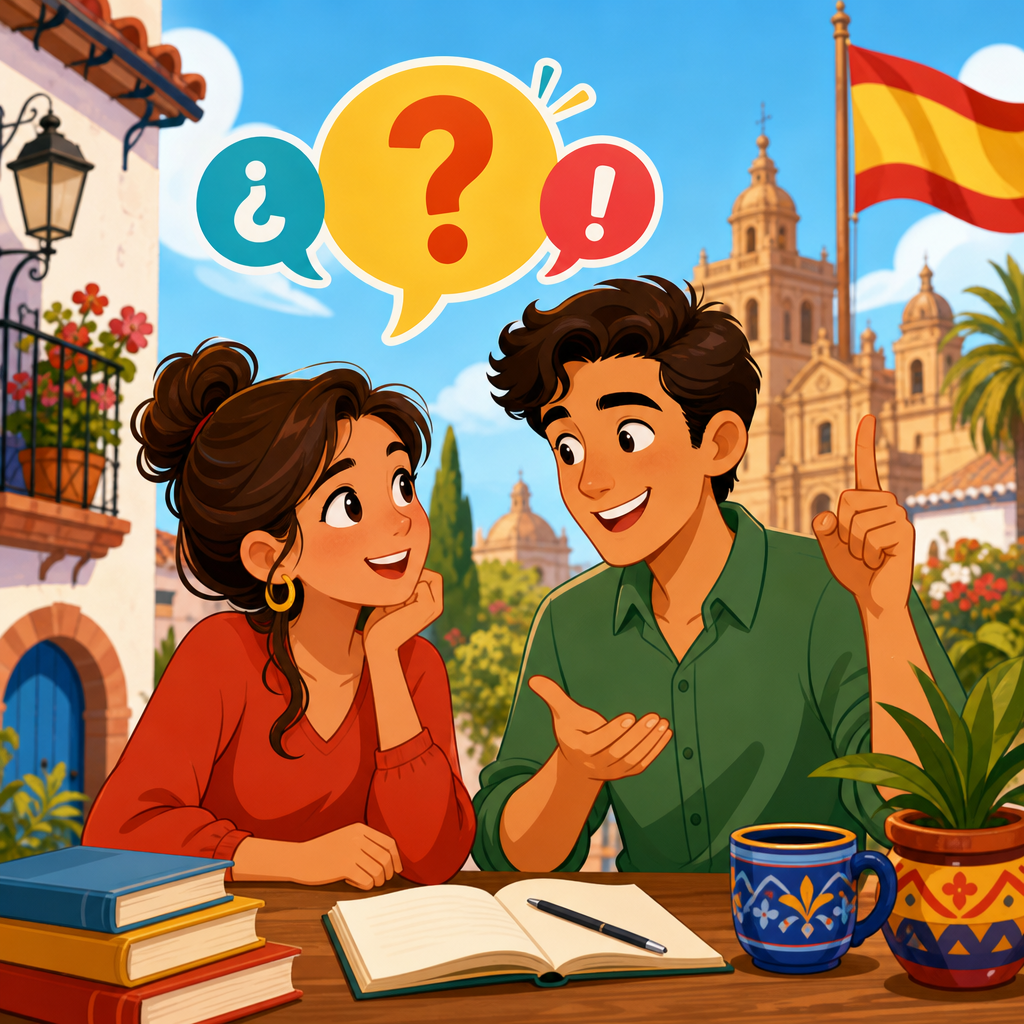
Quick Spanish help matters because most learners do not get stuck on entire textbooks; they get stuck on one urgent question at a time. A traveler needs to know whether to say por or para. A parent helping with homework wants to understand why ser appears in one sentence and estar in another. A professional writing to a client needs a polite greeting that sounds natural, not translated. In my work building Spanish learning resources and answering learner mail, I have seen the same pattern repeatedly: quick, precise answers keep people moving, while vague explanations make them quit.
This hub for a Q&A section for quick help is designed to solve that problem. It gathers the frequent queries learners ask in Spanish community spaces and explains the answers in plain language. Here, “quick help” does not mean shallow help. It means a direct answer first, followed by just enough context to use the answer correctly. That approach is useful for beginners, heritage speakers rebuilding confidence, and intermediate learners who can read a lot of Spanish but still hesitate when they must produce it in real time.
A good Spanish Q&A hub also supports the wider Spanish Community and Interaction topic. Community learning works best when people can ask focused questions, get reliable answers, and then continue the conversation. This page therefore acts as a central guide to the most common pain points: pronunciation, greetings, grammar contrasts, verb forms, useful vocabulary, polite requests, and regional variation. If a learner lands here looking for one answer, the page should also show the next questions they are likely to ask. That structure helps users, teachers, moderators, and support teams reduce confusion and point people toward consistent explanations.
Spanish is especially suited to this format because many “small” questions affect real communication immediately. Choosing between tú and usted changes tone. Misplacing an accent mark can change meaning, as in si versus sí. Using the wrong past tense can make a story sound unnatural. Quick answers on these points are not cosmetic; they improve clarity, confidence, and social accuracy. When learners have access to a dependable bank of expert answers, they spend less time guessing and more time using the language.
What learners ask most in a Spanish quick help section
The most frequent questions are remarkably consistent across forums, classes, tutoring sessions, and community groups. Learners ask how to pronounce letters, how to greet people, how to say everyday phrases, when to use major grammar pairs, and how to avoid sounding rude. They also ask translation questions, but the better version of quick help goes beyond direct translation and explains usage. For example, when someone asks how to say “I am excited,” the answer cannot just be estoy excitado, because in many contexts that suggests sexual arousal. A responsible quick help answer gives safer options such as estoy emocionado or tengo muchas ganas.
Another common pattern is that learners ask short questions that hide a larger issue. “Why is it me gusta and not yo gusto?” is really a question about how Spanish frames liking as “something pleases me.” “Why do I hear both gracias and muchas gracias?” is really a question about degree, tone, and social routine. Quick help works when answers identify the underlying concept instead of treating every question as isolated trivia. That is why a strong hub page should connect frequent queries into categories and recurring rules.
The table below summarizes the questions that appear most often and the kind of short answer that helps immediately. In practice, these answers should link outward to deeper articles, but the hub itself needs to be useful on first visit.
| Common query | Direct answer | Why it matters |
|---|---|---|
| What is the difference between ser and estar? | Ser is generally for identity and inherent traits; estar is generally for states, conditions, and location. | This distinction affects basic sentences from introductions to descriptions. |
| When do I use por and para? | Por often expresses cause, means, exchange, or movement through; para often expresses purpose, destination, deadlines, or recipient. | These prepositions appear in high-frequency speech and writing. |
| Should I say tú or usted? | Use tú in informal situations and usted for formality, distance, or respect, depending on region and context. | Pronoun choice shapes politeness and social fit. |
| Why is it me gusta? | Spanish structures “to like” as “it pleases me,” so the subject is the thing liked, not the person. | Learners need this pattern for countless everyday statements. |
| How do accents work? | Accent marks can show stress or distinguish meanings, as in el/él and tu/tú. | They affect pronunciation, comprehension, and correctness. |
Fast answers to pronunciation, spelling, and accent questions
Pronunciation questions are common because Spanish spelling is more regular than English spelling, yet several sounds vary by region. The quickest reliable answer is this: Spanish is largely phonetic, so once you learn the sound system, you can usually pronounce new words accurately. The letters a, e, i, o, u keep stable vowel sounds, unlike in English. That stability is one reason learners often improve reading aloud quickly. In practical tutoring, I start with vowels first, because weak vowels create more misunderstanding than most consonants.
Learners often ask about r and rr. A single r between vowels is usually a tap, as in pero. Double rr is a trill, as in perro. This matters because the contrast changes meaning. Another frequent question concerns ll and y. In much of the Spanish-speaking world, they sound similar, often like English “y” or a soft “j,” though areas of Argentina and Uruguay may pronounce them closer to “sh” or “zh.” A quick help answer should say plainly that regional variation exists and that learners do not need to imitate every accent to be understood.
Accent marks deserve direct treatment because they are not optional decorations. They can mark the stressed syllable, especially when a word breaks normal stress rules, and they can distinguish meanings in high-frequency pairs. Examples include como versus cómo, que versus qué, and mas versus más. If a learner asks whether missing an accent is a big deal, the honest answer is yes in writing, especially in educational, professional, or publishing contexts. Spell-check tools can help, but they do not replace understanding. The Real Academia Española and the Asociación de Academias de la Lengua Española remain the principal standard-setting references for orthography.
Quick help with everyday phrases, greetings, and polite interaction
Many frequent queries are really social questions: How do I say hello naturally? How do I ask for help without sounding abrupt? What is the safest phrase if I am unsure about formality? The best quick answer is to prioritize neutral, broadly accepted expressions. Hola works almost everywhere. Buenos días, buenas tardes, and buenas noches are standard and polite. To ask for help, ¿Me puede ayudar? is safe in formal settings, while ¿Me ayudas? fits informal ones. For “please” and “thank you,” por favor and gracias remain foundational and should be used generously.
Politeness in Spanish often depends on tone, verb form, and softening language rather than on one magic phrase. Compare Dame eso with ¿Me das eso, por favor? The first can sound commanding unless context justifies it. The second is cooperative and natural. Learners also ask how to apologize. Perdón, disculpa, and lo siento are not interchangeable in every case. Perdón and disculpa often fit minor interruptions or small mistakes, while lo siento carries more emotional weight. A quick help page should explain these distinctions because they appear constantly in conversation.
One of the most useful community-facing answers concerns introductions. If you need a safe template, say: Hola, me llamo Ana. Mucho gusto. If the setting is more formal, use Encantado or encantada depending on the speaker’s gender. For digital interaction, learners frequently ask how to start emails or messages. Professional defaults include Estimado señor García, Estimada señora López, or simply Hola, María if the relationship is established and the tone is less formal. These formulas save learners from literal translations that sound stiff or culturally off.
The grammar questions that come up constantly
The most frequent grammar queries are predictable because they sit at the center of basic communication. Ser versus estar is the classic example. The shortest useful explanation is that ser usually identifies what something is, while estar usually describes how something is or where it is. So es inteligente describes a trait, while está cansado describes a condition. Yet quick help should also mention that the distinction is about meaning, not permanent versus temporary in every case. La fiesta es en mi casa uses ser for an event’s location, which surprises learners who memorize oversimplified rules.
Por and para generate another flood of questions. The fastest accurate guide is to think of para as direction and purpose, and por as cause, route, method, exchange, or duration in some contexts. Este regalo es para ti marks recipient. Viajo para estudiar marks purpose. Lo hice por amor marks cause. Pagué veinte euros por el libro marks exchange. Learners improve faster when answers provide full sentences instead of labels alone.
The verb gustar and similar verbs like encantar, interesar, and molestar deserve direct explanation. In Spanish, the thing liked is grammatically the subject. That is why me gustan los libros literally aligns with “books are pleasing to me.” Once learners understand this structure, dozens of confusing sentences become easier. Quick help should also cover article use, adjective agreement, and basic past tense contrasts. For many everyday needs, the key past-tense answer is this: the preterite reports completed actions, while the imperfect describes background, habit, or ongoing past states. Ayer fui al mercado is completed; cuando era niño, iba al mercado con mi abuela expresses habitual past.
How to answer translation and usage questions without misleading learners
Translation questions are unavoidable in any Spanish help center, but direct equivalents often mislead. The right quick answer gives a translation and a usage note. Take “How do I say ‘I miss you’?” The standard answer is te extraño in many regions, but te echo de menos is common in Spain and me haces falta can express a slightly different emotional nuance. If a hub ignores regional usage, learners may believe one correct answer exists everywhere. That is rarely true in living language.
Another common example is “How do I say ‘can’?” Spanish distinguishes ability, permission, and possibility through context and different constructions. Poder handles many cases, but not all translations are one-to-one. “I can swim” becomes puedo nadar; “You may leave now” may also use puedes irte ahora, though tone and setting matter. Good quick help avoids false certainty. It states the most common answer, then warns when context changes the best choice.
In community moderation and learner support, I have found that the safest practice is to answer with three parts: the best default phrase, one example sentence, and one caution about nuance. That format prevents oversimplification without overwhelming the user. It also keeps the Q&A section useful as a hub, because each short answer can connect to a deeper article on regional Spanish, formal writing, travel phrases, or core grammar. A quick help page succeeds when it solves the immediate question and points the learner naturally toward the next level of understanding.
Building a useful hub for Spanish community interaction
A hub page for a Spanish Q&A section should be organized around user intent, not textbook chapter order. In practice, that means grouping answers by immediate need: speaking, writing, grammar, vocabulary, school help, work communication, and travel or daily life. Each answer should start with the shortest correct response, then add context, examples, and limits. That structure respects the fact that many visitors are on phones, under time pressure, or in the middle of an interaction where they need Spanish help quickly.
The strongest hub pages also maintain consistency. If one article explains usted as formal and another casually tells users to default to tú, the site creates confusion. Editorial standards matter. Use the same terminology for tense names, the same accent rules, and the same regional labeling throughout the subtopic. Named tools can help maintain quality. Corpus references such as CORPES XXI, standard dictionaries like the Diccionario de la lengua española, and learner tools such as WordReference or Linguee are useful when checked critically. They should support answers, not replace expert judgment.
Community interaction adds one final requirement: answers must be respectful to different varieties of Spanish. Mexican, Colombian, Argentine, Caribbean, and Peninsular usage can differ in vocabulary, pronouns, and pronunciation, yet all are valid. A practical quick help section says which form is broadest, which is regional, and which is most formal. That transparency builds trust and keeps learners engaged.
Quick Spanish help works best when it delivers immediate clarity, accurate usage, and a clear path to deeper learning. The most valuable answers are short at the top and rich underneath: direct enough for a fast search, detailed enough to prevent mistakes, and flexible enough to acknowledge regional variation. For a hub under Spanish Community and Interaction, the goal is not just to answer isolated questions. It is to create a dependable place where learners return because the explanations are consistent, practical, and socially aware.
If you build or use a Q&A section for quick help, focus on the questions people ask every day: pronunciation, greetings, politeness, high-frequency grammar, and real-world translation problems. Answer them with examples, not abstractions. Name the nuance when it matters. Keep the language plain. Then connect each answer to deeper resources so one solved question becomes the start of stronger Spanish. Use this hub as the entry point, refine it around real learner questions, and make quick help the reason your Spanish community keeps growing.
Frequently Asked Questions
Why do Spanish learners so often need quick help instead of long lessons?
Because real-world Spanish problems usually appear as specific, high-pressure questions, not as neat chapter exercises. Most learners are not sitting around wondering how to review an entire grammar system from the beginning. They are trying to solve one immediate problem: whether to use por or para, whether a sentence needs ser or estar, how to greet a client politely, or why a phrase they learned in class sounds unnatural in an email. That is why quick Spanish help is so valuable. It meets learners exactly where they are, at the moment confusion appears.
In practice, this kind of targeted support is often more effective than broad study because it is tied to a real need. A traveler remembers the answer to a question about directions because they needed it that day. A parent helping with homework remembers a grammar explanation because it solved a visible problem in front of them. A professional remembers a polished greeting because it helped them write a better message immediately. Quick answers remove friction, build confidence, and keep learners moving instead of letting one doubt stop all progress.
There is also an important emotional side to this. Learners often assume that getting stuck on a small point means they are “bad at Spanish,” when in reality it usually means they have reached one of the language’s most common decision points. Fast, expert answers prevent that frustration from growing. Instead of losing momentum, learners get clarity, use the language, and continue learning naturally. That is often how real progress happens: one answered question at a time.
How can I tell when to use por and when to use para?
This is one of the most common urgent questions in Spanish, and for good reason. Both words can translate to “for” in English, but they are not interchangeable. A simple way to start is this: para usually points toward a destination, goal, purpose, deadline, or recipient, while por usually relates to cause, exchange, movement through, duration, or means. That broad distinction will not solve every case, but it gives you a reliable foundation.
Use para when you are talking about purpose or intended use: Estudio para aprender means “I study in order to learn.” Use it for a recipient: Este regalo es para ti, “This gift is for you.” Use it for a deadline: La tarea es para mañana, “The homework is due tomorrow.” It also appears when expressing a destination or direction in some contexts: Salgo para Madrid, “I’m leaving for Madrid.” In all of these, the idea is forward-looking. Something is aimed at an outcome, person, or endpoint.
Use por when you mean “because of,” “through,” “by means of,” or “in exchange for.” For example, Lo hice por ti means “I did it because of you” or “for your sake.” Caminamos por el parque means “We walked through the park.” Te llamé por teléfono means “I called you by phone.” Pagué veinte euros por el libro means “I paid twenty euros for the book.” It is also common with time expressions showing duration, as in Estudié por dos horas in some learner contexts, though native usage often prefers other structures depending on region and phrasing.
If you want a practical shortcut, ask yourself: am I expressing purpose or destination? Choose para. Am I expressing reason, route, method, or exchange? Choose por. For example, Trabajo para una empresa internacional means “I work for an international company” in the sense of being employed by it, while Trabajo por dinero means “I work for money,” emphasizing motive or exchange. The difference is not random; it reflects what kind of relationship you are expressing.
The best way to master por and para is not to memorize giant lists all at once, but to learn them through meaningful examples. When you see them in real sentences, the logic becomes clearer. Over time, you stop translating from English and begin noticing the kind of idea Spanish wants to express. That is the turning point.
What is the difference between ser and estar, and why do both mean “to be”?
Ser and estar both translate as “to be,” but they are used for different kinds of information. A useful starting point is that ser is generally used for identity, classification, origin, essential characteristics, time, and events, while estar is generally used for states, conditions, locations, and many temporary or changeable situations. That explanation is not perfect in every edge case, but it is much more helpful than the oversimplified rule that ser is “permanent” and estar is “temporary.”
Use ser for things like identity and description: Ella es médica means “She is a doctor.” La casa es grande means “The house is big.” Use it for origin: Somos de Perú, “We are from Peru.” Use it for time and dates: Es tarde, “It’s late,” and Hoy es lunes, “Today is Monday.” Use it for events: La reunión es en el hotel, “The meeting is at the hotel.” In these examples, Spanish is identifying what something is, where it comes from, or how it is classified.
Use estar for location and condition: Estoy en casa, “I am at home,” and El café está frío, “The coffee is cold.” It also appears with progressive forms: Estoy trabajando, “I am working.” With adjectives, estar often emphasizes the current state rather than the inherent quality. Compare es aburrido and está aburrido. The first means “he is boring,” describing his character or effect on others; the second means “he is bored,” describing his current state. That single contrast shows why learners need more than a translation; they need to understand what perspective the speaker is taking.
Some adjective pairs change meaning depending on whether you use ser or estar. Es listo means “he is clever,” while está listo means “he is ready.” Es malo means “he is bad” in a general sense, while está malo often means “he is sick” or “it has gone bad,” depending on context. These are not annoying exceptions so much as examples of how Spanish draws a distinction between essence, role, or classification and current condition or result.
If you are helping a student, writing a sentence, or trying to understand homework, the best question to ask is not “which one means to be?” Both do. Ask instead: am I identifying something, or describing its state? Am I naming what it is, or how it is right now? That shift in thinking usually leads you to the right verb much faster.
How do I write a polite, natural greeting in Spanish for an email or professional message?
The key is to avoid translating word for word from English. Many learners write greetings that are technically understandable but do not sound natural because they mirror English too closely. In professional Spanish, the best greeting depends on formality, region, and your relationship with the reader, but there are several options that are widely safe and effective.
If you want a formal opening, Estimado señor, Estimada señora, or Estimado/a [Name] works well in many business settings. If you know the person’s title, use it: Estimada Sra. Gómez or Estimado Sr. Ramírez. If the context is professional but not extremely formal, Hola, [Name] is often perfectly appropriate and sounds more natural than learners expect. In many modern workplaces, especially in emails between colleagues or clients who already know each other, Hola, María strikes a better balance than a stiff translated formula.
When you do not know the recipient’s name, you can use Estimados señores in some traditional contexts, but more specific greetings are often preferable if possible. Depending on the


