Introduction to Interactive Language Learning
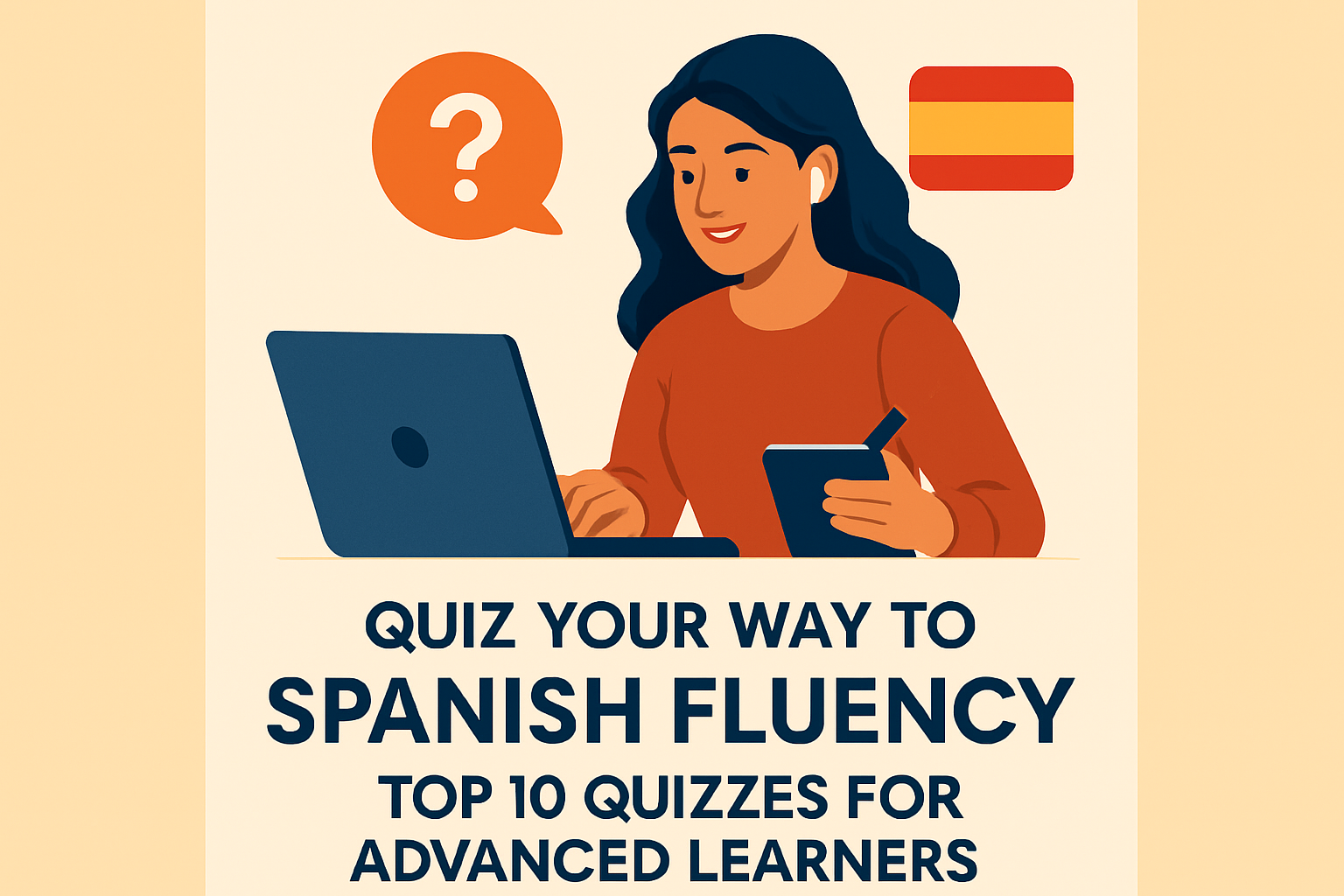
Learning Spanish, or any new language, can be a challenging yet rewarding experience. While traditional methods like rote memorization and classroom lessons lay the foundation, they are not always sufficient for advanced learners seeking fluency. This is especially true for a language as rich and nuanced as Spanish, spoken by over 460 million people worldwide. One highly effective and often underutilized tool in language education is the quiz. When we talk about “quizzes,” we’re not merely referring to formal exams. Instead, we mean interactive, engaging, and comprehensive activities that test and improve your understanding of the language through real-world scenarios and advanced language applications.
Quizzes help in reinforcing knowledge, identifying strengths and weaknesses, and ensuring active recall of information. These interactive exercises benefit learners by providing immediate feedback, which is crucial for mastering complicated grammatical structures, vocabulary nuances, and the cultural contexts that advanced Spanish often involves. Quizzing turns passive learning into an engaging challenge that keeps the mind active and interested. It allows learners to apply theoretical knowledge in practical scenarios, ensuring that what they learn can be effectively used in real life. For those aiming for fluency, quizzes offer an immersive experience that interlinks language skills in speaking, listening, reading, and writing.
Contextual Quizzes for Vocabulary Expansion
One of the common hurdles faced by advanced Spanish learners is the expansion of vocabulary beyond everyday conversational terms. Contextual quizzes come in handy to fill this gap by introducing learners to new words and phrases in meaningful contexts. These quizzes often present sentences or short passages containing missing words, challenging learners to pick the correct term based on contextual clues. Such activities not only introduce new vocabulary but also clarify their usage in various settings.
For instance, when trying to distinguish between synonyms such as “hablar” and “decir,” a contextual quiz can present sentences where the words are used differently. This can help learners understand that “hablar” generally refers to speaking in a broader sense, while “decir” is more about conveying specific information.
- Example 1: “Lo que quiero ________ es importante.” (Decir)
- Example 2: “Me gusta ________ con mis amigos.” (Hablar)
Engaging with vocabulary quizzes helps lock new words into your long-term memory through practical usage, which is pivotal in achieving fluency.
Grammatical Structure Deep Dives
Advanced learners often struggle with complex grammatical structures, such as the subjunctive mood, complex sentence formations, and proper use of verb conjugations. Deep dive quizzes focused on these areas enable learners to practice and master intricate rules. By breaking down complicated aspects into simpler, bite-sized quizzes, learners can progressively build their skills with confidence.
Consider the subjunctive mood, which is often a challenge for English speakers due to its nonexistence in the English language. Quizzes designed to reinforce the subjunctive typically involve converting indicative sentences into their subjunctive forms or identifying the correct mood in varied scenarios, providing clarity on when and why the subjunctive should be used.
For example, imagine a quiz that asks you to convert “Espero que tú vas a la fiesta” to its proper subjunctive form: “Espero que tú vayas a la fiesta.” This type of targeted practice can help learners internalize complex grammatical rules by providing a clear, structured environment for learning these intricacies.
Cultural Context Quizzes: Beyond Language
Achieving fluency in Spanish is not solely about mastering the language—it’s also about understanding the cultural contexts in which it is spoken. Cultural context quizzes offer a fascinating way for learners to explore traditions, idioms, and local expressions specific to different Spanish-speaking regions. These quizzes often present scenarios that require understanding cultural norms and customs, bridging the gap between language and culture.
For instance, learners can engage in quizzes about festivals, holidays, and etiquettes such as the ‘siesta’ culture in Spain or the significance of ‘Día de Los Muertos’ in Mexico. By participating in these quizzes, learners not only improve their language skills but also gain insight into social nuances, illustrating why the same word could carry different connotations in varied cultural settings.
These quizzes are especially valuable for advanced learners who aim to interact with native speakers in authentic situations, be it in business, travel, or personal relationships.
Information Recall through Interactive Exercises
Memory plays a crucial role in language learning. The importance of recalling information is emphasized in quizzes that focus on different forms of interactive exercises. These not only assess a learner’s grasp over vocabulary and grammar but also reinforce memory through repetition and varied applications.
Words, phrases, and concepts are presented in different formats such as multiple-choice questions, short answer segments, and matching exercises. For instance, matching conjugated verbs with their pronouns or translating sentences can hone learners’ ability to recall and utilize their knowledge efficiently.
Studies suggest that information retrieval practices boost memory retention significantly more than simple rote memorization. By diversifying the formats of quizzes and increasing their complexity as comfort with the language grows, quizzes effectively aid in long-term retention and mastery of the Spanish language.
Conversational Simulations: Testing Real-Life Application
Fluency is marked by the ability to communicate effectively in real-time. Conversational simulation quizzes provide opportunities to practice responding to questions, navigating common dialogues, and managing daily interactions in Spanish. These activities simulate conversations on diverse topics such as ordering food at a restaurant, asking for directions, or discussing work-related issues.
In these quizzes, learners may be provided with different scenarios and asked to choose the correct response or complete a dialogue. For example, one might encounter a quiz like:
- Scenario: “En el restaurante, el camarero te pregunta: ‘¿Qué va a pedir?’ ¿Cómo respondes?”
- Options:
- “Nada, gracias.”
- “Quisiera el menú, por favor.”
- “¿Cuánto cuesta esto?”
Such practice acclimates learners to the rhythm and pace of everyday Spanish, boosting confidence and competence in spoken interactions.
Specialized Vocabulary Quizzes for Professional Contexts
For advanced learners interested in utilizing Spanish in professional settings such as healthcare, law, or corporate environments, specialized vocabulary quizzes can be instrumental. These quizzes present industry-specific terminology, allowing learners to develop a lexicon that aligns with their career goals. For instance, a medical Spanish quiz may include terms related to anatomy, prescriptions, and patient interactions.
In legal contexts, learners may engage in quizzes that test understanding of jargon such as “contrato” (contract) or “testimonio” (testimony). By focusing on specific terms, learners can feel prepared for professional scenarios where accuracy is paramount.
This acquisition of specialized vocabulary through tailored quizzes ensures readiness for career-specific demands, enabling effective, precise communication in the targeted field.
Listening Comprehension Quizzes for Enhanced Understanding
One of the greatest challenges of real-world Spanish communication is understanding spoken language, especially given the range of accents and speeds across Spanish-speaking countries. Listening comprehension quizzes deliver exposure to varied dialects and voices, building the ability to follow conversations and discern important information.
These quizzes might include short audio clips followed by questions related to the content, focusing on what was mentioned, the speaker’s tone, or the nuances in the formality of the conversation. For example, learners might listen to a clip of a conversation at a store in Argentina before answering questions about the items discussed or the polite expressions used.
Such targeted practice in auditory skills helps learners pick up on subtleties and develop the competence needed to engage effectively with native speakers, closing the gap between different Spanish dialects and increasing overall comprehension.
Reading Comprehension Quizzes for Literary Exposure
Advanced learners aiming for fluency benefit tremendously from exposure to Spanish literature. Reading comprehension quizzes help interpret literary texts, newspaper articles, and essays, thereby bolstering understanding and appreciation of written Spanish. These quizzes challenge learners to grasp main ideas, detect themes, and decipher wordplay or metaphorical language.
Imagine a quiz based on a short story by a Spanish author, such as Gabriel García Márquez, where learners answer questions on plot developments or character motivations. This kind of engagement fosters a deeper connection with the material and highlights literary techniques unique to the Spanish language.
Through consistent practice, learners refine their reading skills, building towards the goal of enjoying Spanish texts with the same ease as they would in their native language.
Conclusion: Embracing Quizzes for Spanish Fluency
In summary, quizzes are a dynamic and invaluable tool for advanced Spanish learners on their journey to fluency. By incorporating vocabulary expansion, cultural context, and practical usage in their structure, quizzes offer a well-rounded approach to learning that ensures continuous growth and engagement. This method of active learning integrates seamlessly with other study techniques, providing immediate feedback and fostering a deeper understanding of the complex Spanish language.
For those aspiring towards mastery, quizzes offer the flexibility to tailor learning experiences to individual goals, whether they involve personal ambition, professional needs, or cultural exploration. Next time you find yourself eager to improve your Spanish prowess, consider taking these unique quizzes as stepping stones toward fluency. Don’t just study the language—experience it!
Frequently Asked Questions
1. Why are quizzes an effective tool for learning Spanish at an advanced level?
Quizzes are a phenomenal tool for advanced Spanish learners because they provide an interactive and engaging way to test one’s understanding and retention of the language. Unlike traditional methods such as rote memorization, quizzes actively engage the brain in recall and application processes. This active engagement helps to solidify knowledge, making it easier to remember and apply in real-life scenarios. Quizzes can cover everything from vocabulary and idiomatic expressions to grammar and cultural nuances, offering a well-rounded approach to language learning. They also offer the flexibility to focus on specific topics where learners might need extra practice, thus tailoring the learning experience to individual needs. Additionally, the immediate feedback provided by quizzes helps learners quickly identify areas that need improvement, allowing for more targeted learning strategies.
2. How do interactive quizzes contribute to achieving Spanish fluency?
Interactive quizzes are designed to closely mimic real-life language use, which is crucial for achieving fluency. They require learners to actively engage with the material, rather than passively consuming information. This engagement can involve translating sentences, conjugating verbs, or selecting the correct answer in multiple-choice formats. Such activities stimulate the brain’s language centers, reinforcing connections between the Spanish language and its usage. Moreover, because quizzes can frequently test learners in a variety of contexts, they build a learner’s confidence in speaking and understanding Spanish fluently. The dynamic nature of quizzes also keeps learners motivated and interested, which is important for maintaining consistent progress in mastering a foreign language.
3. What types of quizzes are included in the “Top 10 Quizzes for Advanced Learners”?
The “Top 10 Quizzes for Advanced Learners” includes a diverse range of quizzes that target various language skills crucial for fluency. These quizzes are designed to challenge learners with complex vocabulary, advanced grammar structures, idiomatic expressions, and cultural references that are often encountered by native speakers. Types of quizzes include multiple-choice questions that test comprehension and recall, fill-in-the-blank exercises that focus on appropriate word usage, translation tasks that require restructuring of phrases from English to Spanish and vice versa, and listening comprehension activities for honing auditory skills. Additionally, there are scenario-based quizzes that simulate real-life conversations, which encourage learners to apply their knowledge in practical contexts. This comprehensive approach ensures that learners can handle the intricacies of Spanish in both formal and informal settings.
4. How can advanced learners benefit from cultural quizzes in their language learning journey?
Cultural quizzes offer an excellent opportunity for advanced learners to deepen their understanding of the Spanish-speaking world beyond grammar and vocabulary. As language and culture are deeply intertwined, learning about cultural practices, traditions, and historical events through quizzes can broaden a learner’s perspective and enhance their linguistic skills. By integrating cultural context into language learning, these quizzes help learners appreciate the subtleties and idiomatic expressions that are influenced by culture. For instance, knowing about regional dialects, popular festivals, or idioms rooted in historical events can significantly improve conversational skills and comprehension. Moreover, cultural quizzes foster global awareness and empathy, as learners become more informed about the diverse cultures within the Spanish-speaking communities worldwide. This cultural competence is an invaluable aspect of becoming truly fluent in a language.
5. What strategies can advanced learners use to maximize the benefits of doing Spanish quizzes?
To maximize the benefits of Spanish quizzes, advanced learners should adopt several effective strategies. Firstly, they should set clear, achievable goals for each quiz session, focusing on specific areas they want to improve, such as advanced verb tenses, colloquial phrases, or cultural knowledge. Tracking progress over time by reviewing quiz results can help identify patterns and areas needing further attention. Secondly, learners should try itake quizzes regularly to reinforce learning and to maintain momentum. Consistency is key to mastering a language, and quizzes provide a structured format to practice regularly. Additionally, learners should challenge themselves with quizzes beyond their comfort zone to avoid plateauing at their current level. Seeking feedback, whether self-assessed or through collaborative platforms, also aids in recognizing mistakes and learning from them. Finally, mixing quizzes with other learning strategies, such as conversation practice or immersive media consumption, can provide a holistic approach that significantly boosts language proficiency.