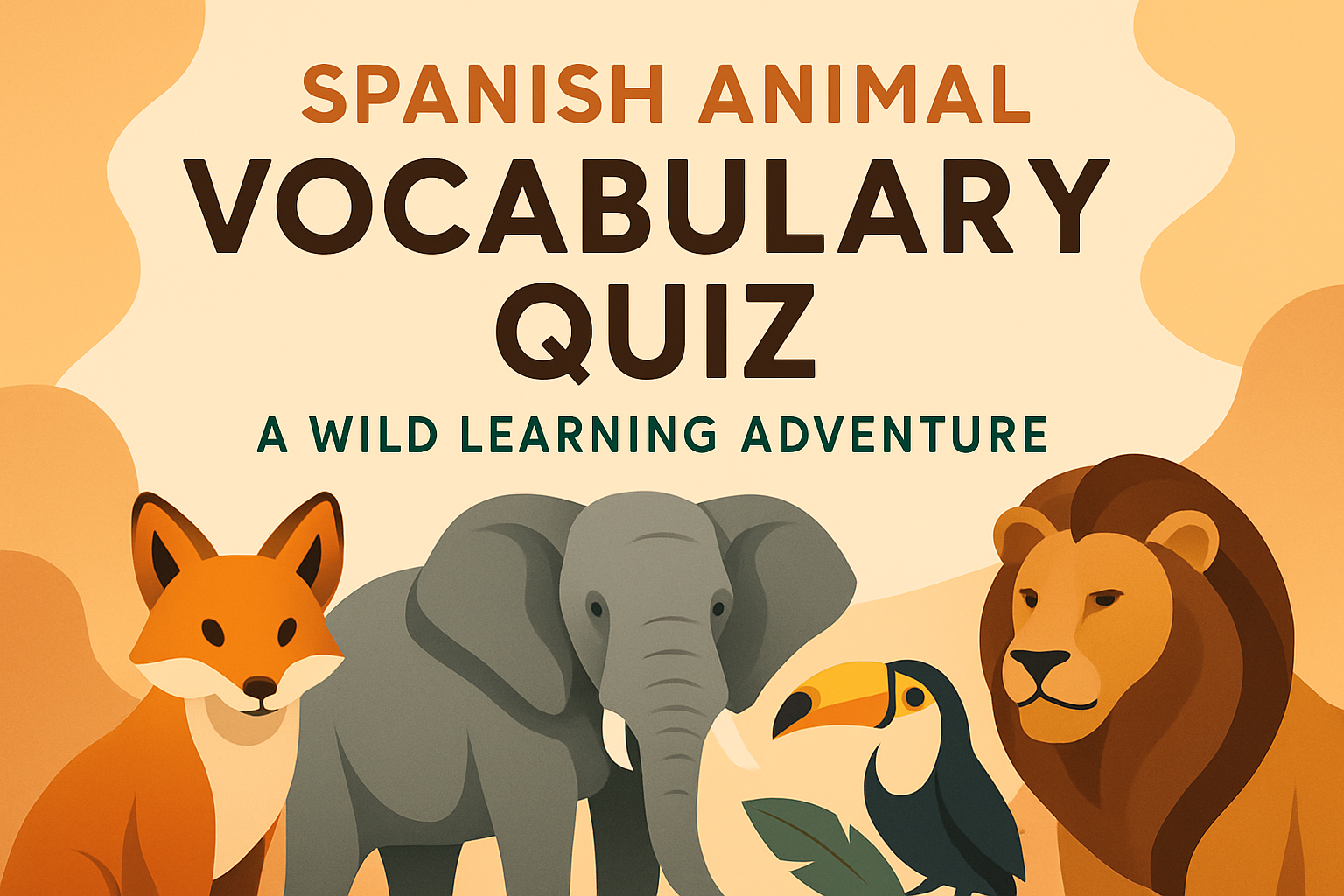
Learning a new language can be both a challenging and rewarding experience. Among the diverse languages that learners find themselves drawn to, Spanish stands out for its rich cultural history and its global significance. Spanish, known for its melodic tone and expressive vocabulary, is spoken by over 460 million people worldwide, making it one of the top languages to learn. A particularly engaging way to dive into Spanish is through thematic vocabulary learning. One theme that captures the imagination of learners is animal vocabulary. Animals, whether they are gentle pets, wild beasts, or mythical creatures, are intriguing, thus making them memorable as vocabulary concepts. This article will embark on an adventure into the world of Spanish animal vocabulary, offering an educational quiz to test and expand your knowledge.
Understanding the vocabulary related to animals in Spanish is more than just memorizing words; it’s about exploring a world where language and nature intersect. This vocabulary not only forms a basic element of conversational Spanish but also enriches your understanding of cultural contexts where these animals play a significant role. For instance, knowing the word “toro” (bull) is crucial when discussing the cultural practice of bullfighting in Spain. Similarly, “llama” has cultural significance in South America. This knowledge deepens communication and connection with Spanish-speaking communities. This immersion into Spanish animal vocabulary is not just a linguistic exercise but a journey into the ecosystems and cultural landscapes of the Hispanic world. So, why does diving into Spanish animal vocabulary matter? It facilitates greater cultural immersion, enhances language fluency, and makes learning more interactive and fun.
Exploring Common and Unusual Animal Vocabulary
When beginning your journey through Spanish animal vocabulary, it’s helpful to start with common animals that you may encounter daily. These can range from pets to farm animals and even wildlife. Knowing their names in Spanish lays the groundwork for more complex conversations and stories. Common animals include “gato” (cat), “perro” (dog), and “pájaro” (bird). These frequently appear in everyday conversations, children’s stories, and media. Pets, primarily cats and dogs, serve as wonderful conversation starters and are often the first vocabulary words a learner encounters.
On the other hand, the Spanish language embraces the beauty of unusual and exotic animals often specific to certain regions of the Spanish-speaking world. These include words like “tiburón” (shark), “iguana,” and “alpaca.” When it comes to learning these terms, it is essential to understand both the environmental and cultural significance. For instance, the “jaguar” is not only a respected animal in indigenous cultures but also a symbol of leadership and strength. Using the correct animal names when talking about ecosystems or when retelling ancient tales from Latin America enriches the storytelling experience and makes your language skills more robust.
Incorporating Visual Learning Methods
Integrating visuals along with vocabulary can greatly aid in the retention and understanding of new words. This can involve using flashcards, watching documentaries with Spanish narration, or exploring infographics related to various ecosystems within Spanish-speaking regions. This not only assists in memorization but also helps in context-based understanding, which is invaluable when learning a language.
A practical and interactive method is to use structured data presentations such as tables. Here’s a simple table that captures the Spanish names for a variety of fascinating creatures:
| Animal (English) | Animal (Spanish) |
|---|---|
| Lion | León |
| Elephant | Elefante |
| Eagle | Águila |
| Monkey | Mono |
| Kangaroo | Canguro |
This type of table helps learners connect the English name they are familiar with to the Spanish vocabulary term, providing visual cues that strengthen retention. Engaging with real-world visuals such as native animals from Spanish-speaking regions allows learners to see the direct application of the vocabulary they are acquiring. By using images, videos, and visual diagrams, the language learning process becomes a vibrant and realistic blend of culture, language, and natural history.
Guided Quizzes and Interactive Exercises
Quizzes are an essential tool for language learners to test their vocabulary knowledge and track progress. A Spanish animal vocabulary quiz not only helps reinforce what has been learned but also introduces a fun element to the learning process. Interactive exercises can range from simple multiple-choice questions to more comprehensive tasks like describing an animal solely in Spanish or matching pictures with the correct vocabulary. These exercises can be found in language learning apps, online learning platforms, or even as printable resources.
For example, a matching exercise can involve a list of animal pictures on one side and a list of Spanish names on the other. Players must correctly match each image to the corresponding Spanish name. Other quizzes might include listening exercises where learners hear the Spanish pronunciation of an animal name and must select the correct visual image or spelling of the word. These dynamic quizzes encourage learners to think quickly and engage with the material actively, making it easier to recall vocabulary in real-life scenarios.
Real-World Applications of Animal Vocabulary
Understanding Spanish animal vocabulary is essential for effective communication in various contexts, from travel to education to professional fields. Whether a zoologist discussing regional fauna or a traveler navigating wildlife tours in Costa Rica, knowing specific animal names enhances the conversation. Even casual scenarios, like discussing a local zoo visit with a Spanish speaker, require familiarity with a diverse range of animal vocabulary.
Consider an emergency situation where you need to describe a missing pet to a Spanish-speaking shelter. Saying “mi perro está perdido” (my dog is lost) is only effective if you can accurately describe the dog, referencing features like “pelaje” (fur) or “colas largas” (long tails). In educational settings, teachers often incorporate animals into language learning curricula because doing so appeals to students’ natural curiosity. In workplaces, the value increases when discussing projects related to biology, conservation, or international media where bilingual communication can have a significant impact.
Navigating Regional Dialects and Variations
While examining Spanish animal vocabulary, it is crucial to recognize variations in terminology across different regions. Just as English has a variety of dialects, Spanish exhibits fascinating regional differences. For example, “pájaro” is generally understood as bird, but in some regions, you might hear “ave” used more frequently, especially when discussing larger or more significant bird species.
Similarly, an animal like the “armadillo” remains the same name across most Spanish-speaking countries, yet the pronunciation and slight colloquial variations might exist. Understanding these differences is vital for learners who wish to engage authentically with diverse Spanish-speaking communities. Developing an awareness of these local versions increases comprehension and facilitates smoother social interactions, making one more adept at appreciating the diversity in language influenced by cultural nuances.
Cultural Significance of Animals in Spanish-Speaking Countries
Animals hold significant cultural value in many Spanish-speaking countries, which often reflect in language use and vocabulary. The importance permeates into literature, art, and daily life, highlighting regional myths, folklore, and traditional practices. For example, the “toro” (bull) is iconic in Spain, symbolizing bravery and presence in bullfighting and festivals. In Mexico, “jaguar” represents power and mystery, a continuation of reverence from ancient civilizations that prayed to jaguar deities.
Diving into these cultural associations helps learners see beyond the mere words, fostering a profound connection to the language. Knowing these elements enriches conversations about regional prints, art, festivals, and even discussions on historical texts where such animals play a central role. By understanding these cultural implications, learners not only expand their vocabulary but also gain cultural literacy, which is indispensable in achieving fluency and depth in any language.
Conclusion: Dive Into a Wild Language Experience
As we summarize the colorful journey through the wilds of Spanish animal vocabulary, it is clear that this language segment is more than a simple add-on to a learner’s repertoire. It provides invaluable interaction with both the language and cultural worlds behind it. From the captivating visuals and fun-filled quizzes that facilitate retention and learning to the understanding of regional dialects that broaden one’s perspective, delving deep into animal vocabulary offers a clever and fulfilling path to fluency.
The next step is to embrace this knowledge actively. Engage with the quizzes, communicate with native speakers using your new vocabulary, and appreciate the cultural stories these words tell. Ultimately, this unique animal vocabulary experience enriches your language journey, making you more adept, culturally aware, and prepared for various communication contexts within the Spanish-speaking world.
Embark on this wild learning adventure today and witness your Spanish skills transform, as you bridge language, culture, and nature through the fascinating lens of animal vocabulary.
Frequently Asked Questions
1. What is the ‘Spanish Animal Vocabulary Quiz: A Wild Learning Adventure’ about?
The ‘Spanish Animal Vocabulary Quiz: A Wild Learning Adventure’ is an interactive and engaging educational tool designed to help learners expand their Spanish vocabulary specifically related to animals. This quiz takes you on a fun journey through the animal kingdom, combining exciting challenges with the opportunity to learn new words. It’s perfect for learners who want to dive deeper into Spanish culture and language through thematic exploration. This quiz format makes vocabulary acquisition enjoyable, ensuring that what you learn sticks with you thanks to its entertaining and adventurous approach.
2. Who can benefit from taking the Spanish Animal Vocabulary Quiz?
The quiz is suitable for a wide range of learners. Whether you are a beginner just starting your Spanish language journey or an intermediate learner looking to reinforce your vocabulary, this quiz can prove beneficial. It’s also great for Spanish students looking to give their learning a boost with a focus on thematic vocabulary. Additionally, teachers can use it as a classroom tool to engage students in a lively and interactive way. The fun and adventurous theme is also appealing to younger learners, making it ideal for both children and adults who enjoy a playful style of learning.
3. How does the quiz help in learning Spanish animal vocabulary?
The quiz aids in learning Spanish animal vocabulary by providing an immersive and interactive experience. Instead of simply memorizing words, learners engage with the material through challenges and questions that require active recall. This method of learning taps into the psychological effects of repetition and gamified learning, ensuring that vocabulary is not only learned but also retained. The adventure-themed approach keeps learners motivated and intrigued, supporting cognitive engagement that enhances memory retention. The quiz’s unique format leverages the natural human love for exploration and play, making vocabulary learning more effective and enjoyable.
4. What type of questions can one expect in the quiz?
The types of questions in the quiz vary but are all designed to reinforce learning. They include multiple choice questions, matching pairs, and fill-in-the-blank exercises that require learners to recall and apply their knowledge. Questions may involve matching Spanish animal names with pictures, identifying the correct word from a list, or translating animal-related phrases from Spanish to English and vice versa. Some questions might involve scenarios or stories where learners have to use their vocabulary contextually, effectively testing their understanding and recall in a dynamic way.
5. How can teachers integrate this quiz into their curriculum?
Teachers can integrate the ‘Spanish Animal Vocabulary Quiz: A Wild Learning Adventure’ into their curriculum in a variety of fun and productive ways. They can use the quiz as a warm-up or cool-down activity at the beginning or end of lessons, or as a themed segment when introducing new vocabulary units. It can serve as a tool for vocabulary revision or as a competitive game among students. Teachers can also assign it as homework to reinforce learning outside the classroom environment. By using the quiz in conjunction with other teaching materials, educators can create a multidimensional learning experience that caters to different learning styles and keeps students consistently engaged and motivated.