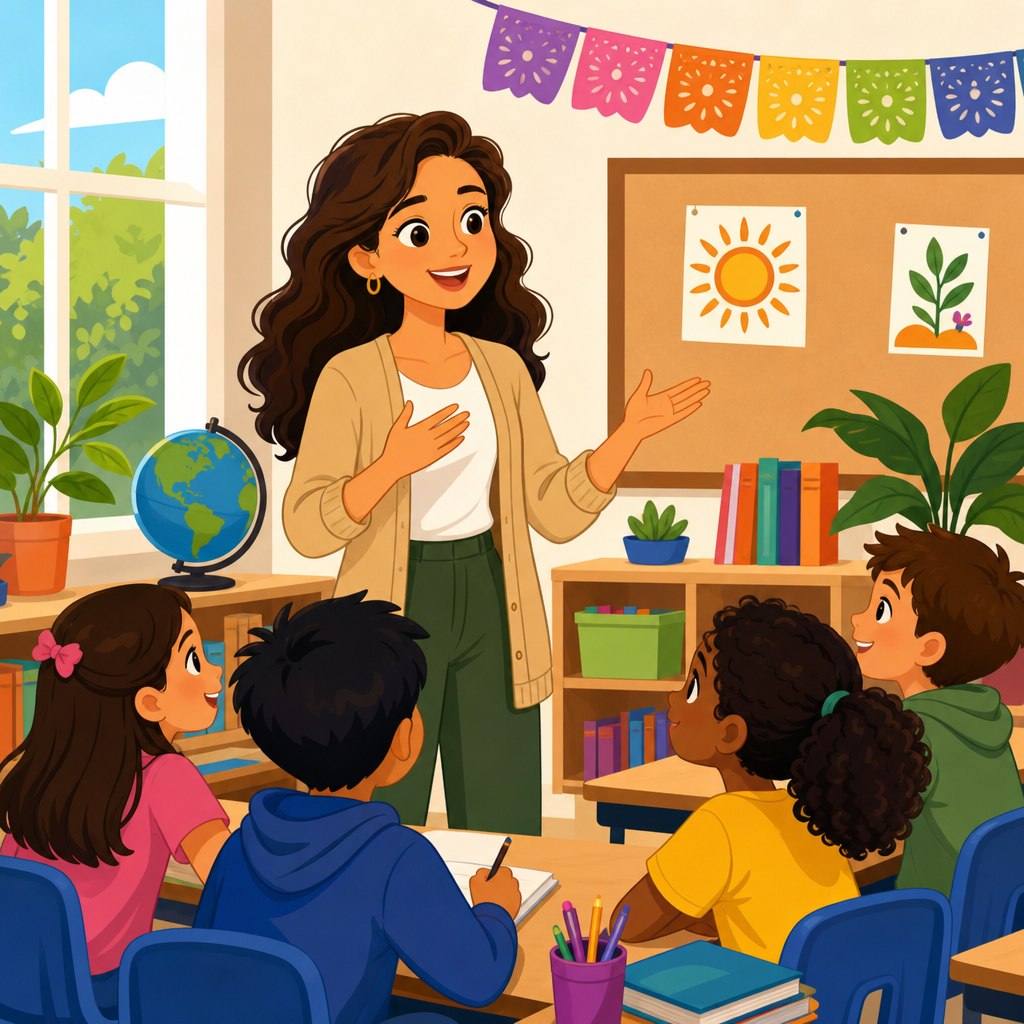
Spanish for educators helps teachers, counselors, paraprofessionals, and school leaders communicate clearly with students and families in one of the most common heritage and home languages in many school communities. In practice, it means using accurate, respectful classroom Spanish for instruction, routines, behavior support, relationship building, and parent communication. I have seen schools make immediate gains in trust when staff learn even modest, functional phrases and understand when to use formal versus informal language. This matters because communication affects safety, learning, inclusion, attendance, and family engagement. A teacher who can explain directions, check understanding, greet a caregiver, or de-escalate a misunderstanding in Spanish removes barriers that otherwise cost time and confidence. For a hub article under Spanish community and interaction, the goal is not perfect fluency. The goal is effective, context-aware communication that supports teaching while pointing educators toward the wider set of Spanish skills they may need across daily school life.
Key terms shape this topic. Classroom Spanish refers to language used for routines, instructions, transitions, feedback, and student support. School-home communication includes messages about attendance, progress, behavior, health, scheduling, and events. Register matters: educators often use usted with caregivers and sometimes with older students in formal settings, while tú may fit younger students depending on local norms. There is also a difference between translation and interpretation. Translation is written; interpretation is spoken. Knowing that distinction prevents common compliance mistakes, especially during meetings involving special education, discipline, or health information. Effective communication also requires cultural competence. Spanish is spoken across many countries and communities, so vocabulary varies. A word that sounds natural in Mexico may be unfamiliar in the Caribbean or the Southern Cone. Good educators aim for clear, widely understood phrasing, verify meaning, and avoid slang. That approach improves comprehension without stereotyping students or families.
Why Spanish communication matters in schools
Spanish communication matters because language access is directly tied to educational opportunity. In the United States, Spanish is the second most spoken language, and many districts serve large numbers of multilingual learners and families who prefer Spanish for school communication. When educators can communicate directly, they improve classroom flow and reduce dependence on ad hoc interpreting by students, siblings, or untrained staff. That is not just inefficient; in sensitive situations it can be inappropriate. I have watched a simple shift, such as giving bilingual arrival directions or clarifying an assignment in Spanish, prevent confusion that would otherwise look like noncompliance or disengagement.
There is also a relationship dimension. Families notice effort. A principal who says, “Buenos días, gracias por venir,” and follows with a translated agenda signals respect before any formal meeting begins. Students notice it too. Hearing their home language used accurately and warmly in school can increase belonging. That does not mean every educator must become bilingual. It means schools should build practical language capacity and know when professional language support is required. Effective Spanish use supports academic instruction, behavior management, restorative conversations, emergency communication, and community trust.
Core classroom Spanish every educator should master
The most useful Spanish for educators is high frequency, predictable, and tied to daily routines. Start with greetings, directions, checks for understanding, and behavior support. Phrases such as “Saquen una hoja de papel,” “Trabajen con su compañero,” “Escuchen atentamente,” and “¿Entendiste?” cover a surprising amount of classroom time. For younger learners, concise commands and visual support work best. For older students, add academic language like “comparen,” “justifiquen,” “subrayen la evidencia,” and “entreguen la tarea.” Pronunciation matters because unclear vowels or stress can change meaning, but perfection is less important than consistency and comprehension.
Educators should also master language for emotional support and inclusion. Useful phrases include “Estoy aquí para ayudarte,” “Tómate un momento,” “Respira profundo,” and “Dime qué pasó.” These expressions are practical in behavior support and trauma-informed classrooms because they lower pressure and invite explanation. For feedback, use phrases that are specific and actionable: “Necesitas mostrar tu trabajo,” “Buen esfuerzo,” “Revisa la puntuación,” or “Explícame tu respuesta.” Avoid relying only on praise words like bien. Students need language that tells them what to improve and what success looks like. If you teach content, learn a small bank of subject-specific terms rather than random vocabulary lists. Math teachers need operation words and problem-solving language. Science teachers need lab safety and observation terms. Specialists need the language of their setting.
| Situation | Useful Spanish | Why it works |
|---|---|---|
| Starting class | Buenos días. Saquen sus cuadernos. Vamos a comenzar. | Sets tone, gives a clear routine, and reduces transition time. |
| Checking understanding | ¿Tienen preguntas? Muéstrenme con el pulgar si entienden. | Pairs oral language with a simple nonverbal check. |
| Redirecting behavior | Necesito que bajes la voz y regreses a tu asiento. | Names the behavior change without shaming the student. |
| Offering support | Está bien pedir ayuda. ¿Quieres que te lo explique otra vez? | Normalizes help-seeking and keeps instruction moving. |
| Dismissing class | Guarden sus materiales. Entreguen su trabajo antes de salir. | Prevents end-of-class confusion and missing assignments. |
Communicating with families respectfully and accurately
Family communication requires more precision than casual classroom talk. The safest starting point is formal, respectful Spanish. Use greetings such as “Mucho gusto,” “Gracias por su tiempo,” and “Quiero compartir el progreso de su hijo” or “de su hija.” Confirm names and pronunciation. Ask for language preference rather than assuming. Some families speak Spanish but prefer written communication in English, while others want calls in Spanish and texts in both languages. In my experience, schools that document language preference in the student information system avoid many preventable errors and increase response rates.
Be especially careful with high-stakes topics. Special education meetings, disciplinary hearings, health matters, and legal notices often require qualified interpreters and translated documents under district policy and federal obligations. Bilingual ability alone does not qualify someone to interpret complex educational terminology. Terms like accommodation, evaluation, eligibility, intervention, suspension, and confidentiality have procedural consequences. When the situation is sensitive, use a professional interpreter, speak in short units, pause often, and address the family directly rather than talking to the interpreter. For routine outreach, plain language is best. Instead of jargon, say exactly what happened, what is needed next, and by when. A short message in clear Spanish usually outperforms a long, formal paragraph packed with educational terminology.
Handling variation, culture, and register without overcomplicating it
One challenge in Spanish for educators is variation. Vocabulary differs across regions: computer may be computadora or ordenador; straw may be pajita, popote, or sorbete. The answer is not to memorize every local term. Use standard vocabulary where possible and check understanding when a word may vary. In schools, this matters most with health, discipline, transportation, and food words. If a student looks confused, paraphrase rather than repeat the same term louder. That simple adjustment solves more communication problems than most teachers expect.
Register also deserves attention. With families, formal address usually communicates professionalism and respect. With students, the choice between tú and usted depends on age, setting, and community norms. What matters most is consistency and tone. Avoid slang, machine-translated idioms, and humor that depends on cultural knowledge. Cultural competence is not about memorizing national traits. It is about curiosity, listening, and avoiding assumptions. Ask, “¿Cómo prefiere que me comunique con usted?” or “¿Qué idioma prefieren en casa?” These questions are practical and respectful. They improve communication more than generic cultural scripts ever will.
Using technology, translation tools, and school systems wisely
Technology can help, but it must be used carefully. Tools such as Google Translate, Microsoft Translator, and built-in translation features in parent messaging platforms are useful for quick drafts, routine reminders, and low-risk communication. They are not reliable enough for nuanced or legally sensitive content without human review. I have seen automatic translations distort tone, mishandle school-specific terms, or create confusion around dates and instructions. A good workflow is to write in short sentences, avoid idioms, review the Spanish output, and, when possible, have a bilingual colleague or translator verify important messages.
Schools should also standardize common communication assets. A shared bank of approved bilingual templates for attendance notices, permission slips, conference invitations, behavior updates, and emergency alerts saves time and improves consistency. Learning management systems and family engagement platforms are more effective when language settings are configured correctly and staff know which communications are auto-translated versus officially translated. Internal linking across school resources matters too: a family message about tutoring should point to the tutoring page, transportation page, and calendar in Spanish when available. From an operational standpoint, that reduces repeated calls to the front office and gives families a clear next step.
How educators can learn Spanish efficiently for school use
The fastest path is targeted learning built around school scenarios. Begin with the interactions you have every day: greetings, attendance, transitions, redirection, encouragement, and caregiver contact. Create a phrase bank by role. A classroom teacher, office secretary, nurse, counselor, bus driver, and administrator need overlapping but different language. Practice aloud, because listening and speaking develop differently from reading. Use spaced repetition tools such as Anki or Quizlet for high-frequency phrases, and pair them with live listening through recordings, tutoring, or conversation practice. Short, repeated drills on realistic phrases beat long vocabulary lists with no context.
Pronunciation deserves focused effort because it affects comprehension immediately. Spanish vowels are consistent, and stress patterns are more regular than in English, so educators can improve quickly with guided practice. Learn the sounds that commonly cause misunderstanding for English speakers, including rolled or tapped r, clear vowels, and distinctions like pero versus perro. Then move to listening for parent speech at natural speed, which is often harder than speaking memorized phrases. Keep a notebook of terms families actually use in your community. Over time, that creates a localized, practical Spanish resource. The goal is dependable communication in school contexts, not textbook perfection. Build from real needs, review often, and expand gradually into the wider articles within this Spanish community and interaction hub.
Spanish for educators is most effective when it is practical, respectful, and tied to real school responsibilities. Teachers do not need flawless fluency to make a meaningful difference. They need reliable classroom phrases, a clear understanding of register, awareness of variation, and sound judgment about when professional interpretation or translation is required. Schools that build these habits strengthen instruction, improve family trust, and reduce avoidable misunderstandings. The benefit is immediate: clearer directions, smoother routines, better support for students, and more confident family engagement.
As a hub page for miscellaneous topics within Spanish community and interaction, this article points to the full range of skills educators use across classrooms, offices, hallways, meetings, and events. The next step is simple: identify the ten Spanish interactions you handle most often, learn the exact phrases for them, and practice until they feel natural. Then expand deliberately. Small, accurate language gains compound quickly in a school setting, and every clear conversation helps students and families feel more included.
Frequently Asked Questions
Why is learning Spanish important for educators, even if they only use basic phrases?
Learning Spanish is valuable for educators because even a modest working vocabulary can improve clarity, reduce stress, and build trust with students and families. In many schools, Spanish is one of the most common home and heritage languages, which means routine school interactions often become more effective when staff can communicate directly rather than relying only on translation after the fact. Basic classroom Spanish can help teachers give directions, check for understanding, manage transitions, support behavior, and create a more welcoming environment from the first day of school.
For counselors, paraprofessionals, front office staff, and school leaders, Spanish also strengthens relationship-building. A family is more likely to feel respected and included when greeted warmly in their language, when school expectations are explained clearly, and when concerns are addressed with care rather than confusion. This does not mean educators need complete fluency to make an impact. In fact, schools often see immediate gains when staff learn accurate, respectful phrases they can use consistently in real situations. The goal is not perfection. The goal is to communicate more effectively, avoid preventable misunderstandings, and show students and families that their language and identity are recognized as part of the school community.
What kinds of Spanish phrases are most useful in a classroom setting?
The most useful phrases are the ones educators can apply every day in authentic school situations. These usually fall into a few practical categories: instruction, routines, behavior support, emotional support, and relationship-building. For instruction, teachers benefit from phrases such as asking students to listen, read, write, repeat, work with a partner, or show their work. For routines, it helps to know how to say things like line up, take out your notebook, put your materials away, sit down, raise your hand, and turn in your assignment. These phrases make the classroom run more smoothly because they reduce uncertainty during transitions and daily tasks.
Behavior support language is equally important. Educators should learn respectful ways to redirect students, reinforce expectations, and address challenges without sounding harsh or unnatural. Phrases related to staying on task, using kind words, walking safely, calming down, or asking for help can make communication more supportive and less reactive. It is also useful to know language for encouragement and connection, such as good job, thank you for trying, I am here to help, how are you feeling, and let’s solve this together. For family communication, staff often need vocabulary for attendance, homework, grades, conferences, schedules, health concerns, and school events. The best Spanish for educators is not random vocabulary; it is functional language that aligns directly with the real communication demands of school life.
How can educators use Spanish respectfully and accurately without overstepping their language ability?
Educators can use Spanish respectfully by focusing on accuracy, humility, and purpose. It is perfectly appropriate to learn and use practical phrases for greetings, directions, reassurance, and family communication, as long as those phrases are correct and delivered thoughtfully. Problems usually arise when staff guess, overestimate their proficiency, or attempt to handle sensitive conversations beyond their skill level. A strong approach is to use Spanish for what you know well, speak clearly, avoid slang unless you fully understand it, and confirm understanding when the topic is important. This helps prevent confusion while still making meaningful efforts to communicate.
It is also important to recognize when a professional interpreter or certified translator is needed. Conversations involving special education, discipline, mental health, safety, legal rights, academic placement, or serious family concerns should not rely on limited classroom Spanish alone. Respectful communication includes knowing the limits of your language skills and seeking support when precision matters. Educators who do this well send a powerful message: they care enough to communicate directly when possible, and they care enough to bring in proper language support when necessary. That balance builds credibility, protects families’ rights, and creates a more inclusive school culture.
What are the biggest benefits of Spanish for parent and family communication?
Spanish can transform parent and family communication by making school information more accessible, personal, and trustworthy. When families can understand expectations, updates, and opportunities in a language they are comfortable with, they are more likely to respond, participate, and advocate for their children. Even simple interactions such as greeting a parent at pickup, explaining a schedule change, or inviting a family to a school event can have a lasting effect. These moments communicate that the school is making an effort to include families rather than expecting them to bridge every language gap on their own.
There are practical benefits as well. Clear communication in Spanish can improve attendance follow-up, increase conference participation, reduce confusion around assignments and behavior reports, and support stronger home-school collaboration. It can also help schools avoid preventable misunderstandings that happen when messages are delivered only in English or translated informally. Just as important, Spanish communication supports dignity. Families should not have to depend on children to interpret complex school matters, especially when the topics involve academics, discipline, or personal concerns. When educators use appropriate Spanish and know when to involve professional language services, they create conditions for more equitable participation and stronger long-term relationships with the community.
What is the best way for school staff to start learning Spanish for education-specific communication?
The best way to start is with job-specific, high-frequency language rather than broad, generic study. School staff should begin by identifying the interactions they have most often: greeting students, giving directions, managing transitions, checking understanding, calling home, speaking with caregivers, supporting emotions, and explaining basic school procedures. Once those situations are clear, staff can learn the exact phrases and vocabulary they are most likely to use repeatedly. This targeted approach is more effective than memorizing long word lists because it immediately connects Spanish learning to real communication needs in the classroom and across the school.
Consistency matters more than speed. Educators should practice pronunciation, learn complete phrases instead of isolated words, and revisit language regularly until it feels natural. Role-play, audio support, sentence frames, and school-based examples can be especially helpful. It is also smart for teams to learn common language together so students and families hear consistent, accurate phrasing across classrooms and offices. Over time, staff can expand from routines and directions into relationship-building, parent communication, and more nuanced student support. The most successful programs emphasize useful language, cultural awareness, and clear boundaries around when bilingual staff, interpreters, or translators are needed. That combination helps educators communicate more effectively while maintaining professionalism, accuracy, and respect.