Spain’s culinary landscape is as diverse and colorful as its history and geography. From the coastal delicacies of Galicia to the hearty dishes of Andalusia, each region boasts its unique flavors and traditions. This guide takes you on a delicious journey through Spain’s regional cuisines, introducing key terms that will enrich your understanding and appreciation of Spanish gastronomy.
Northern Spain: Seafood and Cider
Galicia: A Coastal Delight
Galicia, a region known for its rugged coastline, offers a bounty of seafood. Key terms include:
- Mariscos (Seafood): Galicia is famous for its mariscos, especially pulpo (octopus), often served as pulpo a la gallega (Galician-style octopus).
- Albariño: This white wine, with its fruity and fresh character, is a perfect companion for seafood.
Basque Country: Innovation and Tradition
The Basque Country is renowned for its culinary innovation. Important terms are:
- Pintxos: Similar to tapas, these small snacks are a staple in Basque bars.
- Txakoli: A slightly sparkling, dry white wine that pairs beautifully with pintxos.
Central Spain: Roasts and Stews
Madrid: The Heart of Spanish Cuisine
Madrid offers a melting pot of regional cuisines. Essential vocabulary includes:
- Cocido Madrileño: A traditional chickpea-based stew with meat and vegetables.
- Churros con Chocolate: A beloved breakfast or snack, consisting of fried dough served with hot chocolate.
Castilla y León: Land of Roasts
Famous for its roasted meats, key terms here are:
- Lechazo: Roast suckling lamb, a delicacy of the region.
- Morcilla: Spanish blood sausage, often flavored with onions and spices.
Eastern Spain: Rice and Citrus
Valencia: Home of Paella
Valencia is synonymous with paella. Vocabulary to remember:
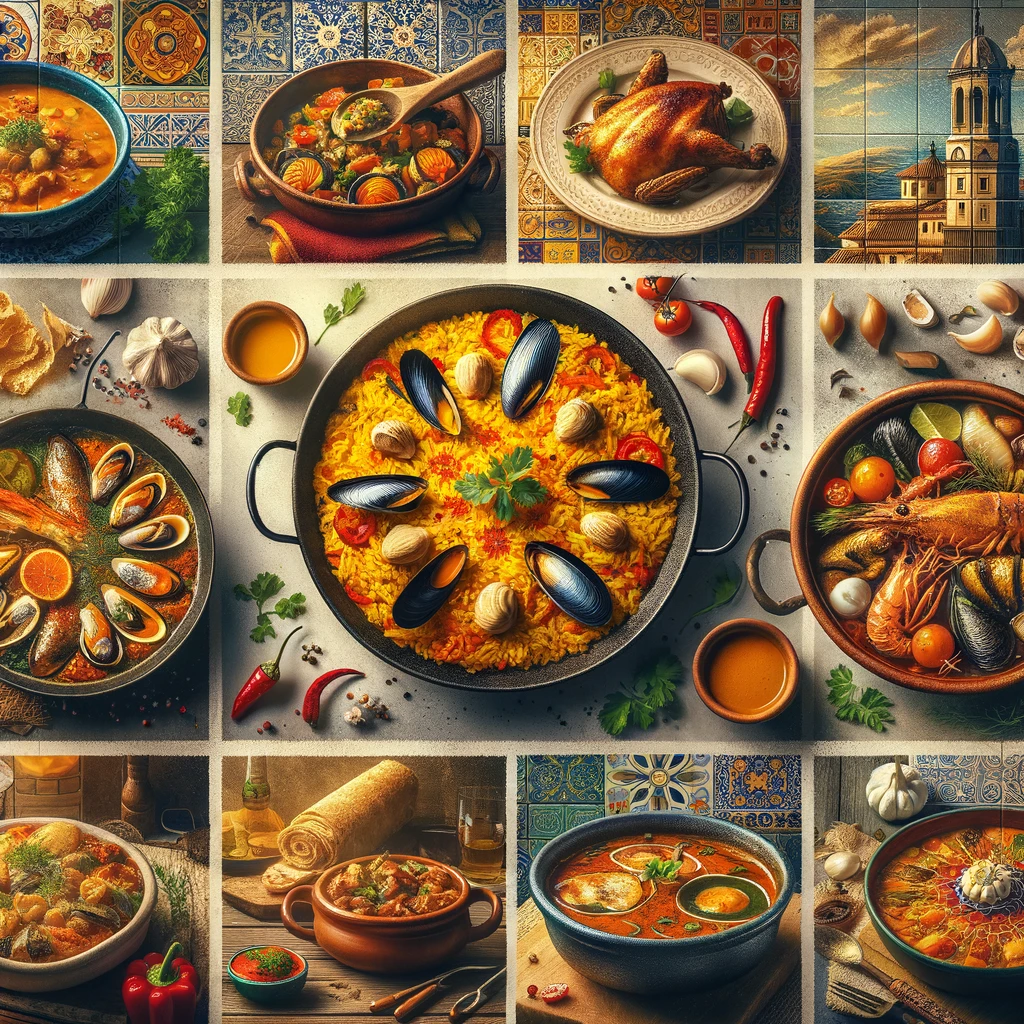
- Paella: A famous rice dish often made with seafood, meat, and vegetables.
- Horchata: A refreshing drink made from tiger nuts, perfect for hot days.
Catalonia: A Blend of Sea and Mountain
Catalonia’s cuisine combines coastal and mountain ingredients. Key terms include:
- Crema Catalana: A dessert similar to crème brûlée, with a rich custard base and caramelized sugar top.
- Escudella: A hearty stew, often made with meat, beans, and vegetables.
Southern Spain: Tapas and Sherry
Andalusia: Birthplace of Tapas
Andalusia is famous for its tapas culture. Important terms are:
- Tapas: Small dishes served with drinks, ranging from olives to elaborate seafood.
- Gazpacho: A cold tomato soup, perfect for the region’s hot climate.
Extremadura: Land of Ham and Cheese
Extremadura is known for its superb ham and cheese. Vocabulary to note:
- Jamón Ibérico: A type of cured ham from black Iberian pigs, highly prized for its flavor.
- Torta del Casar: A creamy sheep’s milk cheese, often served spread on bread.
The Islands: A Fusion of Influences
Canary Islands: Tropical Flavors
The Canary Islands offer a unique blend of Spanish and Latin American influences. Key terms:
- Papas arrugadas: Small potatoes boiled in saltwater, typically served with mojo picón, a spicy pepper sauce.
- Gofio: A flour made from toasted grains, used in various dishes.
Balearic Islands: Mediterranean Delights
The Balearic Islands are known for their Mediterranean flavors. Essential vocabulary:
- Sobrasada: A spreadable sausage, made from ground pork and paprika.
- Ensaïmada: A sweet pastry, often enjoyed for breakfast or as a snack.
Embracing the Flavors: A Cultural Journey
Learning Through Taste
Spanish cuisine is more than just food; it’s a cultural journey. Each dish you encounter tells a story of regional history, climate, and tradition. By familiarizing yourself with the regional vocabulary, you deepen your understanding and appreciation of Spanish culture.
Celebratory Dishes
In many regions, certain dishes are tied to festivals and celebrations. For example:
- Roscon de Reyes: A sweet, ring-shaped pastry traditionally served on Three Kings’ Day in January.
- Fideuà: A noodle-based dish similar to paella, often cooked for gatherings in the Valencian community.
Seasonal Delights
Spain’s diverse climate means seasonal produce varies greatly from region to region. Understanding these seasonal variations adds another layer to your culinary exploration. Autumn might bring setas (wild mushrooms) in the north, while summer in Andalusia offers sun-ripened tomates (tomatoes) for the perfect gazpacho.
The Language of Spanish Cuisine
Understanding Menus
Navigating a Spanish menu becomes much easier with a grasp of regional terms. You’ll not only know what to expect on your plate but can also make more informed choices based on regional specialties.
Conversing with Locals
Food is a universal language, and discussing regional dishes can be a great way to connect with locals. Sharing your knowledge of their local cuisine shows respect and interest in their culture.
Tips for Culinary Explorers
Try Everything
Be adventurous! Spain’s culinary landscape is vast and varied. Even if a dish sounds unfamiliar, give it a try – you might discover a new favorite.
Pairing Food and Drink
Each region has its typical beverages that perfectly complement their dishes. From the robust red wines of Rioja to the crisp ciders of Asturias, exploring these pairings enhances the dining experience.
Cooking Classes and Food Tours
Participate in cooking classes or local food tours. They offer a hands-on way to understand regional cooking techniques and ingredients.
Preserving Traditions
Supporting Local Producers
By choosing regional dishes, you’re not only enjoying delicious food but also supporting local farmers and producers, helping to preserve culinary traditions.
The Role of Family Recipes
Many regional dishes have been passed down through generations. These family recipes are a vital part of Spain’s culinary heritage, each carrying the unique touch of its creator.
The Future of Spanish Cuisine
Fusion and Innovation
While deeply rooted in tradition, Spanish cuisine is also about innovation. Chefs across Spain are reimagining classic dishes, creating a dynamic and ever-evolving food scene.
Sustainability and Conscious Eating
Sustainability is increasingly becoming a focus in Spanish cooking. From farm-to-table restaurants to organic wineries, there’s a growing emphasis on environmentally friendly practices and locally sourced ingredients.
Conclusion
Spanish regional cuisines are a window into the country’s soul, offering a taste of its history, culture, and tradition. As you explore these diverse flavors, remember that each dish, ingredient, and cooking method has a story to tell. Whether you’re a seasoned foodie or a curious traveler, these key terms will guide you on a memorable culinary adventure through Spain. So dive in, explore, and let your taste buds lead the way!