
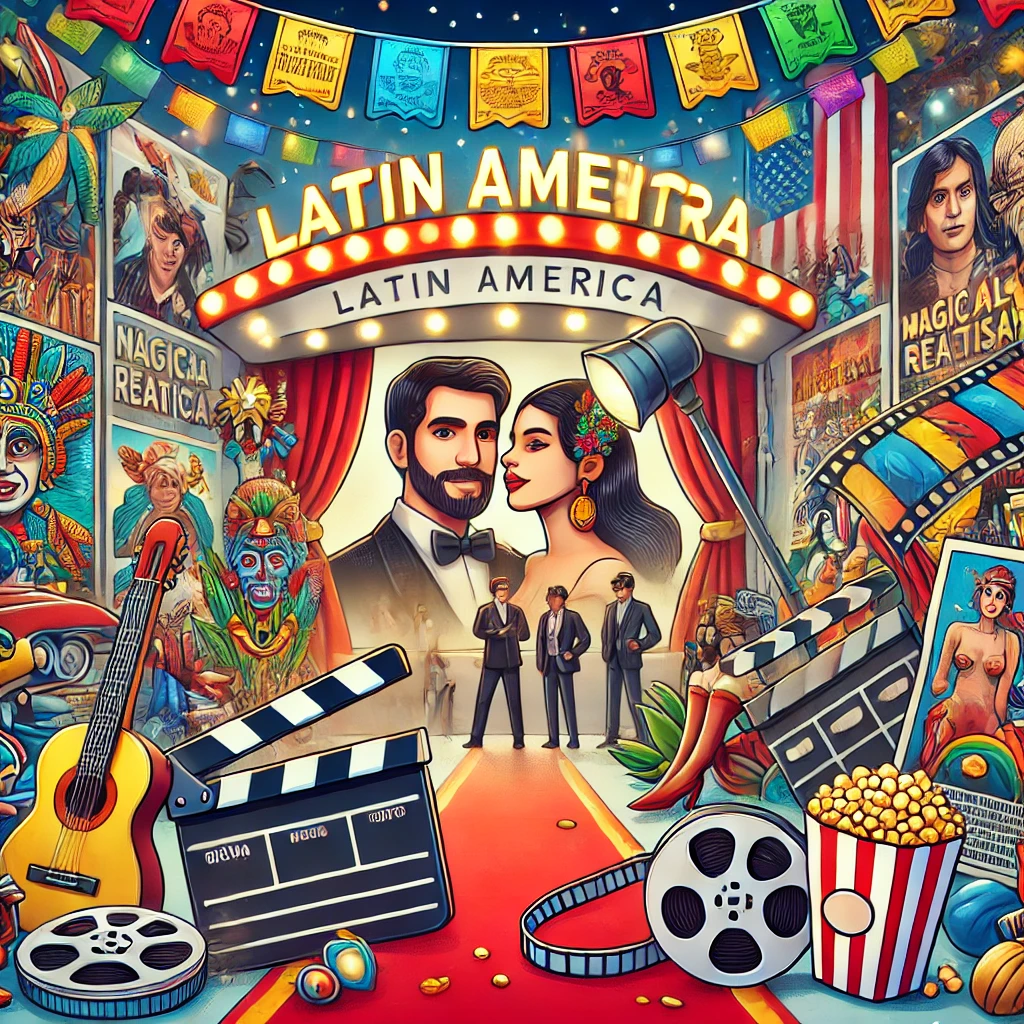
Latin American cinema is a treasure trove of cultural narratives, distinct artistic styles, and a rich array of Spanish vocabulary. This dynamic medium has evolved over the decades, showcasing the unique regional identities and historical contexts from which it emerges. From the visually compelling works of Mexican directors like Alfonso Cuarón to the politically charged films of Argentina’s new wave, the language used in these films offers a lens through which one can better understand the diverse Spanish dialects across Latin America.
For students of Spanish, educators, and cinephiles alike, exploring Spanish vocabulary through Latin American cinema provides an engaging and multifaceted learning experience. Not only does it reinforce language skills, but it also provides insights into cultural nuances and local expressions that are sometimes lost in traditional language education. It’s an invitation to immerse oneself in the varied linguistic landscapes that shape the Spanish-speaking world.
This article aims to delve into the importance of Spanish vocabulary within Latin American films, spotlighting key cinematic works from different countries, and examining the regional varieties and cultural contexts they encapsulate. We’ll also break down specific vocabulary and colloquialisms from these films, helping you to enhance your Spanish language proficiency while gaining a richer understanding of Latin American culture.
The Importance of Context in Language Learning
Language, at its core, is a means of communication grounded in context. When learning Spanish, especially in the context of Latin America, understanding the cultural and situational context is vital. This is where Latin American cinema becomes particularly valuable. Movies reflect real-life scenarios and environments where language is actively used, offering learners authentic, contextualized language exposure.
For example, consider the film “Y Tu Mamá También” directed by Alfonso Cuarón. This Mexican film is rich with local jargon and slang that might not be found in textbooks. Words like “güey” (dude) and “fresa” (preppy/snobby) provide insights into the socio-cultural settings of Mexico. By understanding these terms within the context they are used, viewers get a deeper grasp of both the language and the culture it springs from.
Furthermore, films often bring to light regional differences in Spanish vocabulary. The word for “popcorn,” for example, varies across different Spanish-speaking countries: it’s “palomitas” in Mexico, “pochoclo” in Argentina, and “cotufas” in Venezuela. By watching films from various regions, learners can begin to identify and understand these regional variations, thereby enriching their vocabulary and comprehension.
Spotlight on Mexican Cinema
Mexico is undeniably a powerhouse in the Latin American film industry, having produced internationally acclaimed directors such as Guillermo del Toro, Alejandro González Iñárritu, and Alfonso Cuarón. Mexican cinema offers a plethora of linguistic and cultural diversity, making it a rich resource for language learners.
Films like “Amores Perros” and “Roma” not only present compelling narratives but are also infused with the colloquialisms and idiomatic expressions that are a hallmark of Mexican Spanish. For instance, in “Amores Perros,” the term “chido” (cool/great) and “neta” (truth/really) are frequently used, providing viewers with a taste of everyday speech, especially among younger Mexicans.
Another aspect to consider is the reflection of socio-economic contexts in vocabulary usage. In “Roma,” set in the 1970s, you’ll hear a mix of formal and informal language, showcasing the linguistic divide between the upper and lower classes. Films like these thus become not just mediums of language learning but also windows into societal structures and dynamics.
Argentine Film and Slang
Argentina’s film industry has made significant contributions to world cinema, known for its distinctive style and socio-political narratives. Films such as “El Secreto de Sus Ojos” and “Relatos Salvajes” are great examples of how Argentine Spanish, also known as Rioplatense Spanish, differs from other Spanish dialects.
One of the most prominent features of Argentine Spanish is the use of “vos” instead of “tú” for the second-person singular pronoun. This influence is evident in the dialogue of these films. Additionally, Argentine slang, or “lunfardo,” adds another layer of complexity and richness. Words like “laburo” (work) and “pibe” (kid) are common in everyday speech in Buenos Aires, providing viewers with authentic linguistic experiences.
These films often carry a strong cultural essence, revealing much about Argentine traditions and way of life. For instance, “El Secreto de Sus Ojos” dives deep into the themes of justice and memory, with language that is raw and reflective of the country’s troubled history. Watching such films can enhance one’s understanding of both the language and the underlying cultural contexts.
Cinema from the Andean Region
The Andean region, encompassing countries like Peru, Bolivia, and Ecuador, brings another unique flavor to Latin American cinema and Spanish vocabulary. Films from this region often highlight indigenous cultures and languages, alongside Spanish, offering a bilingual or even multilingual experience.
Take for example the Peruvian film “La Teta Asustada,” which brings Quechua-speaking communities into the narrative. The juxtaposition of Spanish and indigenous languages enriches the dialogue, providing a multi-layered understanding of the Andean cultural tapestry. Vocabulary from Quechua frequently seeps into the Spanish spoken in these films, such as “chompa” (sweater) and “guagua” (baby).
By engaging with cinema from the Andean countries, learners can appreciate how language evolves in regions with significant indigenous influence. These films serve not just as language learning tools but also as cultural artifacts that preserve and showcase the heritage of indigenous peoples within Latin America.
The Colombian Film Scene
Colombia boasts a dynamic and rapidly growing film industry, known for its vibrant storytelling and complex characters. Colombian Spanish is often marked by a musical rhythm and distinct pronunciation, aspects that are vividly captured in its cinema.
Films like “El Abrazo de la Serpiente” and “Pájaros de Verano” are prime examples of how Colombian cinema incorporates regional vocabulary and indigenous languages. In “Pájaros de Verano,” for instance, the film dives into the Wayuu culture and language, offering a rich tapestry of linguistic diversity. Viewers are introduced to words like “maishajaa” (good morning) and phrases used specifically within the Wayuu community.
Additionally, Colombian films often reflect the country’s socio-political landscape, with vocabulary related to its history of conflict and peace efforts. Understanding terms like “guerrilla” (rebel group), “paramilitar” (paramilitary), and “desmovilización” (demobilization) is crucial for grasping the deeper narratives within these films. They offer a lens into the resilience and struggles of the Colombian people, adding another dimension to language learning.
Conclusion
Latin American cinema stands as a robust and profound resource for learning Spanish vocabulary, far beyond what traditional textbooks and classrooms offer. Each film is embedded with cultural, societal, and linguistic elements that enhance the language learning experience. The colloquialisms, regional slang, and idiomatic expressions found in these cinematic works provide learners with an authentic and practical understanding of the language.
From the vibrant streets of Mexico City in “Amores Perros” to the passionate narratives of Argentine films like “El Secreto de Sus Ojos,” there is a wealth of cultural and linguistic diversity waiting to be explored. By engaging with films from different Latin American countries, learners can gain insights into regional varieties of Spanish, understanding not just the language, but also the people and their stories.
As you delve into Latin American cinema, make a conscious effort to note the vocabulary and phrases used. Try to understand the context in which they are spoken and how they reflect the cultural backdrop. This approach will not only enhance your Spanish vocabulary but also deepen your appreciation for the rich and varied cultures of Latin America.
So, grab some “palomitas,” “pochoclo,” or “cotufas,” and immerse yourself in the vibrant world of Latin American cinema. Your Spanish vocabulary, along with your cultural understanding, will undoubtedly flourish.


