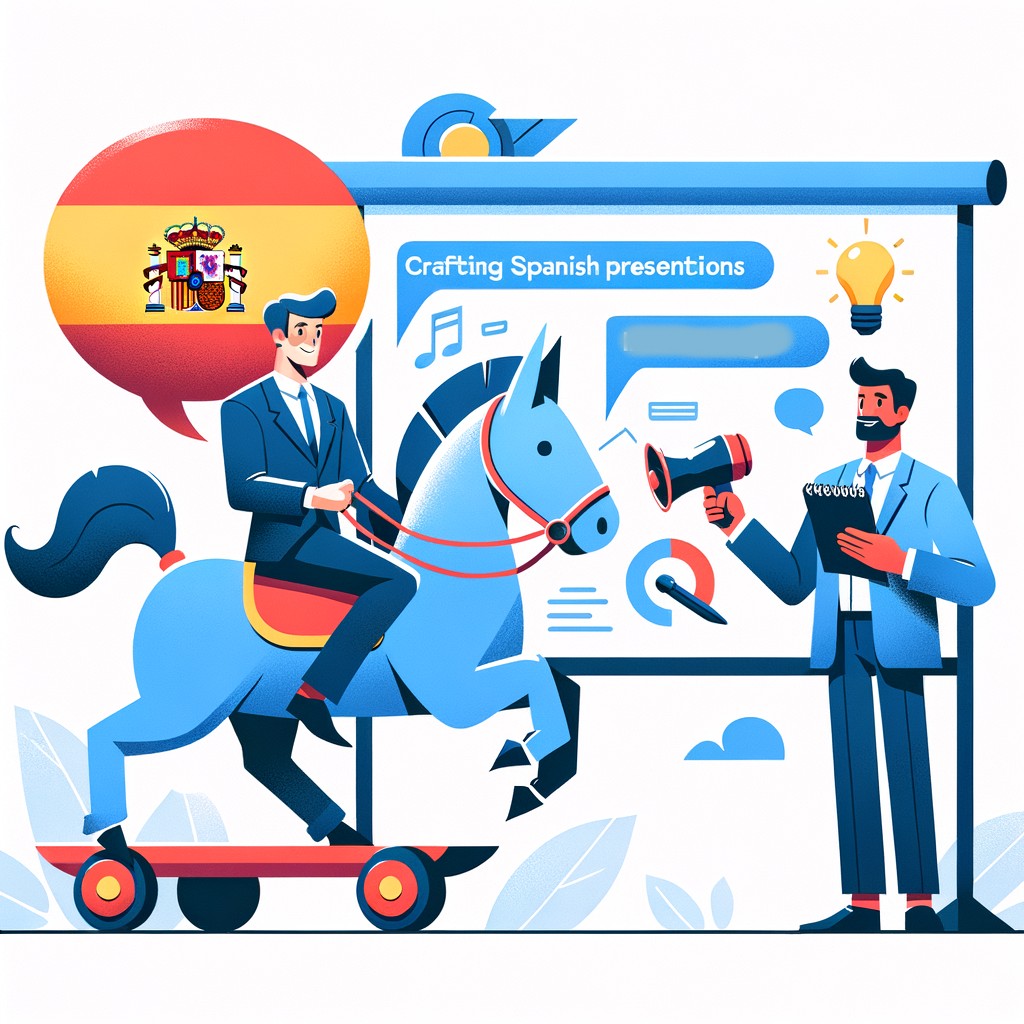
Crafting engaging Spanish presentations is an art that is both challenging and rewarding. The success of your presentation often hinges on how effectively you communicate your message, and intonation plays a critical role in this process. It’s not just what you say, but how you say it. The nuances of intonation can convey emotions, underscore key points, and influence audience engagement. Mastering intonation in Spanish, especially if it is not your first language, requires understanding the rhythm, pitch variation, and emphasis that characterize native speech. This guide aims to provide in-depth tips and strategies to help you deliver impactful and engaging presentations in Spanish by leveraging the power of intonation.
Understanding intonation in Spanish is more than a matter of linguistics; it involves appreciating the cultural contexts and communication styles specific to different Spanish-speaking regions. Spanish is a dynamic, expressive language that varies significantly from one country to another. Each region might have its own unique speaking pattern, pace, and verbal emphasis, all of which are important to comprehend when crafting a presentation intended to be effective across diverse Spanish-speaking audiences.
In this guide, we’ll explore the intricacies of Spanish intonation, breaking it down into practical techniques that you can apply to make your presentations more engaging. We’ll dive deep into aspects like pitch contour, stress patterns, and rhythm. We’ll also explore how these elements work together to create a compelling narrative flow. By mastering these techniques, you’ll be equipped to deliver presentations that resonate emotionally and intellectually with your audience, ensuring that your message is not only heard but felt. Let’s embark on this journey of mastering intonation in Spanish presentations so that you can leave a lasting impression on your audience.
Understanding the Importance of Intonation
Intonation in Spanish is fundamental to conveying meaning beyond the actual words spoken. Its primary functions include indicating questions, expressing emotions, emphasizing points, and maintaining the listener’s interest. For instance, a rising intonation at the end of a sentence can transform a statement into a question, while varying intonation throughout a speech can emphasize crucial points, making them more memorable for your audience.
Spanish intonation can be likened to the musicality of speech; it is the melody that gives words their emotional depth and communicative clarity. Without proper intonation, even grammatically correct sentences can seem awkward or be misunderstood. For non-native speakers, learning to recognize and reproduce common intonation patterns used by native speakers is vital for achieving fluency and ensuring effective communication in presentations.
Intonation also plays a crucial role in audience engagement. A monotonous delivery can cause audiences to lose interest quickly, but varying pitch and pace can capture and sustain their attention, making the presentation more dynamic and interesting. When presenting in Spanish, understanding the cultural norms about how expressiveness is calibrated through intonation is key to ensuring you communicate not only with clarity but also with the right emotional undertones. This is particularly important in professional settings, where the wrong intonation may subtly suggest disinterest or disrespect.
Pitch Variation and Emotional Impact
Pitch variation is an essential element of intonation that influences how your message is received emotionally. In Spanish, nuanced pitch adjustments can differentiate between a serious statement and casual remarks or between enthusiasm and skepticism. Practice listening to native speakers to immerse yourself in the natural rise and fall of tones and mirror these patterns in your own presentations. You can effectively use pitch to elicit specific emotional responses by aligning your intonation with the emotional content of your message.
For example, when delivering important information, a higher pitch can signify excitement or importance, while a lower pitch might convey seriousness or gravity. Adjusting your pitch to suit the context of your message helps you control the narrative tone and influences how the audience perceives your credibility and confidence. In a Spanish presentation, the key is to balance between being overly dramatic and overly monotonous, aiming for a natural rhythm that maintains audience engagement.
Additionally, understanding cultural nuances in pitch variation is important. While some Spanish-speaking regions might have a more musical upward and downward movement in everyday conversation, others might be more subdued. Tailoring your intonation style to match cultural expectations can make your delivery more relatable and impactful, bridging potential communication gaps with your audience. This is especially important in multicultural settings where the audience may interpret tonal variations in diverse ways.
The Role of Stress Patterns
Stress patterns in Spanish denote which syllables are emphasized within words and sentences. Contrary to English, where stress can significantly alter the meaning, Spanish has more predictable stress patterns based on syllabic structure. Stress placement can highlight critical points within your presentation, providing cues for listeners on where to focus their attention.
Generally, Spanish words either have penultimate (second-to-last syllable) or antepenultimate (third-to-last syllable) stress. However, exceptions exist, and understanding these exceptions is necessary for effective verbal emphasis. Be mindful of how you use stress to differentiate between homographs (words that are spelled the same but have different meanings depending on stress), such as “pública” (she publishes) and “pública” (public).
In a presentation context, strategically stressing words or phrases can underscore the significance of particular ideas, thereby enhancing the retention of information. For instance, when introducing a new concept or arguing a key point, stressing the main nouns and verbs can underline these central elements, guiding the audience in recognizing their importance. This approach improves not only comprehension but also keeps the audience’s attention focused on your key arguments. Such deliberate application of stress patterns is crucial in ensuring that your message is not just audible but impactful.
Rhythm and Flow in Presentations
Rhythm in Spanish presentations is another critical component of effective communication. Unlike English, where sentence stress and rhythm can be highly variable, Spanish tends to have a more consistent rhythmic pattern, often described as syllable-timed. Mastering this rhythmic consistency helps enhance comprehension and fluency, making your speech appear more natural and thus more engaging.
When crafting your presentation, aim for rhythmic balance by ensuring that your sentences are structured to reflect natural speech patterns. Practice delivering your speech by focusing on the timing and cadence of your phrases. Using pauses effectively can also aid in maintaining a steady rhythm; pauses give listeners time to process the information presented and create a natural flow in the presentation. Intentional pauses after delivering key points allow the audience to reflect on what has been said, highlighting the information’s significance without the need for overly dramatic gestures.
Moreover, introducing varied sentence lengths within your presentation can prevent monotony and maintain interest. Short, sharp sentences can be used to deliver powerful insights, while longer, more flowing sentences create context and depth, helping to build a compelling narrative. By balancing these elements, your presentation will not only communicate with clarity but will also engage and hold the audience’s attention through its rhythmic appeal. Ultimately, mastering rhythm in your Spanish presentations adds a musical quality that enhances emotional connection and cognitive engagement with your audience.
Techniques for Practicing Intonation
Practicing intonation effectively demands consistency and exposure to native speakers. Immersing yourself in Spanish-speaking environments, such as watching Spanish films, listening to podcasts, or engaging in conversations with native speakers, allows you to naturally absorb the intonation and rhythm unique to the language. These authentic listening exercises are invaluable for developing an intuitive grasp of how intonation patterns operate in different contexts.
Recording your presentations and critically reviewing them will also help you identify areas where your intonation may be flat or off. Pay close attention to the flow and rhythm as you speak, and experiment by adjusting pitch and stress until you achieve a harmonious delivery that feels both natural and engaging. Seeking feedback from native speakers can provide further insights into improving your intonation. Their perspective will help you refine your presentation skills and identify any nuances you may have missed.
Furthermore, consider using technology tools designed for language learning that focus specifically on pronunciation and intonation. These platforms often include interactive exercises that provide immediate feedback, helping you fine-tune your delivery until it aligns with native-speaker patterns. Consistent practice using these tools can greatly aid in accelerating your proficiency in Spanish intonation, thereby ensuring a more compelling and effective presentation style.
Conclusion
Mastering intonation is indispensable for crafting engaging Spanish presentations. By understanding and applying principles of pitch variation, stress patterns, and rhythm, you can significantly enhance the impact of your message. Remember, it’s not sufficient to be linguistically accurate; you must connect emotively and persuasively with your audience. Tailor your intonation to suit the cultural norms and expectations of different Spanish-speaking regions, ensuring that your presentation style resonates globally.
Continuous practice, feedback, and exposure to native speakers are the pillars of developing a natural and compelling presentation delivery. Utilize available resources and technology to assist in refining your intonation skills. Engaging in dialogue with native speakers can also provide nuanced insights that formal learning environments might not offer. Ultimately, by dedicating time and effort to mastering Spanish intonation, you transform not only your language skills but also your ability to connect and communicate effectively in professional and casual settings.
Incorporating these techniques does not merely enhance your linguistic aptitude; it enriches your overall communication capabilities. The nuance brought by intonation fosters connections, promotes understanding, and encourages interaction—fundamental goals for any successful presentation. Embark on this enlightening journey to improve your Spanish presentation skills by focusing on intonation, and witness how it transforms your communicative power and audience engagement. Your commitment to mastering the art of intonation will undoubtedly yield rich rewards in every facet of your Spanish-speaking endeavors.
Frequently Asked Questions
1. Why is intonation important in Spanish presentations?
Intonation in Spanish presentations is a vital element that can significantly impact how your audience receives and understands your message. It’s not just the words you choose—intonation helps convey the emotional undertone of your speech, indicate whether you are asking a question or making a concluding statement, and emphasize your key points. Imagine monotone delivery; it would likely come across as flat and uninspiring, possibly causing your audience to disconnect. Conversely, a lively and varied intonation can capture interest, sustain engagement, and enhance the communicative power of your presentation. Mastering intonation can lead to increased comprehension and retention, making it an indispensable tool for presenters.
2. How can I practice improving my intonation for Spanish presentations?
To hone your intonation skills for Spanish presentations, start by immersing yourself in the language as it is spoken by native speakers. Listen to Spanish radio shows, podcasts, or watch movies and TV shows. As you listen, pay close attention to how speakers modulate their voices. Additionally, practicing with a native speaker can be immensely beneficial. They can provide feedback on your intonation, helping you make necessary adjustments. Engage in shadowing exercises, where you repeat sentences after hearing them, mimicking the intonation patterns as closely as possible. Recording yourself gives you a chance to self-critique, allowing you to notice areas for improvement in real-time. With consistent practice, achieving masterful intonation is entirely within reach!
3. What are some common intonation mistakes to avoid in Spanish presentations?
One common mistake is failing to vary your pitch, which leads to a monotonous presentation. Spanish, much like English, uses pitch variation to signify different emotions and meanings—lack of variation can result in a lack of connection with your audience. Another frequent error is misplacing emphasis on less important words or omitting emphasis on key words, which can obscure your intended message. Also, be mindful not to end declarative sentences with a rising pitch as this might unintentionally turn statements into questions, potentially confusing your listeners. Ensure that your intonation matches the purpose of your sentence, whether it’s to inform, question, or express emotion, to maintain clarity and engagement throughout your presentation.
4. Are there differences in intonation patterns between dialects of Spanish?
Absolutely! Spanish is a dynamic language with various dialects, each with its own distinct intonation patterns. For instance, Castilian Spanish, commonly spoken in Spain, often carries differences in rhythmic stress and vowel pronunciation compared to Latin American Spanish. In contrast, Caribbean Spanish, such as that from Puerto Rico or the Dominican Republic, is characterized by a faster pace and unique rhythm. Meanwhile, Argentine Spanish features the yeísmo, which affects pronunciation and consequently intonation. These regional variations mean that if your presentation is targeting listeners from a specific area, adapting to their local intonation will enhance your relatability and the authenticity of your delivery. Acknowledging these differences and adapting accordingly can show cultural awareness and respect, essential elements for effective communication.
5. Can technology help improve my presentation intonation?
Technology can be a tremendous ally in perfecting your presentation intonation. Many language learning apps offer exercises specifically designed to help learners practice intonation and pronunciation. Additionally, speech analyzing software can provide visual feedback on your intonation, highlighting where adjustments are needed. These tools can offer instant feedback, so you can make real-time improvements. Furthermore, various online platforms allow you to connect with native Spanish speakers for live practice which can be invaluable. With advancements in AI, some tools even offer tailored exercises and predictive text feedback to support your learning journey. Incorporating these technological resources into your preparation can accelerate your progress and help you deliver a more polished presentation.