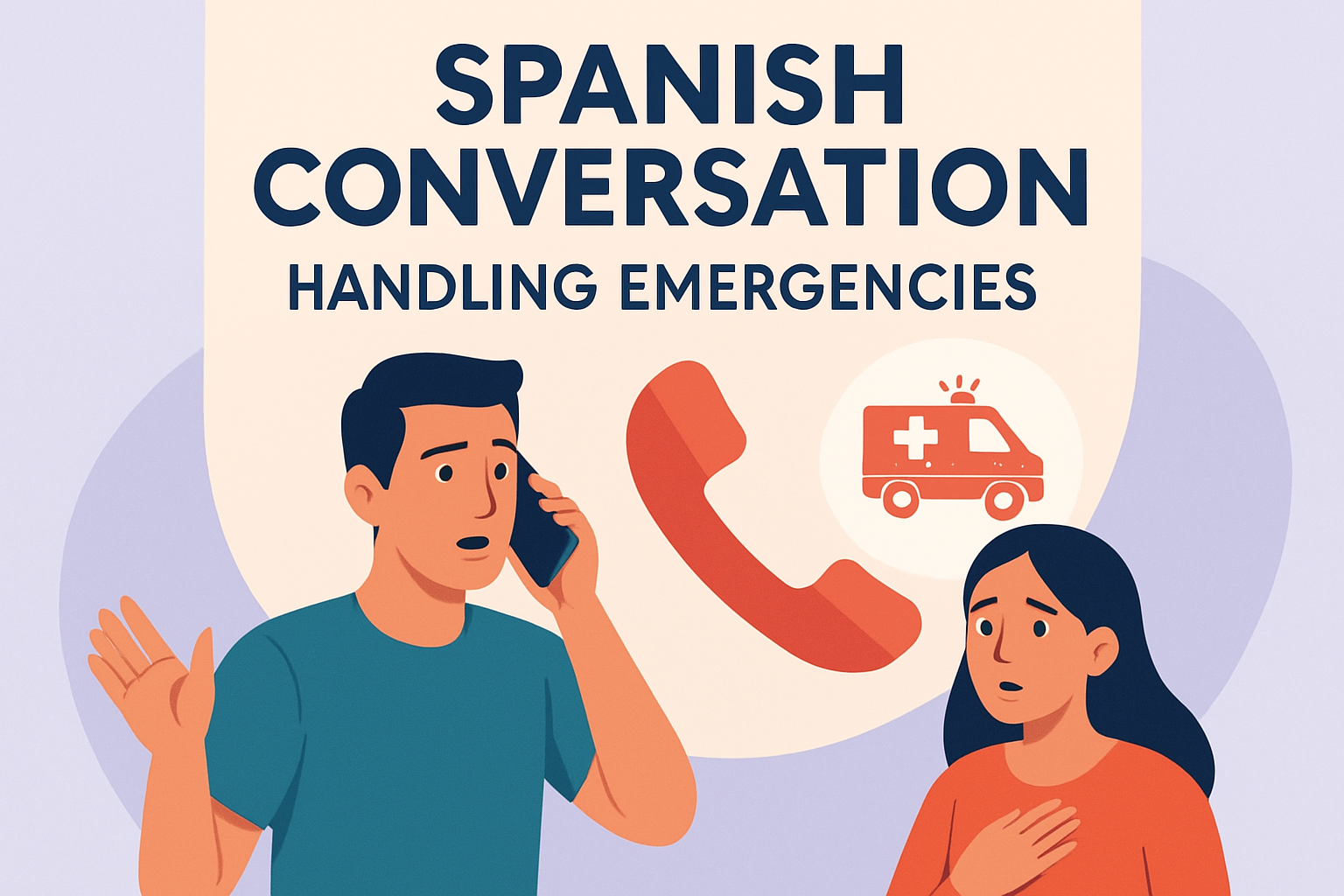
In today’s globalized world, language barriers can pose significant challenges, particularly during emergencies. Being able to communicate effectively in Spanish, the second-most spoken language in the world, becomes crucial in situations that demand immediate attention and response. This article will delve into the essentials of handling emergencies in Spanish, ensuring you are able to manage critical situations when they arise. We will define key terms, explore various scenarios where understanding Spanish could be life-saving, and illustrate the importance of this skill set through real-world examples.
Many individuals find themselves in need of emergency assistance in Spanish-speaking countries or when interacting with Spanish speakers. Effective communication can literally mean the difference between life and death. Thus, understanding and using emergency-related vocabulary in Spanish is not just beneficial; it’s essential. Whether you are traveling, working abroad, or living in a bilingual community, mastering these basics enhances your ability to help yourself and others. Let’s explore how you can navigate through emergencies in Spanish with confidence.
Essential Spanish Vocabulary for Emergencies
Before you can effectively handle emergencies in Spanish, it’s vital to familiarize yourself with the key vocabulary that will help facilitate a response. This vocabulary forms the foundation of any emergency conversation and is crucial for effective communication.
- Ayuda – Help
- Emergencia – Emergency
- Policía – Police
- Ambulancia – Ambulance
- Doctor – Doctor
- Fuego – Fire
- Hospital – Hospital
If you find yourself in an emergency situation, being able to quickly convey these terms can expedite the arrival of the necessary assistance. Consider the following scenario: you are witnessing a fire in a public place, and you need to alert others. Yelling “¡Fuego!” will likely prompt immediate actions from native Spanish speakers, whereas hesitating could result in delays and increased danger.
Communication Strategies in Urgent Situations
Knowing the right words is one thing; effectively using them in an urgent situation is another. Communication during emergencies should be clear, concise, and organized. Speaking calmly and directly can make a significant difference.
A practical approach would involve structuring your sentences based on priority. For example, in a medical emergency, you might need to say, “Necesito una ambulancia inmediatamente. Hay una persona herida.” This translates to, “I need an ambulance immediately. There is a person injured.”
Sometimes, emergencies involve more than seeking immediate help. In situations where you need to explain the nature or specifics of an issue, adopting a structured communication style, such as the SBAR method (Situation, Background, Assessment, Recommendation), can be beneficial. For instance, if you are reporting a theft, you might say: “Ha habido un robo (There has been a theft). El ladrón llevaba una chaqueta roja (The thief was wearing a red jacket).”
Dealing with Healthcare Emergencies
In healthcare situations, especially those involving life-threatening conditions, communicating effectively with medical personnel can speed up treatment and minimize risks. Suppose you are experiencing chest pains. You might need to say, “Tengo dolor en el pecho y me cuesta respirar” which means “I have chest pain and I’m having trouble breathing.”
Medical professionals can respond more efficiently if they understand the nature of your symptoms quickly and clearly. Let’s look at a basic table indicating how you can convey crucial health information:
| English | Spanish |
|---|---|
| I feel dizzy | Me siento mareado/a |
| I am allergic to antibiotics | Soy alérgico/a a los antibióticos |
| My friend is unconscious | Mi amigo/a está inconsciente |
Additionally, being familiar with anatomical terms can be particularly vital if you’re guiding someone attending to an injury or if you’re describing symptoms. This level of knowledge not only expedites intervention but also reduces anxiety for both the person in distress and their helpers.
Contacting Authorities and Emergency Services
Whether you’re reporting a crime, an accident, or any other emergency, reaching out to the appropriate authorities quickly is crucial. Dialing the correct emergency services number is the first step, and in most Spanish-speaking countries, this number is 112, similar to 911 in the United States.
Once connected, clarity is of the utmost importance. Be ready to state your location, the nature of the emergency, and any immediate needs. Suppose you’re witnessing an accident; you might say, “Estamos en la calle Mayor número 5. Hay un accidente. Necesitamos ayuda,” which means, “We are at street number 5. There is an accident. We need help.”
Understanding the operational procedures of emergency services in various countries can also better prepare you for what to expect when making such contact. Oftentimes, the responder will require additional details to assess the situation, so being prepared to answer questions is equally important.
Real-world Example: Navigating an Emergency in Spain
Imagine you’re vacationing in Spain, exploring the narrow streets of Barcelona, when you suddenly witness a pedestrian being struck by a scooter. Your ability to quickly switch to Spanish vocabulary could prove critical. Start by clearing the area and ensuring the injured person remains safe. Then, make the emergency call and use phrases like “Hay un accidente. Una persona fue atropellada,” meaning “There is an accident. A person was run over.” Provide your exact location and any specific requests, such as an ambulance or police presence.
Encountering emergencies abroad challenges both language skills and presence of mind, demanding both rapid assessment and effective communication. Mastery of these expressions before an emergency arises allows one to react with greater efficacy and reduce potential harm.
Practice and Preparation: Securing Proficiency
Proactive preparation for emergencies includes more than just learning vocabulary; it involves simulations and practicing scenarios to build confidence. Engage in role-plays using typical emergency situations, such as reporting a lost passport or explaining allergies to a pharmacist. This hands-on practice can significantly aid in retaining the language tools needed during high-pressure situations.
Another effective strategy is utilizing language apps and resources with a specific focus on emergencies. Many offer phrases and dialogues that can be especially handy in crisis situations. Learning this way ensures you’re exposed to both the standard and nuanced aspects of the language, improving your adaptability in real-life scenarios.
Conclusion: Empower Yourself to Act
Handling emergencies in Spanish isn’t just about understanding words; it’s about being prepared to act swiftly and decisively. Having explored critical vocabulary, effective communication strategies, healthcare emergencies, and the importance of contacting authorities, you now possess a comprehensive toolkit for navigating emergencies in Spanish.
These skills ensure you can offer help, protect yourself, and facilitate the resolution of situations that arise. While traveling or residing in Spanish-speaking environments, your ability to manage emergencies effectively not only enhances your own safety but also fosters a sense of confidence and empowerment.
Your next step? Start practicing these skills regularly. Engage with Spanish-language materials, converse with native speakers, and simulate emergency scenes to hone your abilities. Be proactive in securing this knowledge, as it may one day prove invaluable to you or someone else in need.
Frequently Asked Questions
1. Why is it important to know how to handle emergencies in Spanish?
Understanding how to handle emergencies in Spanish is extremely vital because Spanish is the second most spoken language worldwide, with over 460 million native speakers. In emergency situations, the need for quick and clear communication is critical. If you’re in a Spanish-speaking country or dealing with Spanish-speaking individuals during an emergency, being proficient in basic Spanish can be lifesaving. It not only helps in coordinating help effectively but also ensures that the affected individuals feel understood and reassured during a crisis. When you’re able to communicate effectively, you can provide or receive directions accurately, report specific symptoms, and describe scenarios clearly, which is essential for timely and effective intervention.
2. What are some key Spanish terms and phrases one should know for emergencies?
In an emergency, certain Spanish terms can be incredibly helpful. Knowing how to ask for help is fundamental; the phrase “¡Ayuda, por favor!” means “Help, please!” Crisis situations also require you to know how to call for specific services; unfortunately, these are circumstances when you can’t afford to hesitate or make mistakes. Knowing how to say “fire” (fuego) or “police” (policía) can direct you swiftly to the necessary assistance. Other important phrases include “Estoy herido” (I am injured) or “Hay un accidente” (There is an accident), which can be crucial to tell the severity or the nature of the emergency. Learning basic terms related to health, safety instructions, and location descriptors can also be indispensable when dealing with urgent situations.
3. How should I approach a Spanish-speaking individual during an emergency to ensure clear communication?
Approaching a Spanish-speaking individual in an emergency requires being calm and using very clear, simple language. It’s important to speak slowly and avoid slang or overly complex words that might cause confusion. Make sure your body language conveys urgency and concern yet remains reassuring to avoid panic. Using gestures or visual aids can be very effective too if there’s any doubt. Always start by introducing yourself – if possible, using Spanish, such as “Hola, me llamo [Name], ¿necesitas ayuda?” which means “Hello, my name is [Name]. Do you need help?” By fostering a sense of trust and understanding from the outset, you enhance cooperation and willingness to communicate.
4. Are there any resources that can help me learn how to handle emergencies in Spanish?
Absolutely! There are various resources available to help you handle emergencies in Spanish. Language learning platforms like Duolingo, Rosetta Stone, and Babbel have modules dedicated to emergency language and scenarios. Mobile apps such as Google Translate can also be lifesavers, especially with offline translation features. Additionally, the American Red Cross and similar organizations often provide multilingual resources and guides on emergency response, including Spanish. SpanishPod101 and YouTube also offer lessons specifically focused on emergency dialogues and vocabulary. Immersing yourself in these resources, varying from apps to real-life audio exposure, can really enhance your ability to respond effectively when it matters most.
5. What are the typical scenarios where knowing Spanish can be crucial during emergencies?
There are numerous scenarios where being proficient in Spanish can be crucial during emergencies. If you are traveling in or living in Spanish-speaking regions, you are likely to encounter situations ranging from medical emergencies, such as injuries or diseases, to natural disasters where instructions and warnings need to be followed rapidly. Additionally, urban situations like being a victim of a crime, witnessing an accident, or even reporting a fire would necessitate communicating effectively in Spanish. Another scenario could be offering your help to a Spanish-speaking person in non-Spanish countries who might be in distress, ensuring they receive the needed help promptly without language barriers. Understanding the nature of these scenarios prepares you to manage them efficiently, minimizing complications or delays that could arise due to miscommunication.