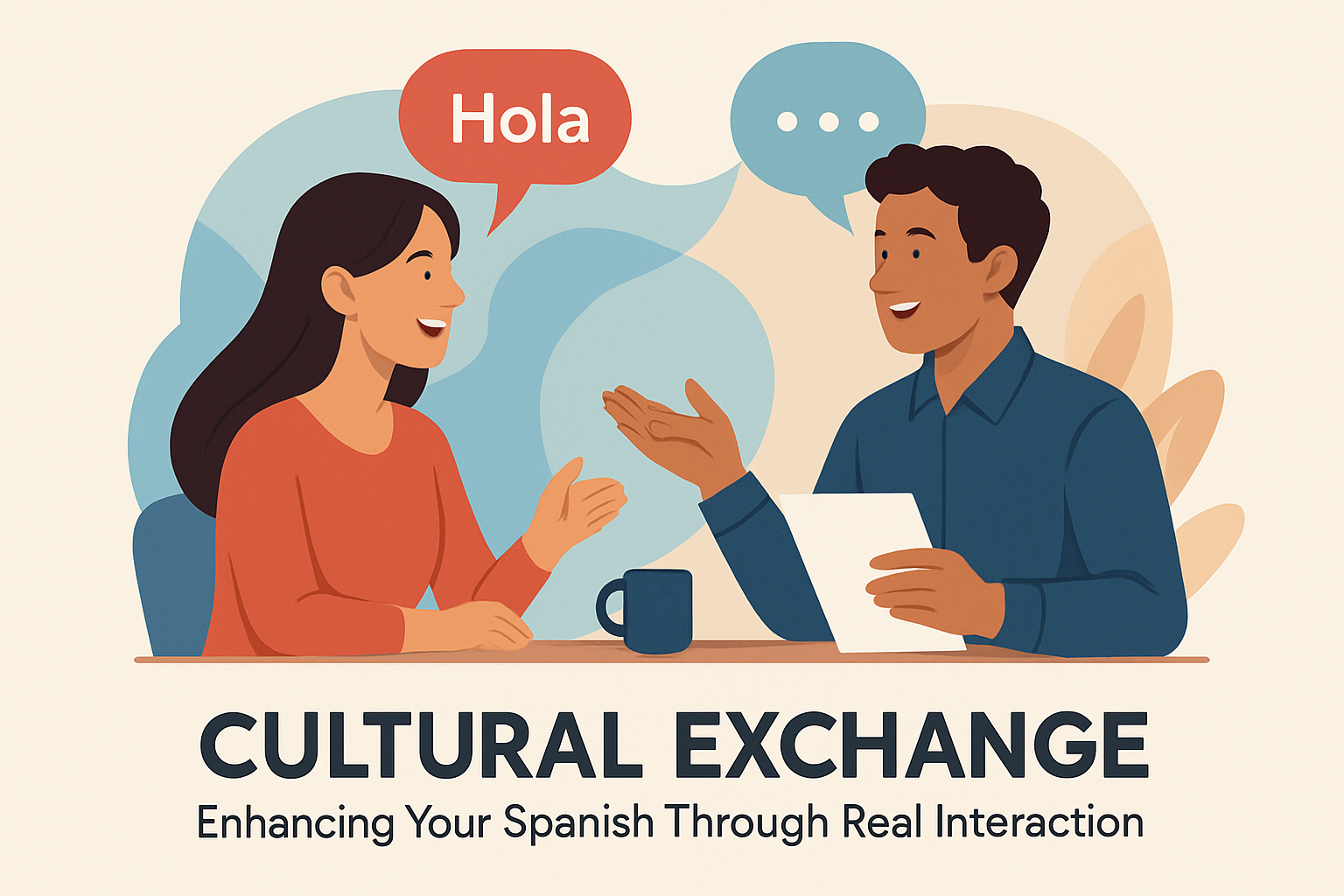
Creative ideas for keeping language exchange sessions fun can turn a well-meaning meetup from awkward small talk into a habit people genuinely protect on their calendars. In the context of Spanish community and interaction, language exchange opportunities are structured or informal settings where learners help one another practice speaking, listening, reading, and cultural communication. I have run community conversation circles, one-to-one tandems, and online exchange groups, and the difference between a draining session and an energizing one usually comes down to design. A good exchange balances both languages, gives each partner a clear role, and creates enough novelty to keep motivation high. This matters because consistency drives progress more than occasional intensity. Learners who enjoy the process return more often, take more risks, and build stronger speaking confidence. For Spanish learners especially, language exchange offers something classes often cannot: spontaneous interaction with different accents, personalities, and real-life topics. It also creates accountability and social belonging, which are major predictors of persistence. If this page is your starting point for language exchange opportunities, think of it as the hub: how to find partners, structure meetings, choose activities, avoid common problems, and keep sessions fresh over time.
What language exchange opportunities actually include
Language exchange opportunities are broader than many learners assume. They include in-person meetups, university conversation tables, community center groups, online tutoring-style swaps, tandem apps, Discord servers, WhatsApp voice exchanges, and professionally moderated speaking clubs. The shared principle is reciprocity: each participant contributes native or stronger-language support while receiving practice in the target language. In a Spanish community setting, that might mean a native English speaker helping a Colombian engineer prepare for interviews in English, while the engineer helps with conversational Spanish. It might also mean two intermediate learners using clear rules and reference materials to practice together. Not every exchange is fifty-fifty in skill level, but the best ones are balanced in value.
There are also different formats for different goals. One-to-one exchanges work best for personalized speaking time, pronunciation correction, and relationship building. Small groups are better for confidence, turn-taking, and exposure to multiple speaking styles. Large events are useful for discovery, networking, and finding compatible partners, but they are usually weaker for deep correction. Online exchanges solve the geography problem and expand access to regional varieties of Spanish from Mexico, Spain, Argentina, or elsewhere. In-person exchanges add body language, stronger social connection, and fewer technical interruptions. When learners choose the right format for the right objective, sessions become easier to sustain.
The strongest hub pages on language exchange opportunities make one point clearly: fun is not a bonus feature. It is a retention strategy. If sessions feel repetitive, too difficult, or socially uncomfortable, attendance collapses. If they feel structured, welcoming, and lightly playful, people come back, recommend the group, and improve faster.
How to find the right exchange partner or group
The best partner is not always the most advanced speaker or the most outgoing person. Compatibility matters more. I look for three things first: reliability, matched goals, and similar tolerance for correction. A learner preparing for travel in Spain needs different practice from someone studying for the DELE exam or building workplace Spanish for healthcare. If goals do not align, the exchange quickly becomes lopsided. One person wants grammar explanations while the other wants fast conversation, and both leave dissatisfied.
Useful places to find language exchange opportunities include Meetup, Eventbrite, university language departments, local libraries, cultural institutes, Facebook groups, ConversationExchange, Tandem, HelloTalk, Speaky, Discord communities, and neighborhood community boards. For Spanish learners, Instituto Cervantes events, Latin cultural associations, church communities, and bilingual coworking circles can be especially effective because they combine language practice with natural social interaction. The advantage of community-based spaces is that conversation has context. Instead of forcing random topics, people discuss food, migration stories, local events, music, or holidays they are already sharing.
Before committing, ask direct questions. How long is each session? How do you divide languages? Do you correct mistakes immediately or at the end? Are sessions casual or goal-based? Do you prefer video, audio, or in person? Those questions save weeks of friction. A short trial session is ideal. In my experience, ten good minutes of actual conversation reveal more than a long profile description.
Structures that keep every session lively and balanced
Fun usually comes from momentum, and momentum depends on structure. The simplest format is a split session: thirty minutes in Spanish, thirty minutes in English, with a timer. During each half, only one language is allowed except for quick clarifications. This prevents stronger speakers from taking over and protects weaker learners from switching back too early. Another reliable format is task-based exchange. Instead of “just chatting,” partners complete an activity such as planning a weekend trip, solving a problem, comparing cultural habits, or reacting to a short article. Tasks reduce dead air and produce more natural vocabulary.
Role rotation also works well in groups. One person facilitates, one tracks time, one notes useful vocabulary, and one summarizes at the end. Clear roles reduce the social uncertainty that makes many sessions feel awkward. For beginners, use predictable routines: warm-up question, short listening clip, vocabulary challenge, paired speaking, recap. For intermediate and advanced learners, vary the cognitive demand. One week can focus on storytelling; another can center on persuasion, debate, or humor.
Correction needs structure too. Constant interruption kills fluency, but zero feedback wastes the exchange. The most effective system I have used is “fluency first, feedback second.” Let the speaker finish a thought, then note two or three high-impact corrections: a verb tense, a false cognate, a pronunciation pattern. This keeps confidence high while still improving accuracy.
| Session format | Best for | Why it stays fun |
|---|---|---|
| Timed half-and-half | Balanced one-to-one practice | Fair turn-taking removes tension and keeps expectations clear |
| Task-based exchange | Intermediate learners | Shared goals create momentum and reduce awkward pauses |
| Conversation circle | Community groups | Multiple voices add energy, accents, and personality |
| Voice-note exchange | Busy schedules | Asynchronous practice is flexible and less intimidating |
| Topic club | Advanced speaking | Focused themes generate richer vocabulary and stronger opinions |
Creative activity ideas for Spanish language exchange sessions
If you want sessions to feel fresh, rotate activity types rather than only rotating topics. Story-building is one of the most reliable options. One partner begins with a sentence in Spanish, the next adds a detail, and the story continues for five minutes before switching languages. Because nobody knows where the plot is going, attention stays high. Another favorite is “real-life mission planning.” Partners design a practical scenario such as ordering for a group at a restaurant, negotiating rent, introducing a friend to family, or asking for help at a pharmacy. This produces useful everyday Spanish instead of abstract textbook dialogue.
Photo prompts work especially well online. Share an image of a street market in Oaxaca, a football stadium in Madrid, or a family meal in Buenos Aires and ask descriptive, inferential, and personal questions. Learners practice vocabulary, narrative tenses, and cultural comparison in one exercise. Music-based exchanges are also powerful. Choose a song, review key lines, discuss meaning, then imitate rhythm and pronunciation. Because Spanish prosody varies by region, songs can expose learners to accent patterns they rarely hear in class.
For mixed-level groups, use mini-games with a clear linguistic target. Two truths and a lie practices past tense. Taboo-style description builds circumlocution, a critical speaking skill when exact vocabulary is missing. Speed rounds with category challenges—foods, travel problems, emotions, idioms—raise energy quickly. Debate cards can work for advanced learners if topics are concrete rather than abstract. “Should cities ban cars from historic centers?” leads to much better language than vague prompts about “technology and society.”
Cultural exchange should be intentional, not decorative. Compare greeting norms, punctuality, holiday routines, humor, or family expectations. These conversations make Spanish more memorable because words attach to lived meaning. They also reduce misunderstandings, which is essential in any real community interaction.
Using themes, tools, and routines to prevent boredom
The easiest way to lose attendance is to improvise every session from scratch. A light framework creates anticipation without making meetings feel mechanical. Monthly themes work well: travel, work, food, health, film, local news, festivals, or childhood memories. Weekly prompts can then sit inside that theme. Learners arrive with background ideas, which improves fluency and lowers anxiety. For a Spanish community group, local cultural calendars are useful planning tools. Tie sessions to Día de los Muertos, Feria de Abril, a football tournament, a new film release, or a neighborhood event, and conversation becomes naturally relevant.
Digital tools help when they support interaction rather than replace it. Shared Google Docs are excellent for collecting corrections, useful phrases, and follow-up vocabulary. Quizlet sets can reinforce words from recurring sessions. For pronunciation, Forvo gives native-speaker examples, while YouGlish can show real context. Zoom breakout rooms make online groups manageable, and WhatsApp keeps momentum between meetings through short audio check-ins. I have seen groups double retention simply by sending one voice-note challenge between sessions, because it keeps the language active without adding heavy homework.
Routine matters as much as novelty. Keep some stable rituals: a three-minute warm-up, a one-minute recap, and a final “phrase of the day.” Repetition builds confidence. Novelty should appear inside the routine, not instead of it. That balance is what makes a group feel both safe and interesting.
Common problems that make exchanges stop being fun
Most failed language exchanges do not end because people dislike each other. They fail because the structure quietly becomes unfair. One person dominates. The stronger speaker turns into a teacher. Corrections become either constant or absent. Scheduling stays vague. The conversation circles the same basic topics every week. These problems are predictable, and they are fixable if addressed early.
If one language consistently gets more time, use a visible timer and alternate who starts each week. If one person monopolizes the conversation, set turn limits or use question cards so each partner asks and answers equally. If the exchange drifts into free tutoring, reset expectations. A reciprocal exchange is not the same as paid instruction, and clarity protects the relationship. If chemistry is poor, end politely and move on. Not every partner match should become a long-term commitment.
Another common issue is overestimating level. Learners often choose discussions that are too advanced, then feel discouraged. The solution is to lower task complexity without lowering dignity. Adults do not want childish material; they want achievable material. A practical role-play about renting an apartment can be easier than an open-ended debate and still feel fully adult. Progress becomes visible when tasks are slightly challenging but clearly manageable.
Safety and boundaries also matter. Meet in public places for first in-person sessions, protect personal information, and choose reputable platforms for online exchange. Community thrives when people feel secure enough to participate consistently.
How to turn one good session into a lasting Spanish community
The long-term goal of language exchange opportunities is not a single enjoyable conversation. It is an ongoing network of interaction that keeps Spanish present in daily life. After a successful session, make the next step easy: schedule the next meeting immediately, agree on a theme, and decide one small follow-up action. That action might be sharing a podcast episode, recording a short audio summary, or bringing one cultural object or news story to discuss next time. Specific follow-up is what converts enthusiasm into continuity.
Community grows through repeated low-friction contact. Small traditions help: a rotating host, a monthly café meetup, a shared playlist, or a collaborative vocabulary bank. Celebrate milestones such as ten sessions completed, a first full hour only in Spanish, or a member passing an exam. Recognition strengthens belonging, and belonging keeps learners engaged during inevitable plateaus.
For a sub-pillar focused on Spanish community and interaction, the central lesson is simple. Fun is not separate from serious learning; it is the condition that makes sustained practice possible. Choose the right format, set fair rules, use creative tasks, and keep the social experience warm and consistent. If you are building or joining language exchange opportunities, start with one structured session this week, then refine it based on what made people speak more, laugh more, and return for the next conversation.
Frequently Asked Questions
What are some creative ways to make language exchange sessions more fun and less awkward?
The best language exchange sessions feel less like a test and more like a shared experience. A simple way to create that shift is to build each meeting around a light structure instead of relying on open-ended small talk. For example, you can use themed sessions such as food, travel, family sayings, celebrations, or neighborhood life. In a Spanish-focused exchange, one week might center on ordering at a market, another on describing childhood games, and another on comparing holidays across countries. Themes give everyone a starting point and remove the pressure of having to invent conversation from nothing.
Interactive activities also make a big difference. Role-plays work especially well because they add energy and purpose. One person can play a café server, a bus driver, a landlord, or a shop owner, while the other practices useful phrases in context. You can also try picture prompts, short storytelling games, “would you rather” questions, mini debates, or cultural show-and-tell. In community Spanish conversation circles, some of the most successful sessions are built around very ordinary but relatable topics, because people have real opinions and memories to share. That naturally leads to more authentic speaking practice.
Another effective strategy is to rotate formats within the same session. Start with a warm-up question, move into pair conversation, add a listening or vocabulary challenge, and finish with a relaxed reflection. This variety keeps the energy from flattening out. The key is not to overcomplicate things, but to give the session enough shape that participants always know what to do next. When people feel guided rather than judged, they participate more freely, and that is usually when the exchange becomes genuinely fun.
How can I keep a Spanish language exchange balanced so both partners benefit equally?
Balance is one of the most important ingredients in a successful language exchange, and it does not happen automatically. In many sessions, one person ends up teaching while the other does most of the talking, or one language quietly takes over because it feels easier. To avoid that, agree on a simple structure from the beginning. A common and effective method is to split the time evenly, such as thirty minutes in Spanish and thirty minutes in English, with a clear transition in the middle. Setting expectations early helps both people feel respected and keeps the exchange from becoming lopsided.
It also helps to define what “benefit” means for each person. One partner may want casual speaking fluency, while the other may want pronunciation correction, vocabulary building, or confidence in everyday conversation. If you know each other’s goals, you can shape activities accordingly. In a Spanish community setting, that might mean practicing real-life interactions like introducing yourself to new people, explaining your background, asking follow-up questions, or talking about local customs and family traditions. The more specific the goals, the easier it is to create a session that serves both partners well.
Correction style matters too. Some people want frequent interruption and direct grammar feedback; others prefer to speak freely and receive notes afterward. A balanced exchange respects both preferences. One practical approach is to let the speaker finish a thought, then offer one or two useful corrections instead of correcting every sentence. That keeps the conversation natural while still making it educational. Over time, the most effective exchanges are usually the ones where both people feel they are learning, contributing, and being heard.
What activities work especially well in group language exchange settings?
Group exchanges need slightly different planning than one-to-one tandems because the main challenge is participation. Without structure, a few confident speakers dominate while quieter learners fade into the background. The strongest group activities are those that create clear turns, small goals, and opportunities for everyone to speak. Breakout pairs or rotating mini-conversations are especially effective because they lower the pressure. Instead of trying to speak in front of a whole circle, participants can focus on one person at a time, which usually leads to more actual language use.
Some of the most reliable group activities include speed conversation rounds, collaborative storytelling, vocabulary scavenger hunts, cultural trivia, and role-play stations. In a Spanish exchange group, you might set up different prompts around the room, such as ordering food, talking about weekend plans, comparing expressions from different countries, or discussing music and films. Participants rotate every few minutes, which keeps the atmosphere lively and prevents any one conversation from stalling. This format also exposes learners to different accents, speaking styles, and personalities, which is valuable for listening flexibility and cultural understanding.
Another excellent option is task-based interaction. Give the group a problem to solve or a plan to create, such as organizing a community event, choosing the best itinerary for a visit, or deciding what dishes to bring to a potluck. People tend to speak more naturally when they are working toward a shared outcome. Group exchanges become memorable when they feel social and purposeful rather than performative. If you combine clear instructions, manageable speaking turns, and topics rooted in real life, the group becomes more welcoming and much more fun to return to.
How do I choose conversation topics that are engaging without being too difficult?
The most engaging conversation topics sit in the sweet spot between familiar and fresh. If a topic is too basic, people lose interest quickly. If it is too abstract or advanced, learners become quiet because they do not have the vocabulary or confidence to express themselves. A good rule is to choose topics connected to everyday life, personal experience, and culture. These are rich enough to spark real conversation but accessible enough for learners at different levels. In Spanish language exchange settings, topics like routines, food traditions, local festivals, friendship, work habits, childhood memories, and city life often work very well.
It also helps to layer the questions from easy to more open-ended. Start with something simple such as “What did you eat this week?” or “What is your favorite place in your city?” Then move toward questions like “How are meals different in your culture?” or “What makes a neighborhood feel welcoming?” This progression allows participants to warm up linguistically before moving into deeper discussion. It creates confidence and gives less advanced learners a way into the topic before the conversation becomes more nuanced.
Visual and cultural prompts can make topics even stronger. Photos, short clips, objects, menus, maps, or social media posts provide immediate context and reduce the mental work of inventing ideas from scratch. For Spanish learners, authentic materials are especially useful because they bring in real vocabulary, regional variation, and cultural references. The goal is not to impress anyone with complexity. The goal is to create enough curiosity and comfort that people want to keep talking. When a topic invites both personal stories and cultural exchange, the session feels lively, meaningful, and much less forced.
How can I make people want to come back to language exchange sessions regularly?
Consistency comes from enjoyment, but it also comes from a sense of progress and belonging. People return when sessions feel welcoming, predictable in a good way, and worth protecting on their calendar. One of the smartest things you can do is create a familiar rhythm. For example, begin each session with a short check-in, move into a featured activity, allow time for freer conversation, and end with a quick takeaway or favorite new phrase. This kind of structure helps participants relax because they know what to expect, while the content inside that structure can still stay varied and creative.
Community feeling is equally important. Language exchange is not just about grammar or vocabulary; it is also about trust. People speak more bravely when they feel safe making mistakes. You can build that atmosphere by celebrating effort, introducing newcomers warmly, and making sure corrections are helpful rather than discouraging. In Spanish community conversations, it often helps to include cultural moments that invite connection, such as sharing sayings from different regions, comparing customs, talking about music, or discussing how humor translates across languages. These details make sessions memorable because they go beyond textbook practice.
Finally, give people a visible sense of momentum. That does not mean turning the exchange into a formal class. It simply means helping participants notice that they are improving. You might revisit useful expressions from previous sessions, keep a shared list of favorite phrases, or end by asking everyone what they were able to say this week that used to feel hard. Small signs of growth create motivation. When participants leave feeling more confident, more connected, and genuinely entertained, they are far more likely to return again and again.