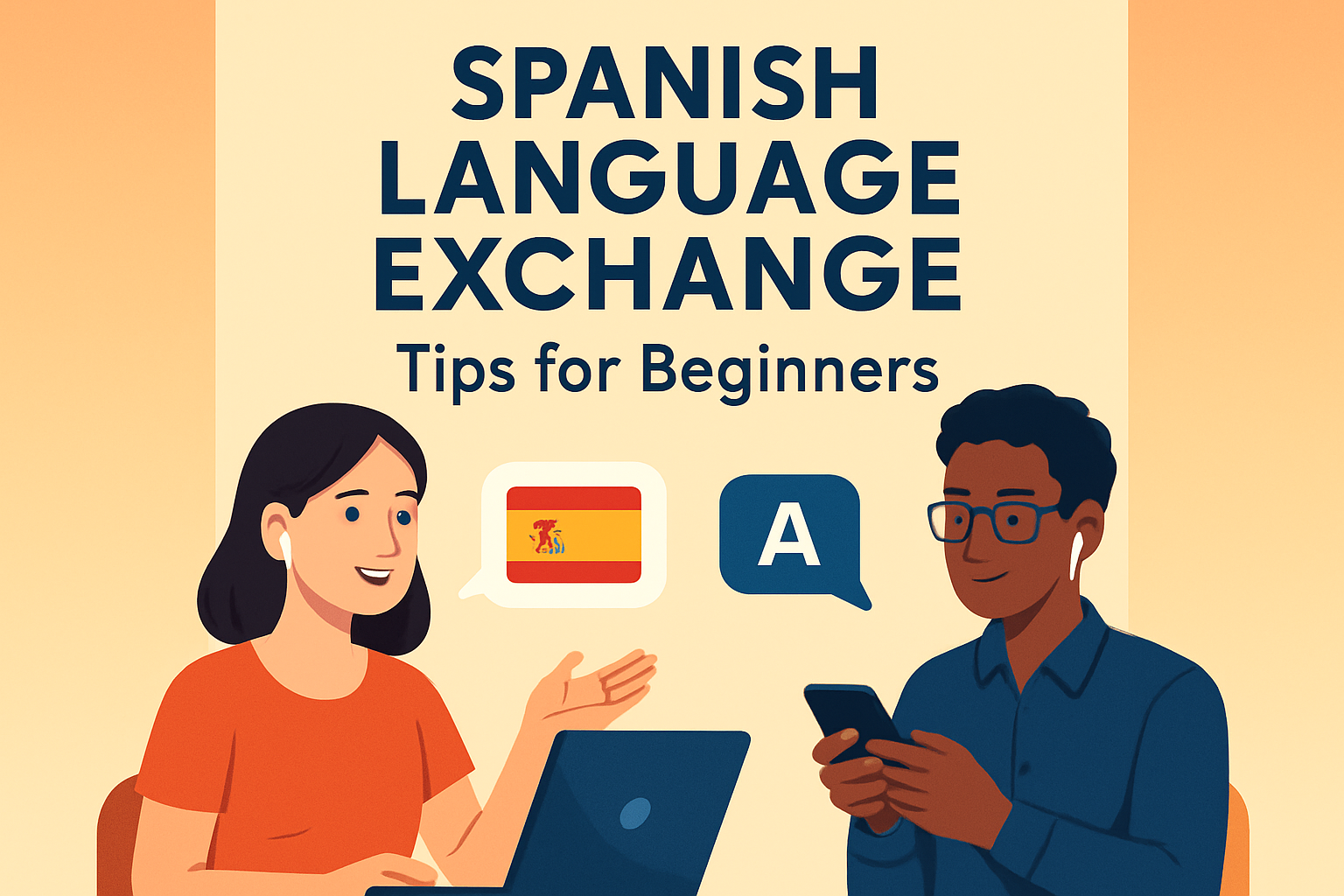
Language exchange turns language study from a solitary exercise into a social practice, connecting learners who trade time, knowledge, and cultural perspective to help each other communicate more naturally. In the Spanish learning world, language exchange opportunities range from structured online platforms and weekly video calls to café meetups, community events, and full immersion friendships. The core idea is simple: two people, or sometimes a small group, use each language in balanced portions so everyone teaches and everyone learns. In practice, successful exchange depends on more than finding a partner. It requires clear goals, mutual respect, reliable scheduling, correction methods, and a shared understanding of whether the conversation is for fluency, grammar support, pronunciation work, or cultural connection.
I have seen learners make faster progress through a well-run exchange than through months of passive app use, especially when they need listening speed, speaking confidence, and real-world vocabulary. That is why this topic matters within Spanish community and interaction. Classroom study builds structure, but exchange builds responsiveness. You learn how Spanish sounds outside scripted lessons, how native speakers actually interrupt, soften requests, use fillers, and adjust register. You also learn the social side of language: how to join a group conversation, how to ask follow-up questions, and how to recover when you miss a word. For many learners, language exchange is the bridge between knowing Spanish and using it comfortably.
This hub article explains the full landscape of language exchange opportunities, from online conversations to in-person meetups, so readers can choose the right format and avoid common mistakes. It covers digital platforms, local events, etiquette, safety, conversation structure, and progression strategies. It also clarifies key terms. A language exchange is not the same as tutoring, because both sides contribute and benefit. A conversation partner may overlap with exchange, but the arrangement is often less formal. A meetup is a group event, usually in a public place, where multiple speakers gather around a target language. Understanding those differences helps learners choose efficiently and set expectations from the start.
How Language Exchange Works and Why It Accelerates Spanish Fluency
The reason language exchange works is straightforward: it increases meaningful input and output under light pressure. Research in second-language acquisition consistently shows that learners improve when they receive comprehensible input, notice gaps in their knowledge, and produce language actively. Exchange creates all three conditions at once. During a thirty-minute Spanish segment, you hear vocabulary in context, try to respond in real time, and discover what you cannot yet say. That feedback loop is hard to replicate with flashcards alone. It is especially effective for Spanish because the language is widely spoken across different regions, giving learners access to accents, expressions, and cultural contexts that no single textbook can cover.
Well-designed exchanges also develop conversational stamina. Many intermediate learners can answer lesson prompts but struggle after the first three minutes of unscripted talk. In regular exchanges, they practice turn-taking, clarification questions, and repair strategies such as “¿Cómo se dice…?” or “¿Quieres decir que…?” Over time, those habits reduce hesitation. I recommend treating exchanges as skill sessions, not just casual chats. A beginner might focus on greetings, dates, and personal information. An upper-intermediate learner might target narrating past events, expressing opinions, and distinguishing preterite from imperfect in live conversation. The more specific the objective, the more measurable the progress.
Online Language Exchange Platforms and Digital Formats
Online language exchange has become the entry point for most learners because it removes geography from the equation. Platforms such as Tandem, HelloTalk, ConversationExchange, Speaky, and MyLanguageExchange let users filter by native language, target language, age range, and availability. Some support text, voice notes, and video calls; others focus on profile matching and move the conversation elsewhere. For Spanish learners, this means access to partners from Mexico, Spain, Colombia, Argentina, and many other countries, each offering different pronunciation features and vocabulary. If your goal is broad comprehension, rotating among regions helps. If your goal is relocation or business communication, a region-specific partner is usually better.
Different digital formats serve different stages of learning. Text chat is useful for beginners because it slows conversation and creates a written record of corrections. Voice notes help with pronunciation, rhythm, and listening without the pressure of a live call. Video calls are the strongest option for fluency because they combine speech, listening, facial cues, and immediate interaction. Group servers on Discord, Meetup, and language-learning communities add another layer by exposing learners to spontaneous multi-speaker discussions. I have found that many learners benefit from using two formats at once: one reliable weekly call for depth, plus occasional text or voice exchanges for continuity between sessions.
| Format | Best For | Main Advantage | Limitation |
|---|---|---|---|
| Text chat | Beginners | Time to think and review corrections | Limited speaking practice |
| Voice notes | Pronunciation and listening | Flexible, less pressure than live talk | No instant back-and-forth |
| Video calls | Fluency building | Real-time conversation with visual cues | Requires scheduling and confidence |
| Group communities | Social confidence | Exposure to varied speakers and topics | Less individualized feedback |
When choosing a platform, evaluate moderation, verification, reporting tools, and user intent. Some people join language apps mainly for friendship or dating, which can derail serious learning. Strong profiles help filter effectively. State your level, preferred schedule, correction style, and goals in plain terms: “A2 Spanish learner seeking weekly 45-minute exchange, half Spanish and half English, with gentle correction and topic planning.” That wording attracts committed partners and reduces mismatched expectations. If a platform is not producing quality interactions after consistent use, switch quickly. The best platform is not the most popular one; it is the one where serious, compatible partners are active in your language pair.
Finding the Right Exchange Partner and Setting Clear Expectations
Compatibility matters more than native fluency alone. The right Spanish exchange partner is someone whose schedule, communication style, patience level, and learning goals align with yours. A highly talkative native speaker may still be a poor fit if they dominate conversation or rarely show up. On the other hand, a partner with modest teaching experience and good listening habits can help you progress rapidly. I advise learners to test several partners before committing to a regular routine. A short trial call reveals far more than a polished profile. Notice whether the person asks follow-up questions, explains naturally, and respects equal time between languages.
Clear expectations prevent most exchange failures. Before the first full session, agree on timing, platform, cancellation norms, correction style, and topic selection. Decide whether you want immediate correction, notes at the end, or selective correction only for repeated errors. Native speakers often default to politeness and skip corrections entirely unless invited. That feels comfortable but slows improvement. A practical structure is twenty minutes in Spanish, twenty minutes in English, then five minutes of feedback each way. Shared documents work well for tracking recurring mistakes, useful expressions, and next-session topics. Consistency beats intensity. One dependable exchange every week for six months usually produces better speaking gains than five enthusiastic sessions followed by silence.
From Screen to Street: In-Person Meetups and Community-Based Practice
In-person meetups add a layer of language development that digital exchange cannot fully reproduce: physical context. In a café, library, cultural center, university club, or community language night, you process background noise, overlapping voices, body language, and spontaneous side conversations. Those conditions are closer to real-life Spanish use. Meetup groups, local Facebook communities, Eventbrite listings, university conversation tables, and Hispanic cultural organizations are common places to find Spanish events. Some are learner-heavy, while others attract native speakers, heritage speakers, and bilingual professionals. The strongest groups usually have a regular host, a predictable schedule, and a clear format rather than open-ended mingling.
For many learners, moving from online conversations to in-person meetups is a major confidence milestone. The transition is easier when you prepare intentionally. Review self-introduction phrases, common opinion language, and question starters before the event. Arrive early, when smaller conversations are easier to enter. If the group is large, focus on having two or three meaningful exchanges instead of trying to speak with everyone. I have watched learners freeze because they expected a meetup to feel like a one-on-one lesson. It rarely does. It is social, dynamic, and occasionally chaotic. That challenge is valuable. It teaches learners how to navigate accents, interruptions, humor, and group energy in Spanish.
Community-based practice also creates continuity beyond language mechanics. You may hear about local festivals, volunteer events, film nights, church gatherings, or professional networking spaces where Spanish is actually used. That matters because sustained language growth depends on identity as much as technique. Learners who begin to see themselves as participants in a Spanish-speaking community tend to practice more consistently and tolerate mistakes better. If a local meetup lacks native speakers, it can still be worthwhile for confidence building, but balance it with interaction from native or highly proficient speakers so you do not reinforce avoidable errors or rely too heavily on learner-to-learner English support.
Safety, Etiquette, and Productive Conversation Structure
Successful language exchange depends on trust and basic professionalism. For online exchanges, protect privacy by using platform messaging first, limiting personal details, and choosing reputable apps with reporting features. For initial in-person meetings, select public places, tell someone where you are going, and avoid sharing home addresses or financial information. These are simple safeguards, not signs of mistrust. They are standard practice. Safety is especially important because language exchange often crosses borders, age groups, and social expectations. If a partner becomes flirtatious, unreliable, manipulative, or disrespectful of the learning purpose, end the exchange quickly and move on.
Etiquette is equally important. Show up on time, keep language time balanced, and do not treat your partner as a free tutor who must plan every session. Bring topics, questions, or materials. If your partner is speaking Spanish and searching for a word, resist jumping into English too fast. Give them room to work. When correcting, focus on patterns that affect clarity rather than interrupting every minor mistake. Productive conversations usually follow a light structure: warm-up, core topic, correction review, and next-step planning. Useful prompts include describing your week, comparing cultural habits, discussing a short article, or reacting to a news clip. Structure keeps conversation purposeful without making it rigid.
Common Problems, Progress Tracking, and Long-Term Growth
The most common language exchange problems are uneven commitment, unbalanced language use, vague goals, and conversations that become repetitive. If every session stays at introductions, work, weather, and weekend plans, progress stalls. Refresh topics intentionally with podcasts, photos, opinion questions, role-play scenarios, or short readings. Another frequent issue is the “English trap,” where both people default to the stronger shared language because it feels efficient. Prevent that by setting a timer and agreeing not to switch unless meaning breaks down completely. If a partner repeatedly ignores the target-language balance, the exchange is not functioning properly, no matter how friendly the interaction feels.
Progress tracking makes exchange more effective and more motivating. After each session, note new vocabulary, recurring errors, pronunciation issues, and one communication win. Review those notes before the next conversation. Monthly self-checks are useful: Can you introduce yourself more smoothly? Tell a story in the past? Maintain ten minutes of Spanish without switching? Ask follow-up questions naturally? Tools such as Google Docs, Notion, Anki, and voice recording apps can support this process. I often recommend recording short summaries after exchanges, then comparing them over time. Learners are usually surprised by how much more quickly they speak, how fewer fillers they use, and how often they self-correct more accurately.
Long-term growth comes from layering exchange with other forms of input and study. Language exchange is powerful, but it does not replace grammar review, reading, listening practice, or occasional professional instruction when fossilized errors appear. The best results come from a balanced system: structured study to organize the language, exchange to activate it, and community participation to sustain it. Spanish learners who build that system gain more than vocabulary. They gain confidence, cultural fluency, and relationships that make the language personally meaningful. Start with one clear goal, one reliable partner, or one local meetup, then build from there. Consistent real conversation is what turns Spanish from something you study into something you live.
Frequently Asked Questions
What is a language exchange, and how does it help Spanish learners improve faster?
A language exchange is a mutual learning arrangement in which two people help each other practice their target languages. In a Spanish exchange, for example, an English speaker learning Spanish might meet regularly with a native Spanish speaker who wants to improve their English. Instead of studying alone through apps, grammar books, or flashcards, both people use real conversation to develop listening, speaking, vocabulary, pronunciation, and cultural understanding in a much more practical way.
What makes language exchange especially effective is that it turns Spanish into something you use, not just something you review. You hear how native speakers actually phrase ideas, react in real time, use filler words, ask follow-up questions, and shift between formal and informal language. That kind of exposure is difficult to replicate in traditional study formats. Over time, learners usually become more comfortable speaking spontaneously, handling misunderstandings, and expressing opinions with greater confidence.
It also adds accountability and motivation. When you know another person is expecting to talk with you each week, it becomes easier to stay consistent. Just as important, language exchange often introduces learners to the cultural side of Spanish, including humor, social norms, regional expressions, and everyday topics that textbooks often overlook. In short, it helps Spanish learners improve faster because it combines repetition, authentic communication, and human connection in one format.
How can I find a good language exchange partner online before moving to in-person meetups?
The best way to find a strong language exchange partner online is to look for someone whose goals, schedule, and communication style match your own. Many learners begin on dedicated language exchange platforms, social apps for language practice, local community groups, or conversation forums. When reviewing profiles, pay attention to practical details: the person’s native language, current proficiency, time zone, preferred meeting frequency, and whether they want casual conversation, structured correction, or a mix of both.
It helps to send a clear first message that introduces who you are, your Spanish level, what language you can offer in return, and what kind of exchange you want. For example, you might suggest a weekly 60-minute video call with 30 minutes in Spanish and 30 minutes in English. That simple level of clarity often filters out mismatched expectations early. A good partner is usually reliable, respectful, patient, and equally interested in both giving and receiving help.
Before committing to regular sessions, try a short trial conversation. This lets both people see whether the exchange feels balanced and comfortable. During that first call, notice whether the other person listens well, shares speaking time fairly, and seems genuinely invested. If the dynamic works online, transitioning to in-person meetups later tends to feel much more natural. Starting online can also reduce pressure, especially for learners who want to build familiarity and trust before meeting at a café, community event, or local language gathering.
What should a balanced language exchange session look like?
A balanced language exchange session should be fair, purposeful, and comfortable for both participants. The most common structure is to divide time evenly between the two languages. In a 60-minute session, that usually means 30 minutes in Spanish and 30 minutes in the partner’s target language. Keeping the time balanced matters because it ensures both people benefit and helps prevent the exchange from drifting into a one-sided tutoring session.
Within each half, it is useful to have a loose plan. You might begin with casual conversation, move into a specific topic such as travel, work, family, or current events, and then spend a few minutes reviewing mistakes or new vocabulary. Some partners prefer to correct errors immediately, while others save feedback until the end so the conversation flows more naturally. Agreeing on this in advance can make the experience much more productive and less awkward.
A strong session also includes realistic language use. Instead of trying to sound perfect, focus on communicating clearly, asking follow-up questions, and noticing useful expressions. You can prepare a few prompts ahead of time, but the goal is not to memorize speeches. It is to practice thinking and responding in Spanish in real time. Over the long term, the best exchanges are consistent rather than intense. A simple weekly routine with balanced speaking time, clear expectations, and honest feedback often leads to better results than occasional marathon conversations.
How do online conversations compare with in-person language exchange meetups?
Online conversations and in-person meetups both offer valuable benefits, but they develop slightly different skills. Online exchanges are often easier to start because they remove geographic barriers and make scheduling more flexible. You can connect with native Spanish speakers from different countries, hear a variety of accents, and build a regular practice routine without commuting. Video calls also allow you to take notes easily, use chat boxes for spelling or corrections, and meet in a lower-pressure environment if you feel nervous speaking.
In-person meetups add a different dimension. They usually feel more immersive because communication includes body language, shared surroundings, and the natural unpredictability of live social interaction. Meeting in a café, community center, or group event can help you practice conversational Spanish in a way that feels closer to real life. You may become better at managing background noise, interrupting politely, reading facial cues, and joining group discussions, all of which are important for everyday communication.
Rather than thinking of one format as better, it is more accurate to see them as complementary. Many learners start online to build consistency and confidence, then move into in-person meetings when they want more spontaneous and socially dynamic practice. A blended approach often works best: regular online calls for structure and continuity, plus occasional face-to-face meetups for deeper immersion and stronger personal connection.
What are the best practices for staying safe and making the most of an in-person language exchange meetup?
When transitioning from online conversations to in-person language exchange meetups, safety and clear expectations should come first. For a first meeting, choose a public place such as a café, library, campus common area, or organized community event. Let a friend or family member know where you are going, and keep the meetup limited in length until you feel comfortable. If the exchange began online, it is also wise to confirm basic details in advance, including the meeting spot, start time, and how long you plan to stay.
To make the meetup productive, treat it like a real exchange rather than just a casual hangout. Decide beforehand how you will divide the languages and what topics you want to discuss. Bringing a few conversation prompts can help if the discussion stalls, especially in the Spanish portion. It is also helpful to talk openly about correction preferences. Some people want frequent feedback, while others prefer natural conversation first and notes afterward.
Finally, remember that the most successful in-person exchanges are built on mutual respect. Show up on time, stay engaged, and be as willing to help as you are to receive help. If the chemistry is good, one meetup can grow into a long-term learning partnership or even a friendship that supports deeper cultural understanding and more consistent Spanish practice. And if the match does not feel right, that is normal too. Language exchange works best when both people feel safe, motivated, and equally valued in the process.