

Street food is an integral part of many Spanish-speaking cultures. From savory empanadas to sweet churros, street food markets and snack stalls offer an authentic taste of the local lifestyle. To fully enjoy these culinary experiences, having a robust vocabulary for street food and snacks in Spanish is essential. This guide provides key terms and phrases to help you navigate menus, chat with vendors, and savor every bite with confidence.
Common Spanish Street Food Vocabulary
1. Essential Food Terms
These words are the foundation for understanding street food in Spanish:
- Comida callejera – Street food
- Puesto – Stall
- Mercado – Market
- Snack – Bocadillo
- Aperitivo – Appetizer
2. Popular Street Foods and Snacks
Here’s a list of street foods you’re likely to encounter:
- Taco – A folded tortilla with fillings
- Arepa – Cornmeal cake, popular in Colombia and Venezuela
- Churro – Fried dough pastry, often paired with chocolate
- Empanada – Fried or baked pastry with savory or sweet filling
- Tamales – Corn dough wrapped in corn husks or banana leaves
Vocabulary for Ingredients
Understanding common ingredients will help you know what you’re eating and cater to dietary preferences.
Proteins:
- Carne – Meat
- Pollo – Chicken
- Cerdo – Pork
- Pescado – Fish
- Camarones – Shrimp
Vegetables:
- Lechuga – Lettuce
- Tomate – Tomato
- Cebolla – Onion
- Chile – Chili pepper
- Aguacate – Avocado
Spices and Flavors:
- Picante – Spicy
- Dulce – Sweet
- Salado – Salty
- Agridulce – Sweet and sour
- Especias – Spices
Grains and Starches:
- Tortilla – Flatbread made of corn or wheat
- Arroz – Rice
- Pan – Bread
- Papa – Potato
- Yuca – Cassava
Phrases for Ordering Street Food
Knowing how to order is crucial when visiting street food markets:
- How to ask for recommendations:
- “¿Qué me recomienda probar?” – What do you recommend I try?
- “¿Cuál es el plato más popular aquí?” – What is the most popular dish here?
- Placing an order:
- “Quiero un/una [food item], por favor.” – I’d like a [food item], please.
- “¿Puede prepararlo sin [ingredient]?” – Can you prepare it without [ingredient]?
- Asking about the food:
- “¿Es picante?” – Is it spicy?
- “¿Qué lleva este plato?” – What does this dish have?
- “¿Tiene opciones vegetarianas?” – Do you have vegetarian options?
- Expressing preferences:
- “Me gusta lo dulce.” – I like sweet things.
- “Prefiero algo ligero.” – I prefer something light.
Understanding Regional Differences
Street food varies greatly across Spanish-speaking countries. Here are a few examples of regional specialties:
Mexico:
- Elote – Corn on the cob with mayonnaise, cheese, and chili powder
- Tostadas – Crispy tortillas topped with various ingredients
- Quesadillas – Tortillas filled with cheese and other ingredients
Spain:
- Tapas – Small plates, including patatas bravas (spicy potatoes)
- Bocadillos – Sandwiches made with baguettes
- Pinchos – Small snacks served on skewers
Colombia and Venezuela:
- Arepas rellenas – Stuffed arepas
- Buñuelos – Fried dough balls, often sweet
Peru:
- Anticuchos – Grilled meat skewers
- Ceviche – Marinated raw fish or seafood
Argentina:
- Choripán – Chorizo sausage in bread
- Empanadas salteñas – A specific style of empanadas
Vocabulary for Describing Food
Being able to describe the taste and texture of food enhances your experience.
Flavors:
- Dulce – Sweet
- Salado – Salty
- Amargo – Bitter
- Ácido – Sour
- Umami – Savory
Textures:
- Crujiente – Crunchy
- Suave – Soft
- Tierno – Tender
- Seco – Dry
- Jugoso – Juicy
Phrases for Compliments and Feedback
- “Está delicioso.” – It’s delicious.
- “¡Qué rico está esto!” – This is so tasty!
- “Me encanta este sabor.” – I love this flavor.
- “Creo que está un poco salado.” – I think it’s a bit salty.
- “¿Podría calentarlo un poco más?” – Could you heat it a bit more?
Tips for Practicing Spanish Vocabulary
- Visit Local Markets:
If possible, visit a local market in a Spanish-speaking area to immerse yourself in the language. - Use Flashcards:
Create flashcards for common street food items and ingredients to expand your vocabulary. - Watch Street Food Videos:
Many YouTube channels showcase street food in Spanish-speaking countries, helping you learn vocabulary in context. - Practice with a Partner:
Role-play ordering street food with a friend or tutor to build confidence.
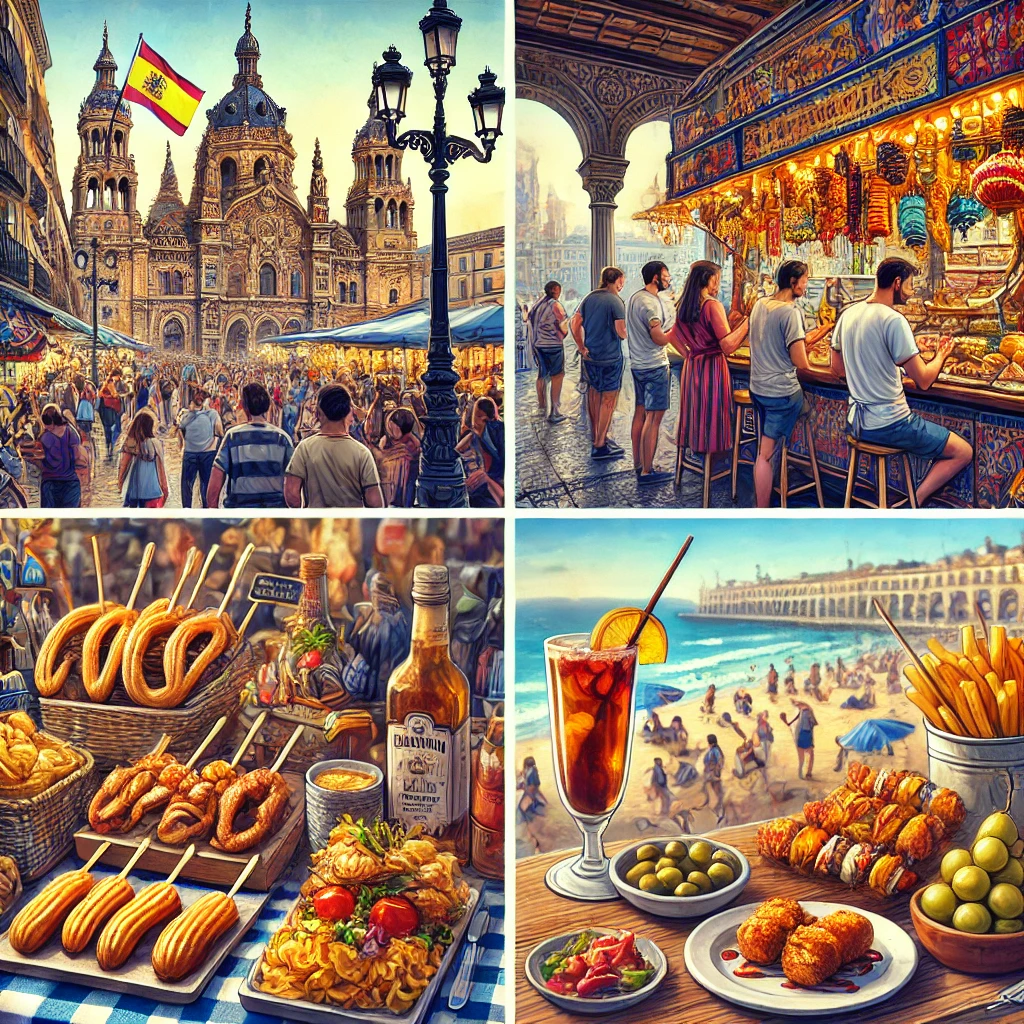
Expanding Your Vocabulary: Drinks and Desserts
No street food experience is complete without pairing your meal with traditional beverages or indulging in a sweet treat. Here’s a vocabulary list to help you enjoy the full spectrum of street food culture.
Drinks
- Agua fresca – Refreshing flavored water, often made with fruits
- Horchata – Sweet rice or nut-based drink, popular in Mexico and Spain
- Té helado – Iced tea
- Refresco – Soft drink
- Chicha – Fermented or non-fermented drink made from corn or fruits
- Café – Coffee
- Chocolate caliente – Hot chocolate
Desserts
- Flan – Creamy caramel custard
- Helado – Ice cream
- Tres leches – Sponge cake soaked in three types of milk
- Turrón – Nougat, often with nuts
- Dulce de leche – Sweet caramel-like spread
Phrases for Ordering Drinks and Desserts
- “¿Tiene algo frío para beber?” – Do you have something cold to drink?
- “¿Qué postres ofrece?” – What desserts do you have?
- “Quiero probar algo típico.” – I want to try something typical.
Key Cultural Phrases for Engaging Vendors
Engaging with street food vendors is a great way to practice Spanish and learn more about the local culture. Use these phrases to connect on a deeper level:
- “¿Cuánto tiempo lleva trabajando aquí?” – How long have you been working here?
- “¿Cuál es su platillo favorito?” – What’s your favorite dish?
- “¿Hay una historia detrás de este plato?” – Is there a story behind this dish?
- “¡Gracias por la recomendación!” – Thank you for the recommendation!
Being polite and showing interest in their craft can make your experience even more memorable.
Regional Snack Vocabulary Cheat Sheet
Here’s a handy cheat sheet of snacks and their meanings in various countries:
Mexico:
- Chapulines – Toasted grasshoppers
- Esquites – Corn kernels mixed with mayo, cheese, and lime
- Gorditas – Thick stuffed tortillas
Argentina:
- Medialunas – Crescent-shaped pastries, similar to croissants
- Facturas – A variety of pastries typically served with coffee
Spain:
- Porras – A thicker version of churros
- Rosquillas – Small, ring-shaped pastries
Peru:
- Picarones – Donuts made with sweet potato and squash
- Turrón de Doña Pepa – A special nougat-like dessert
Colombia:
- Obleas – Thin wafers filled with caramel or fruit spreads
- Pandebono – Cheese bread
Survival Tips for Navigating Street Food in Spanish-Speaking Countries
- Observe Local Customs:
- In some countries, it’s common to share tables or eat standing up. Knowing phrases like “¿Puedo sentarme aquí?” (Can I sit here?) can be helpful.
- Ask About Allergens or Dietary Restrictions:
- “¿Esto contiene gluten?” – Does this contain gluten?
- “Soy alérgico/a a [allergen].” – I’m allergic to [allergen].
- Embrace New Flavors:
- If you’re unsure about an unfamiliar dish, ask: “¿A qué sabe?” – What does it taste like?
- Carry Small Bills or Change:
- Vendors often prefer smaller denominations. Practice saying “¿Tiene cambio para [amount]?” – Do you have change for [amount]?
Fun Activities to Reinforce Your Vocabulary
- Create a Street Food Journal:
Document your street food adventures by noting the names of dishes, their ingredients, and your impressions. - Cook Authentic Recipes at Home:
Try preparing popular street foods like tacos al pastor or empanadas to practice ingredient-related vocabulary. - Host a Language Exchange Dinner:
Invite Spanish-speaking friends to share their favorite street foods while teaching you related terms and phrases. - Play Vocabulary Games:
Use apps or games to match pictures of street food to their Spanish names.
A Glimpse into the Culture of Street Food
Street food isn’t just about the food—it’s about the vibrant culture that surrounds it. Markets and stalls often act as community hubs where people gather to socialize, celebrate, and share traditions.
For example:
- In Mexico, food vendors are known for their friendly banter and ability to whip up custom dishes to suit any palate.
- In Spain, tapas culture encourages sharing, making it a social event as much as a meal.
- In Colombia, vendors take pride in the freshness of their ingredients, often sourced locally.
Exploring these cultural nuances can enrich your appreciation of street food.
Final Thoughts
With the vocabulary and phrases shared here, you’re now equipped to explore the world of street food in Spanish-speaking countries like a pro. Whether you’re savoring crispy empanadas in Argentina, sipping on horchata in Mexico, or indulging in churros con chocolate in Spain, you’ll be able to navigate menus, converse with vendors, and enjoy the experience with confidence.
Remember, learning a language is a journey. Each bite and conversation brings you closer to understanding the rich cultural tapestry behind the food. So, step out of your comfort zone, embrace the flavors, and let the streets guide your culinary adventure.


