

Flamenco is an evocative and passionate art form that has captivated audiences for centuries. Originating from the Andalusian region of Spain, flamenco combines music, dance, and song in a vibrant display of emotion and tradition. As a confluence of various cultural influences, including Gitano (Roma), Moorish, and Jewish elements, flamenco is much more than just a dance; it is a profound cultural expression that has its own language and terminology.
For those who are interested in flamenco or who are learning Spanish, delving into the specialized vocabulary of this art form can be incredibly rewarding. Understanding these terms not only enriches one’s appreciation of flamenco but also provides deeper insights into Spanish culture and linguistic diversity.
In this article, we’ll explore some essential flamenco terms, shedding light on their meanings and origins. Whether you’re a flamenco aficionado, a Spanish learner, or simply curious about this fascinating world, this guide will help you navigate through flamenco’s unique linguistic landscape.
Palo: The Heart of Flamenco
One of the first terms anyone delving into flamenco needs to understand is “palo.” In the flamenco world, a “palo” is a musical form or style, much like a genre in popular music. There are over 50 different palos in flamenco, each with its own distinct rhythm, mood, and structure.
Some of the most well-known palos include “Soleá,” “Bulerías,” “Alegrías,” and “Fandango.” Each palo has specific characteristics and is often associated with certain themes or emotions. For instance, “Soleá” is introspective and solemn, often reflecting themes of sorrow or longing, whereas “Alegrías,” as the name suggests, is joyful and celebratory.
Learning about the different palos is crucial for anyone who wants to understand the intricacies of flamenco. Each palo can be seen as a different facet of the human experience, captured in the language and rhythm of flamenco music.
Compás: The Rhythmic Foundation
Compás refers to the rhythmic cycle of a flamenco palo. It serves as the underlying beat and structure that the music and dance adhere to. Mastery of compás is considered one of the most important aspects of flamenco, as it dictates the timing and flow of the performance.
The complexity of compás varies from one palo to another. Some, like the “Tangos” or “Rumba,” have a straightforward 4/4 beat, making them more accessible to beginners. Others, like the “Soleá” or “Seguiriya,” feature intricate 12-beat cycles that challenge even experienced performers.
Understanding compás is essential for both musicians and dancers. It demands a keen sense of timing and an intuitive feel for the ebb and flow of the music. Practicing compás can significantly enhance one’s overall fluency in flamenco, providing a solid foundation upon which to build more advanced skills.
Duende: The Soul of Flamenco
Duende is perhaps one of the most mystical and elusive concepts in the world of flamenco. The term originally comes from Spanish folklore, referring to a spirit or goblin. In the context of flamenco, however, duende represents a profound, almost transcendental level of emotional expression.
Artists who possess duende are said to have the ability to deeply move their audience, evoking intense emotions and connecting on a spiritual level. Achieving duende is often considered the pinnacle of flamenco artistry, and it is something that cannot be taught or manufactured—it must come from within.
Understanding duende is key to truly appreciating flamenco. It is the soul of the art form, embodying its raw emotional power and depth. While technical proficiency is important, it is duende that elevates a performance to something truly unforgettable.
Jaleo: The Art of Encouragement
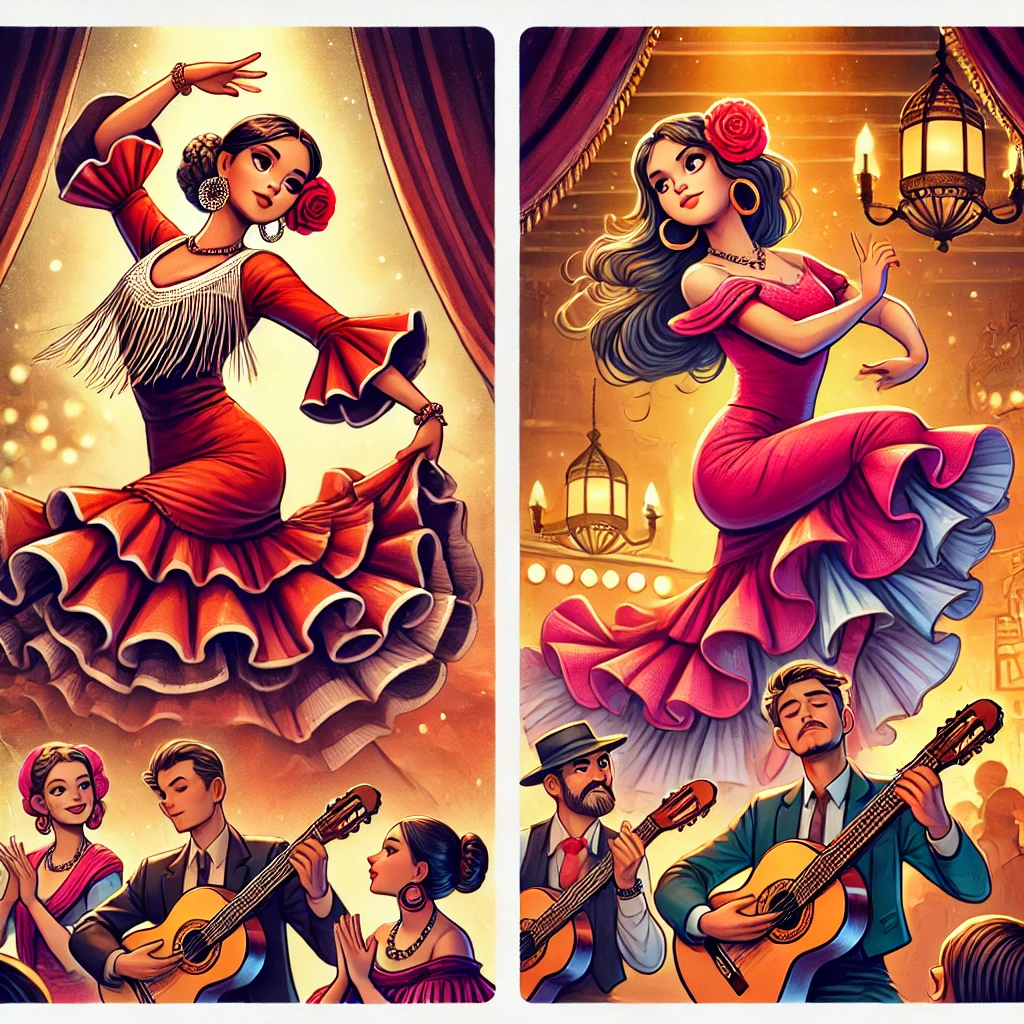
Jaleo is another integral part of the flamenco experience, referring to the spontaneous shouts of encouragement and praise that audience members and performers exchange during a performance. These interjections can range from simple exclamations like “¡Olé!” to more elaborate phrases like “¡Eso es!” (“That’s it!”).
The purpose of jaleo is to create a lively and supportive atmosphere, encouraging the performers and enhancing the communal experience of flamenco. It serves as a form of emotional feedback, letting the artists know when they are particularly in the flow or achieving duende.
Participating in jaleo is a way for the audience to become an active part of the performance. It breaks down the barriers between the stage and the crowd, fostering a sense of unity and shared passion that is at the heart of flamenco.
Zapateado: The Percussive Power of Flamenco Dance
Zapateado refers to the intricate footwork in flamenco dance, characterized by its percussive quality. Dancers use their feet to create complex rhythms, striking the floor with their heels and toes in a coordinated and powerful manner.
Mastering zapateado requires a combination of strength, precision, and musicality. The dancer must be able to synchronize their footwork with the compás, creating a harmonious interplay between the body and the music.
Zapateado is not only a demonstration of technical skill but also an expression of the dancer’s individuality and emotional intensity. It is one of the most visually and sonically striking elements of flamenco, embodying its dynamic energy and passion.
Conclusion
Flamenco is a rich and multifaceted art form, steeped in tradition and brimming with emotion. Understanding its specialized vocabulary is essential for anyone who wishes to delve deeper into its world. From the foundational concept of palo to the elusive and mystical duende, each term offers a window into the soul of flamenco.
The rhythmic intricacies of compás, the communal spirit of jaleo, and the powerful footwork of zapateado all contribute to the unique and captivating nature of flamenco. By familiarizing yourself with these terms, you not only enhance your appreciation of the art form but also gain a deeper understanding of the cultural and linguistic richness of Spain.
Whether you are a performer, a student, or simply an enthusiast, this guide to flamenco vocabulary will provide you with the tools to explore this fascinating world more fully. So next time you listen to a piece of flamenco music or watch a dance performance, you’ll be able to recognize and appreciate the intricate layers of meaning and tradition behind every note and movement.


