

The Spanish language is a rich tapestry woven from various linguistic threads, each adding its unique color and texture. Among these threads, the African influence stands out, not only for its historical significance but also for its profound impact on the vocabulary we use today. From the bustling streets of Madrid to the vibrant towns in Latin America, words of African origin are spoken daily, often without speakers realizing their roots.
Throughout the centuries, the African contribution to Spanish has been shaped by many factors, including colonialism, the transatlantic slave trade, and cultural exchanges. As a result, African languages have left an indelible mark on Spanish, especially in regions where there was significant interaction between African and Spanish-speaking communities.
In this article, we will explore the African influence on Spanish vocabulary, delving into the historical context that facilitated this linguistic exchange and examining specific words and phrases that exemplify this rich heritage. By understanding these influences, we can better appreciate the diversity and complexity of the Spanish language.
Historical Context
To grasp the African influence on Spanish vocabulary, it is essential to understand the historical events that facilitated these linguistic exchanges. The arrival of Moors in the Iberian Peninsula in 711 AD marked the beginning of a significant period of African presence in Spain. During the seven centuries of Moorish rule, there was substantial interaction between the Moors and the local population, leading to the incorporation of many Arabic words into Spanish.
However, the most profound African influence came during the transatlantic slave trade, which began in the 15th century and continued until the 19th century. When European colonial powers, including Spain, transported millions of Africans across the Atlantic, these enslaved individuals brought with them their languages, cultures, and traditions. It was in Latin America, particularly in the Caribbean and coastal regions, that African languages had the most pronounced impact on Spanish vocabulary.
The cultural syncretism resulting from this forced migration produced a unique blend of linguistic elements. African words were assimilated into Spanish, especially in areas where African populations were dense, such as Cuba, Puerto Rico, and the coastal regions of Colombia, Venezuela, and Mexico.
Specific African-Inspired Words
Several Spanish words that we use today have clear African origins. One notable example is “banana,” derived from the Wolof word “banana.” Considering that the plant itself was introduced to Spanish-speaking countries from Africa, this linguistic transfer is hardly surprising.
Another example is the word “guineo,” which also refers to a type of banana. It originates from the term “Guinea,” a region in West Africa. Additionally, words such as “conga” and “marimba,” both of which refer to types of musical instruments, have African roots. These examples reflect the tangible influence of African cultures, especially in music and culinary contexts.
The culinary lexicon also bears African imprints. The term “merengue,” a lively Afro-Caribbean dance, and music style, is rooted in African traditions that gained prominence in the Caribbean.
Regional Variations
While the African influence on Spanish vocabulary is evident across the Spanish-speaking world, its impact varies significantly from region to region. In Spain, Arabic words from Moorish influence are more prominent than words from African languages. Contrastingly, in Latin America, especially in the Caribbean and coastal regions, African influences are more pronounced.
For instance, in Cuba, words of African origin are commonplace, reflecting the island’s history as a major hub in the transatlantic slave trade. Words like “ñame” (yam) and “bembe” (a term for an Afro-Cuban religious gathering or celebration) are still in use today. Similarly, in Puerto Rico, the African influence can be seen in terms like “mofongo” (a traditional dish made from fried plantains).
In coastal regions of Colombia, the African legacy is also crucial in the local dialects. For example, in Palenquero, a Creole language spoken in San Basilio de Palenque, some vocabulary directly stems from African languages, blending seamlessly with Spanish.
Cultural and Social Implications
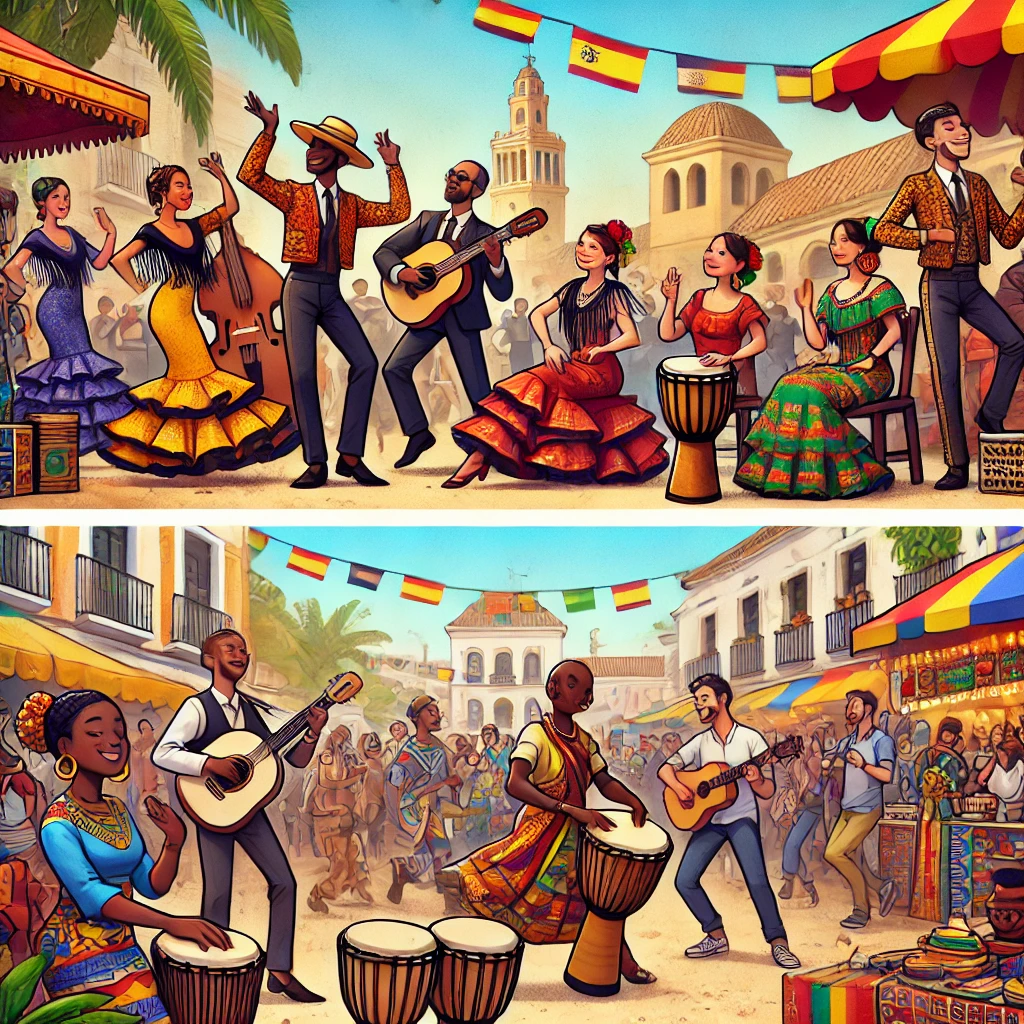
The African influence on Spanish vocabulary extends beyond mere words; it encapsulates a broader cultural and social legacy. In many Spanish-speaking countries, African heritage is celebrated through festivals, music, and dance, all of which have contributed new terms and expressions to the language.
African rhythms and instruments have profoundly shaped Latin American music genres such as salsa, merengue, samba, and reggaeton. Many of the terms associated with these music styles, including dance moves and instrument names, are rooted in African languages.
This blend of cultures has not only enriched the Spanish language but also fostered a sense of unity and shared history among diverse communities. Recognizing and appreciating these contributions helps to combat cultural erasure and promotes a more inclusive understanding of Spanish-speaking identities.
Modern Usage and Adaptations
In contemporary times, the African influence on Spanish continues to evolve. As global migration patterns change and digital media facilitate cultural exchange, new African-derived terms are still being adapted into everyday Spanish language.
Social media, music, and international travel have made it easier for African cultures to influence Spanish-speaking communities. Afrobeat, a genre of music that has roots in African rhythms, has gained popularity worldwide, including in Spanish-speaking countries. Terms associated with this music style, as well as dance moves and fashion, are continuously being adopted into Spanish vocabulary.
Moreover, educational initiatives and cultural programs aimed at recognizing and preserving African heritage are promoting a better understanding of the African roots of many Spanish words. Afro-Latinx communities have been instrumental in advocating for the acknowledgment of these linguistic contributions and ensuring that they remain a vibrant part of the Spanish language.
Conclusion
The Spanish language, as we know it today, is a testament to centuries of cultural exchange and evolution. The African influence on Spanish vocabulary is a significant aspect of this linguistic development, reflecting a rich history of interaction, adaptation, and resilience.
From the introduction of new words through historical events like the transatlantic slave trade to modern cultural exchanges facilitated by globalization, African languages have profoundly shaped and enriched Spanish. Understanding this influence not only broadens our linguistic knowledge but also fosters a deeper appreciation for the diverse cultures and histories that form the backbone of the Spanish-speaking world.
As we continue to explore and celebrate the African contributions to Spanish, it is essential to remember the broader cultural and social contexts in which these linguistic exchanges occurred. By doing so, we can ensure that the legacy of African cultures remains a vibrant and enduring part of the Spanish language, enriching our communication and enhancing our cultural awareness for generations to come.


