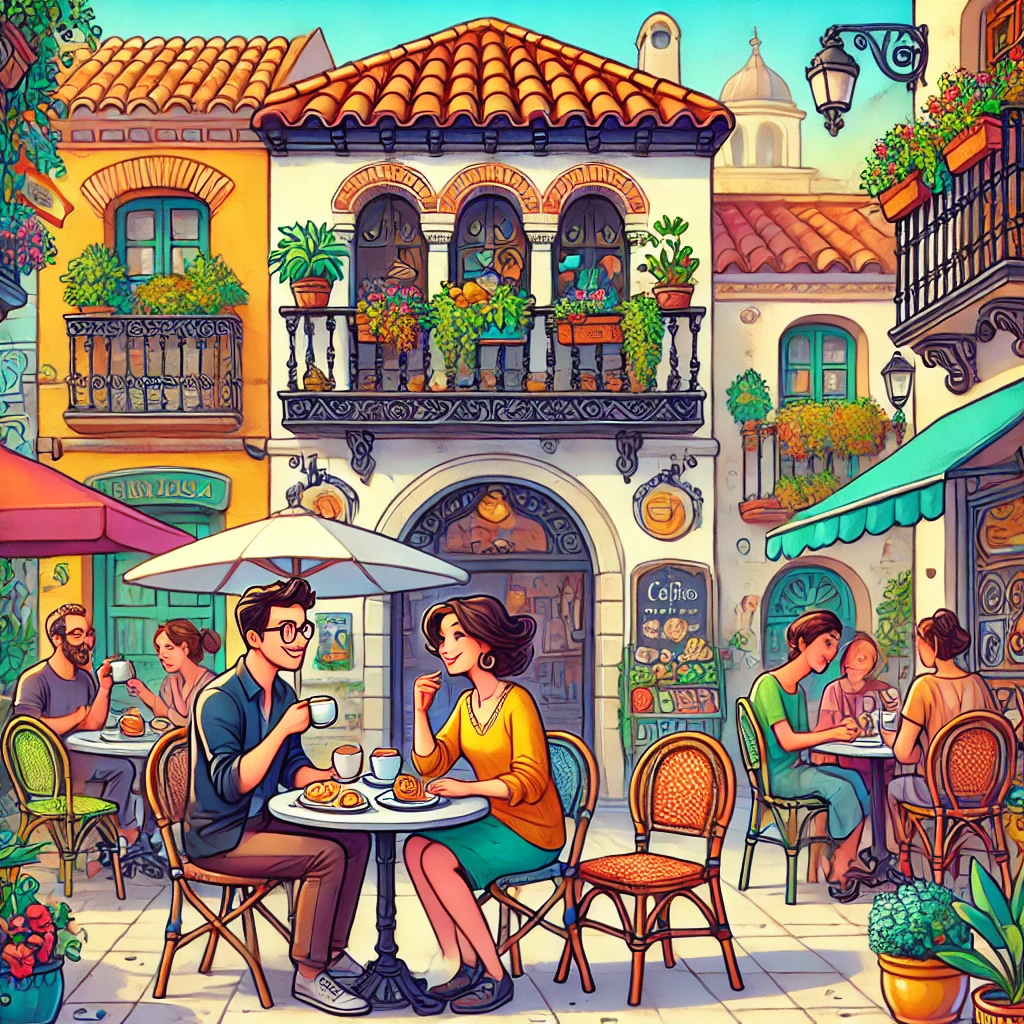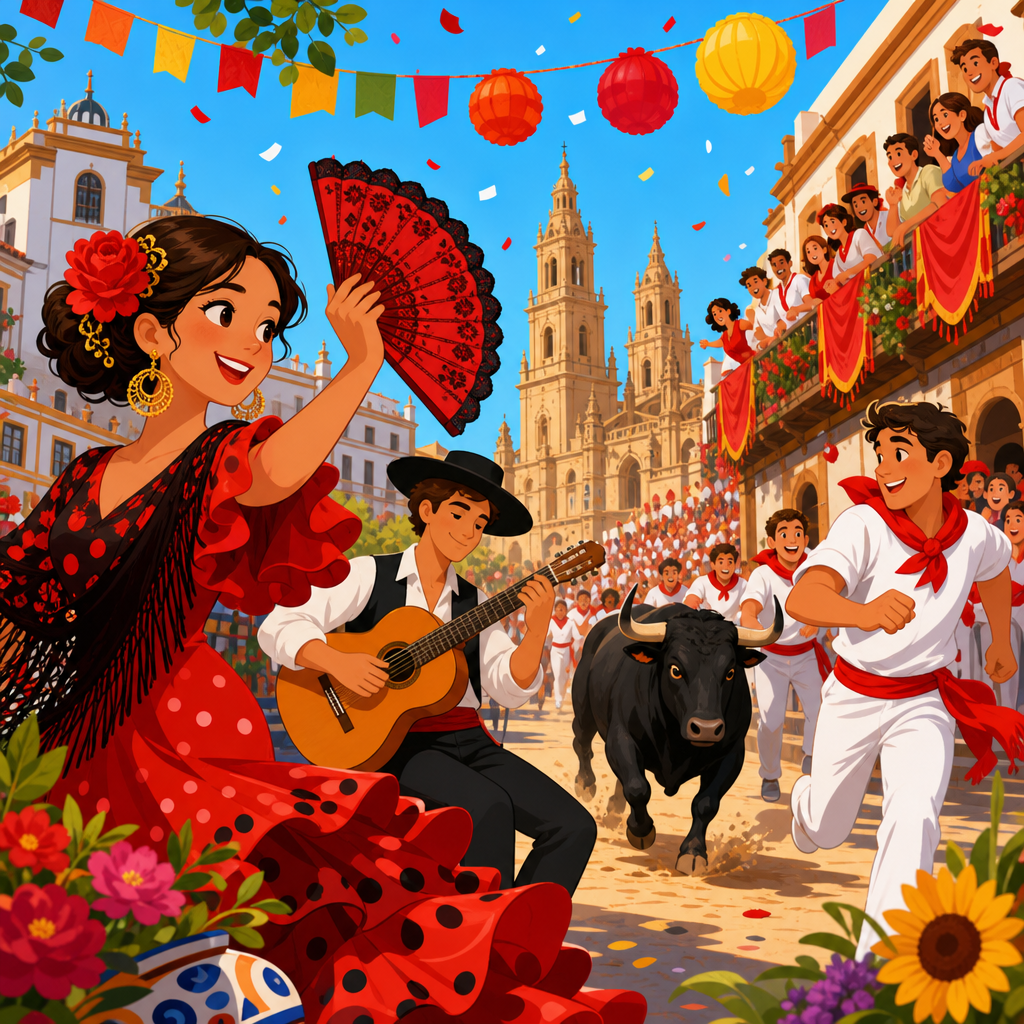
Spanish festivals are among the clearest windows into the country’s identity, because they combine history, religion, food, music, regional pride, and everyday social life in ways travelers can see and residents actively shape. Exploring Spanish festivals means more than listing famous events like La Tomatina or San Fermín. It means understanding how communities mark the calendar, why public space matters, how local customs survive modernization, and what these celebrations reveal about Spain’s many cultures. As a hub within Spanish Community and Interaction, this guide brings together the miscellaneous traditions, seasonal events, and social practices that connect people across villages, cities, and autonomous communities.
In Spain, a festival can be a solemn Holy Week procession, a neighborhood street party, a harvest celebration, a pilgrimage, a fireworks competition, or a major city fair that blends commerce with entertainment. The Spanish terms matter. A fiesta is a celebration, often local and community-centered. A feria usually refers to a larger fair with temporary venues, stalls, rides, performances, and social gatherings. A romería is a pilgrimage, typically to a shrine, mixing devotion with outdoor communal festivity. Carnavales precede Lent and often include costumes, satire, music, and parades. Patron saint festivals honor local religious figures, but even secular attendees participate because these events are also civic rituals.
Why does this matter for anyone studying Spanish community life? Because festivals show how Spaniards interact across generations, classes, and neighborhoods. I have found that no classroom explanation of regional identity matches what becomes obvious during a local fiesta: who organizes the event, who cooks, who marches, who sings, who sponsors, and which symbols the town treats as nonnegotiable. Festivals are also economic engines. Municipal governments, hospitality businesses, artisans, musicians, and transport networks all benefit. At the same time, they raise practical questions about overtourism, safety, noise, sustainability, and cultural preservation.
This article serves as a comprehensive starting point for the miscellaneous side of Spanish festivals: the shared patterns that tie them together, the regional differences that make them distinct, the etiquette visitors should know, and the reasons these celebrations remain central in contemporary Spain. If you want to understand Spanish social interaction in lived, visible form, festivals are one of the best places to start.
How Spanish Festivals Reflect Community and Regional Identity
Spain is not culturally uniform, and festivals make that fact unmistakable. Andalusia expresses identity through ferias, flamenco, horses, religious brotherhoods, and highly visible public sociability. Valencia is known for pyrotechnics and spectacular monument building in Las Fallas. Galicia blends Catholic devotion with Celtic-influenced musical traditions and strong local pilgrimage culture. Catalonia is famous for human towers, giants, fire runs, and highly organized civic associations. The Basque Country highlights gastronomy, local language, and neighborhood-based participation. These are not cosmetic differences. They shape the sound, rhythm, dress, and social meaning of each event.
Many festivals are organized from the ground up by peñas, hermandades, asociaciones vecinales, comparsas, and local committees. These groups do more than plan schedules. They preserve costumes, songs, routes, recipes, and ceremonial roles. In practical terms, that means festivals function as social infrastructure. A child joins a dance group, a family contributes to a brotherhood, a bar sponsors a team, and older residents transmit rules that are rarely written down. This is why even small town celebrations can feel highly structured. What seems spontaneous to an outsider is often the result of months of volunteer coordination.
Regional language also matters. In Catalonia, Castellers festivals involve colles that build human towers according to strict training and safety protocols. In Galicia, a romería may include bagpipes, octopus feasts, and strong parish identity. In Navarre, San Fermín is internationally famous for the running of the bulls, but locals experience it as a much broader civic festival with music, processions, brass bands, traditional dress, and peña culture. Understanding the local frame prevents the common mistake of reducing a festival to its most marketable image.
Spain’s decentralized political structure strengthens this localism. Autonomous communities support culture through grants, tourism campaigns, heritage protections, and education. UNESCO recognition has also elevated several traditions, including the Patum of Berga, the Fallas of Valencia, and human tower culture. Recognition can protect customs, but it can also attract mass tourism. Communities therefore balance visibility with authenticity, trying to welcome outsiders without turning living traditions into staged entertainment.
Major Festival Types and What Makes Each One Distinct
The easiest way to understand Spanish festivals is by type. Religious festivals remain foundational, even in increasingly secular settings. Semana Santa, celebrated across Spain but especially in Seville, Málaga, Valladolid, and Zamora, features processions organized by confraternities carrying pasos, often heavy sculptural floats depicting scenes from the Passion. The atmosphere differs by city. Seville emphasizes emotion, music, and street crowds; Valladolid is known for a more austere, sculptural solemnity. In both cases, the event is not just performance. It is public ritual governed by hierarchy, timing, and long-standing custom.
Carnival festivals, by contrast, emphasize inversion, satire, and costume. Cádiz is especially important because its chirigotas and comparsas use humor, political commentary, and musical competition to critique public life. Santa Cruz de Tenerife hosts one of Europe’s largest carnival celebrations, with parades, queen competitions, and a scale that rivals better-known international events. These festivals offer insight into how Spanish communities use humor and theatricality as social release valves before Lent.
Seasonal and civic festivals often blend religion with agriculture, history, or municipal identity. Las Fallas in Valencia, held in March, combines neighborhood associations, fireworks, satirical monuments, parades, and ritual burning. The ninots and larger fallas figures are visually spectacular, but the deeper structure lies in the casal faller network, where communities organize throughout the year. In June, Alicante’s Hogueras de San Juan similarly uses bonfires, art monuments, and nighttime celebration tied to the summer solstice period. In April or May, Seville’s Feria de Abril transforms a fairground into a temporary social city of casetas, rides, horses, traditional dress, and late-night gatherings.
Then there are high-adrenaline festivals that dominate travel media. San Fermín in Pamplona is the best known, especially the encierro. Yet Spain also has the Tamborrada in San Sebastián, Moros y Cristianos in towns across Valencia and Alicante provinces, and numerous local events involving fireworks, drumming, dance, or mock historical reenactments. Some are open and family-oriented; others require local connections for full participation. The key distinction is whether a festival is designed primarily for community members, for pilgrims, for citywide spectators, or for mixed audiences that now include large tourist flows.
Notable Festivals Across Spain at a Glance
For readers using this page as a hub, the comparison below highlights major examples and the kind of cultural interaction each festival reveals. These are entry points into broader regional traditions rather than an exhaustive list.
| Festival | Location | Typical Time | Main Features | Community Insight |
|---|---|---|---|---|
| Semana Santa | Seville, Málaga, Valladolid, many cities | March or April | Processions, pasos, penitents, sacred music | Shows religious brotherhoods, family continuity, and neighborhood devotion |
| Las Fallas | Valencia | March | Monuments, mascletàs, parades, cremà | Demonstrates year-round neighborhood organization and public art |
| Feria de Abril | Seville | April or May | Casetas, dancing, horses, social visiting | Highlights hospitality, status, and Andalusian social codes |
| San Fermín | Pamplona | July | Encierro, parades, peñas, music | Reveals how global fame can sit inside a deeply local civic festival |
| La Tomatina | Buñol | August | Tomato fight, controlled participation | Shows how a small-town event can become internationally branded |
| Carnival of Cádiz | Cádiz | February | Satirical song groups, costumes, street performances | Centers wit, criticism, and participatory street culture |
| El Rocío | Andalusia | Spring, around Pentecost | Pilgrimage, brotherhoods, wagons, devotion | Combines faith, regional identity, and communal travel |
Food, Music, Dress, and Street Rituals
No serious exploration of Spanish festivals is complete without food and sound. Festival cuisine is practical, local, and social. During ferias and neighborhood fiestas, people share tapas, grilled meats, tortillas, stews, churros, buñuelos, paella, empanadas, or region-specific sweets linked to saints’ days and feast calendars. In Galicia, octopus can anchor a pilgrimage meal. In Valencia, rice dishes carry symbolic local pride. In Andalusia, rebujito appears at fairs, while sherry has ceremonial and social roles in parts of the south. Food is rarely incidental. It structures gathering, extends conversations, and reinforces who belongs to a hosting group.
Music also signals regional culture immediately. Brass bands are essential in many processions and civic celebrations. Saetas in Holy Week create emotionally intense street moments, especially in Andalusia. Gaitas in Galicia, txistus in Basque celebrations, and percussion-heavy drumming in events like the Tamborrada give festivals a local acoustic signature. In Catalonia and Valencia, traditional dances and structured parade music help coordinate public movement. The music is not background entertainment. It marks transitions, announces authority, invites participation, and creates collective memory.
Dress operates in a similar way. Flamenca dresses at Seville’s feria, white-and-red outfits at San Fermín, regional costumes during pilgrimages, and formal attire in religious processions all communicate status, role, and belonging. Visitors often assume dress is decorative, but it usually carries codes. Some casetas are private; some religious events require sober behavior; some local clubs use coordinated outfits to signal membership. Learning these distinctions helps people participate respectfully rather than treating the event as costume theater.
Street rituals tie everything together. Fireworks, flower offerings, giant puppets, dancing in plazas, midnight songs, route-based processions, and ceremonial openings all organize public time. One lesson I have seen repeatedly is that festivals teach people how to share space. Streets stop being only transit corridors and become communal stages governed by unofficial but widely understood rules. You stand back for a float, make room for a band, join an evening paseo, or wait for the right moment to enter a square. That choreography is a form of community interaction in itself.
Practical Etiquette, Tourism Pressures, and the Future of Spanish Festivals
Visitors can enjoy Spanish festivals more fully by understanding basic etiquette. Arrive early for major processions or headline events. Follow local police and municipal instructions, especially around crowd control, fireworks, and animal-related activities. Do not obstruct routes for photos. Dress for the event rather than only for the weather. Learn whether the tone is solemn, celebratory, or mixed. In religious settings, silence and patience matter. In ferias, introductions, invitations, and table manners shape the experience as much as spectacle. A respectful visitor pays attention before participating.
Tourism has expanded opportunities but also created strain. Cities such as Seville, Valencia, and Pamplona must manage waste, security, alcohol abuse, rental pressure, and overcrowding. Smaller towns face a different challenge: how to benefit economically without losing local control. La Tomatina is a useful example. What began as a local tradition became a globally ticketed event with capacity limits, security rules, and brand identity. That structure improves safety, but it also changes who participates and how the town experiences its own celebration. Similar debates surround cruise tourism, influencer behavior, and commercialization of intimate traditions.
Climate and sustainability are now part of festival planning. Heat waves affect parade schedules, crowd safety, and daytime attendance. Cities are rethinking cleaning systems, recycling, water use, generator noise, and transport coordination. Artisans and organizers also face cost pressures for wood, fabric, flowers, insurance, and fuel. Despite that, Spanish festivals remain resilient because they are embedded in community life, not simply staged for visitors. Their future depends on local stewardship, sensible tourism policy, and younger generations seeing them as meaningful rather than obligatory.
Exploring Spanish festivals is ultimately a way to understand how Spain gathers, remembers, celebrates, argues, and renews itself in public. These events reveal regional diversity, social codes, faith traditions, artistic expression, and the everyday mechanics of belonging. If you are building knowledge of Spanish Community and Interaction, use this hub as your starting point, then go deeper into individual festivals, regions, foods, and customs. The more context you bring, the more each procession, fairground, song, or shared meal will make sense.
Frequently Asked Questions
Why are festivals so important to understanding Spanish culture?
Festivals in Spain are important because they bring together many of the forces that shape everyday life: religion, local history, family traditions, regional identity, music, food, and community participation. A festival is not just a performance for visitors. In many towns and cities, it is a living social event that reflects how people relate to their neighbors, their past, and their public spaces. Processions, street gatherings, communal meals, traditional dress, and music all show how culture is practiced rather than simply remembered. This is why festivals offer such a direct view into Spanish identity. They reveal what a community honors, how it celebrates, and how it keeps shared customs alive across generations.
They also highlight the diversity within Spain itself. Festivals in Andalusia can feel very different from those in Catalonia, Galicia, Valencia, or the Basque Country. Even when celebrations share religious roots or seasonal timing, each region expresses them through its own language, symbols, rhythms, and culinary traditions. For travelers, this means festivals are one of the best ways to see Spain beyond stereotypes. For residents, they are a chance to reaffirm belonging and pass on local values. In that sense, Spanish festivals are both cultural memory and present-day social life happening in public, where everyone can witness and contribute to the experience.
Are Spanish festivals mainly religious, or are they more cultural and social today?
Many of Spain’s festivals began with religious foundations, often linked to Catholic feast days, saints, Holy Week observances, harvest cycles, or historic acts of devotion. In towns across the country, calendars were traditionally organized around these sacred dates, and many celebrations still preserve that structure. Processions, church ceremonies, offerings, and acts of collective remembrance remain central in numerous festivals, especially during Semana Santa or local patron saint celebrations. Understanding these origins matters because they explain the symbolism, timing, and emotional depth behind many events that might otherwise seem purely ceremonial or theatrical.
At the same time, Spanish festivals today are also deeply cultural and social. Even when a celebration has religious roots, it often functions as a broad community gathering that includes people with different beliefs and levels of observance. Music concerts, fireworks, dancing, food stalls, neighborhood associations, parades, and street-based activities often stand alongside formal rituals. In modern Spain, festivals frequently serve as occasions for reunion, civic pride, and economic activity, as well as spiritual expression. Rather than choosing between religious and cultural meanings, it is more accurate to say that many Spanish festivals operate on several levels at once. They preserve sacred tradition while also acting as social glue, local showcase, and communal celebration in a contemporary setting.
What do famous festivals like La Tomatina or San Fermín reveal about Spain beyond their tourist appeal?
Well-known festivals such as La Tomatina in Buñol or San Fermín in Pamplona often attract international attention because they are visually dramatic and easy to recognize. However, reducing them to spectacle misses their deeper significance. These events are rooted in local history, civic organization, and strong patterns of community participation. Their survival depends not only on media visibility but on residents, local institutions, safety planning, neighborhood involvement, and a shared belief that the celebration expresses something meaningful about place and identity. What outsiders often see as excitement or chaos is usually supported by a carefully maintained social framework.
These festivals also demonstrate how public space functions in Spain as a stage for collective life. Streets, plazas, balconies, and markets become active settings where tradition is performed and negotiated. People do not simply watch from a distance; they join, organize, prepare, cook, sing, and gather. That level of participation says a great deal about the importance of social interaction in Spanish culture. Famous festivals further show how Spain balances continuity and change. Many celebrations adapt over time in response to tourism, safety concerns, media attention, and local debate, yet communities often work hard to preserve what they see as the event’s authentic core. In that way, these festivals reveal not just entertainment, but the ongoing effort to protect local identity in a modern and highly visible world.
How do Spanish festivals help preserve regional traditions in a modern society?
Spanish festivals are one of the strongest mechanisms for preserving regional traditions because they turn cultural inheritance into shared practice. A custom survives more effectively when people continue to perform it together, and festivals create exactly that opportunity. Traditional music, local dances, dialects or regional languages, artisanal crafts, historic costumes, recipes, and ceremonial roles are all given public relevance during these events. Instead of existing only in museums or archives, these traditions remain active because children see them, families prepare for them, and communities invest time and pride in repeating them year after year. Festivals make heritage visible, social, and emotionally meaningful.
This matters especially in a modern society shaped by urbanization, digital life, and globalization. As lifestyles change, festivals provide continuity with the past while still allowing adaptation. A town may use modern event management, social media promotion, and updated infrastructure, yet continue to honor long-standing rituals or local symbols. In many places, schools, cultural associations, musicians, cooks, and municipal governments all play a role in maintaining festival traditions. That collaboration helps communities protect distinctive identities without freezing them in time. Rather than resisting modernization completely, Spanish festivals often show how tradition can evolve while retaining its local character. They are not relics. They are active cultural systems that help people remember who they are and where they come from.
What should travelers keep in mind if they want to experience Spanish festivals respectfully and meaningfully?
Travelers should approach Spanish festivals with curiosity, patience, and an understanding that these events primarily belong to the communities that host them. The best experience usually comes from learning some background before attending: why the festival is held, whether it has religious significance, which customs are symbolic, and how local people participate. This context changes the experience from passive sightseeing into cultural understanding. It is also wise to remember that some festivals include solemn moments as well as festive ones. During processions or ceremonies, respectful behavior, appropriate clothing, and attentiveness to local norms matter. Photography may be welcome in some settings but intrusive in others, especially during emotionally important rituals.
Practical awareness is equally important. Festivals can be crowded, loud, and highly scheduled, with entire neighborhoods transformed by parades, music, meals, and late-night gatherings. Booking accommodation early, arriving prepared for road closures or transport changes, and following local safety guidance can make a major difference. Just as importantly, travelers should try to engage beyond the headline attraction. Sampling regional food, visiting local markets, speaking with residents when appropriate, and paying attention to the smaller neighborhood traditions often reveal more than the most famous public moment. A respectful visitor recognizes that a festival is not just an event to consume, but a living expression of local life. Approached that way, Spanish festivals become far richer, more memorable, and more culturally revealing.