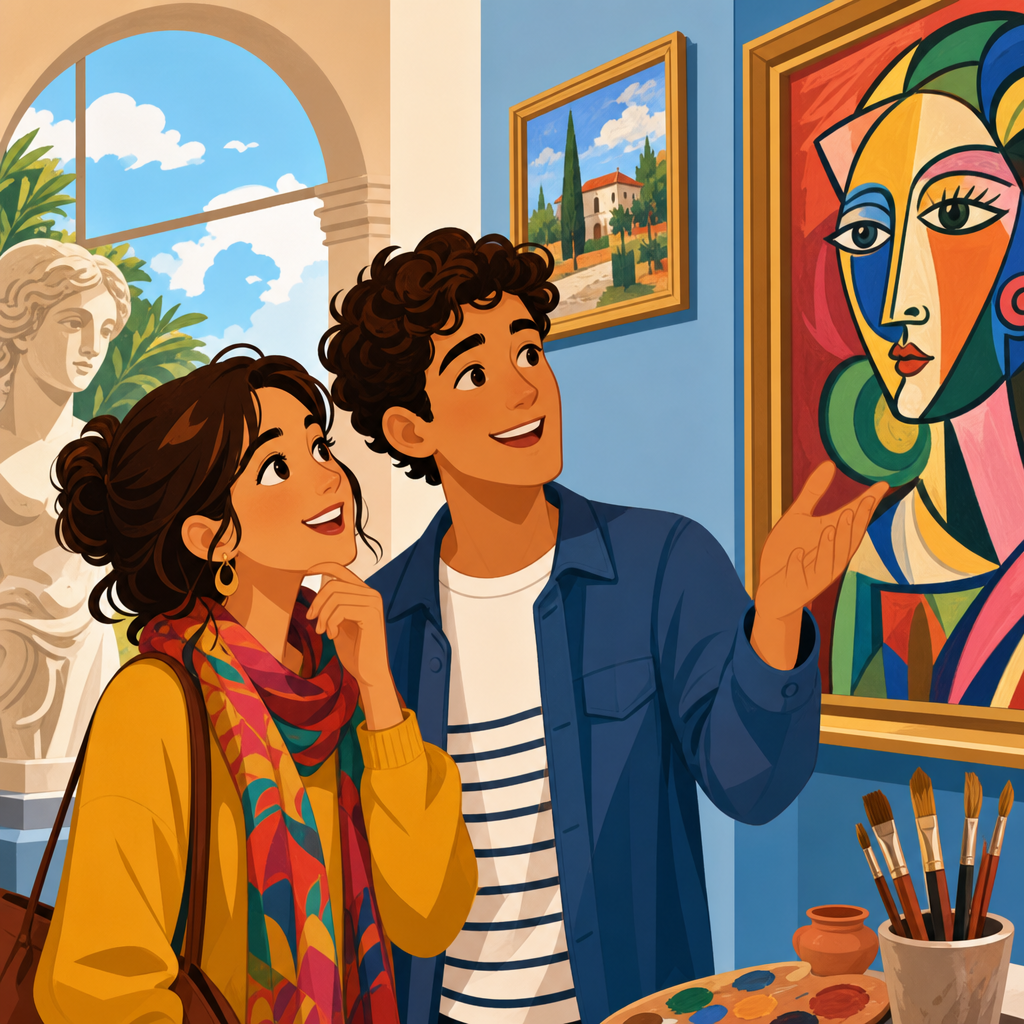
Spanish for art aficionados opens a richer way to talk about beauty, emotion, and creativity, especially when you want to discuss paintings, sculpture, design, photography, architecture, or performance with native speakers. In practical terms, this topic is about learning the Spanish vocabulary, structures, and cultural references that help you describe what makes an artwork striking, subtle, provocative, elegant, or unforgettable. I have used this language in museums, gallery tours, studio visits, and community classes, and the difference is immediate: instead of relying on basic words like bonito, you can express texture, composition, symbolism, technique, and personal interpretation with precision. That matters because art conversations are rarely only about appearance. They also involve historical context, artistic intent, social meaning, and the emotional response a work produces. For learners within Spanish Community and Interaction, this hub is especially useful because art is a natural social subject. It invites opinions, respectful disagreement, storytelling, and cultural exchange. Whether you are visiting the Museo del Prado, discussing muralism in Mexico City, commenting on street art in Bogotá, or sharing handmade ceramics at a neighborhood market, the right Spanish helps you connect more deeply. This guide covers the essential language, from adjectives and verbs to opinion phrases, museum etiquette, and discussion strategies, so you can describe beauty and creativity clearly and confidently.
Core vocabulary for describing beauty, style, and artistic impact
The first step is moving beyond generic praise. In everyday conversation, bonito and hermoso are useful, but art discussion becomes more natural when you vary your language. For visual beauty, common adjectives include bello, precioso, impactante, cautivador, delicado, refinado, armonioso, vibrante, sobrio, audaz, and evocador. Each has a distinct use. A minimalist poster might be sobrio and elegante. A large abstract canvas can feel vibrante and audaz. A Renaissance altarpiece may appear refinado, equilibrado, and luminoso. For negative or mixed reactions, words such as recargado, confuso, frío, monótono, desigual, and provocador are valuable because real discussion is not limited to admiration.
You also need nouns that identify what you are seeing. Key terms include la obra, la pieza, el cuadro, la pintura, el retrato, el paisaje, la naturaleza muerta, la escultura, el mural, el grabado, la instalación, la fotografía, el boceto, la cerámica, el collage, and la exposición. In architecture and design contexts, useful words include la fachada, el espacio, la estructura, la proporción, la simetría, and el detalle. I recommend learning these by category because museum conversations move quickly, and retrieval matters. If you can instantly distinguish between un lienzo, una acuarela, and un fresco, your comments sound much more informed.
To describe artistic effect, learners should master words related to formal analysis. Composition is composición; color palette is paleta de colores; light and shadow are la luz y la sombra; brushstroke is la pincelada; texture is la textura; depth is la profundidad; perspective is la perspectiva; and balance is el equilibrio. These terms are standard in museum education and art criticism. They allow you to say things like: La composición dirige la mirada hacia el centro, or La textura de la pincelada crea movimiento. Those are the kinds of precise observations that make conversations meaningful.
Useful sentence patterns for giving opinions and interpretations
Many learners know vocabulary but struggle to build complete opinions. In art discussion, a few flexible sentence patterns do most of the work. Start with observation: Veo que el artista usa colores apagados; Me llama la atención la simetría; Lo primero que noto es la intensidad de la luz. Then move to interpretation: Esto transmite calma; La obra sugiere una crítica social; Parece representar la memoria o la pérdida. Finally, add evaluation: Me parece una pieza muy lograda; No termina de convencerme; Lo más interesante es el contraste entre tradición y modernidad.
Spanish gives you several ways to soften or strengthen a view. In guided visits, I often use creo que, me da la impresión de que, tengo la sensación de que, and desde mi punto de vista to sound thoughtful rather than absolute. At other times, stronger framing is appropriate: Es evidente que el artista prioriza la forma sobre el detalle; La referencia histórica es clara; El simbolismo central está en el uso del color rojo. This balance matters socially. Art attracts differing interpretations, and Spanish conversation often values both clarity and tact.
Questions are equally important because community interaction is not a monologue. Useful prompts include: ¿Qué te transmite esta obra? ¿Cómo interpretas el uso de la luz? ¿Te parece más clásica o experimental? ¿Crees que el mensaje es político? ¿Qué detalle te llamó más la atención? These questions work in classes, museum visits, book clubs on art history, and casual conversations at openings. They invite response without demanding specialist knowledge.
| Purpose | Spanish phrase | Plain-English use |
|---|---|---|
| Describe first impression | Lo primero que noto es… | Use it to state what stands out immediately. |
| Explain emotional effect | Esta obra me transmite… | Use it to describe mood or feeling. |
| Offer interpretation | Da la impresión de que… | Use it when meaning is suggestive, not certain. |
| Give balanced criticism | Aunque tiene fuerza, me parece… | Use it to mix praise with a reservation. |
| Invite discussion | ¿Cómo lo interpretas tú? | Use it to open the conversation respectfully. |
How to talk about color, composition, technique, and symbolism
If you want to sound fluent in art settings, learn to describe four pillars: color, composition, technique, and symbolism. For color, useful language includes tonos cálidos, tonos fríos, colores saturados, colores apagados, contraste cromático, and gama monocromática. You can say: La paleta de colores cálidos crea cercanía, or El contraste entre azul y naranja genera tensión visual. This kind of phrasing mirrors how curators and educators discuss visual impact.
Composition concerns arrangement. Essential phrases include en primer plano, al fondo, en el centro, a la derecha, a la izquierda, líneas diagonales, punto focal, espacio negativo, and distribución equilibrada. For example: El punto focal está desplazado hacia la izquierda, lo que produce inestabilidad. In photography and design, this terminology is especially useful because people often discuss encuadre, proporción, and ritmo visual. When I help learners prepare for gallery conversations, this is usually the vocabulary that gives them the biggest confidence boost.
Technique describes how the work was made. You might refer to trazo, pincelada suelta, capas de pintura, claroscuro, modelado, talla, relieve, esmalte, and técnica mixta. For contemporary art, installation and digital media vocabulary matters too: montaje, proyección, intervención del espacio, and material reciclado. If you are discussing craftsmanship, say the work is minucioso, pulido, experimental, or artesanal. These are high-value words because they show attention to process rather than surface only.
Symbolism is where conversation often becomes most interesting. You can say: El espejo simboliza la identidad; las flores aluden a lo efímero; el uso del negro sugiere luto o solemnidad. Note the verbs: simbolizar, aludir a, representar, evocar, and remitir a. They help you discuss meaning without sounding simplistic. Not every artwork has a single correct interpretation, but informed language lets you explain why a reading is plausible.
Spanish for museums, galleries, studios, and community events
Art language becomes most valuable when it supports real interaction. In museums, you may need practical expressions such as ¿Hay una visita guiada en español? ¿De qué época es esta obra? ¿Quién es el autor? ¿Forma parte de la colección permanente? and ¿Puedo tomar fotos sin flash? In galleries, the conversation often shifts toward the artist’s career and current exhibition: ¿Es una muestra individual o colectiva? ¿Cuál es el concepto curatorial? ¿Qué materiales utiliza la artista? At studio events or craft fairs, people ask more process-focused questions: ¿Está hecho a mano? ¿Cuánto tiempo lleva esta pieza? ¿Qué técnica usaste?
Regional context matters. In Spain, you may hear comments about la pincelada, el Siglo de Oro, or la influencia de Goya, Velázquez, Picasso, Dalí, and Miró. In Mexico, public discussion often references muralismo, Diego Rivera, José Clemente Orozco, David Alfaro Siqueiros, Frida Kahlo, and artesanía regional. In the Andes, textiles, ceramics, and Indigenous symbolism appear often in cultural spaces. In urban settings across Latin America, street art vocabulary like mural, esténcil, protesta visual, and memoria histórica can be highly relevant. Knowing these references helps you participate with cultural awareness rather than speaking in generic terms.
Etiquette also affects interaction. In guided tours, interrupting less and building on others’ observations is appreciated. Phrases like Estoy de acuerdo, aunque yo añadiría…, No lo había pensado así, and Tiene sentido si consideramos el contexto histórico keep the conversation collaborative. In my experience, these small discourse markers are what turn language knowledge into actual community participation.
Building confidence through practice, comparison, and cultural context
The most effective way to learn Spanish for art aficionados is to practice on real objects, not isolated word lists. Choose one painting, one photograph, one building, and one handmade object. Describe each in three layers: what you see, how it is made, and what it might mean. This method mirrors formal art analysis and produces faster speaking gains than memorizing adjectives alone. If you use a phone recording app, you can track how your descriptions become more precise over time.
Comparison is another powerful technique. Take two portraits and explain differences in luz, expresión, composición, and contexto. Compare a classical sculpture with a contemporary installation. Contrast a handcrafted ceramic bowl with a mass-produced decorative object. Comparison naturally generates useful grammar, including más que, menos que, mientras que, and en cambio. It also prepares you for real conversations, because people rarely discuss a work in total isolation.
Cultural context should always accompany language study. A Mexican retablo, a Spanish baroque painting, a Colombian mural about displacement, and a contemporary Argentine photo series do not invite the same vocabulary or assumptions. Learn the history around the work, including period, movement, medium, and social setting. Museum websites, audio guides, and catalog essays from institutions like the Prado, the Reina Sofía, the Museo Nacional de Antropología, and MALBA are excellent resources because they model accurate terminology in natural Spanish.
This hub also connects to broader Miscellaneous learning goals within Spanish Community and Interaction. Art talk overlaps with giving opinions, expressing emotion, asking follow-up questions, discussing identity, and navigating public cultural spaces. Once you can say why a piece feels inquietante, innovadora, íntima, or profundamente humana, you are not just learning art vocabulary. You are learning how to participate in Spanish-speaking communities with greater sensitivity, curiosity, and confidence.
Spanish for art aficionados is ultimately about seeing more and saying more. Instead of limiting yourself to simple praise, you can describe color, form, technique, symbolism, and emotional effect with clarity. You can ask better questions in museums, contribute more thoughtfully at exhibitions, and connect artistic discussion to culture and history. The practical benefit is social as much as linguistic: art gives people a reason to share memories, values, and interpretations, so stronger vocabulary leads to stronger interaction. Start with a small set of high-frequency terms, practice describing one artwork a day, and reuse flexible opinion phrases until they feel natural. Then expand into regional movements, artist biographies, and medium-specific language. As this Miscellaneous hub under Spanish Community and Interaction shows, art is not a niche topic. It is a gateway to richer conversation in everyday life, travel, study, and community events. Pick one painting, sculpture, or photograph today and describe it in Spanish out loud.
Frequently Asked Questions
1. Why is learning Spanish for discussing art so useful for art lovers and travelers?
Learning Spanish for art appreciation gives you far more than a list of translated words. It allows you to respond to paintings, sculpture, architecture, photography, design, and performance in a way that feels natural, precise, and culturally aware. If you visit museums, galleries, artist studios, historic buildings, or public art exhibitions in Spanish-speaking countries, the ability to describe what you see in Spanish helps you move from simply observing art to actively participating in conversations about it. You can ask thoughtful questions, understand curatorial explanations, follow guided tours more easily, and share your own impressions with native speakers in a way that feels respectful and informed.
It is also useful because art vocabulary in Spanish often carries emotional and aesthetic nuance. Words such as impactante, sutil, provocador, armónico, expresivo, and evocador help you describe not only what a work looks like, but how it feels and what it suggests. That matters when you want to explain why a portrait seems intimate, why a building feels monumental, or why a photograph leaves a haunting impression. In practical settings, this language becomes invaluable during museum visits, gallery tours, art history classes, artist talks, and even casual conversations with locals who are passionate about culture. For art aficionados, Spanish becomes a tool for deeper access, richer interpretation, and more meaningful cultural connection.
2. What Spanish vocabulary should beginners learn first to describe beauty and creativity in art?
Beginners should start with high-frequency adjectives and nouns that can be used across many artistic forms. A strong foundation includes words for general beauty and style, such as bello or hermoso for beautiful, elegante for elegant, llamativo for eye-catching, delicado for delicate, original for original, and creativo for creative. It is also helpful to learn words for emotional and intellectual response, including emocionante for moving or exciting, provocador for provocative, inquietante for unsettling, inspirador for inspiring, and conmovedor for touching. These terms allow you to describe both aesthetic qualities and emotional impact, which is essential in art-related conversation.
You should also build vocabulary tied to visual elements and artistic technique. Useful nouns include la composición, el color, la luz, la sombra, la textura, la forma, la perspectiva, and el detalle. For specific art forms, learn terms like la pintura, la escultura, la fotografía, la arquitectura, el diseño, and la actuación or la performance. A beginner can say things such as La composición es muy equilibrada, Los colores son intensos, or La obra transmite mucha emoción. These simple structures are powerful because they are flexible, correct, and widely understood. Once these basics feel comfortable, you can expand into more subtle language for symbolism, interpretation, and critical analysis.
3. How can I talk about a painting, sculpture, or building in Spanish without sounding too basic?
The key is to move beyond simple labels and begin combining observation, interpretation, and personal response. Instead of saying only Es bonita, you can say La obra me parece muy expresiva por el uso de la luz y el contraste or La escultura tiene una presencia monumental, pero al mismo tiempo transmite fragilidad. This kind of language sounds more natural and sophisticated because it explains why you are reacting in a certain way. In Spanish, art discussions often become more engaging when you mention composition, materials, atmosphere, symbolism, movement, or emotional resonance. Even a few well-chosen phrases can make your comments sound thoughtful rather than generic.
Useful sentence structures include Lo que más me llama la atención es…, Me da la impresión de que…, Transmite una sensación de…, Destaca por…, and El artista logra crear…. These expressions help you organize ideas clearly while sounding more advanced. For example, when discussing a building, you might say La arquitectura destaca por sus líneas limpias y su equilibrio entre tradición y modernidad. For a photograph, you could say La imagen resulta muy evocadora por la manera en que captura la soledad y el silencio. What elevates your Spanish is not using overly complicated words, but connecting visual details to meaning and effect. That is exactly how art lovers speak naturally in real conversations.
4. Are there cultural nuances to keep in mind when discussing art with native Spanish speakers?
Yes, and paying attention to them makes your Spanish sound more authentic and culturally sensitive. In many Spanish-speaking contexts, art is discussed not only in terms of beauty, but also in relation to history, identity, politics, regional tradition, and social meaning. A mural, an architectural style, a religious sculpture, or a contemporary installation may carry references that are obvious to local viewers but less visible to outsiders. That is why it helps to approach conversations with curiosity and humility. Asking questions such as ¿Qué representa esta obra?, ¿Tiene un significado histórico?, or ¿Es típico de esta región? shows that you are interested in context, not just surface appearance.
It is also worth noting that native speakers may use different terms depending on country, setting, or level of formality. In a museum or academic setting, you may hear more specialized language, while in casual conversation people might describe a work as impresionante, muy lograda, profunda, or rara depending on their reaction. When expressing criticism, it is often effective to be nuanced rather than blunt. Instead of saying a piece is bad, you might say No me termina de convencer or Me parece interesante, aunque un poco fría. This style feels more conversational and respectful. Understanding these nuances helps you participate in discussions about art in a way that is not only linguistically accurate, but culturally appropriate and engaging.
5. What is the best way to practice Spanish for museums, galleries, and real art conversations?
The most effective approach is to combine vocabulary study with active, real-world description. Start by choosing artworks you genuinely enjoy and describe them aloud in Spanish. You can use museum websites, exhibition catalogs, artist interviews, architecture photos, and documentary clips as practice material. Try describing what you see, then what you think it means, and finally how it makes you feel. That three-part method builds practical fluency quickly. For example, first identify elements like color, shape, texture, scale, or composition; then interpret themes such as memory, movement, conflict, beauty, or identity; finally explain your personal response using phrases like me conmueve, me intriga, or me resulta fascinante.
It also helps to practice the kinds of interactions you would have in actual cultural spaces. Learn how to ask for clarification during a guided tour, how to comment on a favorite piece, how to compare two artworks, and how to ask about an artist’s technique or influences. Shadowing audio from museum guides or Spanish-language art videos can improve your listening and pronunciation, while keeping a small notebook of art vocabulary reinforces retention. If possible, speak with native speakers in museums, cultural centers, or language exchanges and focus on discussing one piece in depth rather than trying to say everything perfectly. Over time, you will notice that your Spanish becomes more expressive, your observations become sharper, and your enjoyment of art becomes more immersive because you can engage with beauty and creativity on their own linguistic and cultural terms.