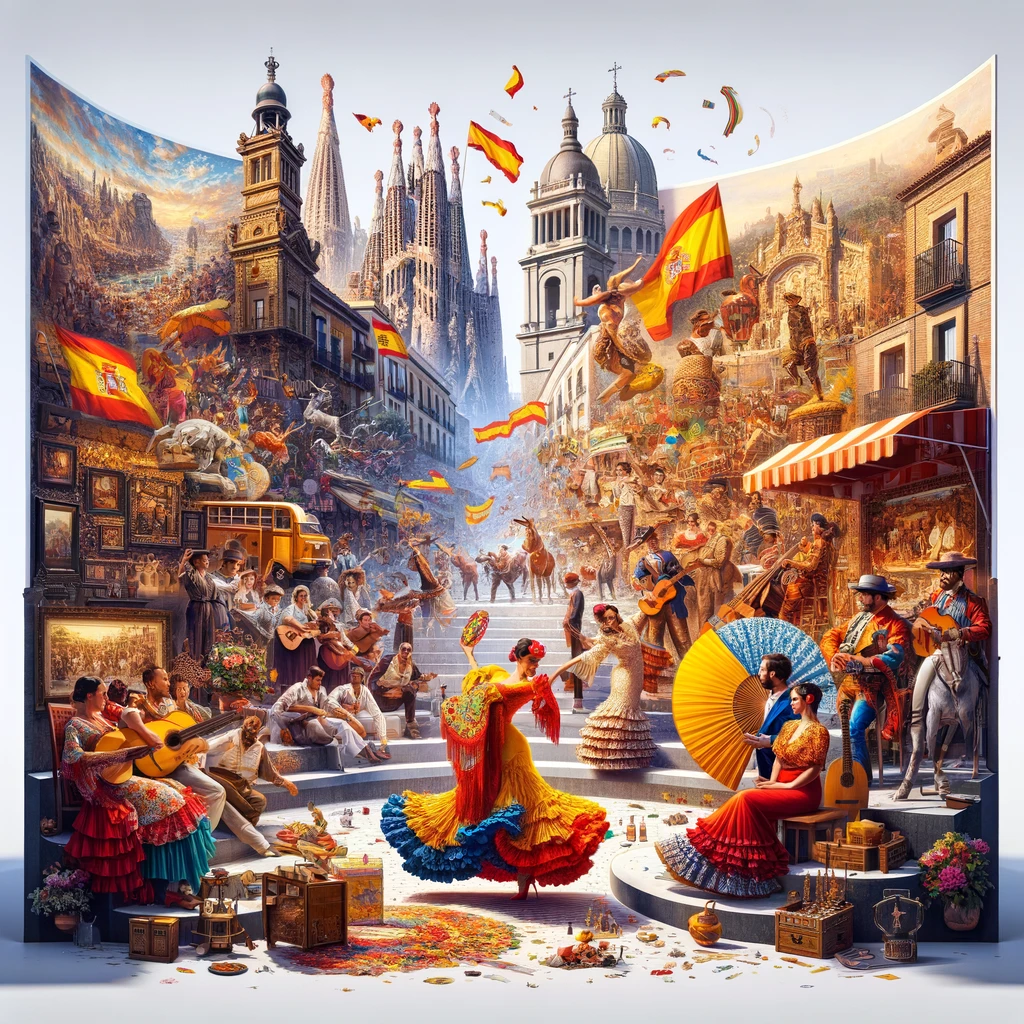
In the tapestry of languages, Spanish stands out for its lyrical beauty, expressive depth, and cultural richness. This article explores the Spanish vocabulary specific to the realms of arts and culture, offering readers a deeper understanding and appreciation of this vibrant linguistic landscape. Whether you’re a language learner, a cultural enthusiast, or an art aficionado, this guide will enhance your lexicon and deepen your connection to the Spanish-speaking world.
The Basics: Common Terms in Arts and Culture
Arte (Art): A broad term encompassing all forms of creative expression.
Cultura (Culture): The social behavior and norms found in human societies.
Música (Music): The art of arranging sounds in time to produce a composition.
Literatura (Literature): Written works, especially those considered of superior or lasting artistic merit.
Pintura (Painting): The practice of applying pigment to a surface to create an image.
Escultura (Sculpture): The art of creating three-dimensional works.
Danza (Dance): The movement of the body in a rhythmic way, usually to music.
Teatro (Theatre): The activity of acting a part in a play, opera, etc.
Cine (Cinema): The art of simulating experiences to communicate ideas, stories, perceptions, feelings, beauty, or atmosphere.
These terms are foundational and often act as gateways to more specialized vocabulary.
Visual Arts: Delving Deeper
In the visual arts, Spanish provides a rich vocabulary that captures the essence of this diverse field.
- Lienzo (Canvas): The surface an artist paints on.
- Pincel (Brush): A tool used for applying paint.
- Acuarela (Watercolor): A painting method using pigments dissolved in water.
- Óleo (Oil painting): A process using oil-based pigments.
- Grabado (Engraving): Art made by engraving or etching a design on a hard surface.
Understanding these terms allows for a more nuanced conversation about art techniques and mediums.
Literary Terms: A World of Words
The realm of literature in Spanish is as rich and diverse as its numerous authors and styles.
- Novela (Novel): A long, fictional narrative.
- Poesía (Poetry): Literary work in which the expression of feelings and ideas is given intensity by the use of distinctive style and rhythm.
- Cuento (Short story): A brief fictional prose narrative.
- Ensayo (Essay): A short piece of writing on a particular subject.
- Crónica (Chronicle): A factual written account of historical events.
These terms form the backbone of discussions about Spanish literature.
Music: A Universal Language
Spanish music vocabulary is extensive, reflecting the diversity of its music.
- Melodía (Melody): A sequence of notes that is musically satisfying.
- Armonía (Harmony): The combination of simultaneously sounded musical notes to produce chords.
- Ritmo (Rhythm): A strong, regular, repeated pattern of movement or sound.
- Letra (Lyrics): The words of a song.
- Compás (Beat): A main accent or rhythmic unit in music or poetry.
These terms are essential for anyone wishing to discuss music in a Spanish context.
Dance: Expressing through Movement
Spanish dance terminology is as expressive as the dance forms it describes.
- Bailarín/Bailarina (Dancer): A person who dances.
- Coreografía (Choreography): The sequence of steps and movements in dance.
- Zapateado (Footwork): A style of dance characterized by rhythmic tapping of the toes and heels.
- **Flamenco: ** A highly-expressive, Spanish dance form.
- **Tango: ** A sensual ballroom dance originating from Argentina and Uruguay.
These terms help in understanding the complexity and beauty of dance forms.
Theater: A Stage of Expressions
In theater, Spanish provides terms that are crucial for understanding this form of art.
- Actuación (Acting): The art or occupation of performing in plays, movies, or television productions.
- Guión (Script): The written text of a play or movie.
- Escenografía (Scenography): The design and decoration of a stage setting.
- Director/Directora (Director): The person who oversees the artistic aspects of a play, film, etc.
- Dramaturgia (Playwriting): The art of writing plays.
Theater vocabulary in Spanish encapsulates the entire process of theatrical production.
Cinema: A Visual Storytelling
Spanish vocabulary in cinema is rich and varied, reflecting the art’s complexity.
- Película (Film/Movie): A story or event recorded by a camera as a set of moving images.
- Director/Directora (Director): The person responsible for the overall artistic direction of a film.
- Guión Cinematográfico (Screenplay): The script of a movie, including acting instructions and scene directions.
- Cinematografía (Cinematography): The art of making motion pictures.
- Edición (Editing): The process of selecting and preparing written, visual, audible, and film media used to convey information.
These terms are fundamental to discussing cinema in the Spanish language.

Cinema: The Art of Visual Storytelling
Cinema in the Spanish-speaking world has its unique flavor, and understanding its terminology can enrich the viewing experience.
- Película (Film/Movie): A story or event recorded by a camera as a set of moving images.
- Director de cine (Film director): A person who directs the making of a film.
- Guión cinematográfico (Screenplay): The script of a film, including acting instructions and scene directions.
- Cinematografía (Cinematography): The art of making motion pictures.
- Efectos especiales (Special effects): Techniques used in the film and video industry to create illusions.
Knowing these terms is key for anyone interested in the rich world of Spanish cinema.
Photography: Capturing Moments
Photography, an important part of visual arts, has its specific vocabulary in Spanish.
- Fotografía (Photography): The art or practice of taking and processing photographs.
- Cámara (Camera): A device for recording visual images in the form of photographs.
- Objetivo (Lens): The part of a camera through which light travels before hitting the film or sensor.
- Exposición (Exposure): The amount of light allowed to fall on each area of a photograph.
- Encuadre (Framing): The presentation of visual elements in an image.
These terms are crucial for anyone delving into the art of photography.
Museums and Galleries: Preserving Art
The world of museums and art galleries is an essential aspect of arts and culture.
- Museo (Museum): A building in which objects of historical, scientific, artistic, or cultural interest are stored and exhibited.
- Galería (Gallery): A room or building for the display or sale of works of art.
- Exposición (Exhibition): A public display of works of art or items of interest.
- Curador/Curadora (Curator): A keeper or custodian of a museum or other collection.
- Obra maestra (Masterpiece): A work of outstanding artistry, skill, or workmanship.
Understanding these terms helps in appreciating the role of institutions in arts and culture.
Festivals and Cultural Events
Festivals and cultural events are a vibrant part of Spanish-speaking societies.
- Festival (Festival): A series of performances in music, drama, etc., typically held annually.
- Feria (Fair): A gathering of stalls and amusements for public entertainment.
- Carnaval (Carnival): A period of public revelry involving processions, music, dancing, and the use of masquerade.
- Concierto (Concert): A musical performance given in public.
- Ceremonia (Ceremony): A formal occasion, typically one celebrating a particular event or anniversary.
Participating in these events offers a firsthand experience of Spanish culture.
Conclusion
The world of arts and culture in the Spanish language is as diverse and rich as the countries where it is spoken. From painting to cinema, dance to literature, each form of art has its unique vocabulary that not only defines it but also reflects the culture it comes from. By familiarizing yourself with this advanced vocabulary, you deepen your understanding and appreciation of the Spanish language and the myriad cultures it represents. Whether you’re a student, a professional, or simply a lover of arts and culture, this comprehensive guide provides the linguistic tools to explore and discuss the vibrant world of Spanish arts and culture with confidence and insight.