
Traveling sustainably and with an eco-friendly mindset isn’t just a trend; it’s a necessity for the planet. Whether you’re a Spanish learner planning an adventure in Spain or Latin America, or you’re simply looking to align your travel habits with your environmental values, this guide will help you. Here, we’ve compiled essential Spanish vocabulary specifically for sustainable and eco-friendly travel. Think of it as your green glossary for making eco-conscious choices during your journeys.
Understanding specific vocabulary can greatly enhance your travel experience, making it easier to communicate your sustainable choices and understand local efforts toward environmental stewardship. With these words and phrases, you’ll be able to support eco-friendly businesses, partake in activities that respect local ecosystems, and minimize your ecological footprint. So, pack your bags (preferably reusable ones) and let’s dive into Spanish vocabulary for sustainable and eco-friendly travel!
Transportation
Sustainable transportation options are key to minimizing your carbon footprint while exploring new destinations. Understanding terms related to public transportation, biking, and even walking can help you navigate more responsibly.
- Transporte público (Public Transportation) – Utilize buses, trams, and trains to reduce emissions.
- Bicicleta (Bicycle) – Consider renting a bike for a zero-emission option.
- Caminata (Walk) – Explore the city on foot; it’s healthy and eco-friendly.
- Carpooling (Viajar compartiendo coche) – Share rides to reduce individual carbon footprints.
- Coche eléctrico (Electric Car) – Opt for electric vehicles if renting a car.
These terms will help you make informed choices about your travel methods. Knowing how to ask for and understand these transportation options in Spanish can make your journey smoother and more environmentally responsible.
Accommodation
Choosing sustainable accommodation can significantly reduce your impact on the environment. Look for places that prioritize renewable energy, waste reduction, and local sourcing.
- Hotel ecológico (Eco Hotel) – An eco-friendly hotel with sustainable practices.
- Casa rural (Rural House) – Staying in countryside accommodations can support local communities.
- Albergue (Hostel) – Budget-friendly and often focused on sustainability.
- Certificación ecológica (Eco Certification) – Look for accommodations with eco-certifications like “Certificación ecológica.”
- Energía renovable (Renewable Energy) – Opt for places that use solar or wind power.
By selecting accommodations with these characteristics, you support businesses that are committed to reducing their ecological impact. Additionally, you contribute to the sustainability efforts of local communities and regions.
Dining and Food Choices
Food is a major aspect of both culture and sustainability. Choosing locally sourced, organic, and plant-based options can significantly reduce your environmental impact.
- Comida local (Local Food) – Supports local farmers and reduces transportation emissions.
- Comida orgánica (Organic Food) – Free from pesticides and better for the environment.
- Opciones vegetarianas/veganas (Vegetarian/Vegan Options) – Reduces the carbon footprint compared to meat-based meals.
- Mercado de agricultores (Farmers’ Market) – A great place to find fresh, local produce.
- Reducir desperdicios (Reduce Waste) – Be mindful of food waste by ordering appropriate portions.
Paying attention to your food choices while traveling helps protect the environment and supports sustainable practices. In regions rich with agricultural diversity, this can also be a delightful way to experience local flavors and traditions.
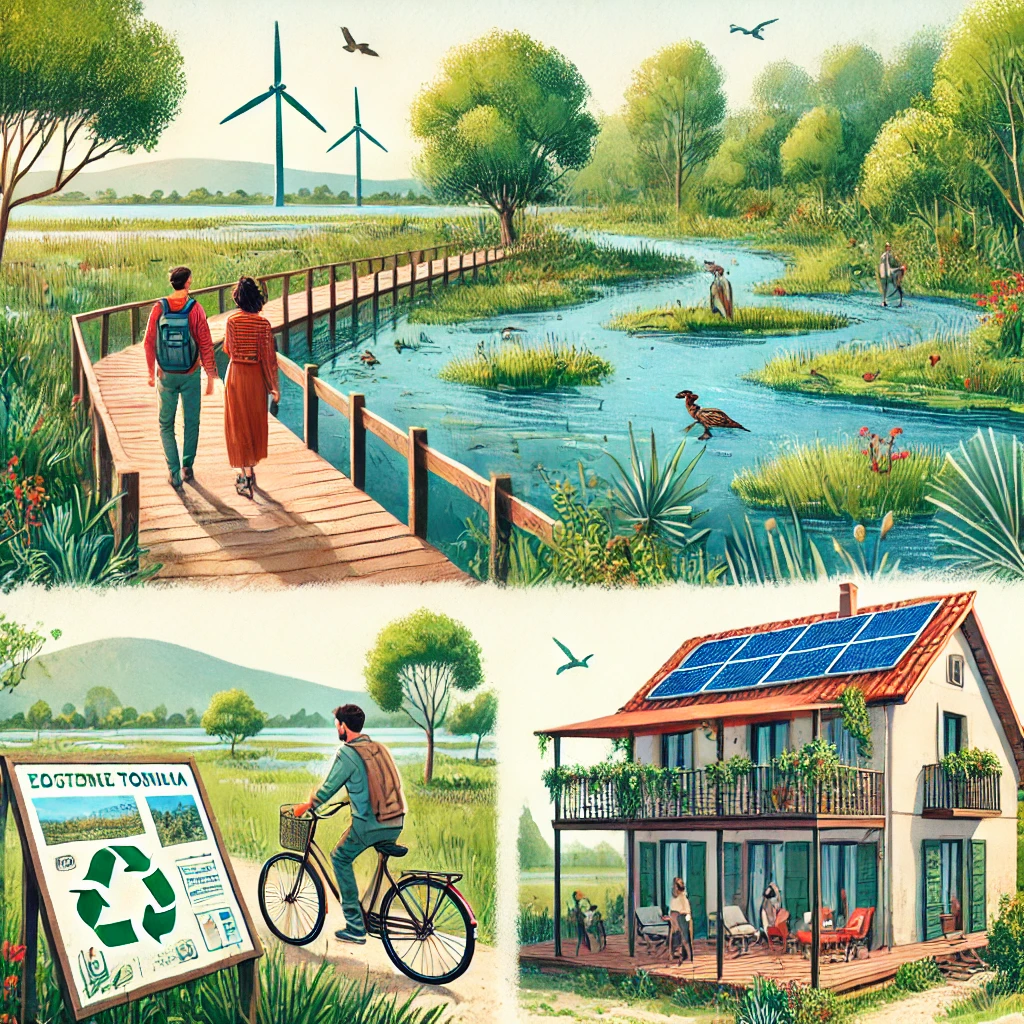
Activities
Sustainable activities can enrich your travel experiences while ensuring that natural and cultural resources are preserved for future generations.
- Senderismo (Hiking) – Explore nature responsibly and with minimal impact.
- Voluntariado (Volunteering) – Contribute to conservation and community projects.
- Eco-turismo (Eco-tourism) – Participate in tourism that supports environmental preservation.
- Avistamiento de aves (Bird Watching) – Enjoy wildlife without disturbing habitats.
- Cursos de cocina local (Local Cooking Classes) – Learn about and support traditional, sustainable food practices.
Engaging in these sustainable activities allows you to connect with nature and local communities in a meaningful way. It ensures that your travels leave a positive impact on the places you visit.
Shopping
Being a responsible consumer is vital when traveling. Opt for souvenirs and goods that are environmentally friendly and ethically produced.
- Artesanía local (Local Craft) – Supports local artisans and reduces mass-produced waste.
- Reciclable (Recyclable) – Choose items made from recyclable materials.
- Productos biodegradables (Biodegradable Products) – Reduce long-term waste with biodegradable items.
- Justo (Fair Trade) – Support products that ensure fair wages and ethical production practices.
- Bolsa reutilizable (Reusable Bag) – Reduce plastic use by carrying a reusable shopping bag.
Making conscious choices about what you buy can help minimize waste and support sustainable businesses. Your purchases can also promote cultural preservation and economic stability in local communities.
Energy and Waste Management
Managing energy use and waste efficiently is crucial for sustainable travel. Small steps in your daily habits can lead to significant environmental benefits.
- Apagar las luces (Turn Off Lights) – Save electricity by turning off lights when not in use.
- Reciclar (Recycle) – Separate your waste for recycling wherever possible.
- Botellas reutilizables (Reusable Bottles) – Reduce plastic waste by using reusable water bottles.
- Duchas cortas (Short Showers) – Conserve water by limiting shower time.
- Evitar plásticos (Avoid Plastics) – Use alternatives to single-use plastics.
Practicing these habits helps ensure that your travel leaves a lighter footprint on the planet. Simple actions like conserving water and energy, and properly managing waste can make a big difference.
Conclusion
Sustainable and eco-friendly travel is not just about making responsible choices; it’s about fostering a deeper connection with the places you visit. By incorporating these Spanish vocabulary terms into your travels, you’ll be better equipped to make environmentally and culturally conscious decisions. Each word and phrase serves as a building block towards more meaningful and respectful interactions with the environment and local communities.
Whether it’s choosing a mode of transportation that reduces your carbon footprint, staying in accommodations that prioritize sustainability, eating food that supports local and organic farming practices, engaging in eco-friendly activities, or shopping with an ethical mindset, every choice counts. Your travel experiences can be more enriching and impactful when they are aligned with sustainable principles.
The journey to sustainable travel is a continuous learning process. As you become more familiar with these concepts and practices, not only will your Spanish language skills improve, but your ability to travel responsibly will be enhanced. So, embark on your next adventure with these words in your toolkit, and celebrate the beauty of travel that honors and protects our planet.