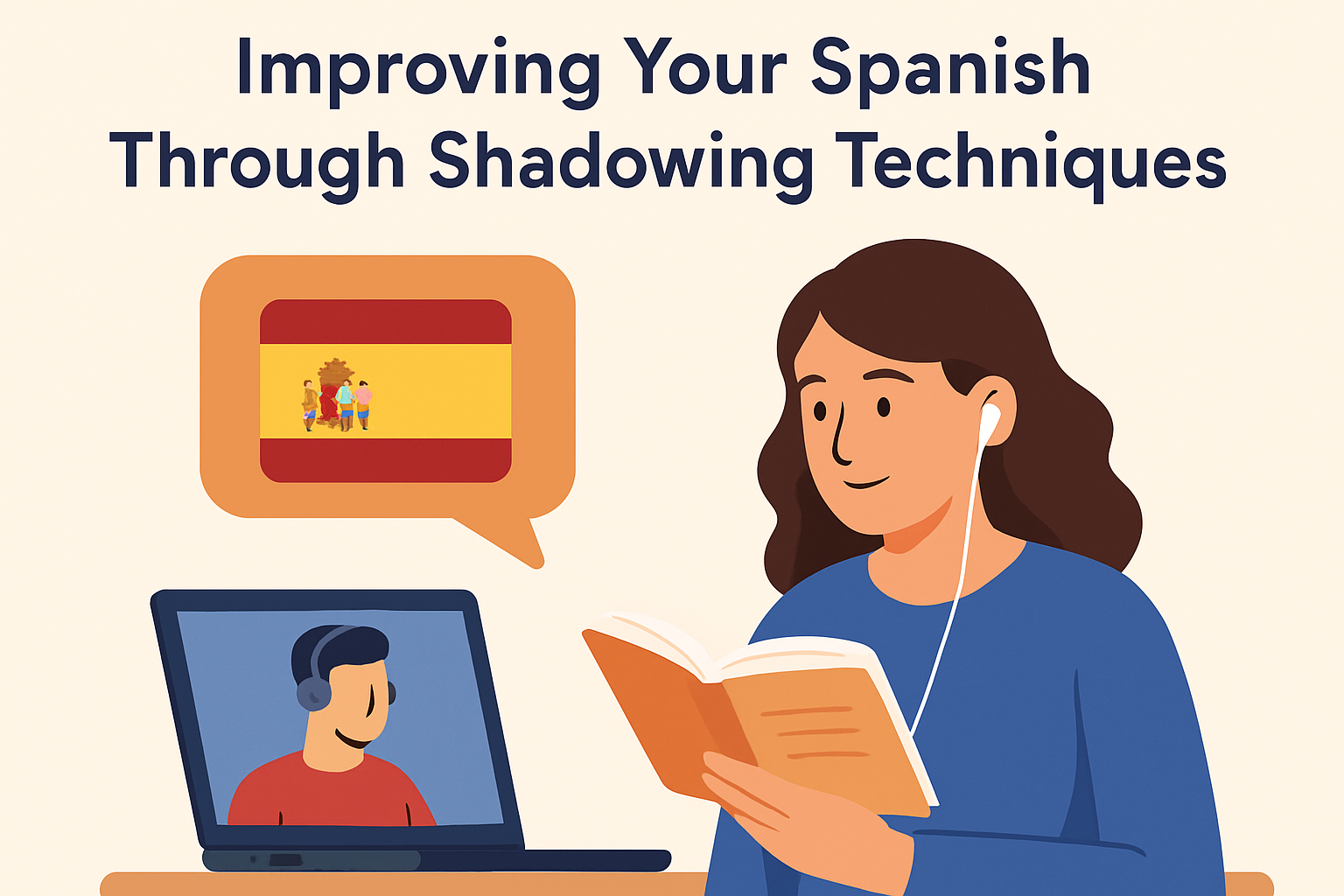
Language learning has become a vital skill in today’s cross-cultural world, where communication bridges gaps and fosters connections. Mastering a second language not only enriches personal growth but also enhances professional opportunities and broader social interactions. One effective yet often underestimated method to improve your Spanish language skills is through shadowing techniques. Shadowing is an approach that involves listening to spoken language and simultaneously repeating what is heard, akin to a shadow following its subject. This technique helps with pronunciation, rhythm, and confidence in verbal communication.
Understanding the concept of shadowing is essential for maximizing its potential as a language learning tool. By engaging with native speech patterns in real-time, learners can better assimilate accurate pronunciations and intonations, distinguishing it from passive listening, which often does not demand active verbal participation. Shadowing is particularly impactful for auditory learners, as it focuses on hearing and reproducing sounds. The significance of shadowing extends beyond mere repetition—it serves as a bridge to fluency, helping learners internalize the language’s natural flow.
The implications of mastering Spanish through shadowing are profound. It prepares individuals to interact more authentically and effectively with native speakers, fostering deeper cultural appreciation and understanding. Shadowing transcends traditional study methods by integrating practical application with academic knowledge, making it a dynamic component of language acquisition strategies. As we delve into various facets of shadowing techniques, we will uncover their real-world applications, benefits, and how you can incorporate them into your language-learning routine for maximum efficiency.
The Basics of Shadowing Techniques in Language Learning
Shadowing involves the active repetition of spoken language, either alongside or shortly after hearing it. For Spanish learners, this method can significantly enhance pronunciation accuracy and verbal elocution skills. This auditory-focused strategy is grounded in mimicking native speakers, allowing learners to grasp language nuances that are often missed in silent reading or passive listening.
An example of shadowing’s efficacy can be observed in language immersion programs in Spain, where students walk the streets and shadow local conversations or audio tours. By immersing themselves in the linguistic environment, they accelerate their proficiency and comfort with the language. Unlike traditional learning methods that focus heavily on vocabulary memorization, shadowing requires active brain engagement, as learners must process what they hear and reproduce it instinctively. This dynamic interaction with the Spanish language ultimately leads to better retention and understanding.
Incorporating Shadowing into Daily Spanish Practice
Integrating shadowing into your daily practice doesn’t require major overhauls to your existing schedule, making it an attractive option for busy learners. One practical approach is to use audio resources, such as Spanish podcasts or audiobooks, during routine activities like commuting or exercising. By attentively repeating phrases during these times, learners can transform ordinary tasks into valuable learning opportunities.
A practical example of daily shadowing incorporates Spanish radio. Suppose you’re preparing dinner and you listen to a Spanish radio station. By repeating dialogues or news snippets aloud, you not only practice pronunciation but also become accustomed to the speed and rhythm of native speech. Furthermore, setting aside specific times for focused shadowing practice can greatly benefit structured learners. For example, dedicating ten minutes each morning to shadow a Spanish TED talk or language learning app ensures consistent practice and gradual improvement.
Enhancing Listening Skills Through Visual Cues
Visual aids complement the auditory aspect of shadowing. By incorporating written transcripts of Spanish dialogue while engaging in shadowing, learners can correlate sounds with written words, reinforcing vocabulary and comprehension. Having the script on hand provides clarity and prevents misunderstandings, especially for new learners who might struggle with rapid speech.

Let’s consider language exchange meetups with Spanish speakers as a real-world application. Here, learners can shadow conversations while watching the participants’ body language and facial expressions. Such non-verbal cues offer context and aid in understanding the emotional undertones of spoken language, which purely auditory methods might overlook. By engaging in shadowing with complementary visual aids, learners develop a more holistic understanding of Spanish communication.
Utilizing Technology to Enhance Shadowing
In today’s digital age, technology plays a pivotal role in enhancing the shadowing experience. Language learning apps and platforms have evolved to incorporate shadowing functionalities, offering learners accessible and interactive avenues to practice. For instance, apps like Duolingo and Rosetta Stone now feature shadowing components where learners can record and playback their attempts alongside native pronunciations.
These technological tools often provide immediate feedback on pronunciation, helping learners adjust their speech patterns in real-time. Consider a case where a learner uses a mobile app to shadow a Spanish conversation. Aided by voice recognition technology, the app evaluates the pronunciation accuracy, highlighting areas for improvement. This method is particularly effective for solo learners who might not have easy access to native speakers for immediate feedback.
Real-World Benefits of Shadowing in Language Mastery
The practical benefits of shadowing extend well beyond language acquisition into real-world conversational fluency. By consistently modeling native speech, learners can speak Spanish with authentic accents and intonations, making them more intelligible and relatable to native speakers. This capability is invaluable in professional settings where clear communication can enhance rapport and collaboration.
| Aspect | Benefit of Shadowing |
|---|---|
| Pronunciation | Achieve near-native accent and intonation |
| Listening Comprehension | Understand spoken Spanish at natural speeds |
| Speaking Confidence | Gain fluency and spontaneity in conversations |
| Cultural Understanding | Appreciate and engage with cultural nuances |
Consider multinational corporations that require employees to engage in Spanish-speaking environments. Employees who have practiced shadowing are likely to outperform their peers in terms of communication because they exhibit more refined language skills. Similarly, travelers immersed in Spanish-speaking countries benefit immensely from shadowing, as it equips them with the linguistic agility needed for daily interactions.
Overcoming Challenges in Shadowing
Despite its advantages, shadowing presents challenges, especially for beginners who may feel overwhelmed by the pace of native speech. Initial difficulties are normal and can be mitigated by starting with slower and clearly articulated audio materials. Resources designed for learners, such as language learning podcasts or educational YouTube channels, often provide around-the-speed and enunciated Spanish content suitable for shadowing.
For learners struggling with self-confidence, engaging in group shadowing activities can offer motivation and support. Joining language learning clubs or online communities allows learners to collaboratively practice shadowing, share experiences, and encourage one another. Such peer interactions offer a balanced approach to shadowing, where learners can exchange tips and reinforce their skills collaboratively, creating a conducive environment for overcoming initial difficulties.
Summary and Action Steps: Unlocking Your Spanish Potential
Shadowing techniques represent a potent tool in the arsenal of Spanish language acquisition methodologies. By focusing on active listening and speaking, shadowing bridges the gap between theoretical knowledge and practical application, fostering authentic communicative proficiency. Through this method, learners gain a deeper understanding and appreciation of the Spanish language, equipped with improved pronunciation, increased confidence, and enhanced listening skills.
The journey to fluency is a cumulative process, and shadowing enriches this journey by offering a dynamic approach to language practice. To harness the full potential of shadowing, commit to integrating it into your daily routine. Start by setting aside dedicated time for structured shadowing sessions, and gradually incorporate more challenging materials as your proficiency grows. Embrace technology and community resources to enhance your practice, leveraging them to tackle challenges and elevate your skills.
As you improve, opportunities for authentic Spanish-language interaction will multiply, whether in professional spheres, travel, or cultural exchanges. Embrace shadowing as an integral part of your language learning strategy, and take the first step towards mastering Spanish with this immersive, effective technique. The next step in your linguistic journey awaits—start shadowing today, and watch as your Spanish flourishes to new heights.
Frequently Asked Questions
1. What is shadowing and how can it improve my Spanish language skills?
Shadowing is a dynamic and engaging language learning technique where you listen to a target language, such as Spanish, and simultaneously repeat what you hear as closely as possible. The primary goal is to mimic the rhythm, intonation, and pronunciation of the speaker to enhance your spoken proficiency. This method helps in developing better listening skills, as you often have to focus intensely on the sounds and structures of the conversation. By practicing shadowing consistently, you not only improve your speaking abilities but also reinforce grammatical structures and vocabulary. This immersive approach accelerates language acquisition by bridging the gap between passive understanding and active use, enriching your overall language learning experience.
2. How is shadowing different from traditional language learning methods?
Traditional language learning methods often emphasize reading, writing, grammar exercises, and standard conversational practice. These methods usually follow a more structured path, where vocabulary and grammar are taught separately in isolation from everyday conversation. On the other hand, shadowing is an immersive technique that integrates listening and speaking simultaneously. It requires active engagement and immediate vocalization, which can make it more effective in improving fluency. Unlike conventional methods that might focus heavily on theory, shadowing gives learners the chance to practice real-time language production and comprehension, closely mimicking how native speakers communicate naturally. This helps break down language learning barriers more rapidly than the isolated drills commonly found in classroom settings.
3. Can I use shadowing techniques if I am a beginner in Spanish?
Absolutely! Shadowing can be adapted to fit different proficiency levels, including beginners. For those just starting, it’s helpful to begin with slow and simple Spanish audio resources, such as children’s stories, beginner podcasts, or language learning applications that offer spoken dialogues at a slower pace. As a beginner, you might find it challenging at first to keep up, but the key is repetition and practice. Initially, focus on short sentences or phrases before gradually increasing the complexity and speed. Beginners will benefit significantly from hearing how words are naturally constructed in sentences, gaining exposure to basic grammar and vocabulary in context, and building confidence through repetition without the pressure of perfect accuracy. Over time, this method will enhance comprehension and speaking skills, creating a solid foundation for further language learning.
4. What types of resources can I use for shadowing in Spanish?
There are numerous resources available for effective shadowing practice in Spanish. Audio books and podcasts are excellent for allowing prolonged exposure to native speech without visual distractions. You can find a myriad of options online catering to different genres and interests, such as educational podcasts, storytelling, interviews, and cultural discussions. Language learning platforms often provide dialogues specifically designed for shadowing, with transcripts that can help confirm your understanding. Videos with subtitles, like those available on YouTube, help by providing visual cues and context to accompany the audio, making it easier to follow along. Additionally, language exchange programs or apps enable learners to shadow conversational phrases in real-world context, offering interactive experiences integral to mastering language nuances. Switching to various types of resources ensures exposure to diverse accents, speaking speeds, and vocabulary, which ultimately sharpens both receptive and productive language skills.
5. How can I make shadowing a regular part of my Spanish learning routine?
Integrating shadowing into your Spanish learning routine starts with setting realistic and consistent goals. Begin by devoting a specific amount of time daily or weekly to practice shadowing exercises. Depending on your schedule, it can range from 10 to 30 minutes each day. Choose resources that are both challenging and enjoyable to keep motivation levels high. Create a comfortable environment for practicing—ensure you have a quiet space with good audio quality to maximize concentration. Recording your shadowing sessions can be highly beneficial for tracking progress over time. Listening back to these recordings allows for self-assessment and highlights areas needing improvement, such as pronunciation or intonation. It’s also important to vary your practice materials to include both formal and informal speech or different Spanish dialects. Joining language learning communities, either locally or online, offers support and accountability, allowing you to share resources, tips, and even engage in live shadowing practice with peers. By making shadowing a regular habit, you’ll witness significant improvements in your Spanish speaking capabilities, leading to more confident communication.