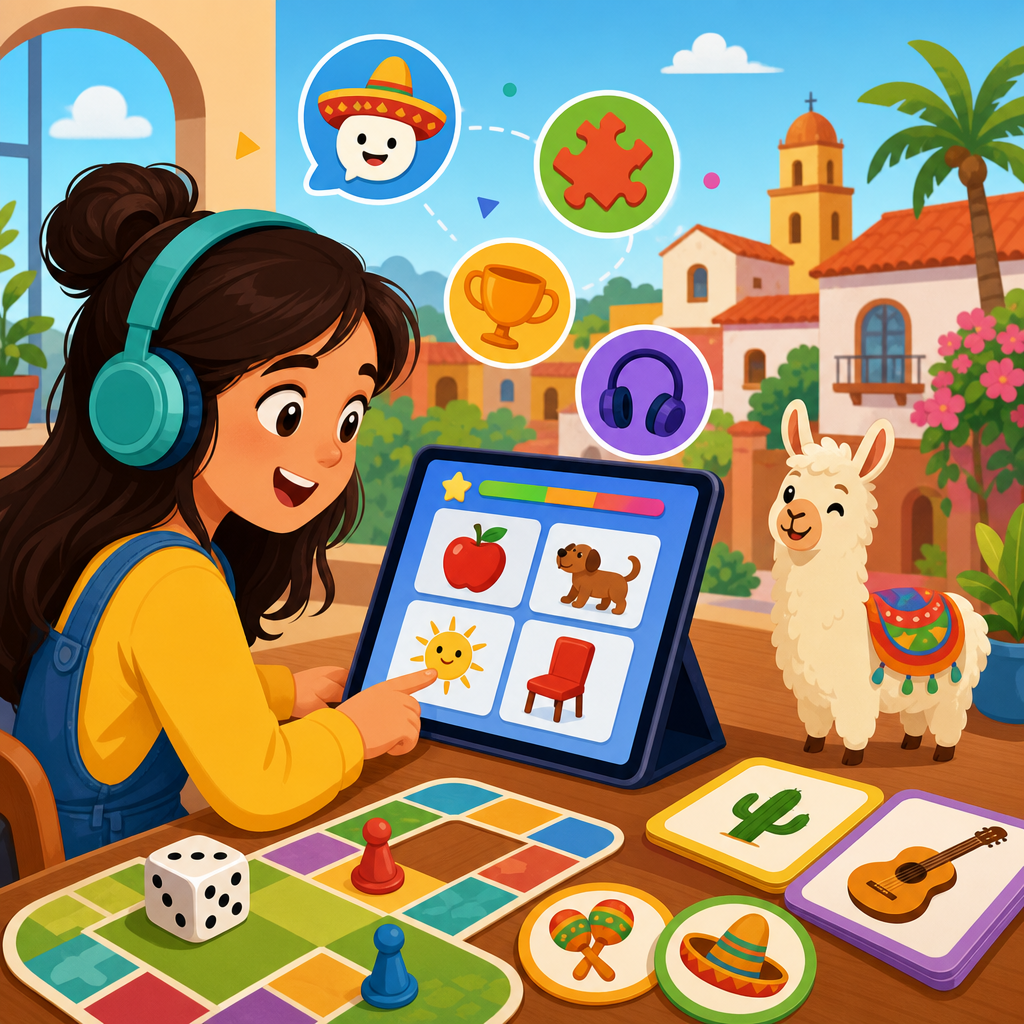
Interactive Spanish learning games for beginners turn passive study into active recall, immediate feedback, and real communication practice. For new learners, that matters because Spanish is not hard only for grammar reasons; it is hard because beginners must recognize sounds quickly, connect meaning to words, and respond without translating every phrase in their heads. Games help solve that problem by making repetition feel purposeful. In my own work with beginner learners, I have seen simple game formats outperform longer worksheets because they increase attention, reduce fear of mistakes, and create many short cycles of listening, speaking, reading, and recall.
Before looking at specific activities, it helps to define the term. Interactive Spanish learning games are structured tasks with a goal, rules, and feedback. They can be digital, like quiz apps and vocabulary platforms, or offline, like card sorting, bingo, role-play challenges, and classroom movement games. The best ones are not random entertainment. They target beginner needs such as high-frequency vocabulary, pronunciation, question formation, gender agreement, numbers, and common verbs like ser, estar, tener, ir, and gustar. A strong game also creates repetition without feeling repetitive, which is one reason beginners stick with it longer.
This topic matters within Spanish community and interaction because games create social use, not just private memorization. A beginner who plays guessing games, turn-taking games, or timed speaking challenges starts using Spanish as a tool for interaction from day one. That builds confidence and prepares learners for conversation groups, tutoring sessions, language exchanges, and community events. Miscellaneous game-based resources often become the bridge between formal lessons and real communication. As a hub topic, interactive Spanish learning games connect vocabulary building, listening practice, pronunciation work, speaking confidence, and peer interaction in one practical entry point for beginners.
What makes a Spanish learning game effective for beginners
The most effective Spanish learning games for beginners do three things well: they stay narrow, they reward retrieval, and they produce useful feedback. Narrow focus means one game should teach a limited set of language targets. For example, a food vocabulary matching game should not also test past tense verbs and indirect object pronouns. Beginners learn faster when cognitive load stays controlled. Retrieval matters because remembering a word from memory strengthens it more than simply seeing it again. That is why picture-to-word recall, charades, category races, and question prompts work so well. Feedback matters because a learner needs to know whether mesa is feminine, whether rojo changes to roja, or whether ¿Cómo te llamas? is more natural than a literal translation.
I usually recommend choosing games that use high-frequency input first. The Common European Framework of Reference supports practical progression, and beginner learners benefit from language they can use immediately: greetings, family words, colors, numbers, days, classroom objects, basic adjectives, and survival phrases. A game built around useful chunks such as tengo hambre, me gusta, quiero agua, and ¿dónde está…? gives faster conversational payoff than a game built around obscure nouns. Good beginner games also include audio whenever possible, because Spanish spelling is relatively transparent, but new learners still need ear training for sounds like rr, ñ, ll, and vowel clarity.
Another marker of quality is how easily a game leads into conversation. If a digital flashcard game teaches animals, the next step should be a speaking prompt such as Tengo un perro or ¿Cuál animal te gusta más? If a board game teaches numbers, it should lead naturally to asking age, prices, phone numbers, or times. Games are strongest when they do not stop at recognition. They should move learners through recognition, recall, production, and interaction. That progression is what turns isolated practice into communicative ability.
Best types of interactive Spanish learning games
Beginners do not need dozens of game categories. They need a small set that covers listening, speaking, reading, vocabulary retention, and pattern recognition. In practice, five formats work especially well: matching games, quiz games, guessing games, role-play games, and movement games. Matching games are ideal for nouns, images, and basic verb forms. Quiz games, especially timed ones, help with rapid recall of articles, colors, numbers, and everyday phrases. Guessing games force learners to ask questions and process clues. Role-play games create beginner conversation in safe scenarios such as cafés, introductions, travel, and shopping. Movement games add energy and support memory because physical response strengthens recall.
Digital tools can support these formats effectively. Quizlet is useful for beginner sets with audio, image cards, and simple review modes. Kahoot works well in groups because it adds time pressure and visible scoring, which raises engagement. Baamboozle, Gimkit, and Wordwall are widely used by teachers for beginner review because they convert vocabulary practice into team competition. Duolingo includes game-like mechanics, though it is strongest as a supplement rather than a complete speaking solution. For offline learners, classic formats still work: bingo for numbers or vocabulary, memory card games for noun recognition, dice games for sentence building, and information gap tasks where one learner has facts the other must discover in Spanish.
| Game type | Best for | Example beginner target | Main benefit |
|---|---|---|---|
| Matching | Vocabulary recognition | Colors, animals, food | Fast repetition with low pressure |
| Quiz | Recall speed | Numbers, articles, greetings | Builds automaticity |
| Guessing | Question formation | ¿Es grande?, ¿Tiene cuatro patas? | Creates real interaction |
| Role-play | Functional speaking | Ordering food, introductions | Prepares for live conversation |
| Movement | Listening comprehension | Toca la puerta, levanta el libro | Links language to action |
The right mix depends on context. Solo learners usually benefit most from audio quizzes, matching sets, and speaking prompts recorded on their phones. In classrooms or meetups, guessing and role-play games add the social pressure that accelerates response time. For children, movement games and picture-based games are especially effective. For adults, scenario games tied to travel, work, and daily routine usually produce better motivation because the practical value is obvious.
How to use games to build real beginner Spanish skills
Interactive Spanish learning games are valuable only when they support specific language outcomes. Vocabulary growth is the easiest example. A learner sees la manzana, hears it, matches it to an image, then answers ¿Te gusta la manzana? and finally says Me gusta la manzana. That sequence moves from recognition to production. The same design works for verbs. A beginner can review tengo, tienes, tiene in a quick quiz, then play a guessing game using Tengo un hermano, Tengo sueño, or Tengo una bicicleta. This is much more effective than memorizing a chart with no context.
Listening is another major benefit. Many beginners can read more than they can understand by ear. Games close that gap when instructions, prompts, or clues are spoken aloud. Total Physical Response activities are especially strong here. If learners hear abre el libro, cierra la puerta, siéntate, or corre, they connect meaning directly to action without translating. Over time, this builds processing speed. I have seen beginner groups become noticeably more comfortable with spoken Spanish after just a few weeks of short command games at the start of each session.
Pronunciation also improves through games because repeated speech lowers inhibition. Beginners are more willing to say perro, reloj, amarillo, and yo when they are trying to win a round than when they are being formally corrected. That does not mean accuracy should be ignored. A good facilitator recasts errors quickly and naturally. If a learner says yo gusto pizza, the response can be ¿Te gusta la pizza? Sí, me gusta la pizza. This keeps the game moving while modeling correct structure. Games are especially useful for practicing stress, vowel purity, and linked phrasing in common expressions.
Social confidence may be the most overlooked gain. Beginners often know more than they can say because they hesitate. Team games, pair work, and low-stakes competitions reduce that hesitation. Even simple formats such as Find someone who…, two truths and a lie, or category races force quick output. Within the broader Spanish community and interaction topic, that matters because participation grows when beginners stop waiting for perfect grammar and start communicating with the language they already have.
Choosing the right games for age, level, and learning setting
Not every interactive Spanish learning game fits every beginner. Young children usually need visual cues, short rounds, and movement. A color hunt, animal charades, or classroom command game works better than a long trivia contest. Teen learners often respond well to team competition, timed quizzes, and peer challenges, especially when scores are visible. Adult beginners usually prefer games with clear real-world relevance. If the activity helps them introduce themselves, order coffee, ask for directions, or talk about family, they stay engaged longer.
Level matters just as much. A true beginner should not be pushed into open-ended debate or advanced storytelling. Start with closed tasks that limit response options. Examples include either-or choices, image labeling, yes-or-no guessing, and sentence frames such as Yo tengo…, Me gusta…, Vivo en…, and Quiero…. As learners stabilize those patterns, games can become more open. Information gap activities, role-play cards, and mystery description games are ideal next steps because they introduce unpredictability without overwhelming the learner. The principle is simple: increase interaction before increasing grammatical complexity.
Setting also changes game choice. In a classroom, teachers can use stations, whiteboard races, group quizzes, and partner speaking rotations. In online tutoring, screen-shared slides, digital spinners, virtual flashcards, and chat-based guessing games work well. For self-study, the best games are those with audio, spaced repetition, and speaking prompts. Anki is not flashy, but for disciplined learners it is one of the strongest tools for retention because it schedules reviews scientifically. Language Reactor can support beginners watching simple Spanish video clips by pairing captions with repeatable segments, though content should be chosen carefully to avoid overload.
A final consideration is cultural authenticity. Beginners should encounter language used by real speakers, not only textbook fragments. Good games include names, foods, places, and expressions from the Spanish-speaking world. A market role-play feels richer when it uses mango, pan, arroz, and jugo rather than generic placeholders. A map guessing game becomes more meaningful when learners see Mexico City, Bogotá, Madrid, or San Juan. Real context makes the language memorable and prepares beginners for genuine interaction.
Common mistakes and a practical path forward
The biggest mistake with Spanish learning games is treating them as filler. If a game has no language objective, no follow-up, and no correction, it may entertain without teaching much. Another common mistake is choosing games that are too difficult. Beginners shut down when they face too many unknown words or have to produce long answers too early. A third problem is overreliance on apps. Many gamified platforms are excellent for recall, but they cannot replace live speaking, negotiation of meaning, and listening to unpredictable responses. Balance is essential.
A practical beginner routine is simple. Use one digital game for daily vocabulary review, one listening or command game several times a week, and one speaking game with a partner or tutor each week. Track topics rather than random words: greetings, family, food, places, hobbies, and routines. Recycle the same vocabulary across multiple formats so knowledge becomes usable. For example, after learning food words with flashcards, review them with bingo, then use them in a restaurant role-play, and finally ask a partner ¿Qué comes en el desayuno? That sequence produces durable learning because each game reinforces the same material in a different way.
Interactive Spanish learning games for beginners work best when they are intentional, social, and tied to real communication. They help learners remember vocabulary, process spoken language faster, speak with less fear, and build habits that carry into conversation groups and community settings. As a hub within Spanish community and interaction, this topic connects naturally to pronunciation practice, beginner conversation activities, language exchange ideas, and classroom engagement strategies. Start with one narrow game format, keep the language useful and high-frequency, and use every round to move from recognition toward real Spanish interaction. Then build your beginner routine around that momentum.
Frequently Asked Questions
1. Why are interactive Spanish learning games so effective for beginners?
Interactive Spanish learning games work well for beginners because they move learning from passive exposure to active use. Many new learners can recognize a word on a worksheet but freeze when they hear it in a real sentence or need to respond quickly. Games help bridge that gap. They train the brain to notice sounds faster, connect vocabulary to meaning more directly, and recall phrases under light pressure. That matters in Spanish because beginners are not only learning grammar rules; they are also learning to hear new sound patterns, identify common words at speed, and speak without translating every idea from English first.
Another reason games are effective is immediate feedback. In a well-designed game, learners quickly see whether they matched the right word, chose the correct verb form, or understood the question accurately. That short feedback loop helps correct mistakes before they become habits. Games also make repetition less tedious. Repeating numbers, greetings, colors, food words, and basic sentence structures can feel boring in traditional drills, but when repetition is tied to a challenge, a goal, or a response task, learners stay engaged longer. For beginners, that consistency is often more important than complexity. The best progress usually comes from repeated, high-frequency practice with simple language used in meaningful ways.
2. What types of Spanish learning games are best for complete beginners?
The best games for complete beginners are simple, fast, and focused on high-frequency language. Matching games are excellent for early vocabulary because they help learners connect Spanish words with pictures, sounds, or categories. Memory games are also useful because they strengthen recall while keeping the language load manageable. Listening games in which learners identify the correct image, word, or phrase after hearing Spanish are especially valuable, since beginners need to train their ears early. If a learner cannot quickly recognize words they already studied, speaking and reading become much harder.
Question-and-answer games are another strong option. Even very basic prompts such as “¿Cómo te llamas?”, “¿Qué color es?”, or “¿Dónde está el libro?” can help beginners practice useful language patterns. Role-play games with highly predictable phrases also work well, such as ordering food, introducing yourself, or asking for directions. The key is structure. Beginners do better with games that limit possible answers and recycle the same language in multiple rounds. Word scramble games, bingo, flashcard races, digital pronunciation challenges, and turn-based classroom games can all be effective if they stay focused on practical beginner content. The goal is not novelty for its own sake. The goal is repeated success with essential Spanish words and sentence frames.
3. Can games really help beginners learn Spanish grammar, or are they mostly for vocabulary?
Games can absolutely help with grammar, especially at the beginner level, but they work best when grammar is taught through use rather than abstract explanation alone. Beginners do need some clear guidance on basics such as gender, number agreement, common verb forms, question patterns, and sentence order. However, grammar becomes much easier to retain when learners repeatedly use it in context. A game that asks learners to choose between “es” and “son,” match articles like “el” and “la,” or build short sentences from scrambled words can reinforce grammar in a practical way. Instead of memorizing a rule and hoping to remember it later, learners repeatedly apply the rule while doing something active.
That said, the most effective grammar games for beginners are narrow and focused. A game that tries to cover too many rules at once usually creates confusion. It is far better to practice one structure repeatedly, such as “me gusta,” “quiero,” “tengo,” or simple present tense forms of common verbs. For example, a guessing game built around “tengo” can help learners absorb both vocabulary and sentence structure at the same time. A sentence-building challenge can teach adjective agreement without a long lecture. Games should not replace all grammar instruction, but they are excellent for making grammar automatic. That automaticity is what beginners need if they want to understand and respond in real time.
4. How often should beginners use interactive Spanish games to see real progress?
Beginners usually see better results from short, frequent practice than from occasional long sessions. In most cases, 10 to 20 minutes of interactive Spanish game practice several times a week is more effective than one heavy study block on the weekend. That is because beginner language learning depends on repeated exposure and retrieval. Learners need to see and hear the same core words and structures many times before those forms become familiar enough to use automatically. Games support that process well because they make repeated practice feel manageable and less mentally exhausting.
Consistency matters more than intensity. A learner who regularly spends a few minutes on listening games, speaking prompts, vocabulary review, and simple sentence tasks will often progress faster than someone who studies irregularly. The best routine usually combines game-based practice with other forms of input, such as beginner reading, slow audio, or guided lessons. Games are strongest when they reinforce what the learner is already studying and make recall faster. If a beginner plays interactive activities focused on greetings, numbers, basic verbs, everyday nouns, and simple questions on a regular schedule, they will usually notice improved comprehension and quicker responses within a few weeks. Real progress comes from repetition with attention, not from random activity.
5. What should beginners look for when choosing the best interactive Spanish learning games?
Beginners should look for games that are level-appropriate, audio-rich, and built around real communication rather than isolated trivia. A strong beginner game should focus on useful Spanish, such as introductions, common verbs, daily routines, food, directions, colors, family, and everyday questions. It should also provide clear instructions, simple goals, and immediate correction. If a game is too difficult, too fast, or packed with low-frequency vocabulary, beginners may feel entertained but not actually learn much. The best tools create small wins, repeat essential language, and gradually increase challenge without overwhelming the learner.
It is also important to choose games that strengthen multiple skills. Ideally, a beginner game should include listening, reading, speaking, or sentence formation rather than only recognition. Pronunciation support is especially helpful because early learners need to connect spelling with sound. Good games also encourage active recall, meaning the learner must produce or choose language from memory instead of only reviewing it passively. Finally, quality matters more than quantity. A small set of well-designed games that repeatedly trains core Spanish patterns is far more valuable than dozens of flashy activities with little instructional focus. The right game should help a beginner respond faster, understand more clearly, and feel more confident using Spanish in simple real-world situations.