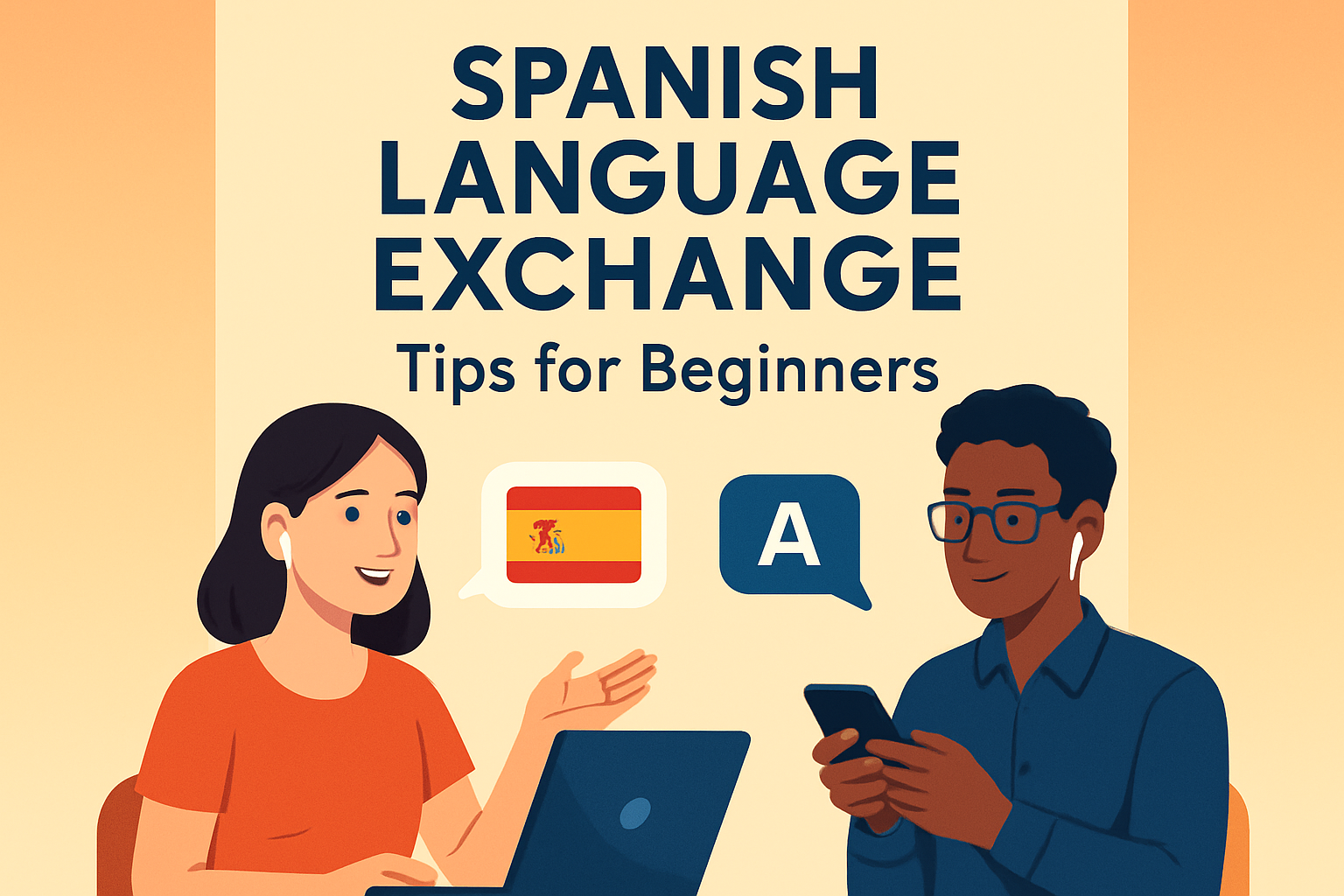
Language exchange tips for busy learners matter because the biggest barrier to speaking Spanish is rarely grammar; it is time, consistency, and access to real conversation. In practical terms, a language exchange is a structured arrangement where two people help each other practice different languages, usually by splitting time evenly and correcting each other in a supportive way. Under the broader topic of Spanish community and interaction, language exchange opportunities include one-to-one partnerships, online communities, local meetups, tutoring hybrids, workplace conversation circles, and short-form voice or text exchanges that fit into crowded schedules. I have helped learners build exchange routines around commutes, lunch breaks, and family obligations, and the same pattern keeps appearing: the people who improve fastest are not those with the most free time, but those who reduce friction and make speaking a weekly habit. That is why this hub matters. It gives busy learners a clear framework for finding the right exchange format, protecting limited time, setting realistic goals, and turning scattered practice into measurable progress in listening, speaking, vocabulary, and confidence.
For Spanish learners especially, exchange practice solves a problem apps cannot fully address. Most apps are excellent for repetition and recall, but they cannot reproduce the unpredictability of a live speaker with a different accent, speed, humor, and conversational style. Real interaction teaches turn-taking, clarification phrases, pronunciation repair, and the cultural signals that shape meaning. It also exposes gaps quickly. If you cannot explain your weekend, ask for directions, or respond naturally to a simple follow-up question, you immediately know what to work on next. For a busy adult, that efficiency is valuable. Instead of studying everything, you can study what conversation proves you need.
What counts as a language exchange opportunity
Language exchange opportunities are broader than many learners assume. They are any repeatable setting where you can use Spanish with another person and receive enough interaction to improve. Traditional tandem partnerships remain common: thirty minutes in English, thirty minutes in Spanish, often on video calls or in person. Conversation groups work well when scheduling one partner is difficult. Message-based exchanges through WhatsApp, Telegram, Discord, or dedicated apps are useful for people who cannot guarantee a full uninterrupted hour. Some learners do best with a hybrid model, combining a paid tutor for structure with unpaid exchange partners for natural conversation. Others join local library groups, church groups, university international clubs, or neighborhood meetups where Spanish is spoken informally.
The best option depends on your constraints. If your calendar changes every week, asynchronous voice notes may be better than fixed calls. If you are shy about speaking, text exchange can build comfort before live conversation. If you need correction, a serious partner or tutor hybrid is stronger than a large meetup where errors often go unaddressed. If you want exposure to varied accents, group spaces and community events provide more diversity than one regular partner. In other words, the right exchange is not the most popular one; it is the one you will actually sustain.
How busy learners should choose the right format
When I help learners choose among language exchange opportunities, I start with three variables: schedule predictability, speaking confidence, and learning goal. Someone preparing for travel may need functional speaking and listening fast, so short high-frequency voice calls are ideal. A professional using Spanish at work may need role-play, terminology, and correction, making a structured partner or tutor hybrid more effective. A parent with limited evening time may need ten-minute voice notes and one weekend session rather than two weekly video calls that are likely to collapse.
Busy learners should also calculate hidden costs. A “free” exchange that requires forty minutes of commuting is not free in practical terms. A massive online server may look active, but if finding a reliable partner takes constant effort, the time cost is high. By contrast, a standing Tuesday call with one dependable partner can outperform five loosely organized communities. Reliability beats variety in the early stages. Once speaking becomes habitual, adding more partners and settings makes sense.
| Format | Best for | Main advantage | Main limitation |
|---|---|---|---|
| One-to-one tandem | Consistent weekly practice | Balanced speaking time and accountability | Scheduling depends on one person |
| Voice-note exchange | Irregular schedules | Flexible, low-pressure speaking practice | Less spontaneous interaction |
| Online conversation group | Accent exposure and variety | Multiple speakers and topics | Less individual feedback |
| Local meetup | Community building | Natural in-person communication | Quality varies by group |
| Tutor plus exchange | Targeted improvement | Structure, correction, and real conversation | Costs money |
Where to find reliable Spanish exchange partners
Reliable partners are usually found through platforms with clear profiles, community norms, and enough active users to allow filtering. Tandem and HelloTalk are the best-known language exchange apps, and both let you search by language pair, level, and interests. ConversationExchange has an older interface but remains useful for finding serious partners interested in email, text, voice, or in-person meetings. Meetup can uncover local Spanish conversation groups in larger cities. Eventbrite, public libraries, universities, cultural institutes, and community centers often host conversation tables that never appear on language apps. Discord servers dedicated to Spanish practice can work well if moderators enforce rules and channels are organized by level or activity.
For Spanish specifically, the most overlooked opportunities are often offline and community-based. Many learners live near Spanish-speaking neighborhoods, churches, restaurants, volunteer organizations, or professional associations where interaction can happen naturally and respectfully. The goal is not to treat native speakers as unpaid teachers. The goal is to participate in real communities where mutual benefit exists. Volunteering, attending bilingual events, joining a soccer league, or supporting a local cultural festival often creates more durable language relationships than app matching alone.
How to start an exchange without wasting time
Most failed exchanges break down in the first two weeks because expectations are vague. A strong first message should state your level, your goals, your availability, and your preferred format. For example: “I’m an English speaker learning Spanish at about A2-B1 level. I can do twenty-minute voice calls on Tuesdays and Thursdays during lunch. I’d like equal time in each language and gentle correction on pronunciation and common mistakes.” That message saves time because it lets the other person quickly decide if the fit is right.
The first session should be short and structured. Introduce yourselves, decide the language split, set a recurring day, and agree on correction style. Some partners want immediate interruption; others prefer notes at the end. I usually recommend limited interruption for fluency practice and a short review at the end for recurring errors. Define one topic for next time, such as work, food, family, or weekend plans. Structure prevents the awkward drift that makes many learners quit.
How to make progress with only a few minutes a day
Busy learners do not need marathon sessions. They need a repeatable system that turns small windows into speaking practice. A useful model is the three-layer week: one live exchange, two brief prep sessions, and daily micro-review. If you have one thirty-minute Spanish exchange on Wednesday, spend ten minutes Monday preparing phrases and questions, ten minutes Tuesday reviewing key vocabulary, and five minutes after the exchange logging mistakes. Then use spare moments for retrieval practice with Anki, Quizlet, or your notes app. This approach keeps conversation linked to review, which improves retention.
Voice notes are particularly effective here. Record a one-minute response about your morning, a recent meal, or a work task, send it to your partner, and ask one question back. You practice output, pronunciation, and listening without coordinating calendars. Over time, save these recordings. Comparing a voice note from month one to month three gives concrete evidence of progress and reveals persistent pronunciation issues.
What to talk about in a Spanish exchange
Conversation quality improves when topics match your real life. If you mostly discuss abstract subjects far beyond your level, you will memorize little and speak less. Start with high-frequency personal topics: routines, errands, health, entertainment, weather, food, travel, work, and family. Then move into scenario practice: ordering, making appointments, explaining a problem, giving directions, discussing plans, and narrating events in past tenses. For intermediate learners, compare news stories, describe cultural differences, debate simple opinions, or explain how something works. The key is relevance. You remember language that solves your actual communication problems.
It helps to use repeatable prompts. Ask and answer the same type of question across several weeks with new vocabulary. For example, “What did you do this weekend?” builds comfort with pretérito. “What were you doing when…?” supports imperfecto. “What would you do if…?” introduces conditional forms naturally. Repetition with variation is more efficient than constantly chasing new topics.
Correction, boundaries, and safety
Good language exchange opportunities are respectful, reciprocal, and safe. That means equal language time, realistic expectations, and clear boundaries. If one person treats the exchange like free tutoring in their target language and shows little interest in helping you, the arrangement is unbalanced. If messaging becomes intrusive or personal in ways that make you uncomfortable, step back. Use platform messaging until trust is established, avoid sharing sensitive personal details early, and meet in public places for in-person sessions.
Correction should also be negotiated. Too much correction kills confidence; too little allows fossilized errors to settle in. The best middle ground for many busy learners is selective correction: focus on mistakes that block understanding, recur frequently, or relate to a current goal. For example, if you are practicing past narration, ask your partner to note repeated tense errors rather than every article mistake. Focus improves progress.
Measuring whether your exchange is working
You should be able to tell within four to six weeks whether a language exchange is productive. Look for specific indicators: you speak more each session, you need less preparation for familiar topics, your partner understands you more easily, and the same mistakes appear less often. Track a few simple metrics: number of minutes spoken in Spanish per week, number of follow-up questions you can answer without freezing, and number of recurring corrections. Record one short monologue monthly on the same topic. Improvement becomes obvious when you compare recordings.
If progress stalls, adjust the system instead of blaming motivation. Change the format, shorten sessions, switch partners, add more structure, or pair exchange practice with targeted grammar review. Many learners simply need tighter feedback loops. A ten-minute review immediately after each exchange can transform results because it captures fresh errors before they disappear.
Building a long-term Spanish interaction ecosystem
The strongest learners do not rely on one exchange alone. They build an ecosystem of interaction that supports different needs. A weekly tandem partner provides accountability. A group meetup adds variety and listening range. A tutor session once or twice a month cleans up persistent errors. Spanish media, local events, and online communities keep input flowing between conversations. Together, these opportunities create momentum even when one element pauses.
As this hub for language exchange opportunities under Spanish community and interaction, the main lesson is simple: choose the format that matches your life, set expectations early, keep sessions structured, and review what conversation exposes. Busy learners succeed when they stop waiting for perfect conditions and start using the time they already have. Pick one exchange format this week, schedule the first session, and let real conversation shape the next stage of your Spanish.
Frequently Asked Questions
What is a language exchange, and why is it especially useful for busy learners?
A language exchange is a practical speaking arrangement where two people help each other practice different languages, usually by dividing the session evenly. For example, one half of the conversation might be in Spanish and the other half in English. Unlike a formal class, the goal is real interaction: listening, responding, asking follow-up questions, and getting used to how the language actually sounds in conversation. Most exchanges also include light correction, vocabulary support, and cultural insight, which makes them especially valuable for learners who want speaking practice without a rigid classroom schedule.
For busy learners, this format works because it targets the real bottleneck: not usually grammar knowledge, but lack of time, consistency, and access to regular conversation. A language exchange can fit into short weekly sessions, voice notes, lunch breaks, or scheduled video calls. That flexibility makes it easier to maintain momentum even with work, family, or school responsibilities. Instead of waiting until you have “enough time” to study perfectly, you create a repeatable habit of speaking Spanish in manageable blocks.
It is also efficient because it combines several skills at once. In one conversation, you practice listening, speaking, pronunciation, vocabulary recall, and confidence-building. If the exchange is well structured, even a 20- to 30-minute session can produce meaningful progress. For learners with limited time, that kind of concentrated, interactive practice often delivers better speaking results than trying to study alone for long periods without actual conversation.
How can I fit a language exchange into a busy schedule without feeling overwhelmed?
The most effective approach is to make your language exchange small, predictable, and easy to repeat. Many busy learners make the mistake of planning long sessions that are difficult to sustain. A better strategy is to start with one short exchange per week, such as 30 minutes total or even 15 minutes in each language. If that feels manageable, you are far more likely to continue. Consistency matters more than intensity when the goal is speaking improvement over time.
It helps to attach your exchange to an existing routine. You might schedule it during a commute break, before dinner on a specific weekday, during a lunch hour, or on the same evening each week. Treat it like a standing appointment rather than something you will “fit in later.” Busy schedules tend to fill every open space, so if your exchange is not scheduled deliberately, it usually gets pushed aside. A recurring time slot reduces mental effort and makes practice automatic.
You can also use flexible formats when live calls are difficult. Voice messages, text exchanges with audio follow-ups, or brief check-ins throughout the week can still support regular speaking practice. While live conversation is ideal, imperfect consistency is better than long gaps. Many learners make faster progress through five to ten minutes of real interaction several times a week than through occasional, ambitious sessions that rarely happen.
Finally, reduce preparation time. Keep a short list of go-to topics such as work, food, weekend plans, current events, hobbies, or travel. Save useful phrases you want to practice. Reuse conversation structures. The less setup each session requires, the easier it is to maintain the habit. Busy learners succeed when the exchange becomes simple enough to continue even during stressful weeks.
What should I do during a language exchange session to make it productive?
A productive language exchange needs structure. Without it, sessions can become unbalanced, drift into one language, or turn into casual chatting that feels pleasant but produces limited progress. Start by agreeing on the format: how long the session will be, when you will switch languages, and whether corrections should happen immediately or at the end. Clear expectations make the exchange more useful for both people and prevent frustration later.
During your Spanish portion, focus on active participation rather than perfect accuracy. Ask questions, answer in complete thoughts, and try to extend the conversation instead of giving short replies. If you do not know a word, explain it another way. That skill is essential in real communication. It keeps the conversation moving and teaches you how to think more flexibly in Spanish. If your partner is more advanced, ask them to model natural phrases you can reuse in future conversations.
Corrections should be supportive and selective. Busy learners do not need every mistake interrupted. It is usually more effective to choose high-value corrections: recurring grammar errors, unnatural phrasing, pronunciation issues that affect understanding, and essential vocabulary. You can ask your partner to note these while you speak, then review them briefly at the end. That preserves the flow of conversation while still giving you concrete feedback to improve.
It is also smart to end each session with a quick recap. Write down three to five useful phrases, one mistake to fix, and one topic to revisit next time. This turns a conversation into a learning cycle. Over weeks, these notes become a personalized study guide based on your actual speaking needs. For busy learners, that is far more efficient than studying random material that may never come up in real conversation.
How do I find a good language exchange partner for Spanish practice?
A good language exchange partner is not just a native speaker or advanced learner; it is someone whose goals, availability, communication style, and expectations match yours. Reliability matters as much as language level. If you are a busy learner, you need a partner who respects time, shows up consistently, and is comfortable with a clear session structure. A perfect linguistic match is less useful than a dependable partner who can meet regularly and communicate well.
When looking for a partner, be specific about what you want. Mention your level of Spanish, your schedule, preferred session length, whether you want video calls or voice notes, and how you like corrections handled. This helps filter out mismatched expectations early. If you say, for example, that you can commit to one 30-minute exchange each week and prefer half the time in Spanish and half in English, you are more likely to attract someone looking for the same kind of arrangement.
It is wise to treat the first one or two meetings as a trial period. Use that time to see whether the conversation feels balanced, whether both people are helping equally, and whether the timing actually works in real life. You should feel encouraged, not judged or rushed. A strong partner will create a supportive environment where mistakes are normal, feedback is helpful, and the conversation feels purposeful. If the exchange is consistently one-sided or difficult to schedule, it is better to move on and find a better fit.
Once you find the right person, protect the relationship with clear communication. Confirm sessions, be punctual, and let them know if you need to reschedule. Bring topics and show interest in helping with their goals too. The best exchanges are collaborative, not transactional. When both people feel respected and supported, the partnership becomes sustainable, and sustainability is exactly what busy learners need in order to keep improving their Spanish.
How can I stay consistent with language exchange practice when motivation drops?
Consistency is usually built through systems, not motivation. Motivation naturally rises and falls, especially for busy learners juggling work, family, and other responsibilities. The key is to make your language exchange so simple and structured that you can continue even when you do not feel especially inspired. A fixed weekly time, a regular partner, and a short session length remove many of the decisions that cause practice to stall.
It also helps to measure progress in realistic ways. Instead of asking whether you are suddenly fluent, track smaller wins: speaking for longer without switching to English, using new vocabulary correctly, understanding your partner more easily, or feeling less nervous at the start of a conversation. These signs of progress are meaningful and motivating. Language growth is often gradual, but when you look closely, regular exchanges usually produce clear improvements in comfort, speed, and comprehension.
Another effective strategy is to lower the bar during difficult weeks. If you cannot do a full video call, send three voice notes. If you cannot prepare a topic, talk about your day. If you feel mentally tired, review old phrases and use them in simple conversation. This keeps the habit alive. Many learners lose momentum not because they are too busy to do anything, but because they think only a full, ideal session counts. In reality, scaled-down practice is one of the best ways to stay consistent long term.
Finally, reconnect your exchange to a practical reason for learning Spanish. Maybe you want to travel confidently, connect with Spanish-speaking friends or coworkers, participate in community conversations, or simply speak more naturally in real life. Purpose creates durability. When your language exchange is tied to meaningful interaction rather than abstract study, it becomes easier to protect that time. For busy learners, that sense of real-world value is often what turns occasional practice into a lasting routine.