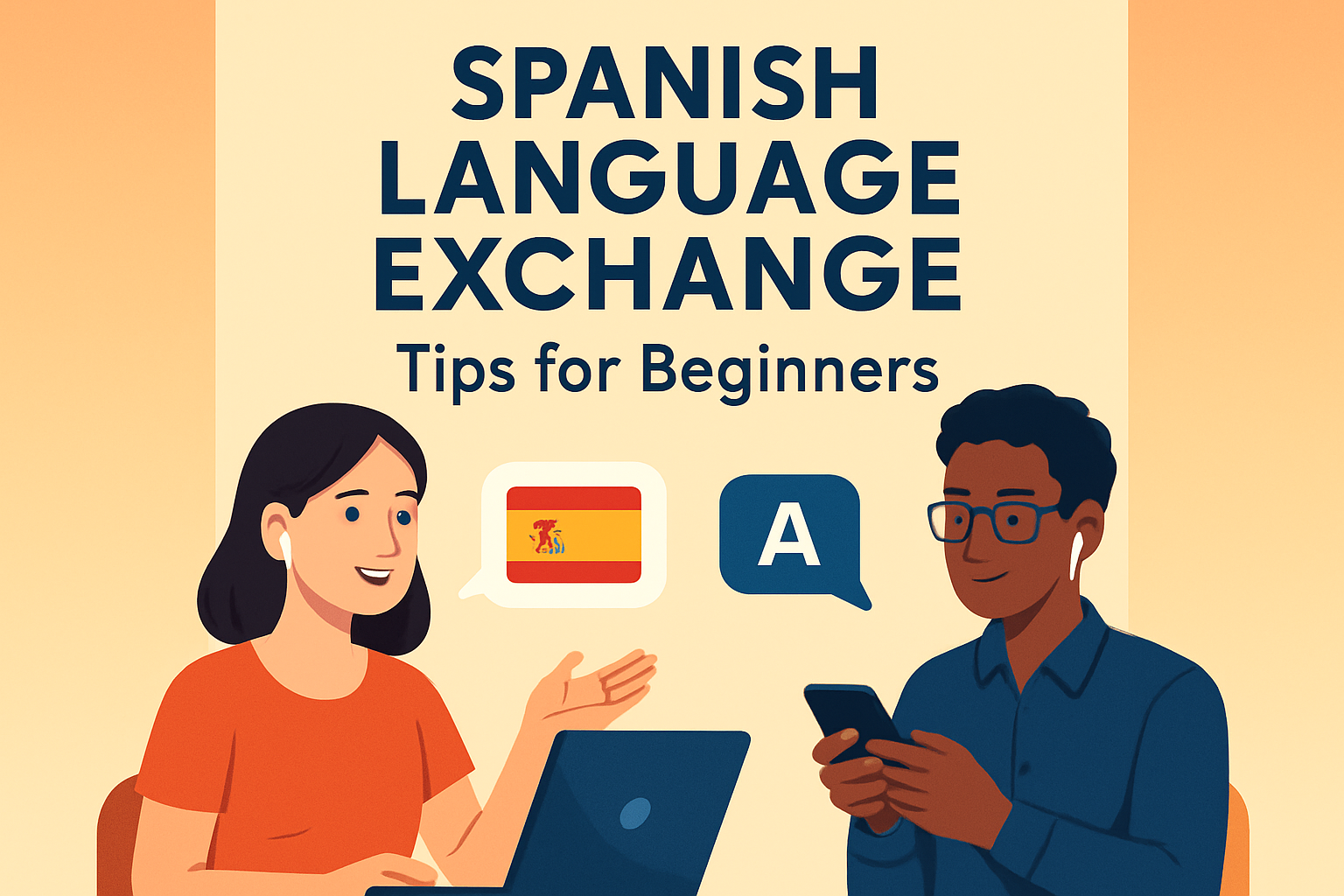
Spanish language exchange is one of the fastest, most practical ways for beginners to start using real Spanish with real people. In simple terms, a language exchange is an arrangement where two people help each other practice their target languages, usually by splitting time between Spanish and another language such as English. Under the broader topic of Spanish community and interaction, language exchange opportunities matter because they turn vocabulary lists and grammar exercises into conversation, listening practice, cultural learning, and accountability. I have coached beginners through exchange sessions online, in community meetups, and in university conversation groups, and the same pattern appears every time: students who speak early, even imperfectly, build confidence faster than students who wait until they feel ready.
For beginners, the phrase Spanish language exchange can sound intimidating. Many learners imagine rapid native speech, awkward silences, or correction every few seconds. In practice, a beginner-friendly exchange is much simpler. It can be a 30-minute video call with a patient partner, a local café meetup with structured prompts, a text-and-voice-note partnership, or an organized event hosted by a language school, library, or cultural center. The goal is not flawless Spanish. The goal is meaningful communication at a level you can sustain while gradually increasing difficulty. That distinction matters, because beginners often quit when they measure themselves against fluency instead of progress.
Language exchange opportunities also solve a problem that classes and apps cannot fully address: unpredictability. In a textbook, you know which verb tense or topic is coming next. In a live exchange, your partner may ask where you work, what music you like, why you are learning Spanish, or what you ate yesterday. That unpredictability trains retrieval, listening, and repair strategies. You learn how to ask for repetition, how to paraphrase when you lack a word, and how to keep a conversation moving. Those are core communication skills. They are also exactly what beginners need if they want to participate in the Spanish-speaking community rather than only study it from a distance.
Another reason this topic deserves a hub article is that beginners have many exchange formats to choose from, and each format suits a different personality, schedule, and learning goal. Some learners thrive in one-on-one sessions because they want focused correction and a regular partner. Others do better in group exchanges because shared pressure feels lighter and multiple accents improve listening. Some need free options like Meetup, Tandem, HelloTalk, Discord communities, and university clubs. Others prefer paid communities or tutoring platforms with structured conversation support. Understanding the landscape helps beginners choose wisely, avoid common mistakes, and create a repeatable practice system instead of relying on random motivation.
Where beginners can find Spanish language exchange opportunities
Beginners today have more language exchange opportunities than ever, but quality varies by platform and by how clearly you state your level and goals. The strongest starting points are dedicated exchange apps, local community groups, academic institutions, and interest-based online communities. Tandem and HelloTalk are two of the most recognized platforms for finding Spanish speakers who want to practice English or another language in return. Tandem is particularly useful for filtering by language, location, and interests, while HelloTalk includes text correction tools, voice notes, and public posts that make first contact less intimidating. If you are hesitant about immediate live conversation, start with written messages and short audio clips before scheduling a call.
Offline opportunities are often better than beginners expect. Libraries, community colleges, universities, cultural institutes, churches, and immigrant support organizations frequently host conversation circles or bilingual events. In many cities, Meetup listings include Spanish-English exchanges in cafés, parks, coworking spaces, and bookshops. I have seen beginners progress quickly in these settings because the structure is often forgiving: introductions, simple prompts, timed partner rotations, and topic cards reduce pressure. If you live in an area with a significant Spanish-speaking population, volunteering can also become a genuine exchange opportunity, provided communication is respectful and the setting is appropriate for learners.
Not every exchange opportunity is equal, so beginners should evaluate options before committing. A good exchange environment includes patience, clear language-level expectations, balanced speaking time, and consistency. A poor one usually involves ghosting, one-sided language use, uncomfortable social dynamics, or advanced speakers dominating the conversation. The easiest way to screen for fit is to ask direct questions early: How often do you want to meet? How should we divide Spanish and English time? Do you want corrections during conversation or afterward? Are you open to using prompts? These simple questions prevent most beginner frustrations.
How to choose the right exchange format for your goals
The best Spanish language exchange format depends on what you need most right now: speaking confidence, listening comprehension, vocabulary growth, pronunciation feedback, or social connection. One-on-one exchanges are ideal if you want regular accountability and tailored conversation. A stable partner learns your level, notices recurring errors, and can help you revisit topics over time. This is the format I recommend for beginners who want steady progress and who feel comfortable building rapport with one person. It works especially well when sessions are short, such as two 20-minute language blocks, because beginner concentration drops faster than many learners realize.
Group exchanges offer different advantages. They expose you to multiple accents, personalities, and speaking styles. That matters in Spanish, where pronunciation and vocabulary differ across Spain, Mexico, Colombia, Argentina, and other regions. A beginner who only speaks with one partner can become too comfortable with one voice and one pace. Group settings also provide observation time. You may spend ten minutes listening before joining in, which is useful when confidence is still low. The tradeoff is less individualized correction and less total speaking time, so group exchanges work best as a supplement to one-on-one practice rather than a complete replacement.
Text-based and voice-note exchanges are underrated for beginners. They slow the conversation down enough for you to think, notice patterns, and self-correct. Voice notes are especially powerful because they bridge the gap between writing and live speech. You can practice pronunciation, rhythm, and spontaneous sentence building without the pressure of instant response. Many beginners use voice notes to prepare for live calls, and that progression is smart. If your speaking anxiety is high, do not force yourself into sixty-minute video calls immediately. Start where you can succeed, then increase difficulty gradually.
| Format | Best for | Main benefit | Main limitation |
|---|---|---|---|
| One-on-one video call | Consistent speaking practice | Personalized feedback and routine | Pressure can feel high for shy beginners |
| Group meetup | Confidence and listening variety | Multiple accents and social energy | Less individual speaking time |
| Text chat | Vocabulary and sentence building | Time to think and review corrections | Limited speaking practice |
| Voice notes | Pronunciation and transition to speaking | Low-pressure spoken output | Not fully spontaneous |
How to prepare for a first Spanish exchange session
Preparation determines whether a first session feels productive or chaotic. Beginners do not need a script, but they do need a framework. Before any exchange, prepare three items: a self-introduction, five common questions, and one backup list of vocabulary related to your daily life. Your introduction should cover your name, where you live, why you are learning Spanish, your job or studies, and a few interests. Your questions can include where your partner is from, what they do, what hobbies they have, and what kind of Spanish they speak at home. This material sounds basic, but basics are where beginners either gain momentum or freeze.
I also advise learners to set a narrow session goal. Do not aim to “practice Spanish” in the abstract. Aim to use the present tense to talk about routine, ask follow-up questions, or survive ten minutes without switching languages. Specific goals make progress visible. Keep a page open with useful repair phrases such as “¿Puedes repetir?”, “Más despacio, por favor,” “¿Cómo se dice…?”, and “No entendí la última parte.” These phrases are not signs of weakness. They are foundational conversation tools. Beginners who use them early stay in Spanish longer and panic less when comprehension drops.
Technical preparation matters too. Test your microphone, camera, headphones, and internet connection before the session. If the exchange is online, choose a quiet place and keep translation tools closed unless you have agreed to use them briefly. Constantly looking up words kills flow. A better method is to note unknown words in a document and ask about them after the conversation block. If you are meeting in person, arrive with a clear plan for how to split languages and how long to stay. Structure reduces awkwardness and makes it easier to schedule the next meeting.
What to talk about when your Spanish is still basic
Beginners often think they have nothing to say in Spanish because their vocabulary is small. In reality, a limited vocabulary can still support many meaningful topics if you choose them carefully. The best beginner conversation topics are familiar, repetitive, and easy to personalize: daily routine, food, family, work or study, hobbies, neighborhood, weather, travel dreams, pets, weekend plans, and media preferences. These topics produce high-frequency verbs and nouns, which means repetition turns into retention. For example, talking about breakfast repeatedly teaches verbs like comer, beber, gustar, preparar, and empezar in a way that isolated flashcards rarely do.
To keep the conversation moving, use simple conversation loops. Answer one question, add one detail, then ask one related question back. If your partner asks, “¿Qué haces los fines de semana?”, do not stop at “Descanso.” Expand it: “Normalmente descanso, voy al gimnasio y cocino. ¿Y tú?” That extra detail gives your partner material to respond to. Another reliable method is comparison. Beginners can compare their city with their partner’s city, local food with Spanish-speaking food, or work habits in two countries. Comparison naturally creates follow-up questions and introduces useful structures like más que, menos que, mejor, and peor.
It also helps to reuse themes across several sessions instead of chasing novelty. When I work with beginners, I often keep the same topic for two or three meetings. Session one covers basic answers. Session two adds reasons and preferences. Session three adds past experiences or future plans. That repetition feels less exciting than constant new topics, but it accelerates fluency because the learner is recycling known language under slightly different conditions. In real exchanges, progress usually comes from depth on common subjects, not from trying to discuss everything at once.
How to balance correction, confidence, and cultural exchange
One of the biggest beginner mistakes is asking for correction on every error. Constant interruption makes speech fragmented and discouraging. The better approach is selective correction. Ask your partner to correct errors that block understanding, involve high-frequency grammar, or keep repeating, and save minor mistakes for a short review at the end. This mirrors what strong conversation coaches do. It protects fluency while still improving accuracy. For example, if you constantly confuse ser and estar or mispronounce a word so heavily that it causes confusion, those are worth fixing immediately. If you forget an article once, it can wait.
Confidence grows when learners notice success, not only mistakes. After each exchange, write down three things you communicated successfully and three items to improve next time. This keeps reflection balanced. I have watched beginners transform when they stopped evaluating themselves only by grammatical perfection. A learner who successfully asks for clarification, tells a short story, or stays in Spanish for fifteen minutes has achieved something important, even with errors. Communication is the central metric.
Cultural exchange is not a side benefit; it is a major reason language exchanges remain motivating over time. Talking with Spanish speakers exposes you to regional words, humor, food customs, holidays, politeness norms, and everyday perspectives that textbooks flatten. Still, beginners should approach cultural topics with curiosity and respect, not assumptions. Ask open questions, avoid treating one person as a spokesperson for an entire country, and remember that the Spanish-speaking world is diverse. That mindset makes your exchange richer and more sustainable.
Common problems beginners face and how to fix them
Most beginner exchange problems are predictable. The first is imbalance: one person practices Spanish, and the other gets little value. Fix this by setting a timer and naming the split at the start, such as fifteen minutes in Spanish and fifteen in English. The second is inconsistency. People disappear, schedules drift, and momentum dies. The solution is simple but effective: schedule the next session before ending the current one. A recurring weekly slot is far better than vague plans to talk again soon.
The third problem is conversations that stay too hard or too easy. If your partner speaks too quickly, ask them to slow down, use shorter sentences, and stick to familiar topics. If the exchange is too easy, add a constraint such as using only Spanish for the first half, describing photos, summarizing a short article, or retelling a recent event. Another common issue is overreliance on translation. If every sentence passes through an app, you are practicing transcription, not conversation. Use circumlocution instead. Describe the missing word, give an example, or say what it is used for. That struggle builds real speaking ability.
Finally, watch for mismatched intentions. Some people join exchange apps mainly for dating, networking, or casual chatting without language goals. There is nothing inherently wrong with social motives, but beginners make faster progress with partners who clearly want structured practice. Be polite, but do not hesitate to move on if the exchange is repeatedly off-purpose. Your time is limited, and consistent, respectful practice matters more than keeping an unproductive match.
Building a long-term Spanish exchange routine that works
A useful Spanish language exchange routine is simple enough to repeat and structured enough to measure. For most beginners, two or three sessions per week is realistic. One can be a live exchange, one a voice-note or text exchange, and one a review session where you revisit vocabulary and corrections from earlier conversations. This combination works because output, reflection, and repetition reinforce each other. If you only talk without review, the same errors repeat. If you only review without speaking, knowledge stays passive.
Track progress with small metrics: minutes spoken in Spanish, number of follow-up questions asked, recurring corrections, and topics discussed comfortably. You do not need elaborate dashboards. A notes app or spreadsheet is enough. Over time, these records show patterns. You may notice that introductions are easy, but past-tense storytelling breaks down, or that listening improves faster than pronunciation. That awareness lets you choose better exchange tasks and connect this hub topic with related resources on conversation practice, pronunciation, listening strategies, and community participation.
The main benefit of Spanish language exchange for beginners is simple: it turns study into interaction. You learn to understand, respond, recover, and connect. Start with one manageable format, prepare a few reliable topics, set clear expectations, and practice consistently. If you treat every session as both conversation and feedback, your Spanish will become more usable week by week. Choose one exchange opportunity today, schedule your first session, and begin speaking before you feel fully ready.
Frequently Asked Questions
What is a Spanish language exchange, and how does it work for beginners?
A Spanish language exchange is a practical learning arrangement in which two people help each other practice their target languages. For example, if you are learning Spanish and your partner is learning English, you might spend part of the conversation speaking only in Spanish and the other part speaking only in English. For beginners, this setup is especially useful because it creates a real reason to communicate, even with limited vocabulary and basic grammar.
In most cases, the exchange is informal but structured. Many partners split a session into equal time blocks, such as 15 to 30 minutes in Spanish and 15 to 30 minutes in the other language. During the Spanish portion, the beginner focuses on listening, responding with simple sentences, asking basic questions, and practicing high-frequency words and phrases. The goal is not perfection. The goal is to build comfort, improve comprehension, and develop the ability to interact naturally with a real person instead of only completing textbook exercises.
What makes language exchange so valuable is that it connects study with actual communication. Vocabulary lists, grammar drills, and apps can help you learn the building blocks of Spanish, but exchange conversations teach you how those pieces work in real life. You start hearing natural pronunciation, common expressions, and conversational rhythm. You also learn how people really respond, clarify meaning, and keep a conversation moving. For beginners, that kind of exposure can accelerate confidence and make Spanish feel like a living language rather than just an academic subject.
How can a complete beginner prepare for a Spanish language exchange session?
The best preparation is simple, focused, and realistic. A beginner does not need to know hundreds of words before starting a language exchange. It is much more effective to learn a small set of useful phrases that support basic interaction. Start with greetings, introductions, common question forms, numbers, days, simple verbs, and everyday topics such as family, work, hobbies, food, and routines. Phrases like “¿Cómo estás?”, “Me llamo…”, “No entiendo”, “¿Puedes repetir?”, and “Estoy aprendiendo español” are extremely helpful because they let you participate even when your language level is still limited.
It also helps to prepare a short list of conversation prompts before each session. Think in terms of practical themes: where you live, what you do each day, what foods you like, what music you listen to, or why you want to learn Spanish. Writing out key words and a few model sentences in advance can reduce anxiety and make the conversation smoother. Many beginners also benefit from reviewing pronunciation basics, especially Spanish vowels and common sounds, because clearer pronunciation often leads to better understanding on both sides.
Another smart step is to set a clear goal for each session. Instead of trying to “practice everything,” choose one small objective, such as using the present tense, asking five questions, or talking for three minutes without switching languages. This keeps the exchange manageable and helps you track progress over time. If possible, let your partner know that you are a beginner and ask them to speak clearly, use simple language, and correct only the most important mistakes. Good preparation is not about trying to sound advanced. It is about creating enough structure to help you stay engaged, learn actively, and get the most from each conversation.
What should beginners talk about during a Spanish language exchange?
Beginners should focus on familiar, high-frequency topics that allow them to reuse common vocabulary and sentence patterns. The most effective conversations are usually about everyday life because they are easier to understand, easier to personalize, and more relevant to real communication. Good starter topics include introductions, daily routines, weather, food, hobbies, family, pets, work or school, travel, holidays, and personal preferences. These subjects naturally encourage repetition of useful verbs such as ser, estar, tener, gustar, ir, and hacer, which are essential for early progress in Spanish.
It is also helpful to choose topics that create a natural exchange rather than a one-sided interview. For example, instead of only answering “What do you do?” you can ask your partner about their city, favorite foods, weekend plans, or cultural traditions. This keeps the interaction balanced and makes the experience feel more like a real conversation. Beginners often learn faster when they hear the same kinds of questions and answers repeatedly in meaningful contexts. Over time, that repetition strengthens listening skills and makes speaking feel more automatic.
If conversation stalls, use simple prompts to restart it. You can ask, “¿Qué te gusta hacer los fines de semana?”, “¿Cuál es tu comida favorita?”, or “¿Cómo es tu ciudad?” You can also prepare photos, a short article, or a list of easy discussion questions to guide the session. The important thing is not to choose sophisticated topics too early. The best language exchange conversations for beginners are clear, practical, and repeatable. They give you a chance to speak often, understand more with each session, and gradually expand your ability to communicate in Spanish with confidence.
How do beginners handle mistakes and corrections in a Spanish language exchange?
Mistakes are a normal and necessary part of learning Spanish, especially in a language exchange. In fact, one of the biggest advantages of speaking with a real partner is that you get immediate feedback while using the language in context. Beginners should expect errors in pronunciation, verb forms, word order, and vocabulary choice. That is not a sign of failure. It is evidence that real learning is happening. Every time you try to express an idea, notice a mistake, and correct it, your Spanish becomes stronger and more accurate.
The key is to make corrections useful rather than overwhelming. At the start of an exchange, tell your partner how you would like to be corrected. Some beginners prefer immediate correction for major errors that block understanding, while others prefer to finish speaking first and receive feedback afterward. A very effective approach is to ask your partner to correct only the most important issues, such as mistakes that change the meaning or involve very common structures. Too many interruptions can reduce confidence, but thoughtful feedback can make each session more productive.
It also helps to keep a notebook or digital document with corrections you receive often. If your partner repeatedly corrects the same verb tense, article usage, or pronunciation pattern, review it before the next conversation and try to use it correctly several times during the session. This turns passive correction into active improvement. Most importantly, do not wait until your Spanish is “good enough” to speak. Fluency develops through use, and language exchange gives you a safe environment to experiment, make mistakes, and improve with each conversation.
How can beginners find a good Spanish language exchange partner and make the experience successful long-term?
Finding the right partner is just as important as finding the opportunity itself. A good Spanish language exchange partner is reliable, patient, respectful, and genuinely interested in mutual learning. Beginners often do best with someone who understands that the exchange should be balanced and supportive, not a test. You can find partners through language exchange apps, online communities, local cultural groups, conversation meetups, schools, universities, and social media groups focused on language learning. The best choice is usually someone whose goals, schedule, and communication style match your own.
Once you connect with a potential partner, start with a short trial conversation. Use that first meeting to see whether the pace feels comfortable, whether both languages receive equal attention, and whether the interaction feels encouraging. It is perfectly reasonable to discuss expectations early. Decide how long sessions will be, how often you will meet, whether you will focus on speaking only or include texting and voice notes, and how corrections should be handled. Clear expectations prevent frustration and make it much easier to build a consistent routine.
For long-term success, consistency matters more than intensity. A beginner will usually benefit more from two or three short exchanges each week than from one long, exhausting session. Try to build a regular habit, even if each conversation is only 20 to 30 minutes. Keep sessions engaging by rotating topics, reviewing past vocabulary, and setting small goals. Over time, you will likely notice that you understand more, respond faster, and feel less afraid of speaking. That is exactly why Spanish language exchange is so effective for beginners: it transforms passive study into active communication and helps you build real-world Spanish skills step by step.