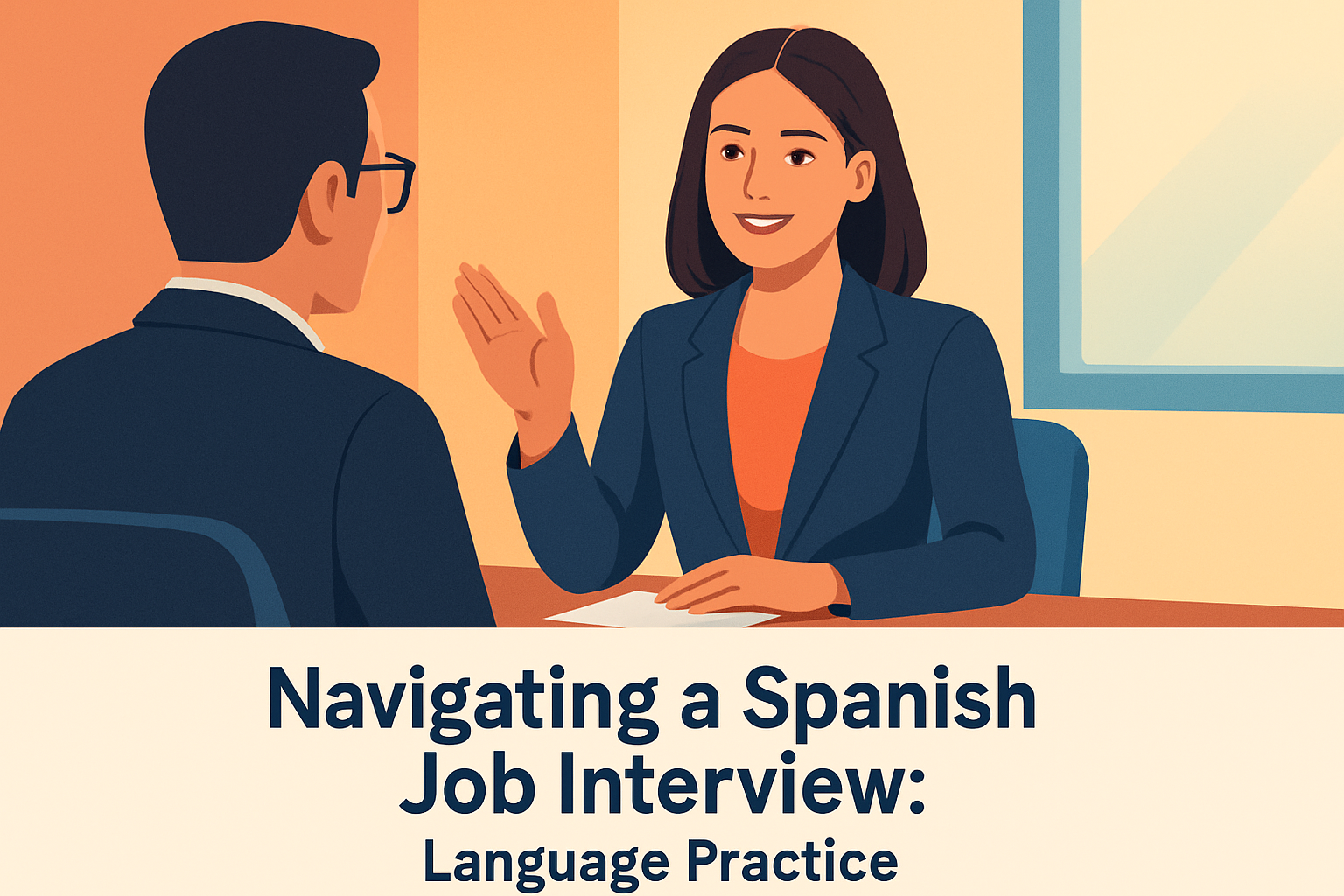
Navigating a Spanish job interview requires more than memorizing polite phrases; it demands practical language control, cultural awareness, and the confidence to answer clearly under pressure. A Spanish job interview is a professional conversation conducted partly or fully in Spanish to evaluate your qualifications, communication skills, and fit for a role. In my work helping candidates prepare for multilingual hiring processes, I have seen strong applicants lose momentum because they studied grammar in isolation instead of practicing interview language in realistic scenarios. That matters because employers are not only listening for correct verb endings. They are assessing whether you can explain your experience, respond to follow-up questions, understand nuance, and handle professional small talk naturally.
For job seekers targeting roles in Spain, Latin America, or international companies with Spanish-speaking teams, interview Spanish can directly affect hiring outcomes. Recruiters often use the interview to measure fluency, but they also look for precision, tone, and cultural appropriateness. The language of interviews includes key functions such as summarizing your background, describing achievements, asking informed questions, and discussing salary or availability tactfully. Terms like competencias, experiencia laboral, fortalezas, and objetivos profesionales appear repeatedly, and knowing how to use them in context makes a visible difference. Effective preparation combines vocabulary review, listening practice, answer rehearsal, and feedback. When those parts work together, candidates sound professional rather than memorized, and that is usually what moves them forward.
What Spanish interviewers usually ask and what they are really evaluating
Most Spanish job interviews follow recognizable patterns. Common questions include “Háblame de ti,” “¿Por qué quieres trabajar aquí?”, “¿Cuáles son tus fortalezas y debilidades?”, and “Cuéntame sobre un reto profesional.” On the surface, these seem simple, but each one tests several skills at once. “Háblame de ti” checks whether you can give a concise career summary without reciting your full résumé. “¿Por qué quieres trabajar aquí?” tests research, motivation, and vocabulary related to the industry. Questions about strengths and weaknesses evaluate self-awareness, honesty, and your ability to frame traits professionally. Behavioral questions look for structured storytelling, usually with context, action, and result.
Interviewers are also listening for register. In professional Spanish, usted is often safer than tú unless the company culture is clearly informal. Candidates should know standard transition phrases such as en mi puesto anterior, fui responsable de, logré mejorar, and aprendí a. These connectors create fluid answers and help avoid the stop-start delivery that makes even competent speakers sound uncertain. I advise candidates to prepare a ninety-second professional introduction, three quantified achievement stories, and a short explanation of why the company interests them. This preparation covers a large share of typical interview questions while giving you flexible language you can adapt in real time.
Another overlooked point is listening comprehension. Many candidates practice speaking only, then struggle when the interviewer uses a regional accent, speaks quickly, or asks layered questions. Spanish in Madrid, Mexico City, Bogotá, and Buenos Aires can differ in speed, vocabulary, and rhythm. You do not need native-level mastery of every variety, but you do need exposure to authentic speech. Listening to company videos, business podcasts, and recorded mock interviews helps you catch common phrases such as disponibilidad inmediata, gestión de proyectos, trato con clientes, and expectativas salariales. Better listening leads to better answers because you respond to the actual question instead of the one you expected.
How to practice Spanish interview language effectively
The best language practice for a Spanish job interview is targeted, spoken, and repetitive. General app exercises have some value, but they rarely teach the phrases needed to discuss deadlines, leadership, conflict resolution, or metrics. Start by building an interview phrase bank. Group language by purpose: introductions, experience, achievements, teamwork, problem solving, and questions for the employer. For example, under achievements, keep sentence frames like “Aumenté las ventas un 15% en seis meses” or “Reduje el tiempo de respuesta del equipo mediante un nuevo proceso.” These frames help you speak with specificity, which recruiters trust more than broad claims such as “Soy muy trabajador.”
Next, rehearse aloud, not silently. Spoken rehearsal exposes weak points in pronunciation, verb agreement, and pacing. Record yourself answering ten core questions, then review whether your answer is clear, concise, and easy to follow. I often hear candidates use long, English-influenced sentences that collapse midway. Shorter Spanish sentences are usually stronger in interviews. Instead of saying everything at once, break ideas into manageable units. If your level is intermediate, prioritize accuracy and clarity over complexity. A direct answer in correct Spanish creates a better impression than a complicated answer full of errors. This is especially true in customer-facing, operations, and cross-functional roles where communication reliability matters.
Mock interviews are essential because they add pressure, and pressure changes language performance. Practice with a tutor, colleague, language exchange partner, or hiring coach who can interrupt, ask follow-up questions, and challenge vague answers. If possible, simulate the actual format: video interview, phone screen, panel interview, or in-person meeting. Use tools like italki for speaking practice, DeepL Write to check phrasing, Forvo for pronunciation, and LinkedIn to review company terminology. The Common European Framework of Reference, or CEFR, is also useful. A candidate at B1 level can succeed in some interviews with preparation, while B2 usually allows more flexibility and confidence in professional discussion.
| Practice area | What to prepare in Spanish | Example |
|---|---|---|
| Introduction | One-minute career summary | “Soy analista de marketing con tres años de experiencia en campañas digitales.” |
| Achievements | Results with numbers | “Incrementé la tasa de conversión un 12% mediante pruebas A/B.” |
| Challenges | Problem, action, result structure | “Había retrasos en el proyecto, así que coordiné reuniones semanales y cumplimos el plazo.” |
| Motivation | Reasons for applying | “Me interesa su enfoque en expansión internacional y experiencia del cliente.” |
| Questions | Thoughtful closing questions | “¿Cómo definen el éxito en este puesto durante los primeros seis meses?” |
Answering with confidence: examples, structure, and cultural nuance
Confidence in a Spanish interview comes from structure, not from trying to sound perfect. A reliable method is to answer in three parts: brief context, specific action, measurable result. This approach works especially well for competency questions. If asked, “Cuéntame sobre una vez que resolviste un problema,” do not begin with excessive background. State the situation, explain what you did, and finish with the outcome. In coaching sessions, I have found that candidates who organize answers this way are easier to understand and appear more senior, even when their Spanish is not advanced. Structure signals professionalism.
Cultural nuance also matters. In many Spanish-speaking professional contexts, warmth and courtesy are expected, but over-familiarity can hurt credibility early in the process. Begin with formal greetings such as “Mucho gusto” and “Gracias por su tiempo.” If the interviewer shifts to a more informal style, you can adapt gradually. Be careful with direct translations from English. “I am excited” does not always need “Estoy excitado,” which often carries a different meaning; “Me hace mucha ilusión” or “Estoy muy motivado” is usually safer. Similarly, “actually” is not “actualmente” in most contexts. False cognates are a common source of avoidable mistakes.
Another area where nuance matters is discussing weaknesses, salary, and employment gaps. For weaknesses, choose a real but manageable point and explain how you address it. For salary, use clear, professional language: “Estoy abierto a una oferta competitiva acorde con las responsabilidades del puesto y el mercado.” For gaps, stay honest and concise, then pivot to what you learned or improved during that period. If you do not understand a question, asking for clarification is acceptable and often smart. Use phrases like “¿Podría repetir la pregunta, por favor?” or “Si he entendido bien, me pregunta sobre…” That shows composure and prevents costly misunderstandings.
Last-minute preparation for virtual and in-person Spanish interviews
The final twenty-four hours before a Spanish interview should focus on sharpening, not cramming. Review your professional summary, your top achievement stories, and key vocabulary related to the job description. Read the company’s website in Spanish if available, especially sections on products, mission, and recent news. This gives you industry terms and helps you answer “¿Por qué nuestra empresa?” with substance. For example, if the company emphasizes transformación digital, sostenibilidad, or atención al cliente, mirror that language naturally in your responses. Recruiters notice when candidates understand how the organization describes itself.
For virtual interviews, test audio, camera, internet connection, screen name, and interview platform in advance. Language performance drops quickly when technology creates stress. Keep notes nearby, but do not script full answers; reading is obvious and weakens eye contact and spontaneity. For in-person interviews, arrive early enough to settle your pace and breathing. Dress appropriately for the sector, because presentation shapes first impressions before your Spanish does. In both formats, prepare your closing questions in Spanish and end with a concise statement of interest: “Gracias por la oportunidad. El puesto me interesa mucho y creo que mi experiencia puede aportar valor al equipo.” A strong close reinforces competence and motivation.
After the interview, send a short thank-you message in Spanish if that fits the company culture. Mention one specific point from the conversation and restate your interest. This follow-up demonstrates professionalism and gives you another chance to show written command of the language. Over time, the best way to improve interview Spanish is to treat each practice session like a performance skill, not a vocabulary quiz. Focus on realistic questions, role-specific language, active listening, and concise delivery. If you prepare this way, you will not just survive a Spanish job interview. You will communicate your value clearly, build trust quickly, and give employers a solid reason to move you to the next stage. Start practicing your answers aloud today, refine them with feedback, and turn preparation into confidence.
Frequently Asked Questions
1. How can I practice Spanish effectively for a job interview without sounding memorized?
The most effective way to practice is to prepare structured answers, not fixed scripts. In a Spanish job interview, employers want to hear that you can communicate naturally, adapt to follow-up questions, and explain your experience clearly under pressure. Start by identifying the topics that almost always come up: your background, strengths, previous roles, achievements, reasons for applying, and salary expectations. For each one, build a flexible answer framework in Spanish with key vocabulary, transition phrases, and examples rather than trying to memorize every sentence word for word.
A strong method is to rehearse out loud using realistic interview prompts such as Háblame de ti, ¿Por qué quieres trabajar aquí?, and ¿Cuál ha sido un reto profesional importante para ti?. Record yourself and listen for hesitation, overuse of filler words, and grammatical patterns that cause problems. Then repeat your answer with small variations so you learn to express the same idea in more than one way. This helps you sound composed instead of robotic. It is also useful to practice with someone who can interrupt you, ask for clarification, or challenge a point, because real interviews are rarely linear. The goal is not perfect Spanish in an academic sense; it is professional clarity, confidence, and the ability to respond in real time.
2. What kinds of Spanish interview questions should I expect, and how should I prepare for them?
Most Spanish job interviews include a blend of standard professional questions, role-specific questions, and conversational follow-ups designed to test your ability to communicate spontaneously. You should expect questions about your experience, current responsibilities, technical knowledge, work style, teamwork, conflict resolution, and motivation for pursuing the role. Depending on the company, you may also be asked situational questions such as how you would handle a difficult client, manage deadlines, or prioritize competing tasks. If the interviewer is assessing language ability closely, they may ask you to expand on an example, describe a process, or explain a past decision in detail.
Preparation should focus on content and delivery. Create clear Spanish answers for common themes: who you are professionally, what you have accomplished, what value you bring, and why you are interested in the position. Use specific examples with measurable outcomes whenever possible. For example, instead of saying you are organized, explain how you improved a workflow, reduced delays, or managed multiple projects successfully. Also prepare for softer but important questions like ¿Cuáles son tus puntos fuertes y débiles? and ¿Por qué dejaste tu último trabajo?. These are not just language tests; they reveal your judgment, professionalism, and self-awareness. The more your answers are grounded in real experience and expressed in simple, accurate Spanish, the stronger your performance will be.
3. How important is cultural awareness in a Spanish job interview?
Cultural awareness matters a great deal because success in an interview is not based only on vocabulary or grammar. It also depends on whether your communication style feels professional, respectful, and appropriate in the context of the company and country. In Spanish-speaking environments, tone, formality, and interpersonal dynamics can vary, but one consistent principle is that politeness and clarity carry weight. Knowing when to use formal language, how directly to present your accomplishments, and how to show enthusiasm without sounding careless can influence the interviewer’s impression of you.
For example, beginning with a more formal register is usually the safer choice unless the interviewer clearly signals a more relaxed style. Listening carefully, not interrupting, and answering with enough detail to demonstrate competence are all important. At the same time, you should avoid overcomplicating your language in an attempt to sound advanced. A concise, well-organized answer is usually more persuasive than a complicated one with mistakes. Cultural awareness also includes understanding what employers may value in self-presentation: reliability, collaboration, professionalism, and genuine interest in the role. If you show that you can communicate effectively and navigate workplace expectations in Spanish, you are demonstrating employability, not just language ability.
4. What should I do if I do not understand a question during the interview?
Not understanding a question does not automatically damage your interview. In fact, how you handle the moment can show professionalism, composure, and strong communication habits. The key is not to panic or guess wildly. If a question is unclear, ask politely for repetition or clarification. Phrases such as ¿Podría repetir la pregunta, por favor?, Perdón, ¿podría explicarlo de otra manera?, or Si entiendo bien, ¿me está preguntando sobre…? are extremely useful because they buy you time and confirm meaning. This is far better than answering the wrong question confidently.
You can also use strategic paraphrasing. Restate what you think the interviewer means and ask for confirmation before continuing. This shows active listening and reduces the chance of misunderstanding. If you know part of what was asked but need a moment to organize your response, begin with a short framing phrase such as Es una buena pregunta or Desde mi experiencia while you think. Interviewers are generally more interested in your ability to recover smoothly than in flawless comprehension at every second. A calm clarification request demonstrates maturity, especially in multilingual hiring processes where the role itself may require asking thoughtful questions rather than pretending to understand everything immediately.
5. How can I sound confident in Spanish even if I am not fully fluent?
Confidence in an interview does not come from using the most advanced grammar; it comes from being understandable, organized, and intentional. Many candidates undermine themselves by trying to speak beyond their actual level. A better strategy is to use accurate, professional Spanish that you can control. Shorter sentences, clear structure, and strong examples create a better impression than complicated wording filled with pauses and corrections. Think in terms of message delivery: what do you want the interviewer to understand about your experience, strengths, and potential contribution? If that message is clear, your Spanish will sound stronger.
To build that confidence, prepare opening and transition phrases that help you stay in control of your answers. For example, you can organize responses with language such as En primer lugar, Además, Por ejemplo, and En resumen. These expressions make your speech sound more polished and give your answer a logical flow. It also helps to practice speaking at a slightly slower pace than normal so your pronunciation stays clear. Confidence is also nonverbal: eye contact, posture, calm breathing, and a steady tone all reinforce credibility. If your fluency is still developing, be honest but positive. Show that you can operate professionally in Spanish, continue improving, and communicate effectively when it matters. For many employers, that combination is more valuable than perfect fluency without substance.


