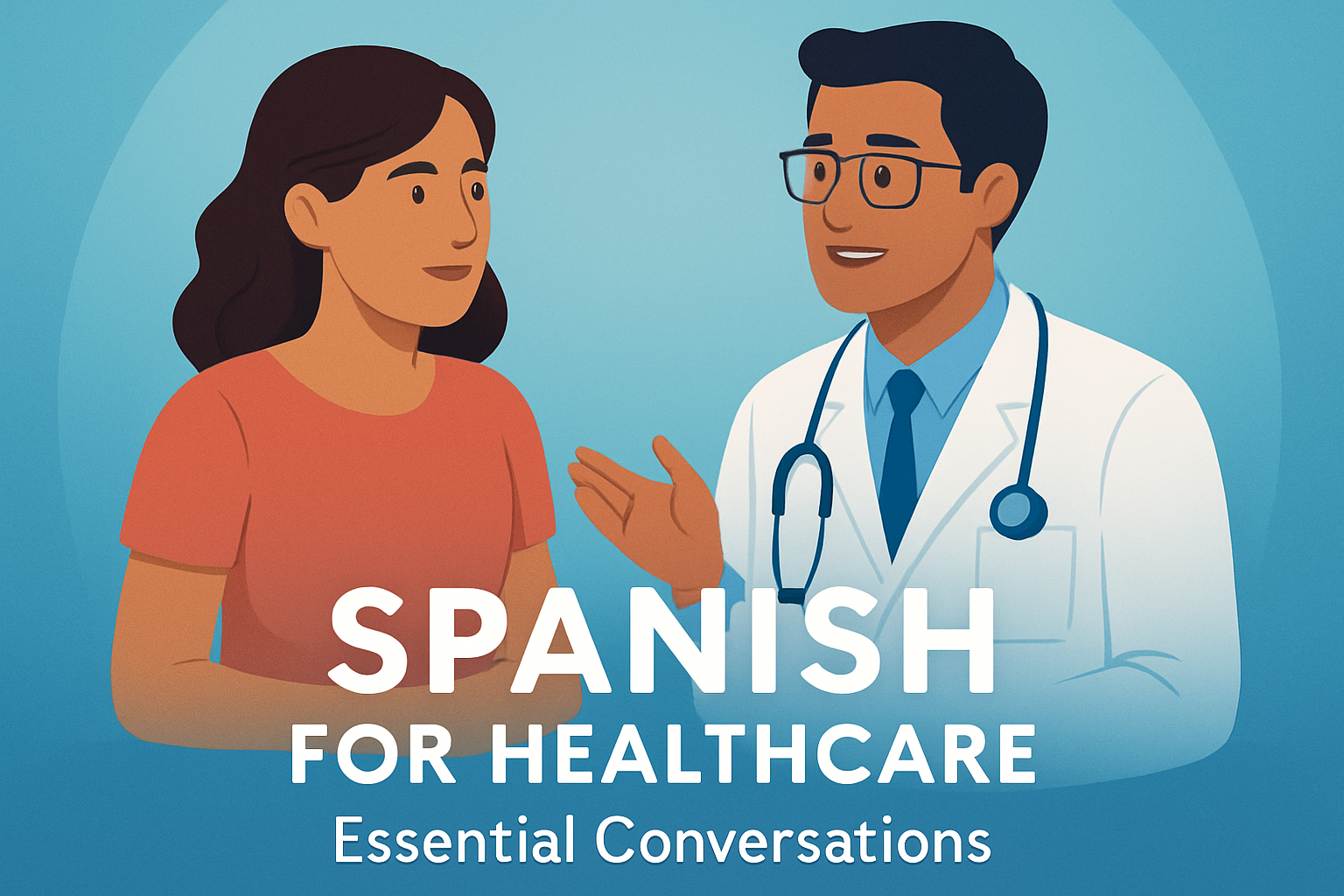
Spanish for healthcare is not just a language skill; it is a patient safety tool that improves communication, trust, and clinical outcomes in hospitals, clinics, urgent care centers, pharmacies, and community health programs. In the United States, Spanish is the second most spoken language, and millions of patients prefer discussing symptoms, medications, family history, and consent questions in Spanish. When clinicians, front-desk teams, medical assistants, care coordinators, and billing staff can handle essential conversations in clear, respectful Spanish, they reduce misunderstandings that often lead to missed instructions, delayed treatment, lower adherence, and preventable frustration. In my work with multilingual healthcare content and patient communication training, I have seen simple phrases make an immediate difference: a patient relaxes when greeted properly, a parent asks a fuller question, and discharge instructions suddenly become usable instead of intimidating.
The phrase Spanish for healthcare refers to the practical Spanish vocabulary, sentence patterns, pronunciation habits, and cultural awareness needed in medical settings. It is not the same as conversational travel Spanish. Healthcare Spanish focuses on high-risk moments: identifying the chief complaint, asking about pain, confirming allergies, reviewing medications, explaining tests, giving directions, discussing follow-up, and knowing when to bring in a qualified medical interpreter. The goal is not to replace interpreters or encourage staff to work beyond their language competence. The goal is to build communication capacity for routine interactions while protecting accuracy in legally, ethically, and clinically sensitive conversations. That distinction matters because language access standards, including federal civil rights obligations and accreditation expectations, require meaningful communication with patients who have limited English proficiency.
Why does this matter now? Because healthcare organizations are judged not only on clinical quality, but also on patient experience, equity, and readmission prevention. Language barriers affect all four. Research from public health agencies and medical journals has consistently linked limited language access with lower comprehension, less preventive care, and greater risk of adverse events. A clinician may think, “Take this twice daily with food” is straightforward, but if the patient hears only fragments, adherence becomes guesswork. A receptionist may ask for insurance information too quickly, and the patient may nod politely without understanding next steps. Essential Spanish conversations close these gaps. They support safer triage, smoother registration, more accurate history taking, and better follow-through after the visit.
For searchers asking what they actually need to learn first, the answer is simple: start with essential conversations, not long word lists. Learn how to greet patients, verify identity, ask where it hurts, understand timing and severity, explain common procedures, and provide clear discharge instructions. Just as important, learn respectful limits, such as saying that you want to bring in an interpreter to make sure everything is exact. That balanced approach is what makes healthcare Spanish effective. It is practical, patient-centered, and rooted in real clinical workflows.
Why Spanish communication changes patient care
Strong Spanish communication improves care because medicine depends on precise information exchange. Patients must describe symptoms accurately, staff must gather complete histories, and clinicians must explain treatment in ways patients can act on at home. In practice, the biggest gains often come from ordinary interactions. A nurse who says “¿Dónde le duele?” instead of relying on gestures gets a faster pain assessment. A medical assistant who can ask “¿Es alérgico a algún medicamento?” catches a key safety detail before the chart is finalized. A pharmacist who confirms “Tómelo dos veces al día” and then checks understanding reduces the chance of misuse.
There is also a trust dimension. Patients who feel seen linguistically are more likely to share sensitive information, including mental health concerns, sexual health issues, domestic safety questions, and financial barriers to treatment. I have watched intake quality improve simply because the first thirty seconds of an encounter were handled respectfully in Spanish. Tone matters as much as terminology. Saying “Buenos días, ¿en qué le puedo ayudar?” signals patience and professionalism. Rushing through memorized phrases without listening does the opposite.
Healthcare teams should also understand what Spanish communication cannot do on its own. Basic proficiency is useful for greetings, screening questions, and common instructions, but informed consent, serious diagnoses, surgical explanations, and complex medication counseling often require a trained interpreter. That is not a weakness; it is best practice. The safest organizations train staff to use direct Spanish within defined boundaries and escalate to interpreter services when complexity rises. This combination supports both efficiency and compliance.
Core phrases for reception, triage, and patient intake
The most useful Spanish phrases in healthcare are those tied to repeated workflows. At the front desk, staff need language for greeting, scheduling, insurance, identification, forms, and wait times. During triage, they need symptom questions, pain scales, duration, pregnancy screening, and emergency escalation. In exam rooms, clinicians need body parts, symptom descriptors, timing, severity, associated symptoms, and medication review phrases. These are the building blocks of essential conversations because they occur every day across nearly every setting.
Here are examples I recommend teams master first. For reception: “¿Cuál es su nombre completo?”, “¿Me puede dar su fecha de nacimiento?”, “¿Tiene identificación?”, “Por favor, tome asiento,” and “Vamos a llamarle pronto.” For triage: “¿Qué síntomas tiene?”, “¿Cuándo empezó?”, “¿Tiene fiebre?”, “¿Le falta el aire?”, “Del cero al diez, ¿cuánto dolor tiene?” For clinical intake: “¿Dónde le duele?”, “¿Toma medicamentos?”, “¿Es alérgico a algún medicamento?”, and “¿Está embarazada?” These are not textbook extras; they are operational essentials.
Pronunciation and comprehension deserve attention too. Staff do not need native accents, but they do need intelligibility. Mispronouncing numbers, dates, dosage frequency, or negatives can create real risk. I advise teams to practice chunks rather than isolated words. For example, “una vez al día,” “dos veces al día,” and “antes de comer” should be learned as complete units. It also helps to use teach-back in plain Spanish: “Para confirmar, ¿me puede decir cómo va a tomar la medicina?” That one question often reveals misunderstandings that would otherwise remain hidden until the patient returns worse, not better.
| Clinical task | Essential Spanish phrase | Plain-English meaning | Why it matters |
|---|---|---|---|
| Greeting | Buenos días, ¿en qué le puedo ayudar? | Good morning, how can I help you? | Sets a respectful tone and opens communication. |
| Identity verification | ¿Cuál es su fecha de nacimiento? | What is your date of birth? | Supports correct patient identification. |
| Chief complaint | ¿Qué le trae hoy a la clínica? | What brings you in today? | Starts the visit with the patient’s main concern. |
| Pain assessment | Del cero al diez, ¿cuánto dolor tiene? | From zero to ten, how much pain do you have? | Provides a measurable symptom baseline. |
| Medication review | ¿Qué medicamentos toma actualmente? | What medicines are you currently taking? | Reduces medication reconciliation errors. |
| Allergy check | ¿Es alérgico a algún medicamento? | Are you allergic to any medication? | Prevents avoidable adverse reactions. |
| Interpreter boundary | Voy a pedir un intérprete para asegurar que todo esté claro. | I’m going to request an interpreter to make sure everything is clear. | Protects accuracy during complex discussions. |
How to discuss symptoms, pain, and common conditions
Symptom discussion is where healthcare Spanish becomes most clinically valuable. Patients rarely present with neat textbook language. They describe sensations, timing, triggers, and worries in ordinary words. Staff need to understand both standard terms and common phrasing. For pain, useful descriptors include “dolor agudo” for sharp pain, “ardor” for burning, “presión” for pressure, “hinchazón” for swelling, “mareo” for dizziness, “náuseas” for nausea, and “cansancio” for fatigue. Body location questions matter just as much: “¿En el pecho?”, “¿En la espalda?”, “¿En la garganta?”, or “¿En el abdomen?”
Good symptom interviewing follows a structured pattern that works in Spanish as well as English. Ask what the symptom is, where it is, when it started, how severe it is, what makes it better or worse, and whether there are associated symptoms. For example: “¿Cuándo empezó?”, “¿Es constante o viene y va?”, “¿Empeora al caminar?”, and “¿Tiene tos, fiebre, o vómitos?” This structure mirrors recognized clinical history frameworks and helps avoid fragmented questioning. In urgent care and emergency settings, direct yes-or-no questions in Spanish can quickly identify red flags such as chest pain, shortness of breath, severe headache, confusion, and uncontrolled bleeding.
Common conditions require specific language. For diabetes care, patients need terms like “azúcar en la sangre,” “insulina,” and “nivel de glucosa.” For respiratory illness, key phrases include “dificultad para respirar,” “congestión,” and “sibilancias.” In obstetrics, teams need “embarazo,” “contracciones,” “sangrado,” and “movimientos del bebé.” In pediatrics, caregivers often need reassurance and simple instructions: “¿Ha comido?”, “¿Ha mojado el pañal?”, and “¿Tiene fiebre desde ayer?” The more closely vocabulary aligns with actual patient journeys, the more useful it becomes.
Giving instructions, medications, and follow-up clearly
Treatment language must be concrete. Vague Spanish causes poor adherence, especially when patients are tired, anxious, or in pain. The safest approach is to give short instructions, one action at a time, using familiar verbs. Say “Tome esta medicina con comida” instead of a complicated sentence. Say “Descanse, tome agua, y regrese si empeora” rather than compressing multiple ideas into one long explanation. Clarity matters more than sounding advanced.
Medication counseling deserves extra care because dosing errors are common across languages. Teams should state the dose, frequency, route, timing, and duration in plain Spanish. Examples include “Tome una tableta por la mañana y una por la noche,” “Use esta crema dos veces al día,” and “No maneje después de tomar esta medicina.” Avoid unsafe shortcuts and check understanding with teach-back. In pharmacy settings, I strongly recommend pairing spoken Spanish with translated labels, pictograms when appropriate, and written after-visit summaries. Spoken language alone is rarely enough for complex regimens.
Follow-up instructions should answer the patient’s next practical questions: when to return, what warning signs to watch for, where to go if symptoms worsen, and whom to call. Phrases such as “Regrese en una semana,” “Llame si tiene fiebre alta,” and “Vaya a la sala de emergencia si no puede respirar” are direct and useful. For chronic disease management, staff should also explain monitoring steps, such as checking blood pressure, blood sugar, or wound changes at home. This is where healthcare Spanish supports continuity of care rather than just the single visit. If your organization publishes related resources on patient education, preventive care, or interpreter services, internal linking between those pages helps both users and search visibility.
Culture, respect, and when to use a medical interpreter
Effective healthcare Spanish is not only about words; it is also about respect, formality, and safety boundaries. In most clinical settings, using “usted” rather than “tú” is the professional default unless the patient clearly invites a more informal style. Addressing adults as “señor,” “señora,” or by their preferred name can reduce distance without sounding casual. Family involvement also varies. Some patients want relatives present for nearly every discussion, while others do not. Ask rather than assume: “¿Quiere que su familiar esté aquí?”
Cultural humility matters because Spanish-speaking patients are not a single group. Vocabulary, accent, and healthcare expectations differ across Mexico, Puerto Rico, Cuba, Central America, South America, and Spain. Even basic medical terms can vary. That is why plain phrasing usually works better than regional slang. It is also why listening carefully is a clinical skill. If a patient says a term you do not know, ask for clarification instead of pretending to understand. Accuracy is more respectful than false fluency.
Every healthcare worker should know when to stop and bring in a qualified interpreter. Use one for consent, refusal of treatment, end-of-life discussions, behavioral health crises, suspected abuse, surgery, serious new diagnoses, and any conversation where misunderstanding could change outcomes. Family members should not be the default interpreters, especially children. Professional interpreters are trained to preserve meaning, manage turn-taking, and reduce omissions. In my experience, the highest-performing teams normalize this by saying so clearly: “Quiero asegurarme de explicarlo correctamente, así que voy a pedir un intérprete.” Patients usually appreciate the care behind that decision.
Training methods, tools, and realistic ways to improve fast
Healthcare teams can improve medical Spanish quickly if training matches real workflows. The best programs do not begin with grammar drills; they begin with the top fifty to one hundred interactions staff use every day. Front-desk staff practice registration dialogues. Nurses rehearse triage and discharge language. Clinicians role-play history taking for common complaints such as cough, fever, abdominal pain, urinary symptoms, and medication refills. This task-based approach mirrors how adults learn effectively under time pressure.
Named tools help. Teams often build phrase banks in shared knowledge bases, use spaced-repetition apps for retention, and record standard scripts for pronunciation practice. Organizations may also align language training with CLAS standards for culturally and linguistically appropriate services, Joint Commission communication expectations, and plain-language principles from health literacy frameworks. These are not abstract references; they give structure to training and reinforce that language access is part of quality care, not a side project.
Measure progress realistically. A useful benchmark is not “speaks fluent Spanish.” It is “can complete intake safely,” “can provide routine discharge instructions,” or “knows when to call an interpreter.” Supervisors can audit encounters, review patient feedback, and identify breakdown points. Over time, teams should update their Spanish resources based on real patient questions, new service lines, seasonal illness patterns, and medication counseling needs. If you want to strengthen care quality, start small, practice consistently, and make essential Spanish conversations part of everyday operations.
Spanish for healthcare matters because communication shapes diagnosis, safety, adherence, patient experience, and trust. The most effective approach is practical: learn the core phrases used in registration, triage, symptom assessment, medication review, treatment instructions, and follow-up. Use clear, respectful Spanish, rely on teach-back to confirm understanding, and involve qualified interpreters whenever conversations become high risk or highly complex. That balance protects patients while improving efficiency for staff and reducing friction across the care journey.
The main benefit is straightforward. When healthcare teams can handle essential conversations in Spanish, patients understand more, ask better questions, and follow care plans with greater confidence. Small language improvements produce outsized operational results: cleaner intake, fewer errors, better education, and stronger relationships. This is especially important in primary care, emergency medicine, pediatrics, pharmacy, and community health, where speed and comprehension often determine whether a patient gets the right care at the right time.
If you are building Spanish skills for healthcare, focus on the next conversation your team will actually have. Create a short phrase list for that workflow, practice it aloud, test comprehension, and define clear interpreter boundaries. Then expand from there. Essential conversations are where better language access begins, and better language access is where better care becomes visible to every patient who walks through the door.
Frequently Asked Questions
Why is Spanish for healthcare considered a patient safety tool rather than just a helpful language skill?
Spanish for healthcare directly affects the quality and safety of patient care because clear communication is central to every stage of the medical experience. When patients can describe symptoms accurately in Spanish, clinicians are more likely to understand onset, severity, duration, triggers, and related concerns without losing important details. That can improve triage decisions, reduce misunderstandings during diagnosis, and support more appropriate treatment plans. In hospitals, clinics, urgent care centers, pharmacies, and community health settings, even a small communication gap can lead to missed allergies, incorrect medication use, confusion about follow-up instructions, or incomplete informed consent.
It also strengthens trust, which is a major factor in healthcare outcomes. Patients who feel understood are often more willing to share sensitive information about pain, mental health, pregnancy, family history, chronic disease management, or barriers to care. That trust can improve adherence to treatment, attendance at follow-up appointments, and willingness to ask questions before a problem worsens. For front-desk staff, medical assistants, care coordinators, and billing teams, Spanish communication helps prevent errors in scheduling, registration, insurance discussions, and referral coordination. In this sense, Spanish is not simply a professional advantage. It is a practical tool that supports safer care, stronger relationships, and better clinical results.
Who benefits most from learning essential Spanish conversations in healthcare settings?
Nearly every role in a healthcare organization benefits from learning essential Spanish, not just physicians and nurses. Front-desk teams often provide the first point of contact, so their ability to greet patients, confirm appointments, explain wait times, verify demographic information, and respond to basic concerns can shape the entire patient experience. Medical assistants and nursing staff use Spanish during rooming, vital signs collection, symptom review, medication reconciliation, and discharge preparation. Clinicians benefit when they can ask focused questions, explain common conditions, discuss treatment options, and confirm understanding in simple, respectful language.
Care coordinators, social workers, case managers, pharmacy staff, and billing personnel also gain significant value from Spanish communication skills. These roles frequently handle referrals, transportation issues, medication instructions, insurance explanations, payment questions, and access to community resources. For Spanish-speaking patients, these conversations are often just as important as the clinical encounter itself. Community health workers and outreach teams benefit as well, especially when discussing preventive care, vaccinations, prenatal services, diabetes education, or chronic disease management. Even employees who are not fluent can improve the patient experience by learning high-frequency healthcare phrases, culturally respectful communication habits, and the right moments to involve a qualified interpreter. The broad benefit is simple: when more members of the care team can communicate effectively in Spanish, patients encounter fewer obstacles and receive more coordinated, compassionate care.
What types of conversations are most important to learn in medical Spanish first?
The most important conversations to learn first are the ones that happen most often and carry the greatest risk if misunderstood. Symptom-related questions are usually a top priority. Healthcare professionals should be able to ask where something hurts, when symptoms started, how severe they are, whether they are getting better or worse, and whether there are related issues such as fever, nausea, dizziness, shortness of breath, or swelling. Medication conversations are equally essential, including how often a patient takes a medicine, whether they missed doses, whether they have side effects, and whether they understand how to use inhalers, insulin, antibiotics, or pain medication correctly.
Other high-value areas include allergies, past medical history, surgical history, pregnancy-related questions, family history, and basic preventive care discussions. Intake and administrative conversations also matter more than many people realize. Being able to explain forms, confirm identity, discuss insurance basics, schedule follow-up visits, and give clear arrival instructions can reduce confusion and missed appointments. Discharge and aftercare language should also be a priority because patients need to understand warning signs, when to return, how to take medications, dietary restrictions, wound care instructions, and the next steps in their care plan. In short, the best starting point is practical, repeatable communication that supports safety, routine workflow, and patient understanding across the full care journey.
Can healthcare staff use basic Spanish on their own, or should they always rely on professional interpreters?
Basic Spanish can be extremely useful in healthcare, but it should be used responsibly and within clear limits. Staff can often use simple Spanish for greetings, comfort, routine directions, basic intake questions, and other low-risk interactions that help patients feel welcomed and oriented. For example, it can be helpful to say where to sit, ask whether the patient has pain, confirm a date of birth, explain that a clinician will arrive shortly, or offer simple reassurance during a stressful moment. These interactions can make care feel more personal and reduce anxiety, especially when patients are navigating unfamiliar systems.
However, professional interpreters remain essential for complex, high-risk, legal, or emotionally sensitive conversations. That includes informed consent, diagnosis discussions, treatment alternatives, surgical explanations, medication risks, discharge instructions, end-of-life decisions, mental health assessments, and any situation where misunderstanding could affect safety or rights. Staff should avoid overestimating their fluency. A few memorized phrases are not enough for nuanced clinical communication. The safest approach is to combine practical Spanish skills with strong interpreter practices: use Spanish to build rapport and improve workflow, but bring in a qualified interpreter whenever accuracy, complexity, or patient comprehension may be in question. This balanced approach protects patients, supports staff confidence, and aligns language access with high standards of care.
How does learning Spanish improve trust, satisfaction, and outcomes for Spanish-speaking patients?
Learning Spanish improves trust because it signals respect, effort, and inclusion. Many Spanish-speaking patients feel more comfortable discussing symptoms, concerns, and personal history in the language they use at home. When healthcare workers can communicate directly, even at a basic but competent level, patients often feel less intimidated and more willing to participate in the conversation. They are more likely to ask clarifying questions, mention barriers such as cost or transportation, and disclose details that might otherwise remain unspoken. That stronger connection can be especially valuable in primary care, pediatrics, women’s health, pharmacy counseling, chronic disease management, and community health programs where long-term relationships matter.
Better communication also improves satisfaction and outcomes because patients are more likely to understand what is happening and what they need to do next. They can follow medication instructions more accurately, prepare properly for tests or procedures, recognize warning signs earlier, and return for follow-up care with fewer misunderstandings. Families may also feel more engaged when key explanations are delivered in a language they understand, which can support caregiving at home. Over time, these improvements contribute to stronger adherence, fewer avoidable errors, more effective preventive care, and a more equitable healthcare experience. For organizations, investing in Spanish communication skills is not just about convenience. It is a meaningful way to improve patient-centered care, reduce barriers, and serve communities more effectively.


