Peruvian Spanish is a fascinating linguistic tapestry that reflects the rich cultural history of Peru. This unique variant of the Spanish language is spoken by millions across the country, infusing the typical Latin American Spanish with a distinct regional flavor. What sets it apart are its significant influences from indigenous languages, most notably Quechua and Aymara. These ancient languages have contributed a range of words and expressions that are seamlessly woven into everyday conversations. Learning Peruvian Spanish offers more than just an academic challenge; it opens a window to understanding the diverse cultural landscapes and historical contexts of the Andean region. Travelers, linguists, and students of Spanish alike can find immense value in mastering this particular dialect. This article delves deep into the intricacies of Peruvian Spanish, exploring its origins, unique phonological features, regional variations, and the cultural significance of blended vocabulary. Whether you are planning a trip to Peru, or simply wish to enrich your Spanish language skills, this comprehensive guide aims to equip you with a thorough understanding of how Peruvian Spanish stands out as a compelling blend of language and culture.
Historical Origins and Indigenous Influence
The historical origins of Peruvian Spanish date back to the Spanish conquest of the Inca Empire in the 16th century. As Spanish colonizers and missionaries established their presence, they imposed their language on the indigenous populations. However, the indigenous people of the region did not abandon their languages. Instead, a syncretism occurred where both languages coexisted, resulting in a dynamic linguistic landscape. Quechua, the language of the Inca Empire, plays a crucial role in shaping Peruvian Spanish. Many Quechua words have been integrated into the local Spanish lexicon, particularly in areas related to agriculture, nature, and daily life. For instance, the word “chompa” (sweater) and “cancha” (field) are of Quechua origin. Similarly, Aymara, another significant indigenous language, has also left its mark. Words like “chuyo” (knitted hat) demonstrate the rich cultural lexicon that Peruvian Spanish has inherited. This incorporation of indigenous terms into Spanish reflects not only the historical interactions but also the ongoing respect for indigenous cultures and their contributions to Peruvian identity. The syncretism seen in Peruvian Spanish thus serves as a testament to the enduring legacy of these ancient languages.
Phonological Characteristics
Peruvian Spanish exhibits several distinctive phonological characteristics that set it apart from other Spanish dialects. One of the most notable features is the pronunciation of the “s” at the end of syllables and words. In coastal regions, the “s” is often aspirated, pronounced with a soft, breathy sound, somewhat resembling an “h.” For instance, “escuelas” (schools) might sound like “eh-kuelah.” Additionally, in the Andean regions, the “r” and “l” sounds can sometimes be interchanged, a phonological trait influenced by indigenous languages. Sometimes, “r” may be pronounced more like a rolled “l” or vice versa. Another characteristic is the tendency to drop the “d” in the past participle form, turning “cansado” into “cansao.” These phonetic nuances not only contribute to the unique sound of Peruvian Spanish but also reveal the cross-cultural blending that has shaped its evolution. By recognizing and adapting to these features, learners and speakers can gain deeper insights into the local culture and improve their linguistic competence.
Regional Variations
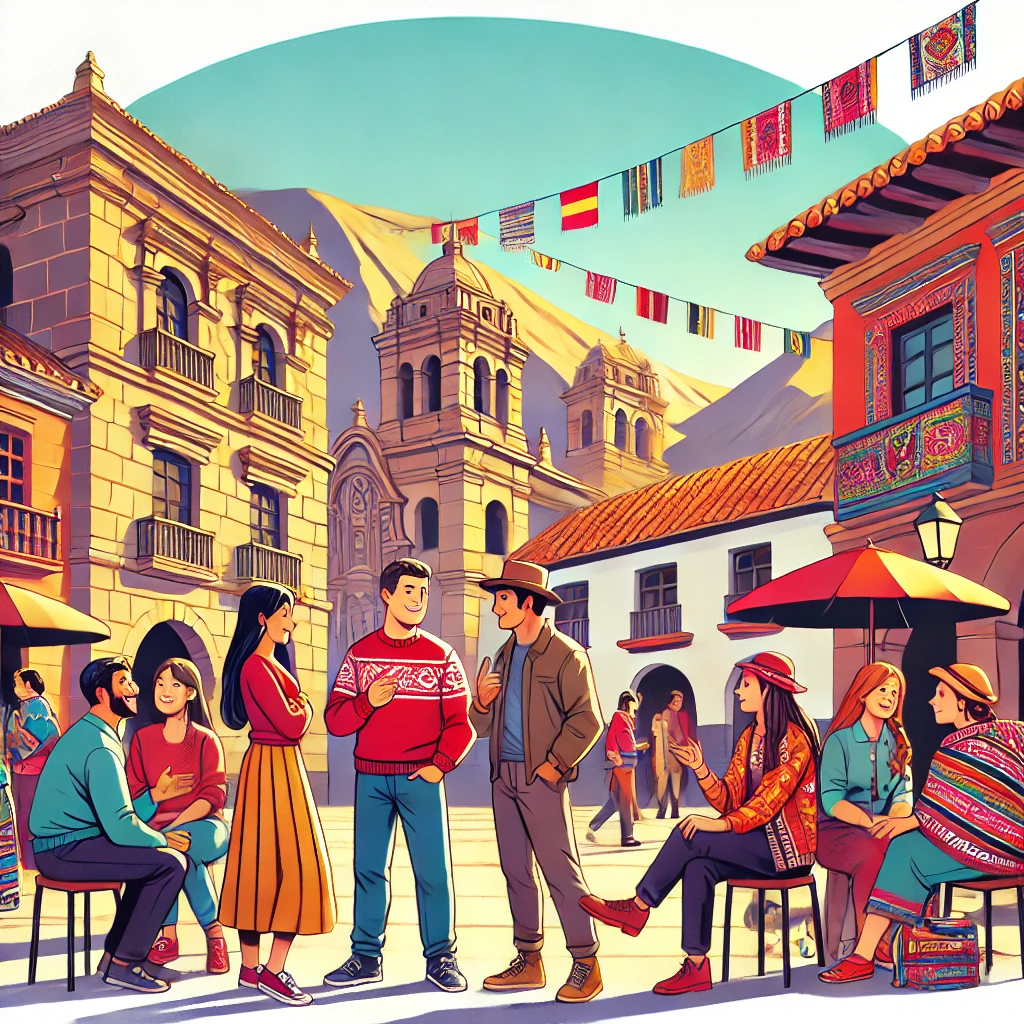
Peruvian Spanish is not monolithic; it varies significantly across different regions of the country. The coastal regions, the Andean highlands, and the Amazonian jungle each have their own distinct linguistic flavors. In coastal areas, particularly in Lima, the Spanish spoken is often closer to the Standard Spanish taught globally but includes some local slang and phrasings. The coastal dialect is influenced by a more relaxed and urban cultural setting, with words like “jamear” for eating. In contrast, the Andean highlands speak a version of Spanish deeply intertwined with Quechua. This version incorporates more indigenous vocabulary and shows greater phonological influence from Quechua. As a result, Andean Spanish can sometimes sound markedly different, making words and phrases unique to the region. The Amazonian region also presents its own version of Spanish, influenced by the indigenous Amazonian languages. Here, one might encounter terms and expressions that are completely unique to the jungle environment, reflecting the biodiversity and the local ways of life. These regional differences underscore the linguistic diversity within Peru, offering rich opportunities for linguistic and cultural exploration.
Cultural Significance
Language is deeply intertwined with culture, and Peruvian Spanish is no exception. The blend of indigenous and Spanish terms found in this dialect does more than just facilitate communication; it serves as a living repository of Peru’s history, traditions, and values. For example, many Peruvian idioms and proverbs have indigenous origins, conveying wisdom and cultural practices passed down through generations. Expressions like “hacer chanca” (to struggle or work hard) find their roots in agricultural practices from indigenous cultures, enhancing the richness of the language. Furthermore, understanding these culturally embedded terms can offer deeper insights into Peruvian social and cultural norms. From daily greetings to culinary terms, mastering the local slang and idiomatic expressions can significantly enhance one’s ability to integrate and appreciate Peru’s vibrant culture. Whether mingling with locals in a bustling Lima marketplace or participating in traditional Andean rituals, a command of Peruvian Spanish opens doors to authentic experiences, allowing for a deeper connection with the rich Peruvian heritage.
Conclusion
Peruvian Spanish is much more than a mere dialect; it’s a linguistic mosaic that intricately ties together the threads of Spanish colonial history and rich indigenous traditions. Understanding this unique blend provides not only linguistic competence but also a broad cultural awareness that enriches any educational or travel experience in Peru. The influences of Quechua and Aymara, the distinctive phonological traits, and the regional variations all testify to the rich tapestry that is Peruvian Spanish. Cultural significance is embedded in its idioms, proverbs, and everyday expressions, making it a living testament to Peru’s diverse heritage. For students of Spanish, exploring the nuances of Peruvian Spanish can be both an enlightening and enriching experience. It offers a broader perspective of the Latin American Spanish-speaking world and helps build a deeper appreciation for Peru’s unique cultural identity. In summary, mastering Peruvian Spanish not only equips you with the skills to navigate different regions of Peru but also provides an invaluable cultural comprehension that makes every conversation a richer, more meaningful exchange. Whether you are planning to visit or are simply a language enthusiast, diving into the fascinating world of Peruvian Spanish promises a rewarding linguistic and cultural journey.